
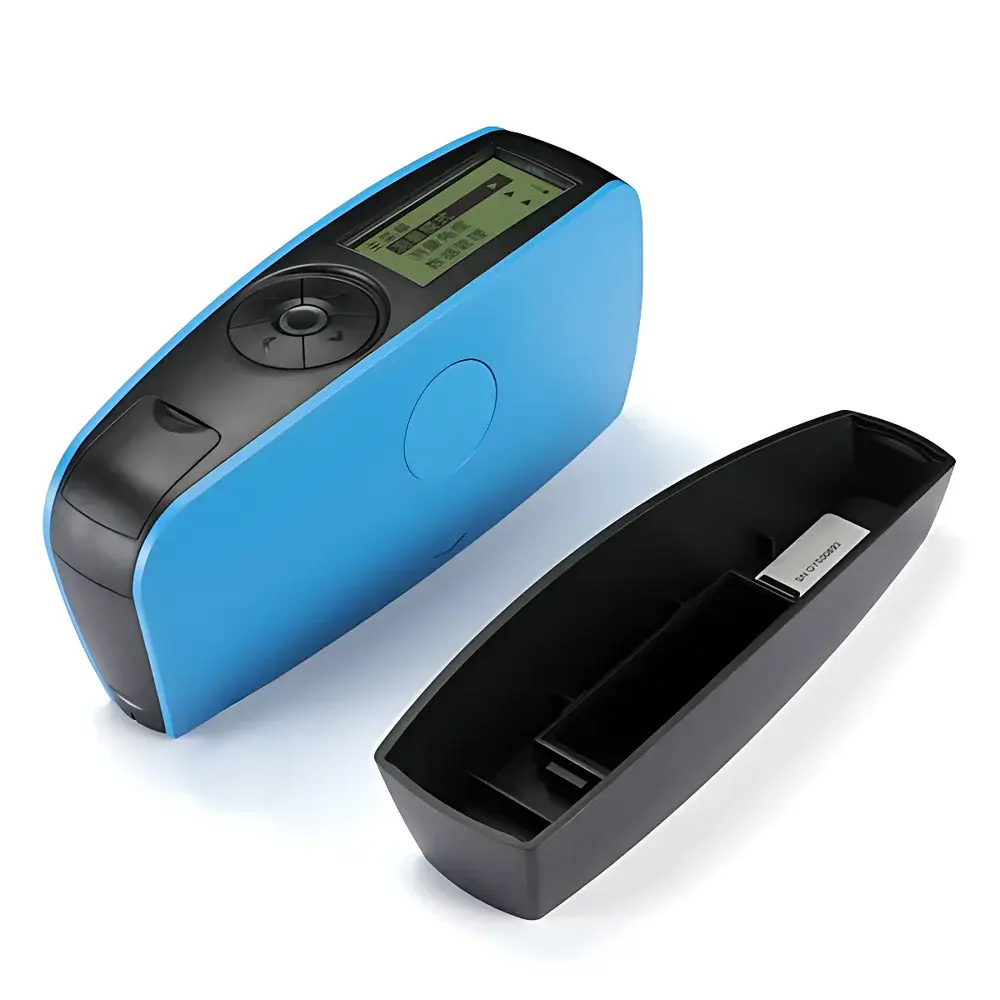
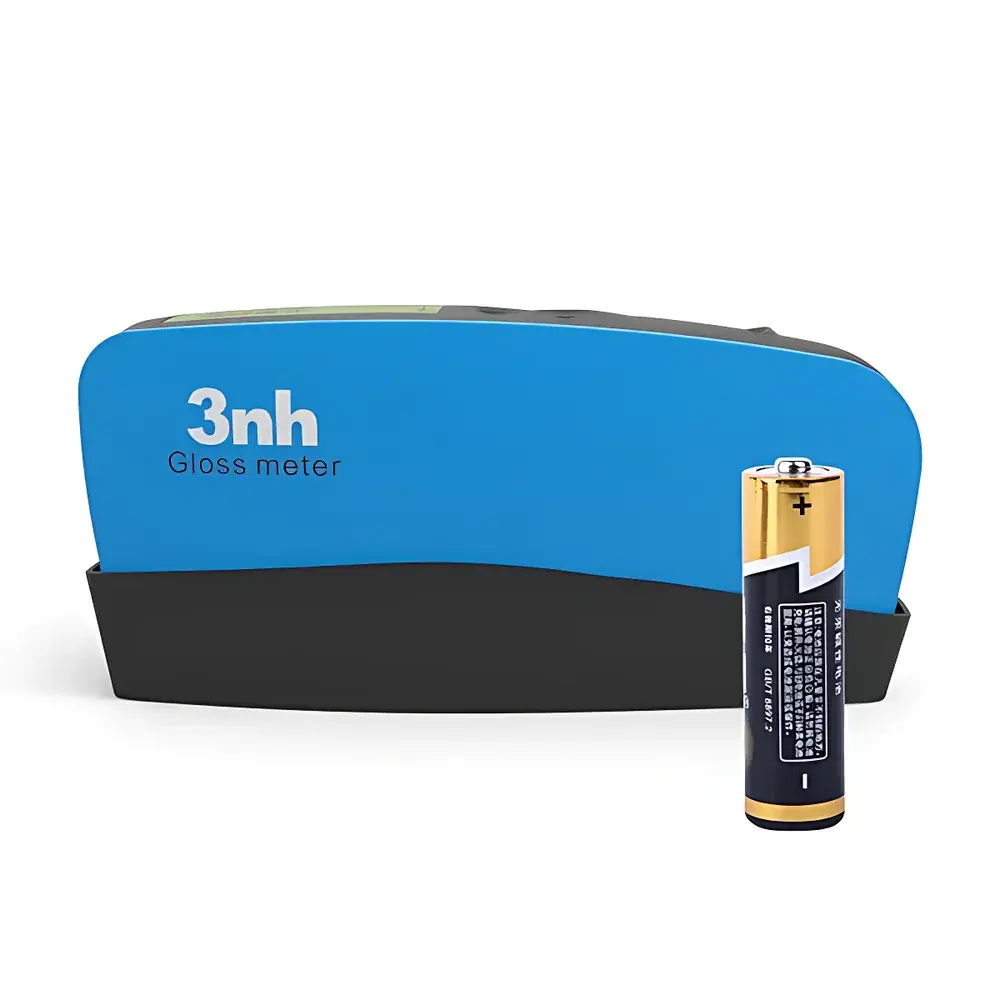
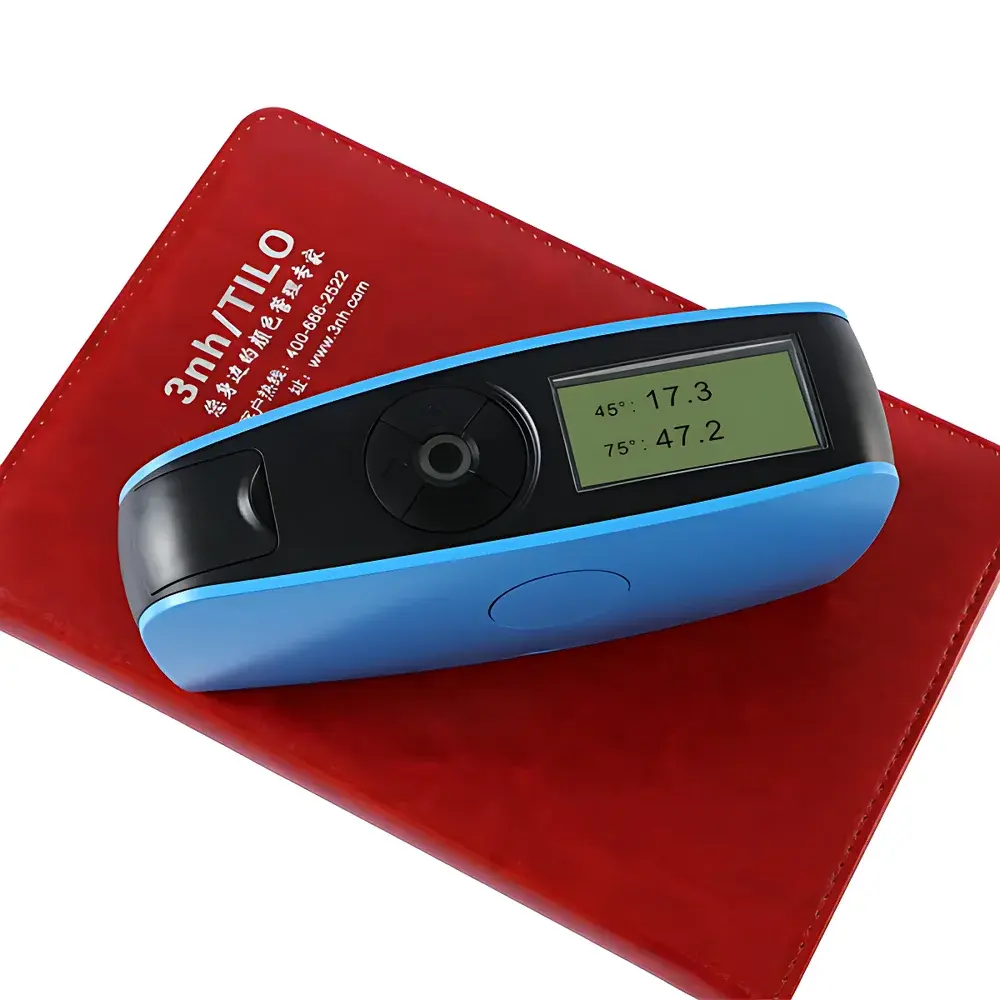
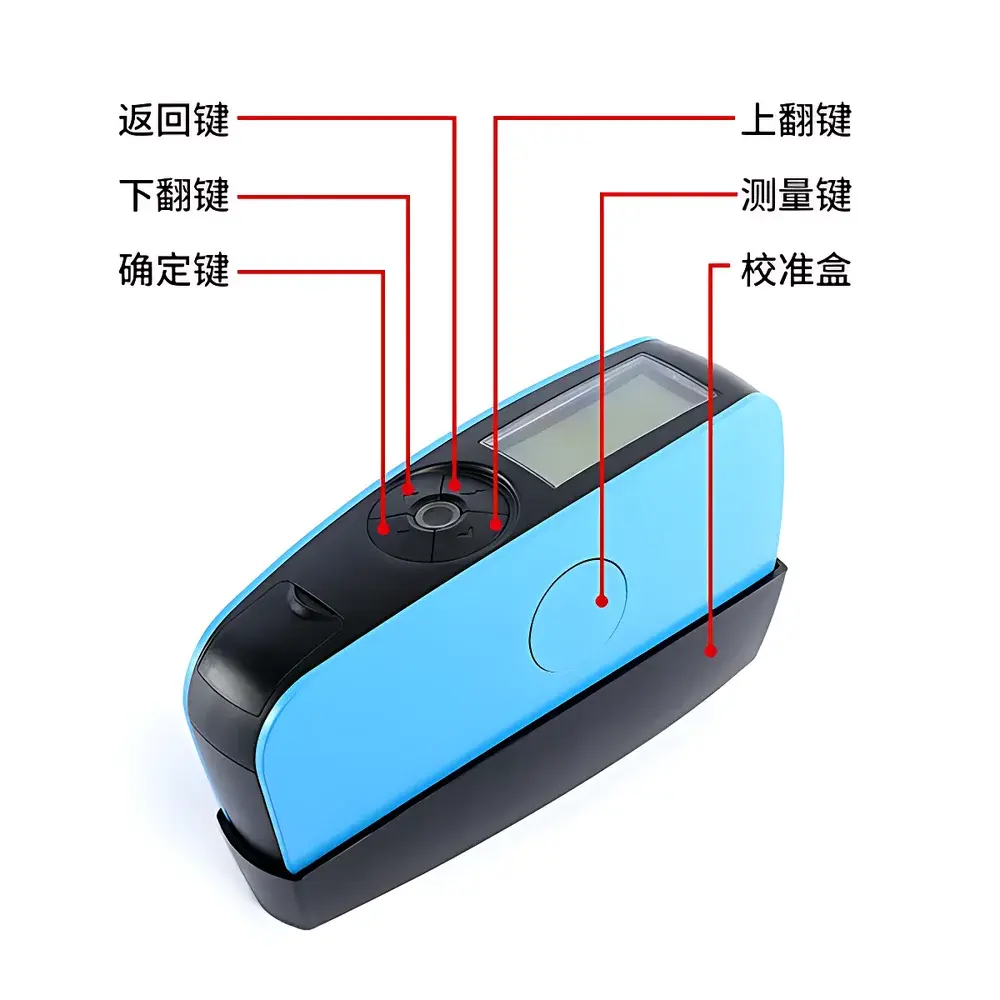
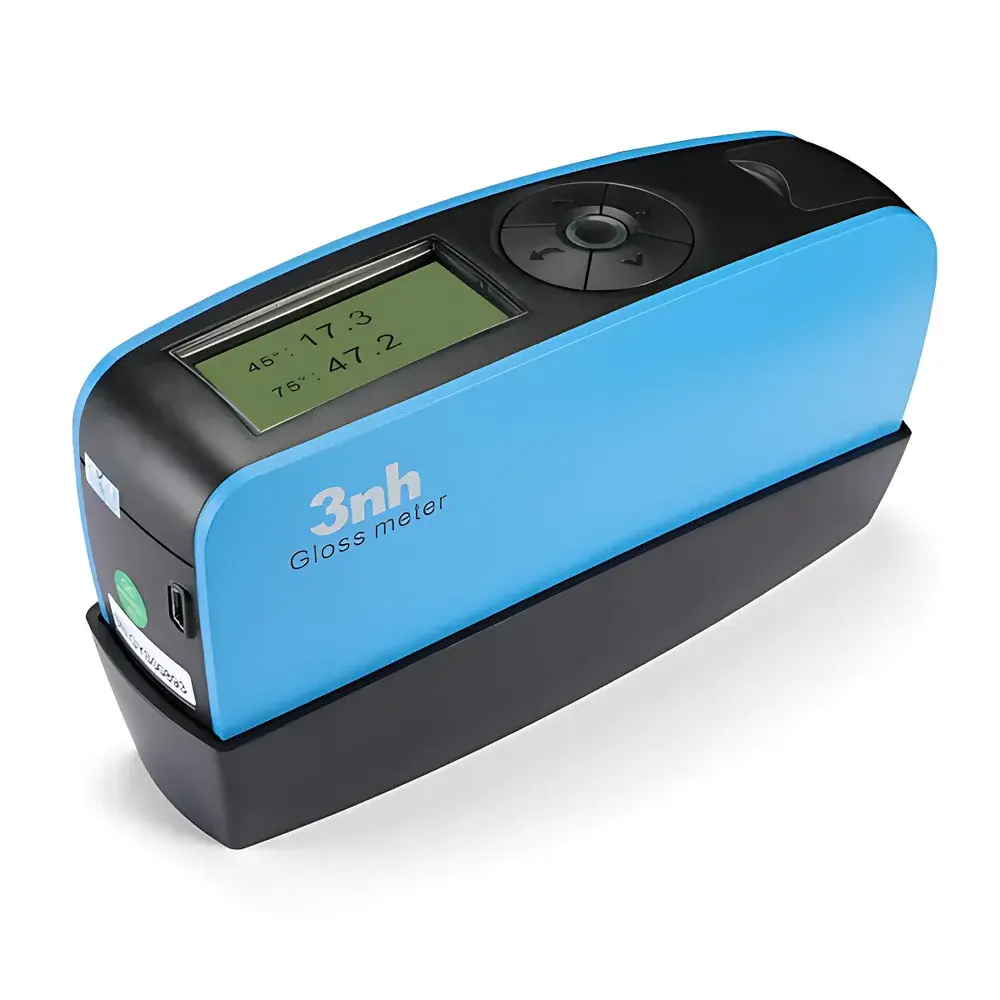
3nh YG60M 60° Micro-Aperture Precision Gloss Meter
| Brand | 3nh |
|---|---|
| Origin | Guangdong, China |
| Manufacturer Type | Direct Manufacturer |
| Product Type | Handheld Manual Gloss Meter |
| Model | YG60M |
| Measurement Angle | 60° |
| Aperture Size | 2 mm × 4 mm |
| Measurement Range | 0–1000 GU |
| Resolution | 0.1 GU |
| Repeatability | ±0.2 GU (0–100 GU) |
| Measurement Time | 0.5 s |
| Display | 2.3-inch monochrome LCD |
| Data Storage | 35,000 readings (configurable across modes) |
| Power Supply | 1 × AA alkaline or Ni-MH rechargeable battery (≥10,000 measurements per charge) |
| Dimensions | 160 × 52 × 84 mm |
| Weight | ~300 g (including calibration plate and battery) |
| Operating Temperature | 0–40 °C |
| Storage Temperature | −20–50 °C |
| Relative Humidity | <85% RH, non-condensing |
| Compliance | JJG 696 (Chinese National Verification Regulation for Working Gloss Meters) |
| Software | GQC6 Quality Control Software (PC-based, USB connectivity) |
| Optional Accessories | Mini thermal printer, Bluetooth 5.0 adapter |
Overview
The 3nh YG60M 60° Micro-Aperture Precision Gloss Meter is a handheld, manually operated optical instrument engineered for high-accuracy surface gloss evaluation on geometrically constrained or highly curved samples. It operates on the principle of specular reflectance measurement at a fixed 60° incident angle—aligned with ISO 2813, ASTM D523, and GB/T 9754 standards—where a collimated beam strikes the sample surface and the intensity of reflected light within the specular angle is quantified in Gloss Units (GU). Unlike conventional gloss meters with standard 9 × 9 mm or larger apertures, the YG60M integrates a purpose-built 2 mm × 4 mm micro-aperture optical path, enabling reliable measurements on concave/convex surfaces, narrow edges, engraved textures, and miniaturized components where macro-aperture instruments yield spatial averaging errors or signal loss. Its robust mechanical design, temperature-stabilized LED source, and factory-calibrated photodetector array ensure long-term stability and metrological traceability to national reference standards.
Key Features
- Micro-aperture optical architecture: 2 mm × 4 mm measurement spot enables precise gloss assessment on curved, recessed, or sub-centimeter features—critical for quality control in precision injection-molded electronics housings, watch dials, automotive trim inserts, and medical device surfaces.
- High repeatability & regulatory compliance: Delivers ±0.2 GU repeatability below 100 GU and ±0.2% GU above 100 GU, fully satisfying JJG 696 verification requirements for working-class gloss meters; suitable for internal calibration audits and GLP-aligned documentation workflows.
- Multi-mode operational flexibility: Supports four distinct measurement paradigms: Basic Mode (instant single-shot capture), Statistical Mode (mean, max/min, SD over up to 99 readings), Continuous Mode (real-time streaming at 0.5 s intervals), and Quality Control Mode (user-defined upper/lower limits with pass/fail visual feedback).
- Intelligent calibration management: Built-in automatic verification of calibration standard plate reflectance prior to each session; supports both manual recalibration and periodic drift compensation—essential for maintaining measurement integrity across shifts or multi-site deployments.
- Extended field usability: Powered by a single AA cell (alkaline or Ni-MH), rated for ≥10,000 measurements per charge; auto-power-off configurable from 30–120 seconds; IP52-rated enclosure resists dust ingress and incidental splashes during shop-floor use.
- Ergonomic industrial design: Compact form factor (160 × 52 × 84 mm), balanced weight distribution (~300 g), and tactile button layout minimize operator fatigue during prolonged sampling campaigns—validated through ISO 9241-411 anthropometric guidelines.
Sample Compatibility & Compliance
The YG60M is validated for use across diverse substrate classes including solvent-based and UV-curable coatings, thermoplastic and thermoset polymers, anodized and electroplated metals, glazed ceramics, laminated paperboard, and natural stone finishes. Its micro-aperture eliminates edge diffraction artifacts common when measuring beveled or chamfered parts—such as smartphone frames, eyewear lenses, or dental prosthetics. The instrument complies with JJG 696 (China’s mandatory verification regulation for working gloss meters), and its 60° geometry ensures cross-compatibility with industry-standard reference data published under ISO 2813 and ASTM D523. While not FDA 21 CFR Part 11–certified out-of-the-box, raw data export via GQC6 software supports integration into validated quality management systems (QMS) requiring ALCOA+ data integrity principles.
Software & Data Management
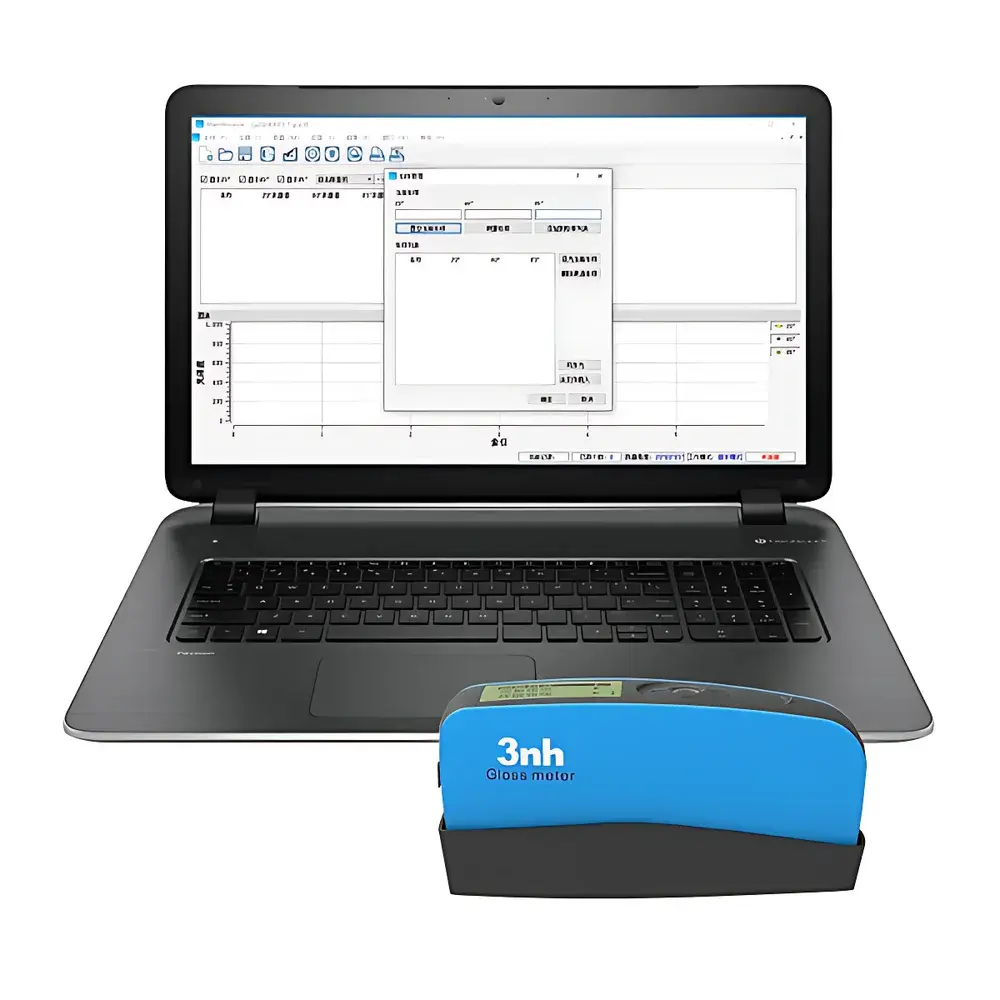
The included GQC6 Quality Control Software provides full bidirectional communication via USB interface, enabling real-time synchronized measurement logging, customizable report generation (PDF/CSV/XLSX), statistical process control (SPC) charting (X̄-R, Cp/Cpk), and audit-trail-enabled user access logs. All stored readings—including timestamp, location tag (manual entry), operator ID, and mode-specific metadata—are retained with immutable timestamps. Data encryption, role-based permissions, and electronic signature support can be implemented at the enterprise IT layer. Firmware updates and calibration certificate templates are distributed through 3nh’s official technical portal—accessible globally without regional restrictions.
Applications
- Automotive: Gloss consistency verification on interior trims, painted bumpers, and chrome-plated grilles with tight-radius curves.
- Consumer electronics: Surface finish validation of matte-finish anodized aluminum casings, AR-coated glass displays, and textured polymer buttons.
- Printing & packaging: Batch-to-batch gloss uniformity assessment on varnished cartons, metallized films, and UV-spot coated labels.
- Furniture & building materials: Quantitative gloss grading of lacquered wood veneers, polished marble slabs, and ceramic tile glazes.
- Medical devices: Finish inspection of sterilizable stainless-steel surgical instruments and biocompatible polymer housings where reflectance correlates with surface roughness and cleaning efficacy.
FAQ
What standards does the YG60M comply with?
It conforms to JJG 696 (People’s Republic of China National Verification Regulation) and aligns with the optical geometry and reporting conventions of ISO 2813 and ASTM D523 for 60° gloss measurement.
Can the YG60M measure curved or textured surfaces accurately?
Yes—the 2 mm × 4 mm aperture minimizes spatial averaging effects, enabling repeatable measurements on radii down to 5 mm and moderately textured surfaces (Ra ≤ 0.8 µm) without contact pressure artifacts.
Is PC software required for basic operation?
No—standalone measurement, data storage, and on-device pass/fail evaluation require no external software; GQC6 is optional for advanced analytics and regulatory documentation.
How is calibration traceability maintained?
Each unit ships with a NIST-traceable ceramic calibration tile (certified reflectance ±0.1 GU at 60°); users perform routine verification using the built-in self-check function before critical measurement sessions.
Does the YG60M support multi-angle gloss measurement?
No—it is a dedicated 60° instrument. For 20°/60°/85° tri-angle analysis, consider the 3nh YG268 or NHG268 series.





