
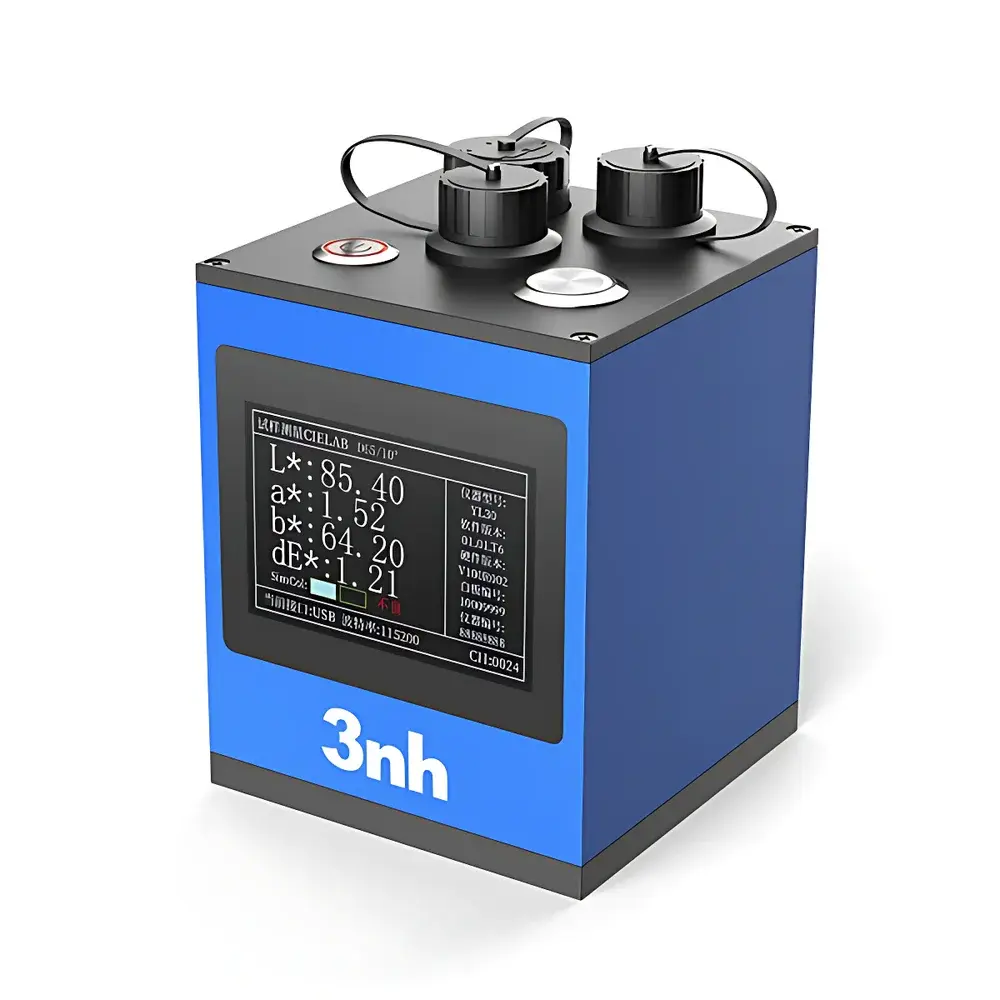
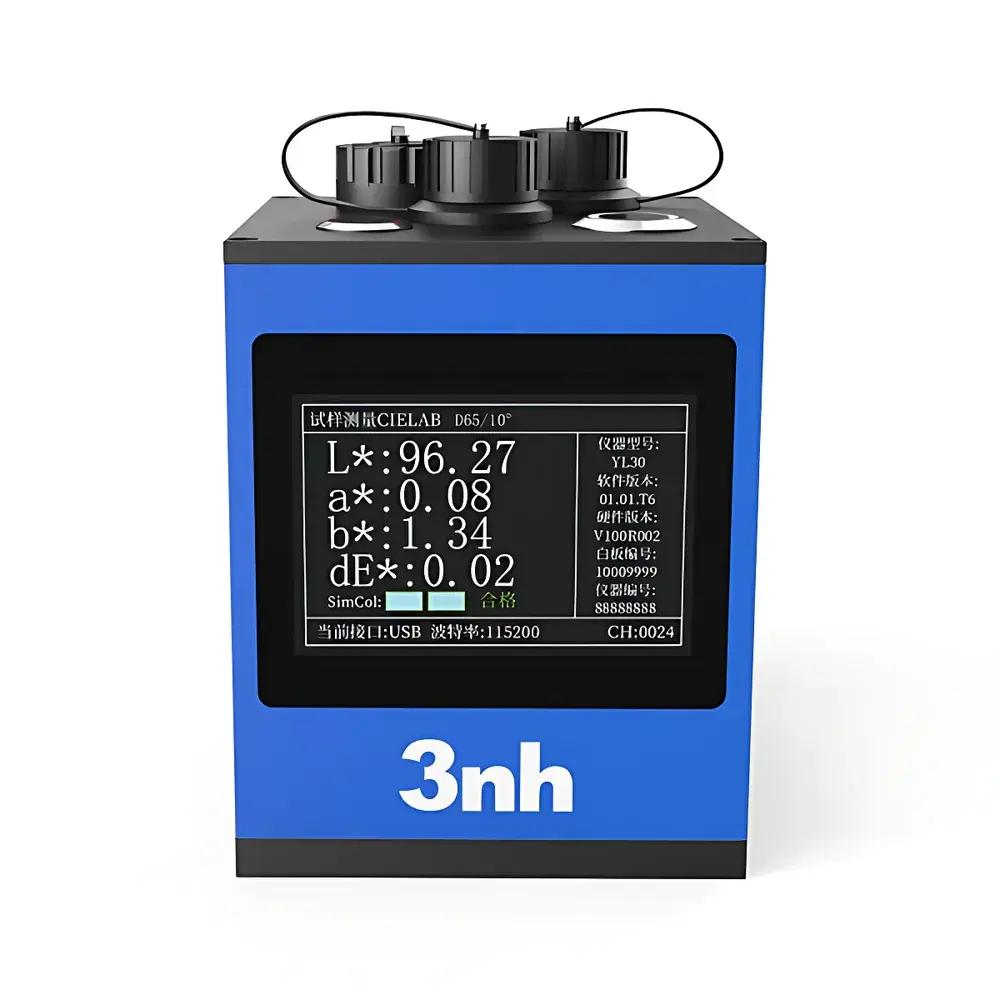
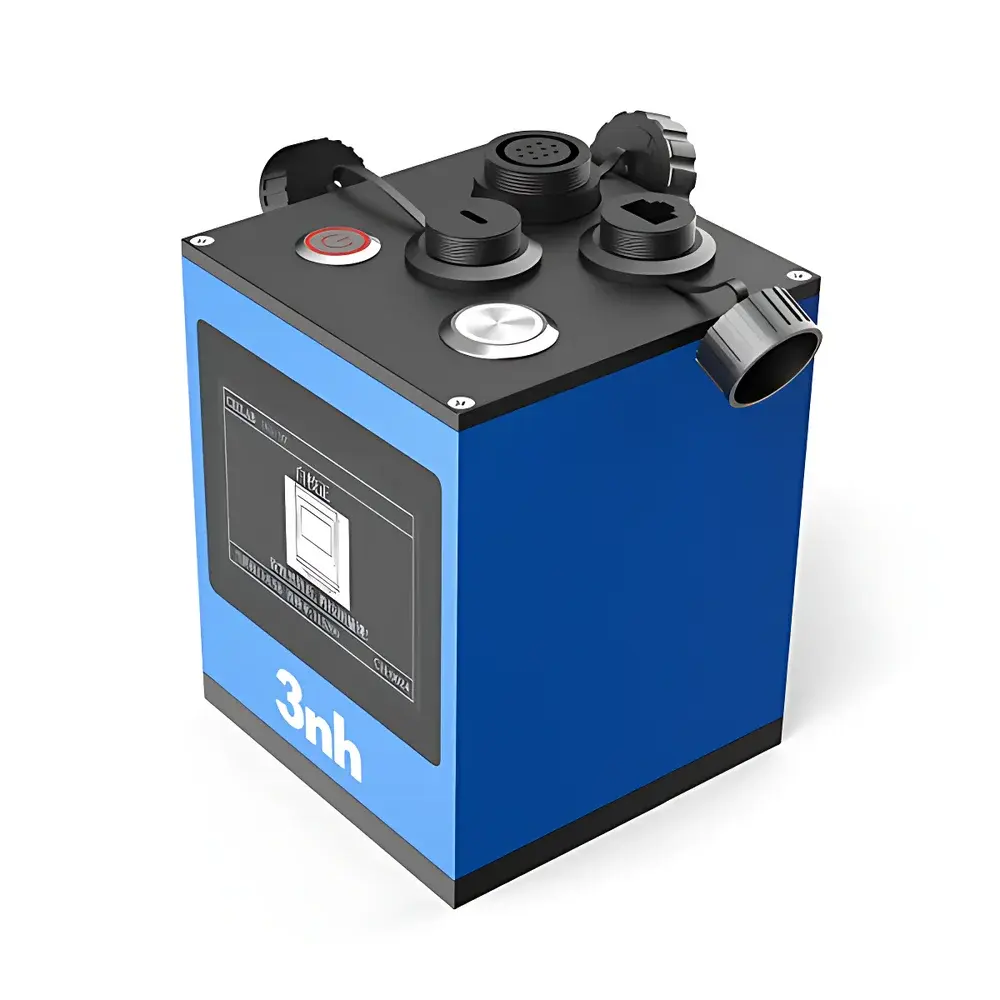
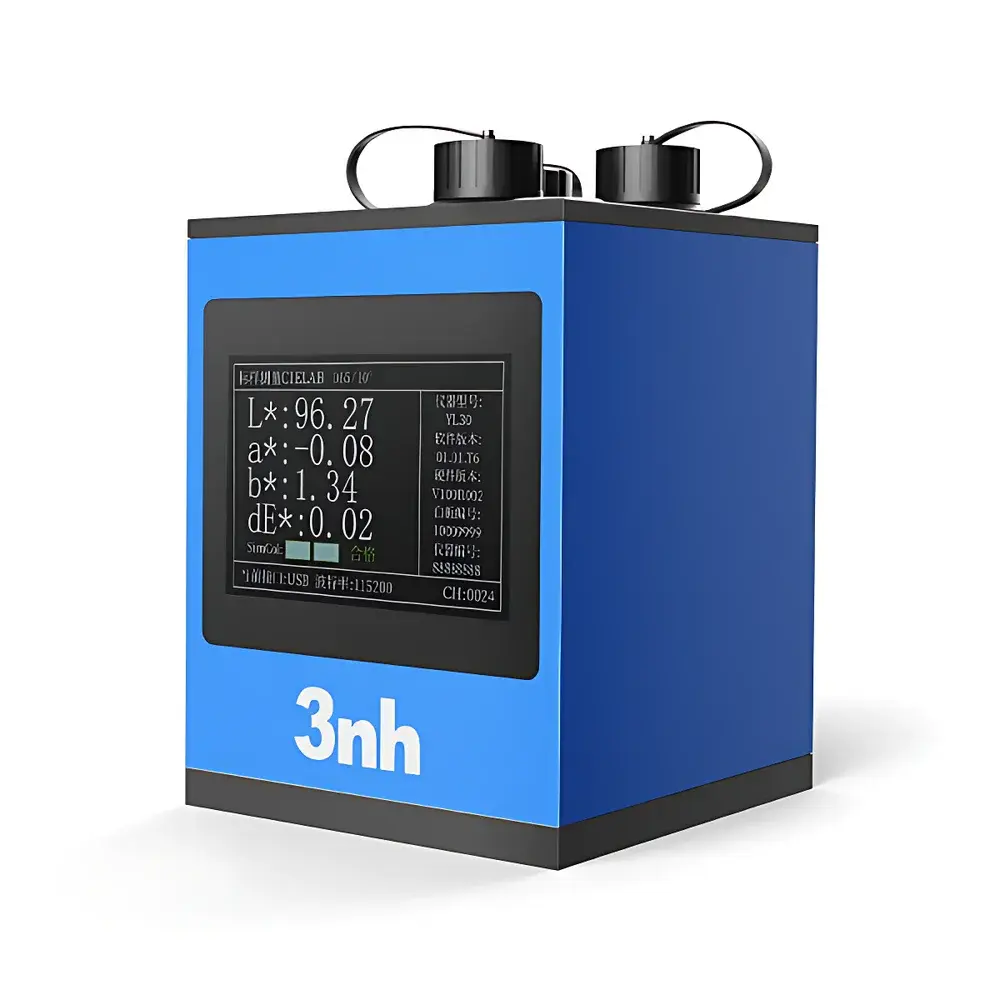
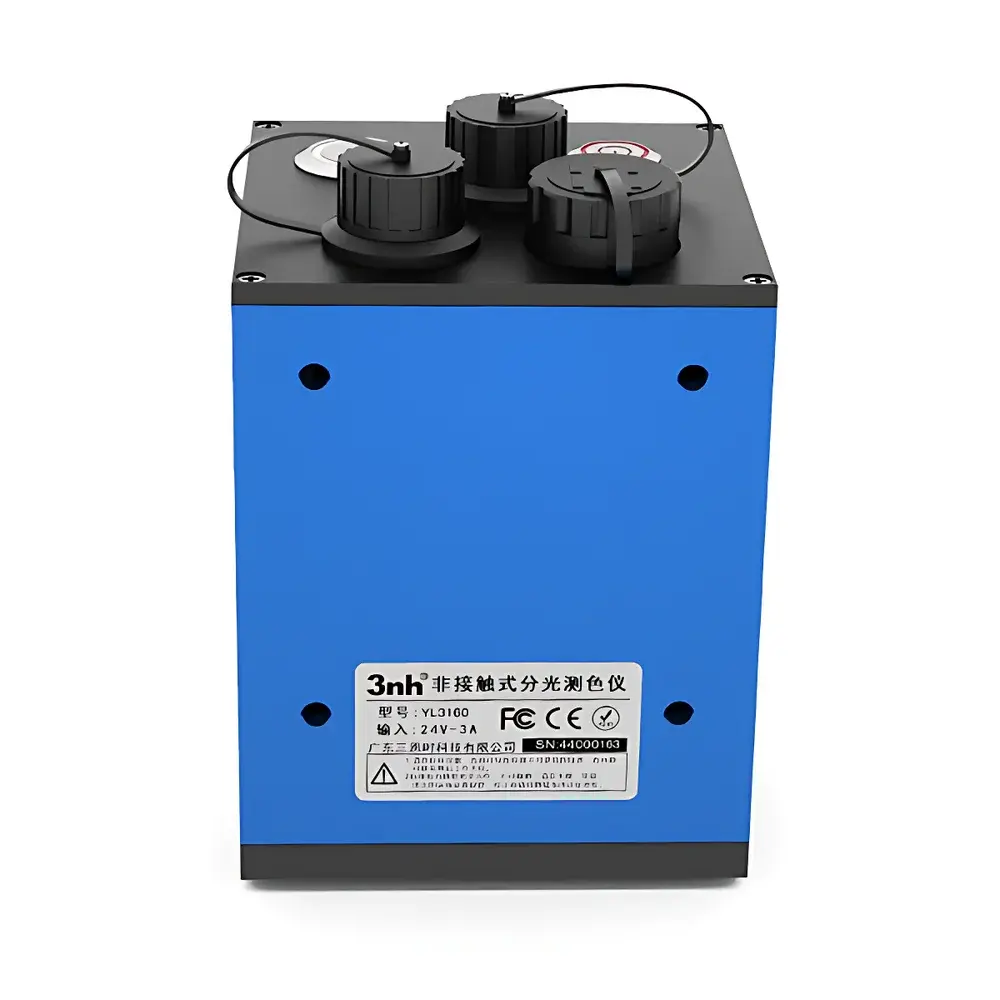
3nh YL3160 Non-Contact Spectrophotometric Colorimeter
| Brand | 3nh |
|---|---|
| Origin | Guangdong, China |
| Manufacturer Type | Manufacturer |
| Product Category | Spectrophotometric Colorimeter |
| Instrument Type | In-Line |
| Optical Geometry | 45°/0° |
| Light Source | Full-Spectrum LED |
| Spectral Range | 400–700 nm |
| Repeatability | ΔE*ab ≤ 0.02 |
Overview
The 3nh YL3160 Non-Contact Spectrophotometric Colorimeter is an industrial-grade in-line color measurement instrument engineered for high-precision, non-destructive spectral analysis in automated manufacturing environments. It operates on the CIE-compliant 45°/0° optical geometry—where a ring-shaped 45° illumination source eliminates directional bias, and a coaxial 0° detector captures diffuse reflectance with minimal influence from surface texture or gloss. Unlike contact-based colorimeters, the YL3160 employs a fixed-focus optical probe with a nominal working distance of 7.5 mm (±0.15 mm), enabling stable spectral acquisition without physical interaction. This design eliminates mechanical wear, sample contamination, and deformation risks—critical for measuring liquids, pastes, powders, soft polymers, delicate coatings, and hygienically sensitive substrates. Its core optical architecture integrates a concave holographic grating, dual-array 256-pixel CMOS sensor, and thermally stabilized full-spectrum LED source (400–700 nm, 10 nm resolution), delivering consistent spectral reflectance data traceable to CIE No. 15, ISO 7724-1, ASTM E1164, and GB/T 3978 standards.
Key Features
- True Non-Contact Operation: Measures at 7.5 mm standoff distance; eliminates cross-contamination, surface damage, and sensor fouling—ideal for food, pharmaceutical, cosmetic, and corrosive material applications.
- In-Line Integration Ready: Compact footprint (100 × 100 × 140 mm), IP66-rated enclosure, and DC24V power input ensure robust deployment on production lines, robotic arms, or conveyor-mounted stations.
- High-Speed Spectral Acquisition: Full-spectrum measurement completed in as little as 50 ms (typical 100 ms); supports >1 million measurements per day under continuous trigger mode.
- Multi-Protocol Industrial Connectivity: Native support for USB 2.0, RS-232, RS-485 (multi-drop capable), Ethernet (TCP/IP), analog voltage output (0–10 V), and hardware external trigger (TTL level) for PLC synchronization.
- Self-Calibrating Optical System: Automatic warm-up compensation and onboard white/black calibration routines execute at power-on and on-demand—no manual recalibration required between shifts.
- Environmental Resilience: Rated IP66 for dust-tight and high-pressure water resistance; operational within 0–40°C and 0–85% RH (non-condensing), up to 2000 m altitude.
Sample Compatibility & Compliance
The YL3160 accommodates diverse physical states—including opaque/transparent liquids, viscous slurries, granular powders, textured ceramics, flexible films, and matte or glossy painted surfaces—without requiring sample preparation or fixturing. Its 8 mm measurement aperture and unrestricted sample height tolerance simplify integration into variable-height production workflows. The instrument complies with international photometric and colorimetric standards including CIE No. 15:2018, ISO 7724-1:2018, ASTM E1164-22, DIN 5033-7, GB/T 3978–2008, and GB/T 18833–2019. For regulated industries, raw spectral data export (CSV, TXT) and audit-ready measurement logs support GLP/GMP documentation requirements. While not FDA 21 CFR Part 11–certified out-of-the-box, its deterministic firmware behavior, timestamped records, and unalterable measurement history enable validation by end users per internal SOPs.
Software & Data Management
The YL3160 interfaces with PC-based 3nh ColorQC software (Windows only), providing real-time spectral visualization, statistical process control (SPC) charts, pass/fail tolerancing (ΔE*ab, ΔE00, CMC, etc.), and batch reporting. All color spaces (CIE LAB, XYZ, LCH, DIN99, HunterLab), observer angles (2°/10°), and illuminants (D65, A, F2, LED-B5, TL84, etc.) are configurable. Spectral reflectance curves, whiteness (ASTM E313, ISO 2470), yellowness (ASTM D1925), tint, metamerism index (MI), and opacity metrics are computed algorithmically from raw 10 nm interval data. Data export supports CSV, Excel, and XML formats; network-enabled units allow centralized monitoring via Modbus TCP or custom REST API integration (SDK available upon request).
Applications
- Automotive & Electronics: Real-time paint, plastic trim, and PCB solder mask color verification during assembly.
- Food & Beverage: Batch consistency monitoring of sauces, dairy products, confectionery, and fruit pulp without container opening or sampling.
- Pharmaceuticals & Cosmetics: Non-invasive tablet coating uniformity assessment and cream/powder shade control under cleanroom-compatible conditions.
- Printing & Packaging: Inline spot-checking of inkjet, flexo, and gravure print density and hue stability across web-fed lines.
- Ceramics & Building Materials: Glaze and tile color matching under variable ambient lighting conditions.
- Plastics & Polymers: Extrusion line feedback control for masterbatch dispersion and pigment concentration adjustment.
FAQ
What is the maximum allowable distance variation between probe and sample?
The optimal working distance is 7.5 mm ± 0.15 mm. Deviations beyond ±0.3 mm may affect aperture fill ratio and introduce geometric uncertainty; automated focus feedback is not supported.
Does the YL3160 require annual recalibration by an accredited lab?
No. Its factory calibration is traceable to NIM (National Institute of Metrology, China) standards. End-users perform routine verification using supplied ceramic white and black standards; formal recalibration is recommended every 24 months or after impact/drop events.
Can the device operate continuously for 24/7 production cycles?
Yes. Thermal management and LED driver design support uninterrupted operation at ambient temperatures ≤40°C. LED lifetime exceeds 3 million measurements or 5 years under typical duty cycles.
Is spectral data accessible programmatically for MES/SCADA integration?
Yes. Raw reflectance values (400–700 nm @ 10 nm intervals), tristimulus values, and derived color metrics are exposed via ASCII serial protocol (RS-485/RS-232), Modbus RTU/TCP, or HTTP GET requests over Ethernet.
How is inter-instrument agreement ensured across multiple YL3160 units?
Unit-to-unit agreement is specified as ΔE*ab ≤ 0.2 when measuring BCRA Series II tiles—verified during final QA. For critical multi-station deployments, optional inter-unit matching reports and offset compensation tables are provided pre-shipment.




