
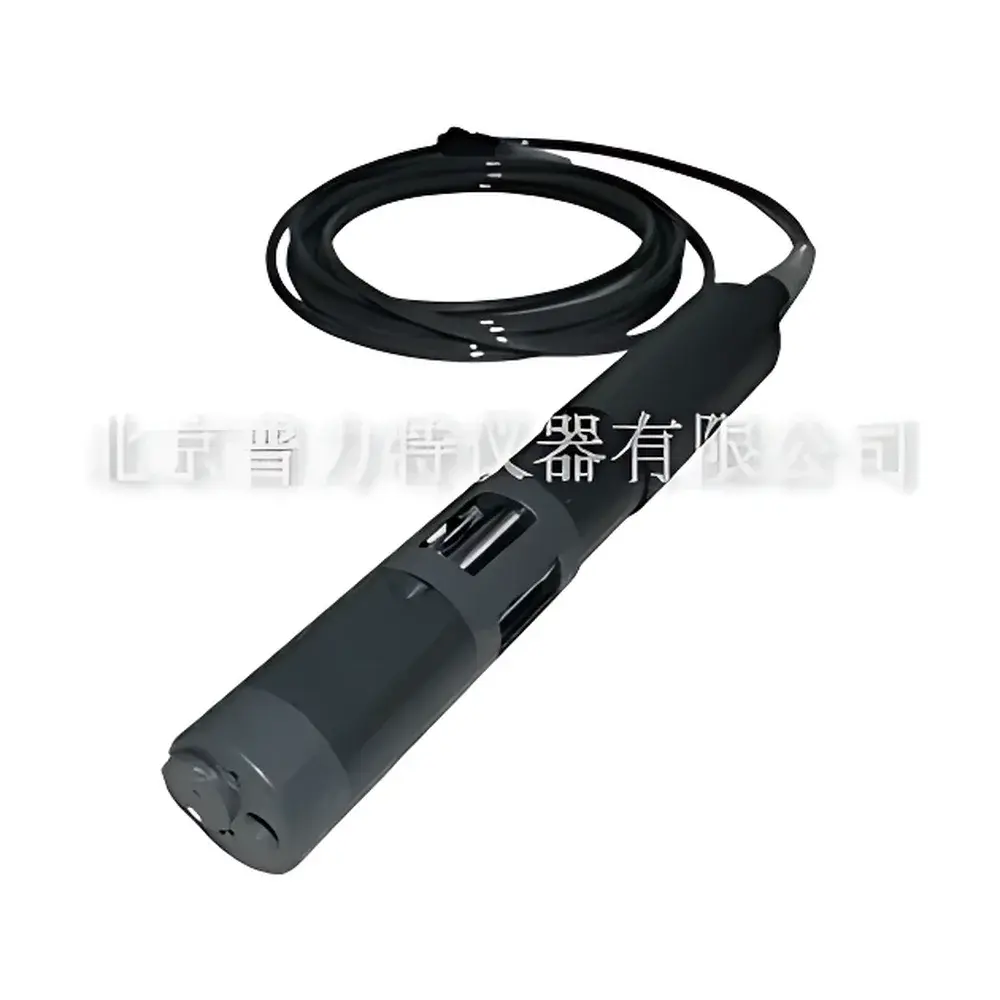
621 Multi-Parameter Water Quality Sensor
| (Origin | Australia |
|---|---|
| Manufacturer Type | Authorized Distributor |
| Origin Category | Imported |
| Model | 621 |
| Instrument Type | Online Water Quality Analyzer |
| Measured Parameters | Temperature, Conductivity, TDS, Salinity, Dissolved Oxygen (DO), Turbidity, pH, ORP, Depth (optional) |
| Communication | RS232/USB, ASCII protocol, 9600/4800 baud |
| Housing | PVC & Stainless Steel |
| Dimensions | 440 mm × 50 mm (L × Ø) |
| Power Consumption | 120 mA |
| ADC Resolution | 18-bit |
| Cable Length | Up to 100 m with Kevlar-reinforced cable |
| Calibration | Two-point calibration supported |
| Software | Windows-based configuration and real-time monitoring application) |
Overview
The 621 Multi-Parameter Water Quality Sensor is an integrated, submersible online monitoring platform engineered for continuous, high-fidelity measurement of critical physicochemical and optical water quality parameters in freshwater, estuarine, and marine environments. Designed and assembled in Australia, the sensor employs a modular architecture combining electrochemical, optical, and pressure-based transduction principles—each calibrated and temperature-compensated in accordance with ISO 7027 (turbidity), ISO 5814 (dissolved oxygen), ASTM D1125 (conductivity), and USP (conductivity and TDS)—to ensure metrological traceability and field reproducibility. Its compact cylindrical form factor (440 mm × 50 mm) enables deployment in narrow conduits, boreholes, intake structures, and open-water buoys without compromising hydrodynamic stability or sensor exposure integrity.
Key Features
- Simultaneous real-time measurement of nine core parameters: temperature, conductivity, TDS (calculated from conductivity), salinity, dissolved oxygen (% saturation and mg/L), turbidity (0–600 NTU or 0–3000 NTU range), pH, ORP, and optional pressure-based depth (0–100 m).
- Expandable optical module interface supporting up to seven additional fluorescence-based sensors: chlorophyll-a, phycocyanin (freshwater cyanobacteria), phycoerythrin (marine cyanobacteria), rhodamine WT, fluorescein, CDOM (colored dissolved organic matter), petroleum hydrocarbons (oil-in-water), and optical brighteners.
- 18-bit analog-to-digital conversion ensures high dynamic range and low-noise signal resolution across all channels, minimizing quantization error in low-concentration fluorescence and high-precision electrochemical readings.
- Robust dual-material housing: food-grade PVC body with 316 stainless steel end caps and pressure-rated O-ring seals rated for continuous submersion at depths up to 100 m (depth sensor enabled).
- RS232 and USB communication interfaces operating at configurable baud rates (9600 or 4800), transmitting ASCII-formatted data packets compatible with industry-standard SCADA systems, PLCs, data loggers (e.g., Campbell Scientific CR series), and custom telemetry platforms.
- Two-point calibration support for pH and ORP; factory-calibrated electrodes and optical cells with documented NIST-traceable calibration certificates available upon request.
Sample Compatibility & Compliance
The 621 sensor is validated for operation in natural waters—including rivers, lakes, reservoirs, aquaculture ponds, coastal zones, wastewater effluents, and drinking water distribution networks. Its electrochemical pH and ORP electrodes utilize solid-state reference junctions resistant to sulfide fouling and chloride drift. The optical turbidity channel conforms to ISO 7027 compliance via 860 nm LED excitation and 90° scattered-light detection. Dissolved oxygen is measured using Clark-type polarographic technology with integrated temperature and salinity compensation algorithms per Winkler-derived standards. All firmware and data handling protocols support audit-ready operation under GLP and GMP frameworks, with optional timestamped logging and metadata tagging aligned with EPA Method 160.1 and ISO 5667-22 requirements for environmental monitoring data integrity.
Software & Data Management
A dedicated Windows-based desktop application provides full instrument configuration, real-time parameter visualization, calibration management, diagnostic status reporting, and raw ASCII data export (CSV, TXT). The software supports batch calibration import/export, alarm threshold definition (with hysteresis), and synchronized multi-sensor deployment profiling. Data streams are structured to comply with SDI-12 and Modbus RTU mapping conventions for seamless integration into existing environmental data management systems (EDMS). For regulated applications, optional firmware upgrades enable 21 CFR Part 11-compliant electronic signatures, user-access controls, and immutable audit trails—fully compatible with LIMS and cloud-based platforms such as HydroSphere™ and Aquarius Time-Series.
Applications
- Real-time source water quality surveillance for municipal water utilities and dam operators.
- Algal bloom early warning systems in eutrophic lakes and reservoirs via concurrent chlorophyll-a, phycocyanin, and CDOM monitoring.
- Marine environmental impact assessments (EIA) tracking salinity intrusion, DO depletion, and hydrocarbon contamination in port and offshore areas.
- Wastewater treatment plant influent/effluent monitoring with simultaneous ORP/pH/conductivity trending for process control optimization.
- Research-grade limnological and oceanographic studies requiring long-term, low-maintenance in-situ deployments with high inter-parameter correlation fidelity.
FAQ
What communication protocols does the 621 support?
The sensor outputs ASCII-formatted data over RS232 and USB interfaces at 9600 or 4800 baud, with configurable framing (8N1). It does not natively support Modbus TCP or CAN bus but can be interfaced via protocol converters.
Is the depth sensor included by default?
No—the pressure-based depth transducer is an optional add-on module; standard configurations include only the nine core parameters.
Can the 621 be deployed in seawater for extended periods?
Yes. Its 316 stainless steel components and epoxy-sealed optical windows are corrosion-resistant to ISO 9223 C5-M marine environments, with validated performance over 12-month submerged deployments.
How is TDS calculated, and what is its uncertainty?
TDS is derived algorithmically from conductivity using the standard conversion factor (0.64–0.71 µS/cm → mg/L), with ±10% relative uncertainty reflecting variability in ion composition; users may input site-specific factors.
Does the firmware support remote updates or over-the-air reconfiguration?
Firmware updates require local USB connection and the Windows configuration tool; no OTA capability is implemented due to regulatory constraints on field-modifiable measurement algorithms.
Related Products







