
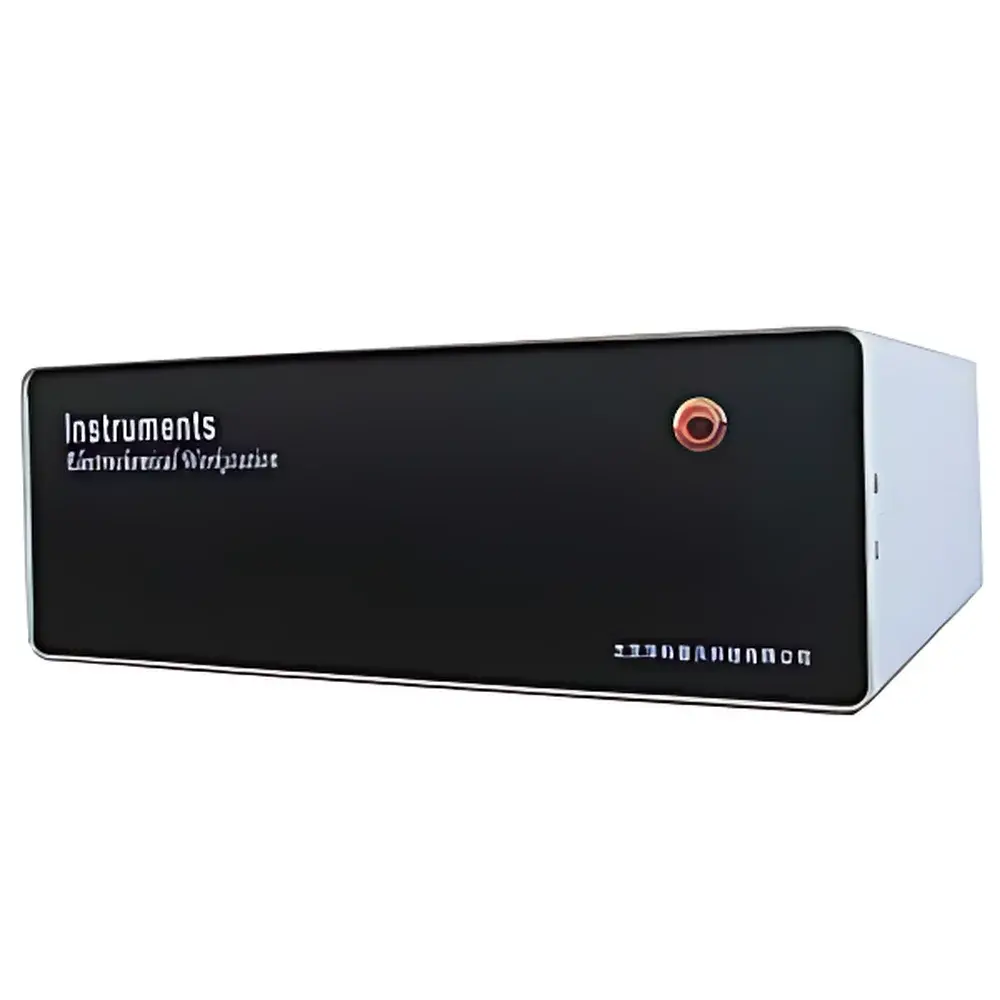
760E Electrochemical Workstation
| Origin | Beijing, China |
|---|---|
| Manufacturer Type | Authorized Distributor |
| Origin Category | Domestic (PRC) |
| Model | 760E |
| Price Range | USD 7,000–10,000 (excl. PC) |
| Instrument Type | Potentiostat/Galvanostat/EIS Workstation |
| Channel Configuration | Multi-Channel (Up to 4 Independent Channels) |
| Current Range | ±10 pA to ±0.25 A |
| Current Accuracy | ±0.2% of reading |
| Potential Accuracy | ±1 mV or ±0.01% of full scale |
| Potentiostatic Range | ±10 V |
| EIS Frequency Range | 10 µHz to 1 MHz |
| Warranty | 12 months |
Overview
The 760E Electrochemical Workstation is a high-performance, multi-channel potentiostat/galvanostat system engineered for precision electrochemical characterization in research laboratories and quality control environments. Built upon a low-noise analog front-end and digitally controlled feedback architecture, the 760E implements standard three-electrode cell configurations (working, reference, counter) and supports a comprehensive suite of DC and AC techniques—including cyclic voltammetry (CV), linear sweep voltammetry (LSV), chronoamperometry (CA), chronopotentiometry (CP), open-circuit potential (OCP) monitoring, and electrochemical impedance spectroscopy (EIS). Its wide dynamic current range (±10 pA to ±0.25 A) and sub-millivolt potential resolution enable reliable measurement of both ultra-trace redox processes and high-current battery electrode reactions. The workstation operates under galvanostatic, potentiostatic, and zero-resistance ammeter (ZRA) modes, making it suitable for corrosion studies, battery cycling, sensor development, and fundamental kinetics analysis.
Key Features
- Multi-channel architecture supporting up to four independently controlled electrochemical cells—ideal for parallel screening of catalysts, electrolytes, or electrode materials.
- Ultra-low current detection capability down to ±10 pA with <0.2% accuracy, enabling quantitative analysis of slow electron-transfer kinetics and passive film growth.
- Potential control accuracy of ±1 mV or ±0.01% of full scale across the ±10 V range, ensuring reproducibility in high-impedance systems such as coated metals or solid-state electrolytes.
- Broad EIS frequency coverage from 10 µHz to 1 MHz with phase resolution better than 0.1°, facilitating detailed modeling of interfacial capacitance, charge-transfer resistance, and diffusion-controlled processes.
- Integrated analog filtering and digital signal averaging to suppress electromagnetic interference—critical for measurements in non-shielded lab environments.
- Hardware-triggered synchronization between channels and external devices (e.g., temperature controllers, optical spectrometers) via TTL I/O ports.
Sample Compatibility & Compliance
The 760E is compatible with standard electrochemical cells (e.g., conventional three-electrode beakers, rotating disk electrodes, microfluidic flow cells, and custom-designed battery test fixtures). It interfaces seamlessly with common reference electrodes (Ag/AgCl, SCE, Hg/Hg₂SO₄) and working electrodes (glassy carbon, platinum, gold, carbon paste, screen-printed electrodes). All hardware and firmware comply with IEC 61000-4 electromagnetic compatibility standards. Data acquisition workflows support audit-trail generation and user-access logging—enabling alignment with GLP and GMP documentation requirements when paired with validated software protocols. While not pre-certified for FDA 21 CFR Part 11, the system provides the foundational capabilities (electronic signatures, data immutability options, session logs) required for regulated environments upon customer-specific validation.
Software & Data Management
The workstation is operated via dedicated Windows-based software featuring intuitive experiment sequencing, real-time visualization, and automated parameter optimization. Users define method templates for standardized tests (e.g., ASTM G102 for polarization resistance, ISO 16773-2 for coating impedance), with export options to CSV, TXT, and MPT formats. Raw data files include embedded metadata (timestamp, instrument ID, calibration status, operator ID), supporting traceability per ISO/IEC 17025. Batch processing tools allow post-acquisition fitting of EIS spectra using equivalent circuit models (Randles, transmission line, constant-phase elements) with nonlinear least-squares regression. Software updates are distributed via secure HTTPS channels and include version-controlled release notes compliant with laboratory change management practices.
Applications
- Battery R&D: Half-cell and full-cell cycling, differential capacity analysis (dQ/dV), state-of-charge estimation, SEI formation studies.
- Corrosion Science: Potentiodynamic polarization, electrochemical noise analysis (ENA), localized corrosion mapping using scanning vibrating electrode technique (SVET) integration.
- Biosensor Development: Amperometric detection of glucose, dopamine, and nitric oxide; enzyme kinetics modeling under controlled mass transport.
- Electrocatalysis: Oxygen reduction reaction (ORR), hydrogen evolution reaction (HER), CO₂ reduction activity screening across catalyst libraries.
- Materials Characterization: Conductivity profiling of conducting polymers, redox switching behavior of metal–organic frameworks (MOFs), and ion-insertion dynamics in layered oxides.
FAQ
Is a computer included with the 760E system?
No—the 760E workstation does not include a host computer. A Windows 10/11 PC (minimum i5 CPU, 8 GB RAM, USB 2.0/3.0 port) is required for operation.
What is the warranty coverage?
The instrument carries a 12-month limited warranty covering parts and labor for defects in materials and workmanship under normal use conditions.
Can the 760E perform simultaneous multi-channel EIS measurements?
Yes—each channel operates independently with synchronized timing; EIS scans can be initiated simultaneously or staggered with user-defined delays.
Does the system support third-party scripting (e.g., Python or MATLAB)?
Yes—COM-based API access is provided for programmatic control, enabling integration into automated test benches and custom data analysis pipelines.
How is calibration performed?
Factory calibration uses NIST-traceable voltage and current standards. End-users may perform verification checks using certified resistors and precision voltage sources; full recalibration requires return to authorized service centers.






