
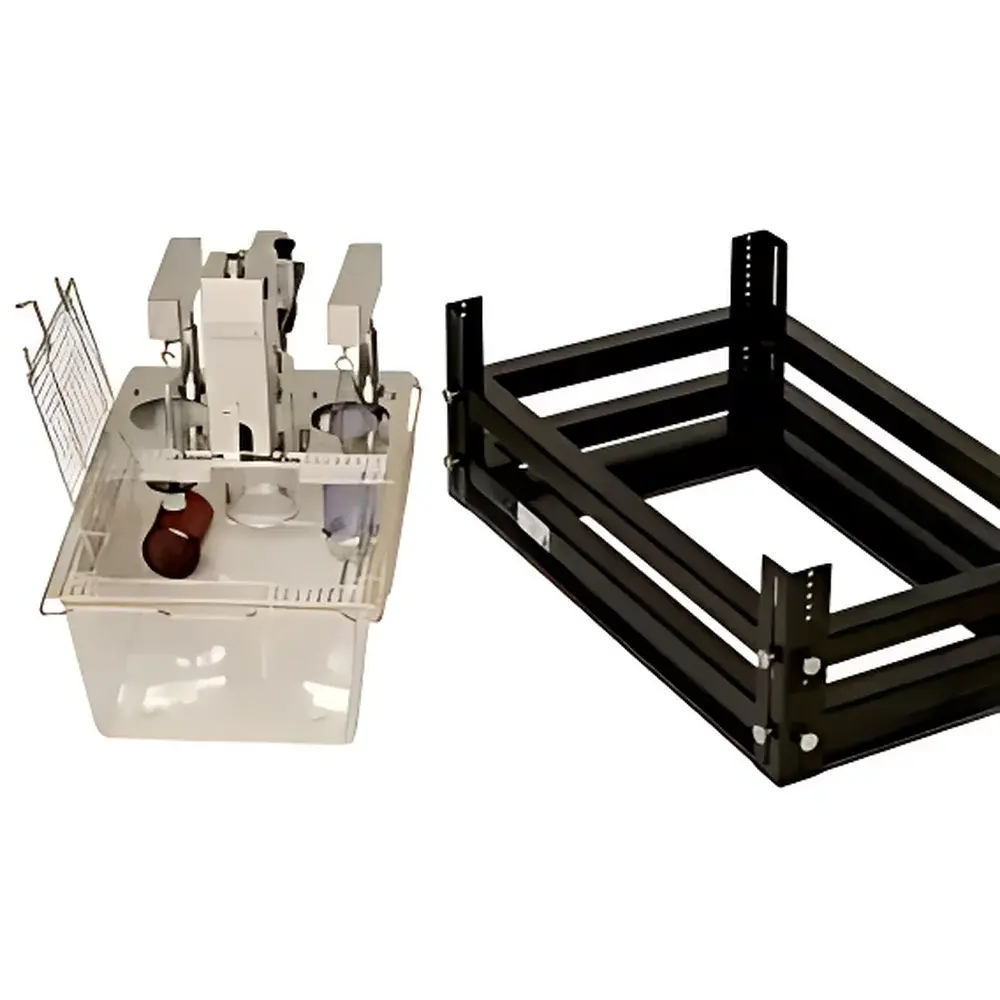
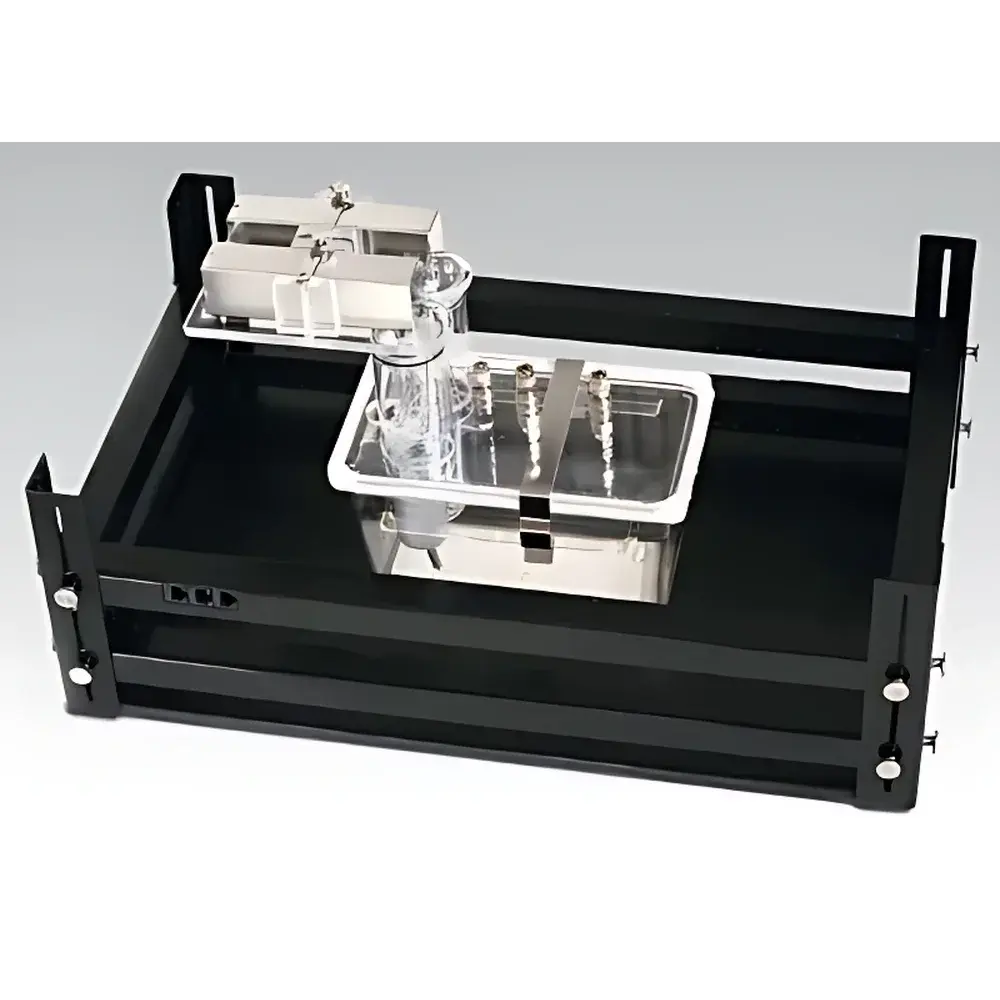
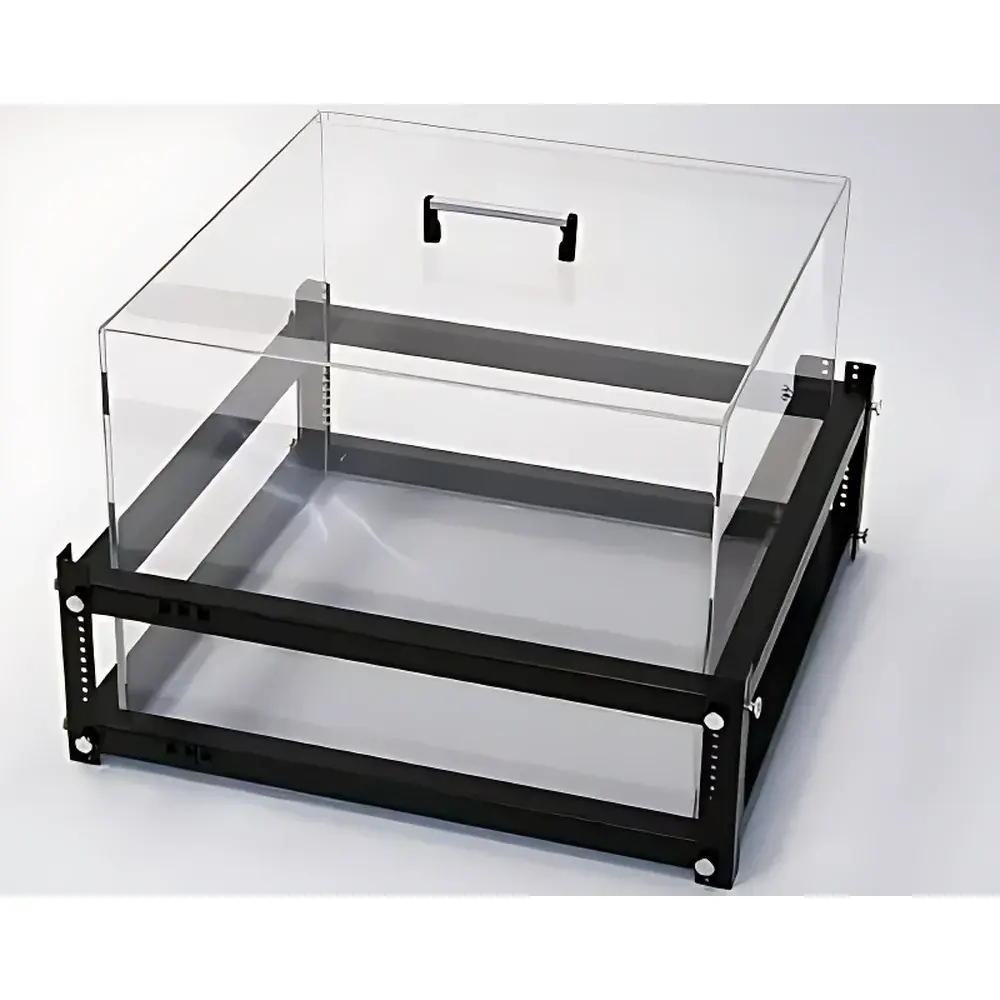
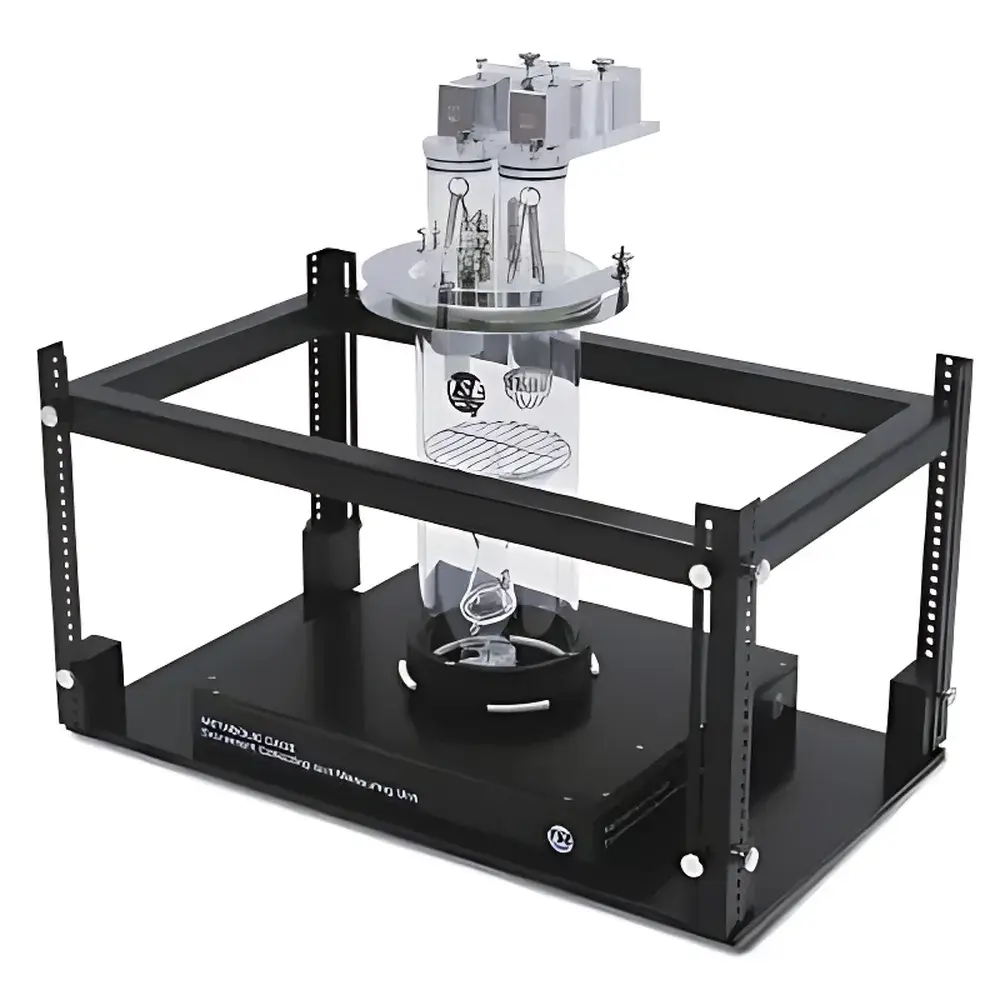
ActiMot2 Light-Beam Frame by TSE Systems
| Brand | TSE Systems |
|---|---|
| Origin | Germany |
| Model | ActiMot2 – Light-Beam Frames |
| Application | Automated 3D locomotor and fine-motor activity monitoring in home-cage environments |
| Compatibility | Standard mouse/rat housing cages, CaloCage (indirect calorimetry), PhenoCage (metabolic phenotyping), PhenoMaster笼 systems |
| Calibration | Factory-calibrated |
| Detection Principle | Dual-mode infrared beam interruption (coarse locomotion + fine-motion discrimination) with configurable dead time and spatial zoning |
| Spatial Resolution | Adjustable frame geometry supporting multiple cage footprints (e.g., 20 × 20 cm to 40 × 40 cm) |
| Temporal Resolution | ≥100 Hz beam-sampling rate per channel |
| Sensor Architecture | Non-contact, solid-state IR emitter/detector pairs arranged orthogonally along X, Y, and Z axes |
| Environmental Robustness | EMI-shielded, ambient-light-immune optics |
Overview
The ActiMot2 Light-Beam Frame is a high-fidelity, non-invasive behavioral monitoring system engineered for longitudinal, home-cage assessment of spontaneous motor activity in rodents. Designed and manufactured in Germany by TSE Systems—a leader in integrated preclinical phenotyping platforms—the system employs a three-dimensional orthogonal array of infrared (IR) emitter-detector pairs to precisely map beam interruptions across the X, Y, and Z axes surrounding standard rodent housing cages. Unlike video-based tracking, which suffers from occlusion, shadow artifacts, and computational latency, the ActiMot2 relies on deterministic optical beam-break logic with microsecond-level timing resolution. Each beam interruption is classified in real time as either coarse locomotion (e.g., ambulation, rearing) or fine motor activity (e.g., grooming, head movements, tremor-like motions), using programmable inter-beam dead-time thresholds to suppress spurious signals from tail flicks or cage scratching. The system operates without physical contact, requires no animal tagging or marker application, and maintains full functionality inside environmentally controlled enclosures—including those integrated with indirect calorimetry (CaloCage), comprehensive metabolic monitoring (PhenoCage), or fully automated phenotyping suites (PhenoMaster).
Key Features
- True 3D spatial mapping: Independent X-, Y-, and Z-axis beam layers enable volumetric reconstruction of movement trajectories and posture-related metrics (e.g., vertical rearing frequency, horizontal path length, dwell time in defined zones).
- Configurable spatial zoning: Users define custom regions—such as center vs. periphery—within the cage footprint to quantify anxiety-related behavior (e.g., thigmotaxis) analogous to open-field test paradigms.
- Dual-threshold motion discrimination: Adjustable dead-time parameters allow separation of sustained locomotion from transient micro-movements, improving specificity in models of Parkinsonism, dystonia, or sedation.
- Zero-calibration architecture: Factory-aligned optical paths and temperature-compensated photodiodes eliminate routine recalibration—critical for multi-site studies and long-term chronic experiments.
- Vivarium-ready integration: Compatible with standard IVC cages, ventilated rack systems, and advanced phenotyping modules including PhenoMaster, CaloCage, and PhenoCage, enabling concurrent acquisition of activity, energy expenditure, respiratory exchange ratio (RER), and circadian rhythm data.
- Real-time signal validation: Persistent beam obstruction (e.g., due to bedding accumulation or sensor contamination) is automatically flagged and excluded from analysis, ensuring data integrity without manual curation.
Sample Compatibility & Compliance
The ActiMot2 Light-Beam Frame supports standard mouse (e.g., C57BL/6, BALB/c) and rat (e.g., Sprague-Dawley, Wistar) strains housed in transparent polycarbonate or acrylic cages ranging from 20 × 20 cm to 40 × 40 cm floor area. It accommodates both single-housed and group-housed configurations, provided cage geometry permits unobstructed IR transmission. The system meets ISO 17025-aligned design principles for metrological traceability and is routinely deployed in GLP-compliant toxicology and pharmacokinetic studies. While not a medical device, its output metrics—including total beam breaks, zone transitions, vertical event counts, and temporal bout analysis—are referenced in peer-reviewed protocols aligned with NIH Behavioral Core Facility standards and OECD Test Guidelines 426 (Neurotoxicity Study) and 429 (Skin Sensitization). Data export formats (CSV, HDF5) support audit trails compliant with FDA 21 CFR Part 11 when used within validated LIMS or ELN ecosystems.
Software & Data Management
Acquisition and analysis are managed via TSE’s Phenomaster Suite software (v6.5+), which provides synchronized, time-stamped event logging across all connected modules. Beam-break events are timestamped at ≤10 ms resolution and aggregated into user-defined epochs (e.g., 1-min bins, circadian hours, or drug-administration windows). Built-in algorithms compute over 40 validated behavioral descriptors—including ambulatory distance, stereotypy index, rest-activity fragmentation, and diurnal amplitude—without reliance on machine learning black boxes. Raw binary logs are stored in compressed HDF5 containers with embedded metadata (cage ID, animal RFID, environmental conditions), enabling reproducible reprocessing. Export options include ANSI-compliant CSV for statistical packages (R, SAS, GraphPad Prism) and API-accessible REST endpoints for integration with institutional data warehouses or FAIR-aligned repositories.
Applications
- Neuropharmacology: Quantifying dose-dependent suppression or potentiation of locomotor activity following CNS-active compounds (e.g., dopaminergic agonists, GABA modulators, NMDA antagonists).
- Circadian biology: Long-term (>7-day) monitoring of free-running activity rhythms under constant darkness or light-cycle shifts, with automatic periodogram and chi-square period analysis.
- Genetic phenotyping: High-throughput screening of transgenic/knockout lines for hypoactivity, hyperkinesia, or abnormal gait patterns in home-cage settings.
- Toxicology & safety pharmacology: Detection of subtle motor deficits in repeat-dose studies where traditional observational scoring lacks sensitivity.
- Metabolic phenotyping: Correlating spontaneous activity with energy expenditure (VO₂, VCO₂), feeding behavior, and core body temperature in CaloCage/PhenoCage integrations.
- Aging research: Tracking age-related declines in fine-motor coordination and exploratory drive independent of handling stress.
FAQ
Can the ActiMot2 be used with opaque or metal-walled cages?
No—optical beam transmission requires line-of-sight between paired emitters and detectors. Only transparent or IR-permissive cage materials (e.g., polycarbonate, acrylic, specific PETG blends) are supported.
Is synchronization with EEG/EMG possible?
Yes—via TTL pulse input/output ports, the ActiMot2 can be hardware-triggered alongside electrophysiology systems for event-locked analysis of motor onset relative to neural oscillations.
How is data validated across laboratories?
TSE provides standardized reference datasets (e.g., “PhenoTest” benchmark suite) and participates in international inter-laboratory comparison studies coordinated through the International Mouse Phenotyping Consortium (IMPC).
Does the system require special power or cooling infrastructure?
No—it operates on standard 100–240 VAC input and generates negligible heat; no dedicated HVAC or UPS is required beyond typical vivarium specifications.
Can beam frames be retrofitted to existing PhenoMaster installations?
Yes—ActiMot2 is a modular add-on compatible with all PhenoMaster generations (v3.0 and later) via the TSE Bus interface and firmware update.




