
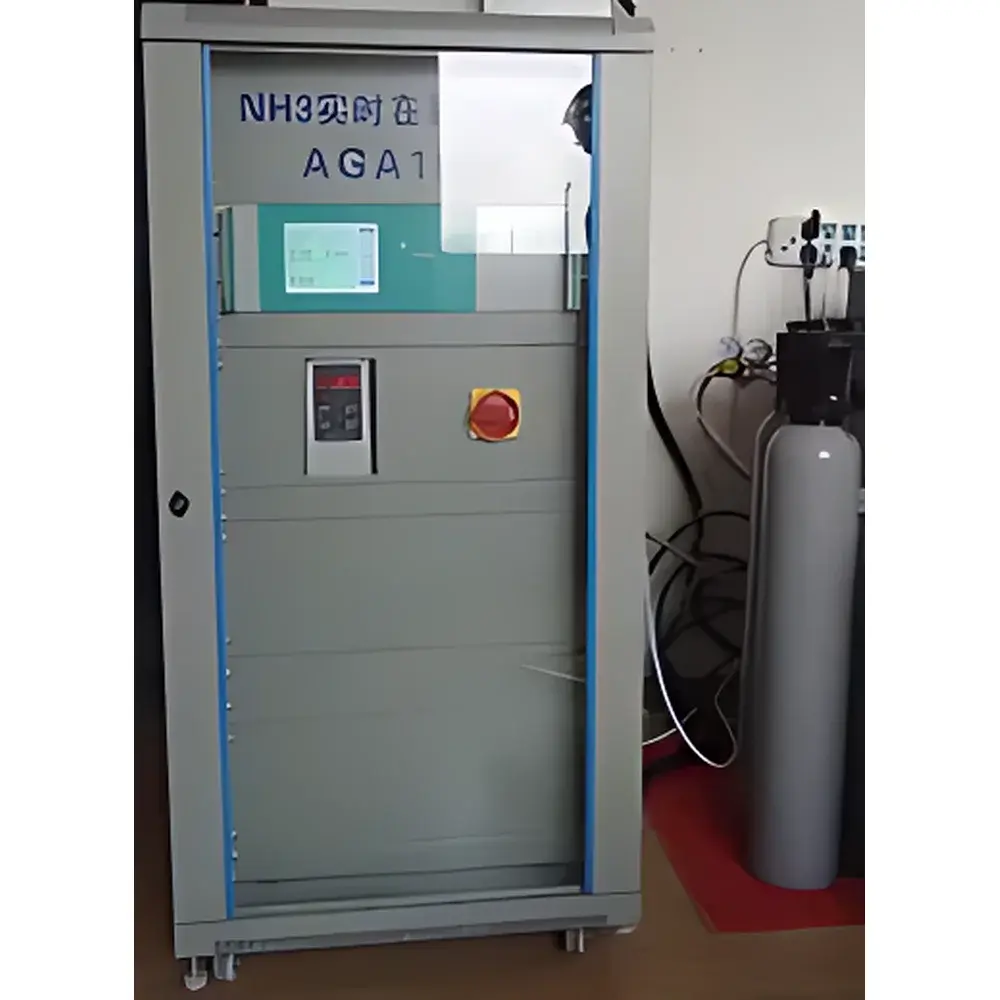
AGA1000 Heated Ammonia Analyzer with FTUV Spectroscopy
| Key | Origin: Fujian, China |
|---|---|
| Manufacturer Type | Authorized Distributor |
| Origin Category | Domestic (China) |
| Model | AGA1000 |
| Pricing | Available Upon Request |
Overview
The AGA1000 Heated Ammonia Analyzer is a high-performance, in-situ ultraviolet absorption spectrometer engineered for continuous, selective, and interference-resistant quantification of ammonia (NH₃) in hot, humid, or condensable gas streams. It employs Fast Fourier Transform Ultraviolet (FTUV) spectroscopy — a derivative of differential optical absorption spectroscopy (DOAS) — to resolve NH₃ concentration by analyzing characteristic absorption features in the 190–220 nm spectral range. Unlike chemiluminescence or electrochemical methods, FTUV enables direct, real-time measurement without catalytic conversion, eliminating cross-sensitivity to NO, NO₂, SO₂, CO, CO₂, O₂, N₂, and H₂O vapor. The integrated 190 °C heated optical path — encompassing sample cell, flow manifold, and inlet tubing — prevents NH₃ adsorption and condensation, ensuring metrological integrity across variable dew points and low-temperature exhaust conditions.
Key Features
- Heated optical architecture: Full-path heating to 190 °C maintains gas-phase integrity and eliminates wall losses during sampling of wet or low-temperature flue gases.
- FTUV core engine: High-resolution UV absorption spectroscopy with real-time FFT-based spectral deconvolution for unambiguous NH₃ identification and quantification.
- Ultra-fast response: T₉₀ ≤ 2 seconds enabled by high-speed digital signal processing (DSP) and optimized gas exchange dynamics in the heated flow cell.
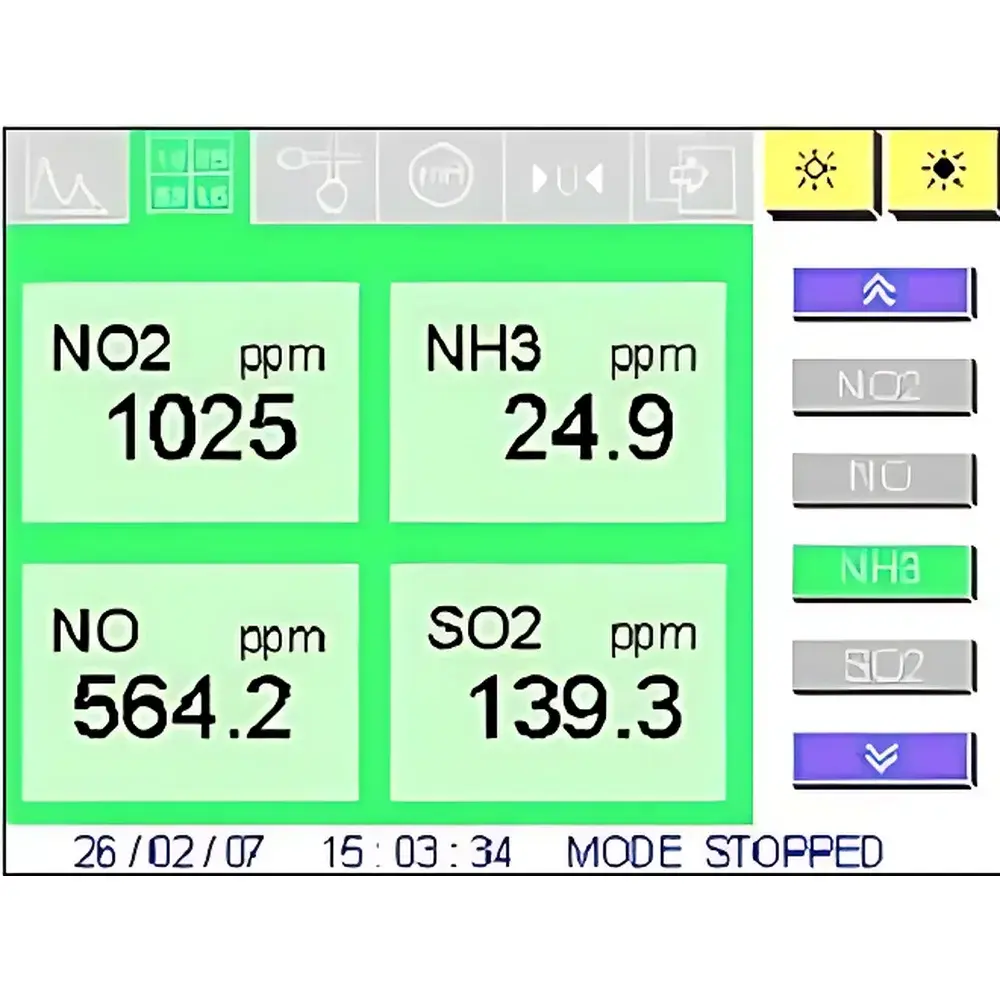
- Multi-gas capability: Simultaneous quantification of NH₃, NO, NO₂, and SO₂ using dedicated spectral algorithms — NO via peak-area integration, NO₂ via dual-wavelength ratio, SO₂ via FTUV fitting.
- Self-compensating metrology: Integrated mass flow sensor, temperature transducer, and pressure transducer enable automatic stoichiometric correction per ISO 14956 and EPA Method 6C requirements.
- Low lifecycle cost: UV lamp lifetime exceeds 10 years under continuous operation; no consumables, catalysts, or converter furnaces required.
Sample Compatibility & Compliance
The AGA1000 is validated for use with stack gases, SCR/SNCR injection zones, diesel and natural gas engine exhaust, and industrial process streams containing up to 30% H₂O(v), particulate loadings < 5 mg/m³, and operating temperatures from –20 °C (ambient inlet) to 200 °C (heated path). Its design conforms to key regulatory frameworks including EN 15267-3 (QAL1 certification readiness), EPA Performance Specification 15 (PS-15) for NH₃ CEMS, and ISO 14956:1999 for ambient air quality measurement uncertainty assessment. Zero and span drift (<2% FS/24 h) and linearity (±1% FS) meet GLP data integrity thresholds for compliance reporting.
Software & Data Management
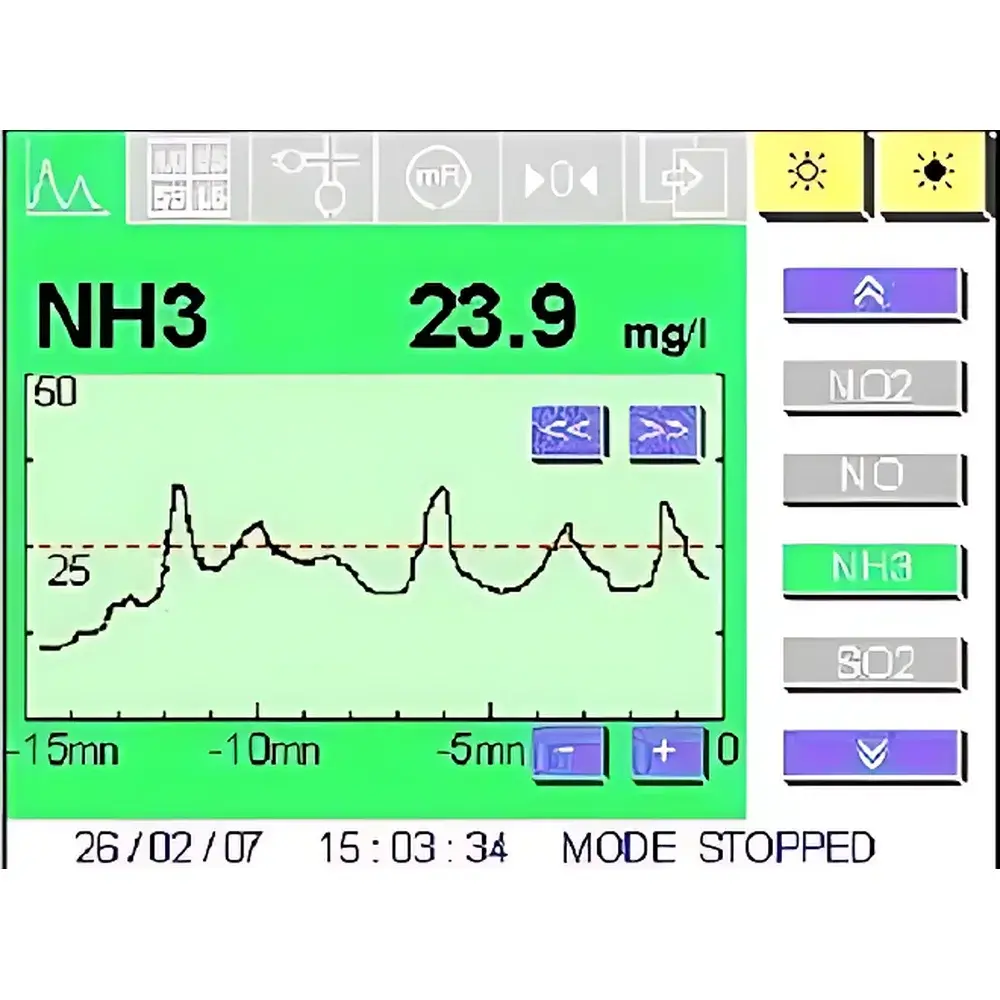
Embedded firmware supports dual communication protocols: ASCII-based AK protocol for legacy SCADA integration and Modbus RTU over RS232 for PLC interfacing. All raw spectra, calibration logs, diagnostic flags, and environmental compensation parameters are timestamped and stored locally with 30-day circular buffer retention. Optional PC software provides spectral visualization, multi-point calibration management, audit trail export (CSV), and automated report generation compliant with 21 CFR Part 11 requirements when deployed with user authentication and electronic signature modules.
Applications
- Continuous Emission Monitoring Systems (CEMS): Real-time NH₃ slip measurement downstream of Selective Catalytic Reduction (SCR) and Selective Non-Catalytic Reduction (SNCR) systems in power plants and waste incinerators.
- Engine Development & Certification: Transient NH₃ quantification during WLTC, RDE, and FTP-75 test cycles for Euro VI, EPA Tier 4, and China VI emission compliance validation.
- Process Optimization: Closed-loop feedback control of reagent dosing in denitrification units, where sub-ppm NH₃ stability directly impacts catalyst longevity and NOₓ removal efficiency.
- Environmental Monitoring: Fugitive emission detection at fertilizer production facilities and wastewater treatment plants under ISO 14064-2 verification protocols.
FAQ
Does the AGA1000 require external gas conditioning or dilution systems?
No — its fully heated sample path (190 °C) and FTUV selectivity eliminate the need for chillers, permeation dryers, or catalytic scrubbers typically required by NDIR or electrochemical analyzers.
Can it operate reliably in high-humidity exhaust streams?
Yes — water vapor does not interfere with the NH₃ absorption band in the UV region; the heated path ensures all moisture remains gaseous and does not contribute to spectral baseline drift.
What calibration standards are supported?
Certified NH₃-in-N₂ permeation tubes or dynamic dilution systems traceable to NIST SRM 2690 are recommended; zero gas must be hydrocarbon-free synthetic air or nitrogen.
Is remote diagnostics and firmware update capability available?
Firmware updates are performed via RS232; remote monitoring of operational status, lamp intensity, and spectral SNR is accessible through Modbus register mapping.
How is measurement traceability maintained?
Each unit ships with a factory calibration certificate referencing ISO/IEC 17025-accredited reference gas measurements; users may perform field validation using certified span gases per ISO 17043 proficiency guidelines.



