
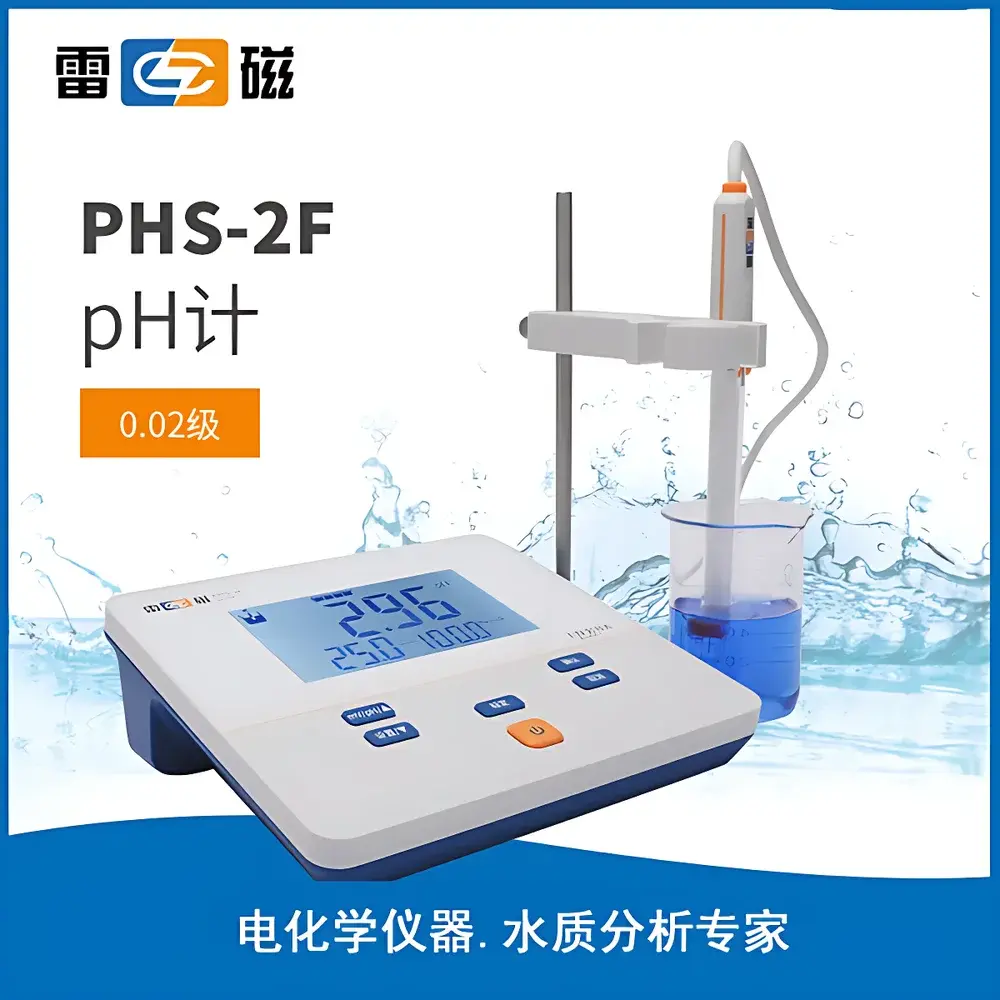
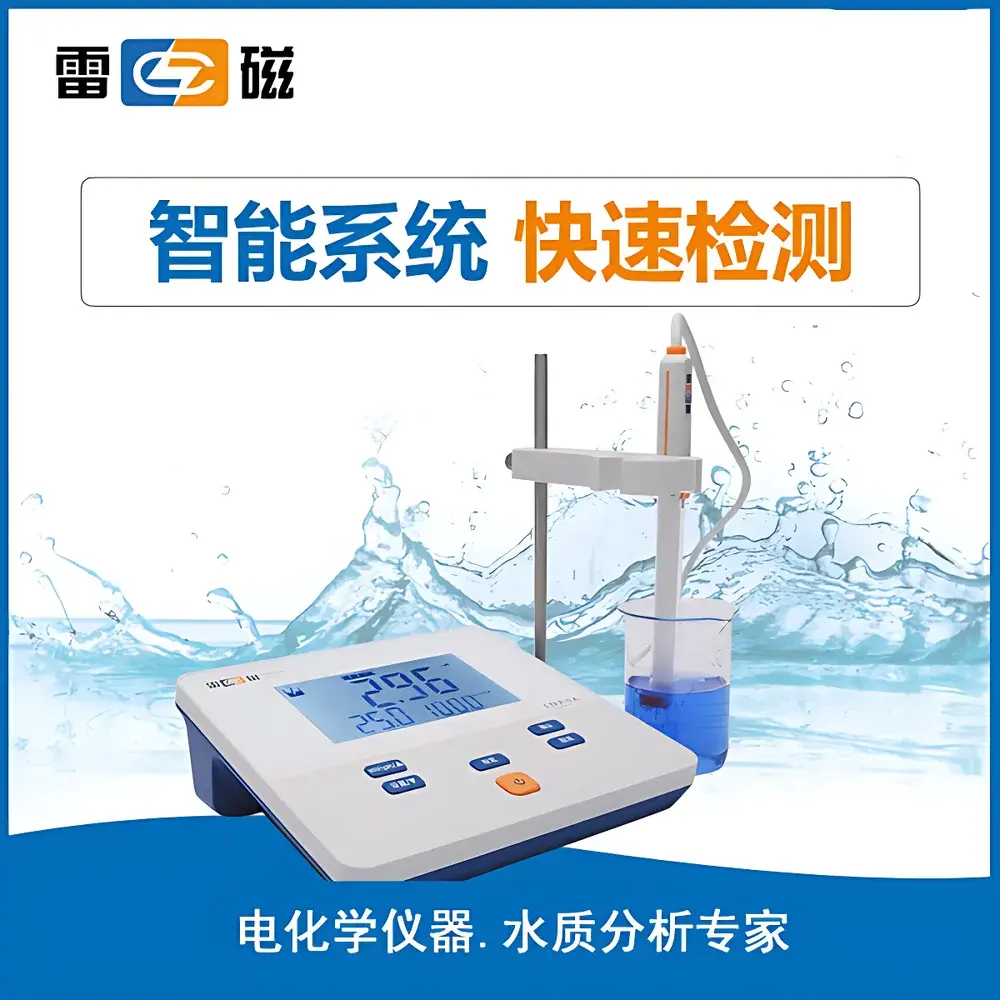
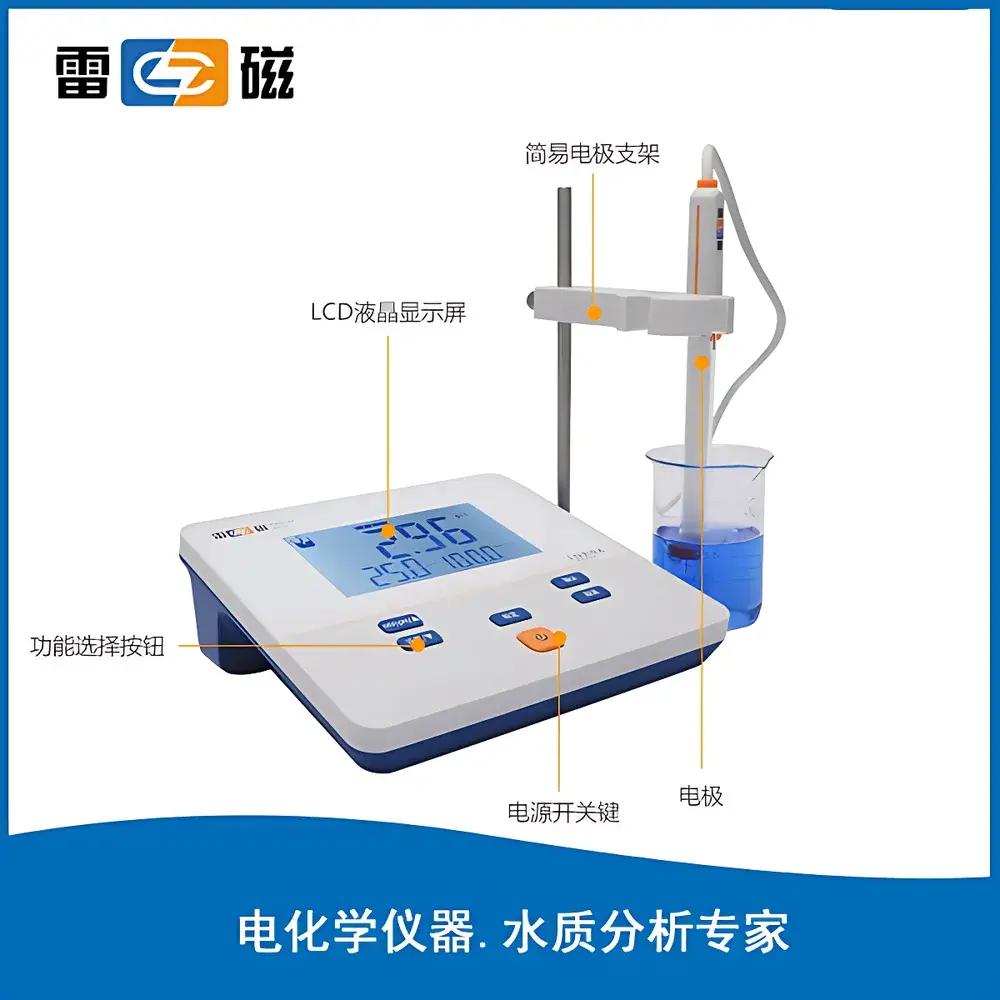
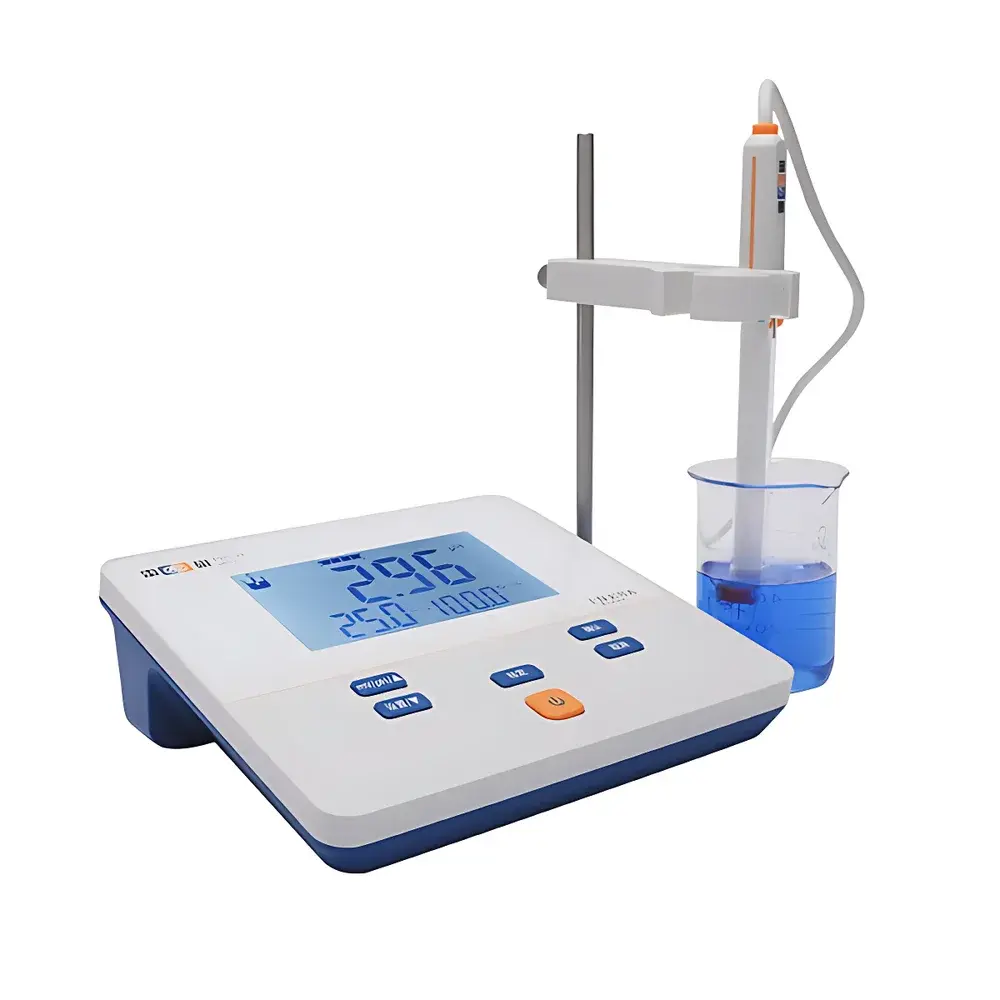
Leici PHS-2F Benchtop pH Meter
| Brand | Leici |
|---|---|
| Origin | Shanghai, China |
| Instrument Type | Benchtop |
| Parameter Type | Single-parameter (pH/mV) |
| Measurement Range | 0.00–14.00 pH / −1400 to +1400 mV |
| Resolution | 0.01 pH / 1 mV |
| Accuracy | ±0.01 pH ±1 digit / ±0.1% FS (mV) |
| Stability | (±0.01 pH ±1 digit)/3 h |
| Temperature Compensation | Manual |
| Calibration Buffers | pH 4.01, 7.00, and 9.18 standard solutions |
| Display | Segment LCD (large-screen, high-contrast) |
| Power Supply | AC 220 V ±10%, 50 Hz |
| Dimensions (L×W×H) | 290 × 210 × 95 mm |
| Weight | 1.5 kg |
Overview
The Leici PHS-2F is a precision benchtop pH meter engineered for reliable, repeatable measurement of hydrogen ion activity in aqueous solutions. Operating on the fundamental principle of potentiometric measurement—where the electromotive force (EMF) generated between a glass pH electrode and a reference electrode is linearly proportional to solution pH—the PHS-2F delivers calibrated voltage-to-pH conversion per the Nernst equation (−59.16 mV/pH at 25 °C). Designed for routine laboratory use in academic, industrial, and quality control environments, this instrument meets the functional requirements of ISO 7888 (water quality — determination of pH), ASTM D1293 (standard test method for pH of water), and supports GLP-compliant documentation when integrated with external logging systems. Its robust analog front-end architecture ensures low-noise signal conditioning, while the fixed-slope calibration algorithm eliminates drift-related interpolation errors common in low-cost digital meters.
Key Features
- Large-segment LCD display with high-contrast, glare-resistant layout—optimized for readability under varied ambient lighting conditions in teaching labs and production QC rooms.
- Manual temperature compensation (MTC) via front-panel adjustment—enables correction for solution temperature deviations from 25 °C using standardized Nernst slope coefficients.
- Dual-mode operation: simultaneous pH and millivolt (ORP) measurement—supporting both acidity/alkalinity assessment and redox potential analysis without mode switching delays.
- Two-point or single-point calibration protocol—compatible with internationally certified buffer standards (pH 4.01, 7.00, 9.18 at 25 °C) traceable to NIST SRM references.
- Stable analog circuitry with <0.3 mV/h input bias drift—minimizing zero-point drift during extended measurements typical in environmental water monitoring or fermentation process checks.
- Compact benchtop form factor (290 × 210 × 95 mm) and lightweight design (1.5 kg)—facilitating repositioning across shared lab benches without compromising mechanical stability.
Sample Compatibility & Compliance
The PHS-2F is validated for direct measurement of clear, low-turbidity aqueous samples including distilled/deionized water, buffer solutions, tap water, wastewater effluents, and mild electrolyte solutions (e.g., saline, dilute acid/base titrants). It is not intended for non-aqueous solvents, highly viscous media, or suspensions containing particulates >5 µm that may clog the reference junction. Electrode compatibility follows DIN 19262 and IUPAC-recommended configurations: standard BNC input accepts all Leici-compatible combination pH electrodes (e.g., E-201-C) and general-purpose reference electrodes. The instrument complies with GB/T 11165–2005 (Chinese national standard for laboratory pH meters) and satisfies essential safety requirements per IEC 61010-1:2010 for electrical equipment used in measurement, control, and laboratory applications.
Software & Data Management
As a standalone analog-digital hybrid instrument, the PHS-2F does not feature embedded data logging or USB/Bluetooth connectivity. However, its stable mV output (via rear-panel analog output port, optional accessory) enables integration with third-party DAQ systems (e.g., National Instruments USB-6009), chart recorders, or SCADA platforms for continuous pH trend recording. When used in regulated environments—including pharmaceutical water system validation or food processing line monitoring—the device supports audit-ready workflows when paired with controlled calibration logs, operator sign-offs, and manual entry into LIMS or Excel-based QA templates compliant with FDA 21 CFR Part 11 (electronic records/signatures) via procedural controls—not firmware-level enforcement.
Applications
- Academic instruction: Undergraduate chemistry and environmental science laboratories for teaching pH theory, calibration methodology, and buffer behavior.
- Industrial QC: Routine verification of boiler feedwater, cooling tower cycles, and rinse bath pH in electroplating or semiconductor cleaning processes.
- Environmental testing: Field-deployable lab verification of surface water, groundwater, and treated effluent per EPA Method 150.1 and ISO 10523.
- Food & beverage: Monitoring pH stability during dairy fermentation (yogurt, cheese), brewing mash adjustments, and juice preservation parameter tracking.
- Pharmaceutical water systems: Conductivity-coupled pH spot checks in purified water (PW) and water-for-injection (WFI) distribution loops per USP .
FAQ
Does the PHS-2F support automatic temperature compensation (ATC)?
No—it provides manual temperature compensation only. Users must measure sample temperature separately and adjust the TC knob accordingly before reading.
Can it be used with non-Leici electrodes?
Yes, provided the electrode uses a standard BNC connector and operates within the input impedance tolerance (>1012 Ω) specified in the user manual.
Is the instrument suitable for ISO/IEC 17025-accredited testing?
It may serve as a secondary reference in accredited labs when operated under documented procedures, calibrated traceably to national standards, and verified per internal SOPs—but it lacks built-in audit trail or electronic signature capabilities required for full compliance.
What is the recommended recalibration frequency?
Per ISO/IEC 17025 and ASTM E70 guidelines, recalibrate before each analytical batch or at minimum every 2 hours during continuous use; verify with a mid-range check standard (e.g., pH 7.00) between calibrations.
Does it meet IP rating requirements for wet-lab environments?
The PHS-2F has no formal IP rating; it is designed for dry-bench use only—avoid direct liquid contact, splashes, or high-humidity enclosures without protective housing.





