
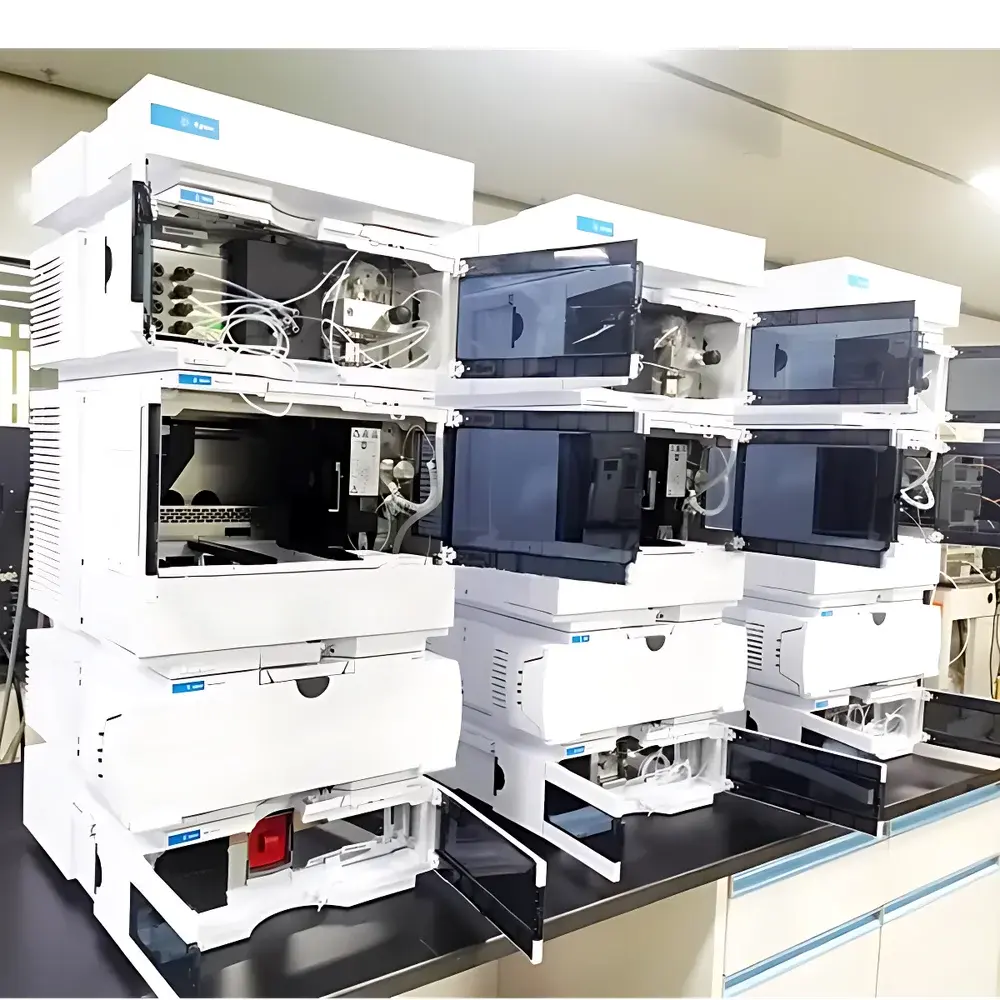
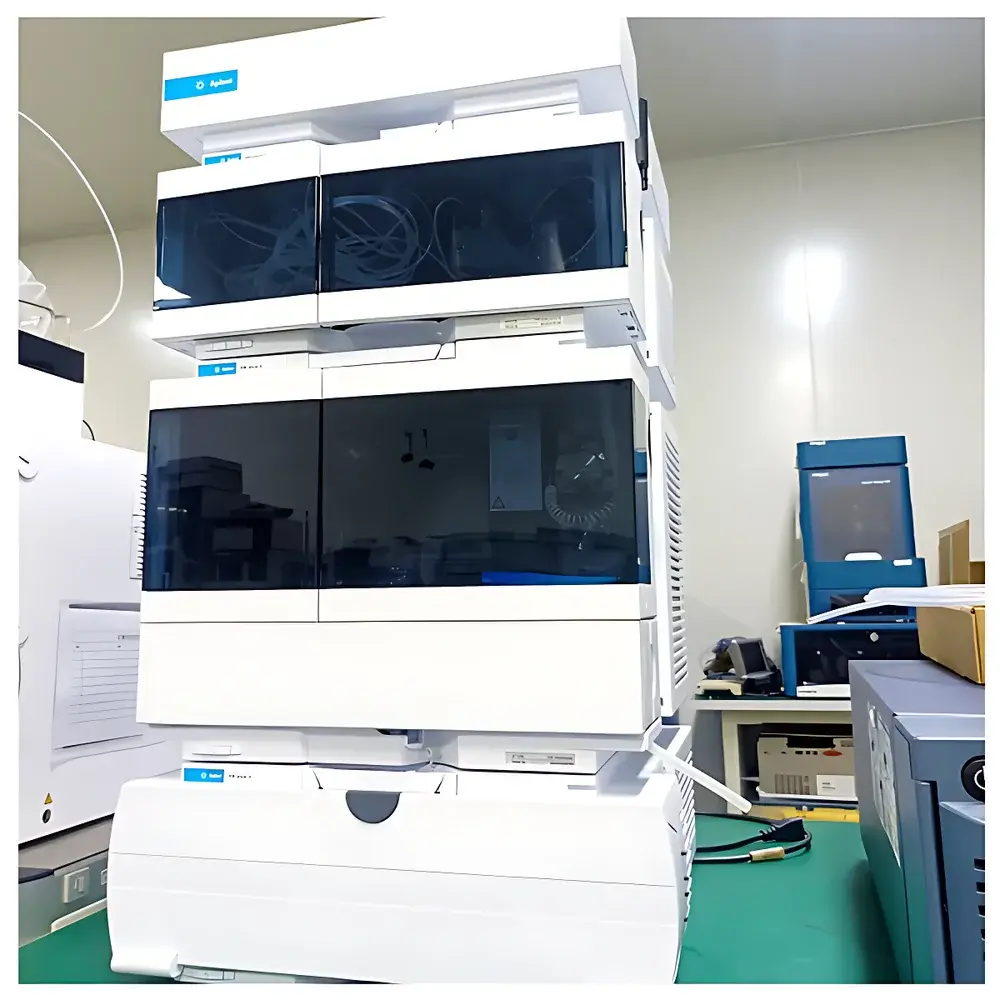
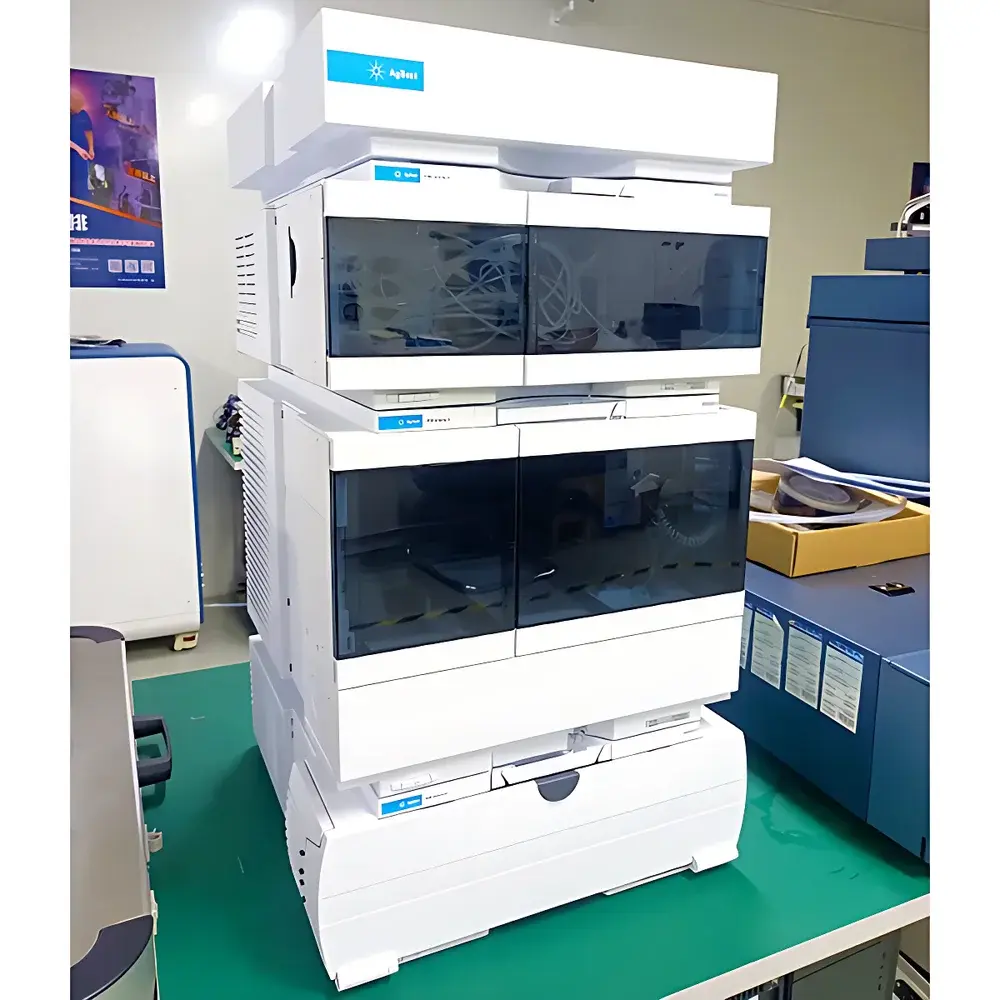
Agilent 1260 Infinity II Analytical Liquid Chromatograph
| Brand | Agilent Technologies |
|---|---|
| Origin | Singapore |
| Manufacturer Type | Authorized Distributor |
| Origin Category | Imported |
| Model | 1260 Infinity II |
| Instrument Type | Conventional High-Performance Liquid Chromatograph (HPLC) |
| Application Scope | General-Purpose Analytical & Semi-Preparative Separation |
| Flow Rate Range | 0.001–10 mL/min |
| Maximum Operating Pressure | 40 MPa |
| Flow Accuracy | ±0.1% RSD |
| Injection Volume Range | 0.1–100 µL |
| Autosampler Capacity | 80 positions |
| Column Oven Temperature Range | 20–80 °C |
| UV Wavelength Range | 190–900 nm (standard DAD or VWD) |
| Data Acquisition Rate | Up to 100 Hz |
Overview
The Agilent 1260 Infinity II Analytical Liquid Chromatograph is a modular, high-reliability HPLC system engineered for precision, reproducibility, and seamless integration into regulated and research-intensive laboratory environments. Built upon Agilent’s InfinityLab platform architecture, it employs dual-piston positive displacement pumping technology with active solvent compressibility compensation to deliver exceptional flow stability across the full operational range (0.001–10 mL/min) and pressure envelope (up to 40 MPa). Its design adheres to core chromatographic principles—gradient elution, isocratic separation, and column temperature control—to ensure retention time reproducibility (<0.05 min RSD) and peak shape fidelity under both analytical and semi-preparative conditions. The system supports standard 2.1 mm, 4.6 mm, and 9.4 mm i.d. columns, enabling method transfer from UHPLC screening to milligram-scale purification without re-optimization. As a CE-marked, FDA-compliant instrument, it meets essential requirements for GLP and GMP workflows when configured with audit-trail-enabled software and electronic signature modules.
Key Features
- Modular infinity architecture allowing field-upgradable configurations—from basic isocratic analysis to fully automated semi-preparative purification with fraction collection
- Low-dispersion fluidic path featuring InfinityLab Quick Connect fittings, minimizing system dwell volume (<300 µL) and reducing peak broadening and carryover
- Thermostatically controlled column compartment (20–80 °C, ±0.15 °C stability) for retention time consistency across environmental fluctuations
- Variable-wavelength detector (VWD) or diode-array detector (DAD) with 190–900 nm spectral range and 100 Hz acquisition rate for high-resolution peak tracking and purity assessment
- Autosampler with 80-position tray capacity, 0.1–100 µL injection range, and programmable needle wash to maintain cross-contamination <0.005%
- Integrated fraction delay sensor technology for real-time synchronization between UV signal and physical fraction collection—critical for mass-directed or purity-triggered isolation
Sample Compatibility & Compliance
The 1260 Infinity II accommodates a broad spectrum of sample matrices—including pharmaceutical actives, natural product extracts, polymer additives, and environmental contaminants—without requiring hardware modification. Its solvent compatibility spans water, acetonitrile, methanol, THF, and chlorinated solvents (with appropriate seals), supporting reversed-phase, normal-phase, HILIC, and ion-exchange applications. System validation documentation aligns with ASTM E2631 (chromatographic system suitability), ISO/IEC 17025 (testing laboratory competence), and USP (chromatography). When operated with OpenLAB CDS ChemStation in 21 CFR Part 11-compliant mode, it provides full audit trail, user access control, and electronic signature support required for FDA submissions and quality control release testing.
Software & Data Management
OpenLAB CDS ChemStation serves as the unified control and data handling platform, offering intuitive method building, sequence scheduling, and real-time chromatogram visualization. It supports multi-instrument control (including optional integration with 6100-series single-quadrupole MS systems for mass-triggered fractionation), automated calibration curve generation, and customizable report templates compliant with ALCOA+ data integrity principles. Raw data are stored in vendor-neutral .D format, exportable to CSV, PDF, or CDF for third-party processing. Software validation packages—including IQ/OQ protocols and change control logs—are available to support laboratory qualification under GxP frameworks.
Applications
This system is routinely deployed in QC laboratories for assay validation and stability-indicating methods per ICH Q2(R2); in process R&D for impurity profiling and forced degradation studies; and in natural products labs for bioactivity-guided fractionation. Its scalability permits direct transition from analytical scouting (2.1 mm columns, 0.2–1 mL/min) to semi-preparative isolation (9.4 mm columns, up to 10 mL/min), eliminating method redevelopment delays. Coupling with a 6100-series LC/MS enables real-time m/z-based triggering of fraction collection—particularly valuable for isolating low-abundance metabolites or degradants obscured by matrix interferences.
FAQ
Is the Agilent 1260 Infinity II compatible with UHPLC columns?
Yes—when equipped with low-volume detectors, narrow-bore tubing, and appropriate pump seals, it supports sub-2 µm particle columns at pressures up to 40 MPa, though optimal performance is achieved with 1.8–3 µm particles.
Can it be upgraded to support mass-directed purification?
Yes—via integration with Agilent 6100-series single-quadrupole MS systems using MassHunter-controlled fraction collection modules.
What is the minimum system dwell volume achievable?
With optimized configuration (VWD, low-volume flow cell, 0.12 mm ID capillaries), dwell volume can be reduced to ≤280 µL, critical for gradient method transfer and early-eluting peak resolution.
Does it support regulatory-compliant electronic signatures?
Yes—when deployed with OpenLAB CDS ChemStation in 21 CFR Part 11 enforcement mode, including role-based permissions, audit trail logging, and digital signature binding.
How many fractions can be collected per run?
Up to 216 fractions in glass tubes (4 tube diameters) or 384 fractions across four 96-well plates—scalable via modular fraction collector expansion.






