
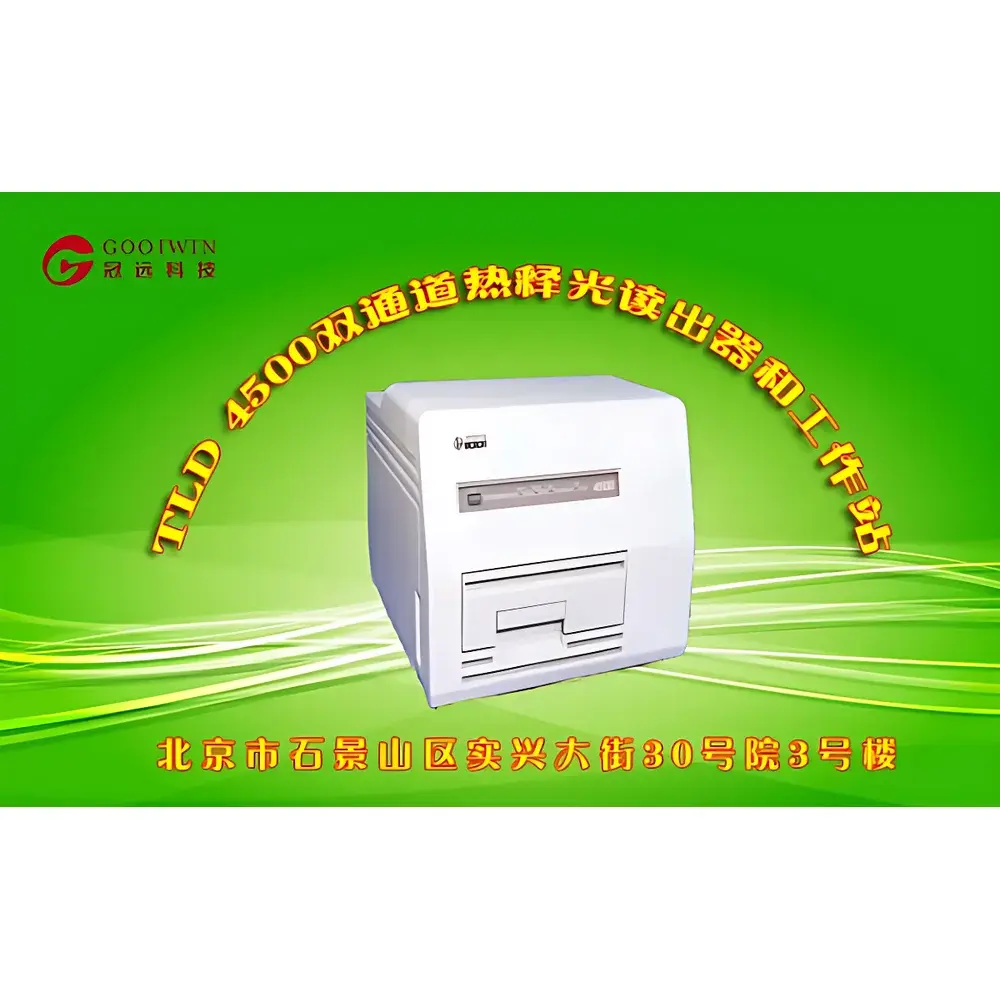
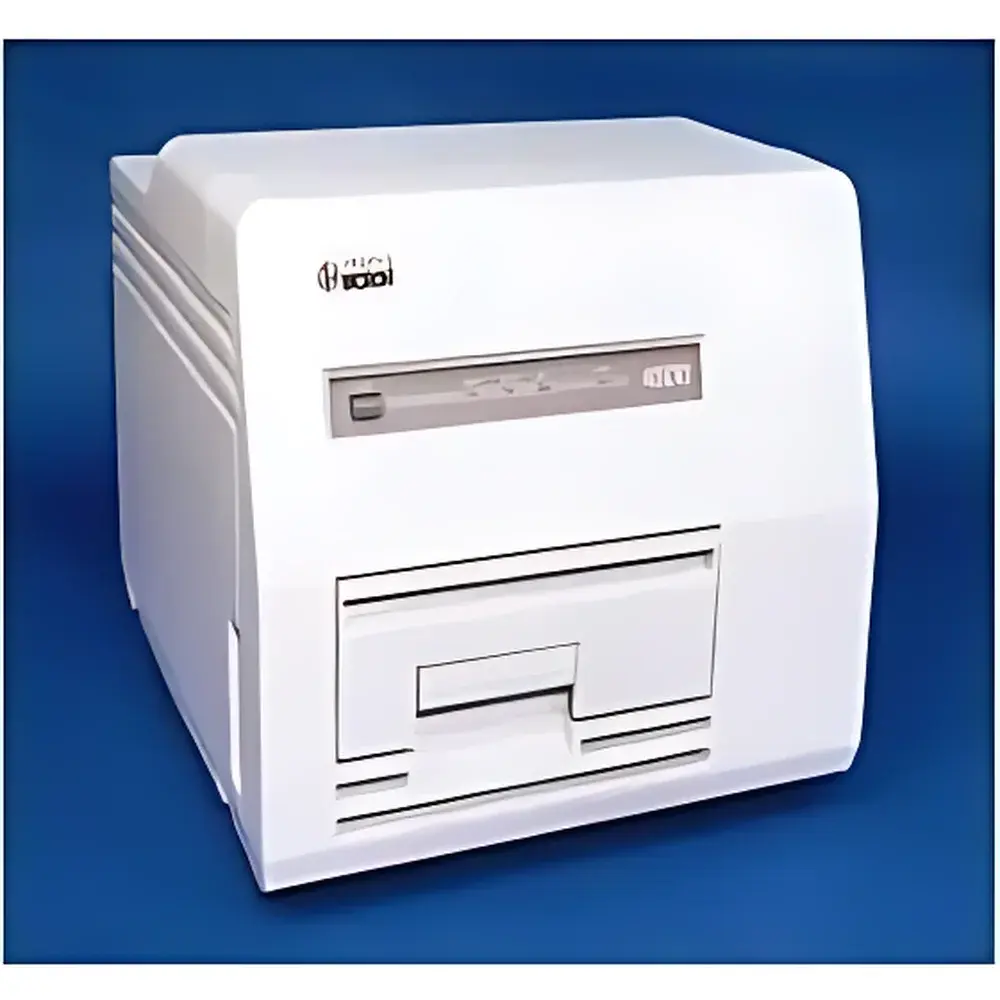
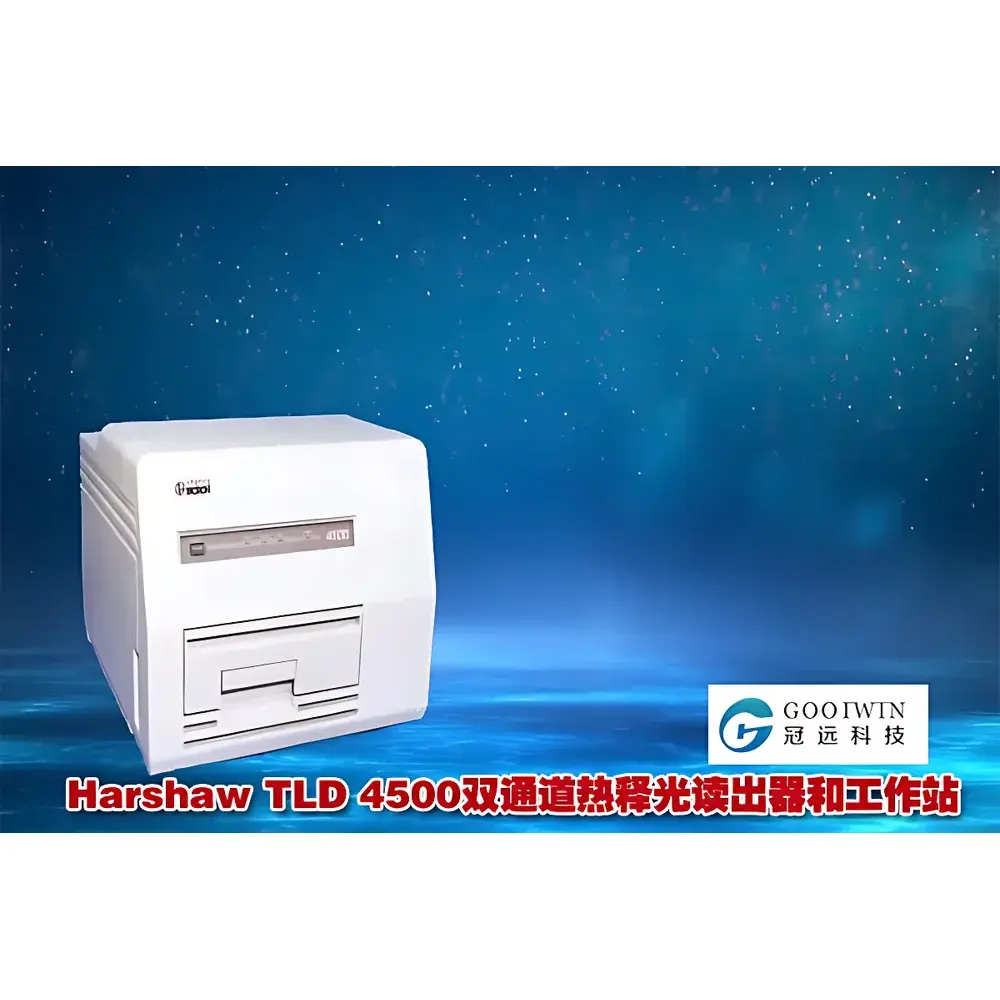

Harshaw TLD 4500 Dual-Channel Thermoluminescent Dosimeter Reader and Integrated Workstation
| Brand | UNION |
|---|---|
| Origin | USA |
| Manufacturer Type | Authorized Distributor |
| Origin Category | Imported |
| Model | TLD 4500 |
| Pricing | Available Upon Request |
Overview
The Harshaw TLD 4500 Dual-Channel Thermoluminescent Dosimeter Reader and Integrated Workstation is a precision-engineered instrument designed for quantitative, high-reproducibility thermoluminescence (TL) signal readout from solid-state dosimetric materials—including LiF:Mg,Ti (TLD-100), CaSO4:Dy, and Al2O3:C. Operating on the fundamental principle of thermally stimulated luminescence, the system measures photon emission intensity during controlled linear heating (typically 1–20 °C/s) following ionizing radiation exposure. The emitted light—proportional to absorbed dose—is detected via dual photomultiplier tubes (PMTs), enabling simultaneous or sequential readout of two independent sample positions with cross-channel normalization capability. The workstation integrates hardware control, thermal profiling, spectral filtering, and dose calculation into a single validated software environment compliant with ALARA-based radiation protection programs and regulatory audit requirements.
Key Features
- Dual-channel PMT detection architecture with independent gain calibration and dark-current compensation for inter-channel consistency
- Programmable heating profile: ramp rates from 0.5 to 30 °C/s, maximum temperature up to 300 °C, with ±0.5 °C thermal stability over full cycle
- Integrated glow curve deconvolution algorithm supporting peak separation (e.g., peaks 3, 4, 5 in LiF:Mg,Ti) for discrimination of low- and high-LET radiation components
- Onboard self-calibration using built-in calibrated light-emitting diodes (LEDs) and reference TL chips traceable to NIST SRM 2957
- Automatic annealing sequence execution (pre-read bake-out and post-read high-temperature reset) with configurable time/temperature profiles
- GLP-compliant operation log: timestamped records of all thermal cycles, PMT voltages, background counts, and user actions
Sample Compatibility & Compliance
The TLD 4500 supports standard planchet formats (e.g., 3.2 mm diameter discs, 1 cm × 1 cm chips, powder-loaded capsules) and accommodates both manual and automated sample trays. All TL materials—including oxide phosphors, fluorides, and sulfates—require pre-use annealing to erase residual signal and re-establish stable trap distribution; the system enforces strict thermal history control to ensure reproducible defect equilibration. The reader meets IEC 62387-1:2012 requirements for passive dosimetry systems and supports compliance with ISO/IEC 17025:2017 (calibration laboratories), ANSI N13.11–2022 (personnel dosimetry performance criteria), and EURADOS Technical Report No. 27 (TL dosimetry quality assurance). Dose reporting conforms to SI units (mGy, mSv) with optional conversion to legacy units (R, rad) via embedded correction factors per ICRU Report 51.
Software & Data Management
The Harshaw DOSIS™ v5.x software suite provides full lifecycle management—from sample registration and irradiation protocol assignment to glow curve analysis, batch calibration, and regulatory report generation. It supports multi-point and linear calibration curves using reference irradiations traceable to national metrology institutes (e.g., NIM China, NIST USA, PTB Germany). The software implements ASTM E1991-21-compliant uncertainty propagation for combined standard uncertainty (k=2), includes audit trail functionality compliant with FDA 21 CFR Part 11 (electronic signatures, event logging, data immutability), and exports dose results in CSV, XML, and PDF/A-2 formats suitable for LIMS integration and accreditation audits.
Applications
- Personnel and environmental dosimetry in nuclear power plants, research reactors, and radiotherapy facilities
- Quality assurance of diagnostic and therapeutic X-ray, gamma, and beta sources under ISO 14155 and IEC 61223-3-5
- Retrospective dose reconstruction in radiological incident investigations
- Space radiation monitoring using space-qualified TLD elements aboard satellites and crewed missions
- Calibration validation of reference-class ionization chambers and secondary standard dosimeters
FAQ
What annealing protocols are recommended for LiF:Mg,Ti (TLD-100) prior to readout?
Standard protocol: 400 °C for 1 hour followed by rapid cooling to room temperature; alternative low-temperature anneal (100 °C for 2 hours) may be used for routine reprocessing.
How does the TLD 4500 handle dose nonlinearity at high exposure levels?
The system applies supralinear correction algorithms based on material-specific empirical models (e.g., Hoogenboom’s extended track structure model) and enables user-defined polynomial fitting for doses exceeding 10 Gy.
Is the workstation compatible with third-party TL materials not supplied by Harshaw?
Yes—provided the material exhibits measurable TL output in the 350–650 nm spectral range and adheres to standard thermal stability specifications; users must define custom sensitivity factors and glow curve templates.
Does the system support remote operation and networked data archiving?
Yes—via secure TLS-enabled Ethernet connection; supports centralized database storage using SQL Server or PostgreSQL with role-based access control (RBAC) and automated backup scheduling.
Related Products





