
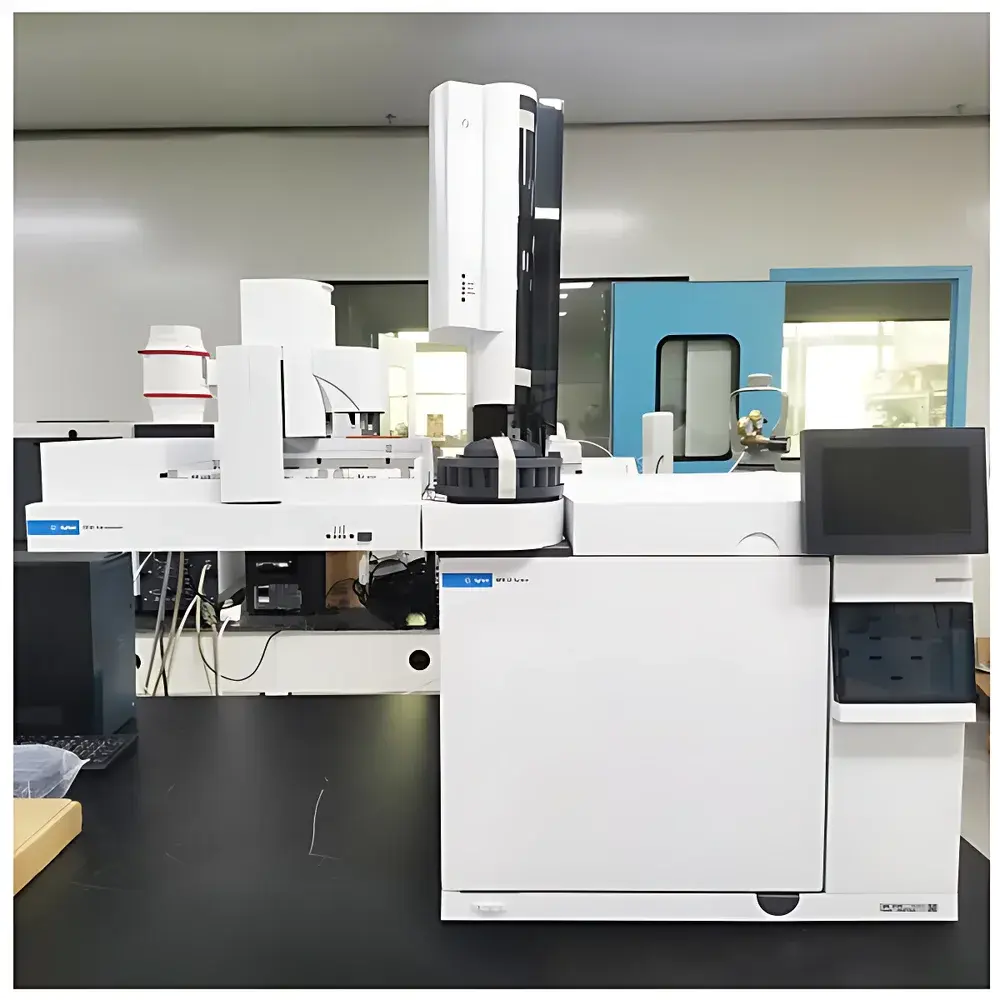
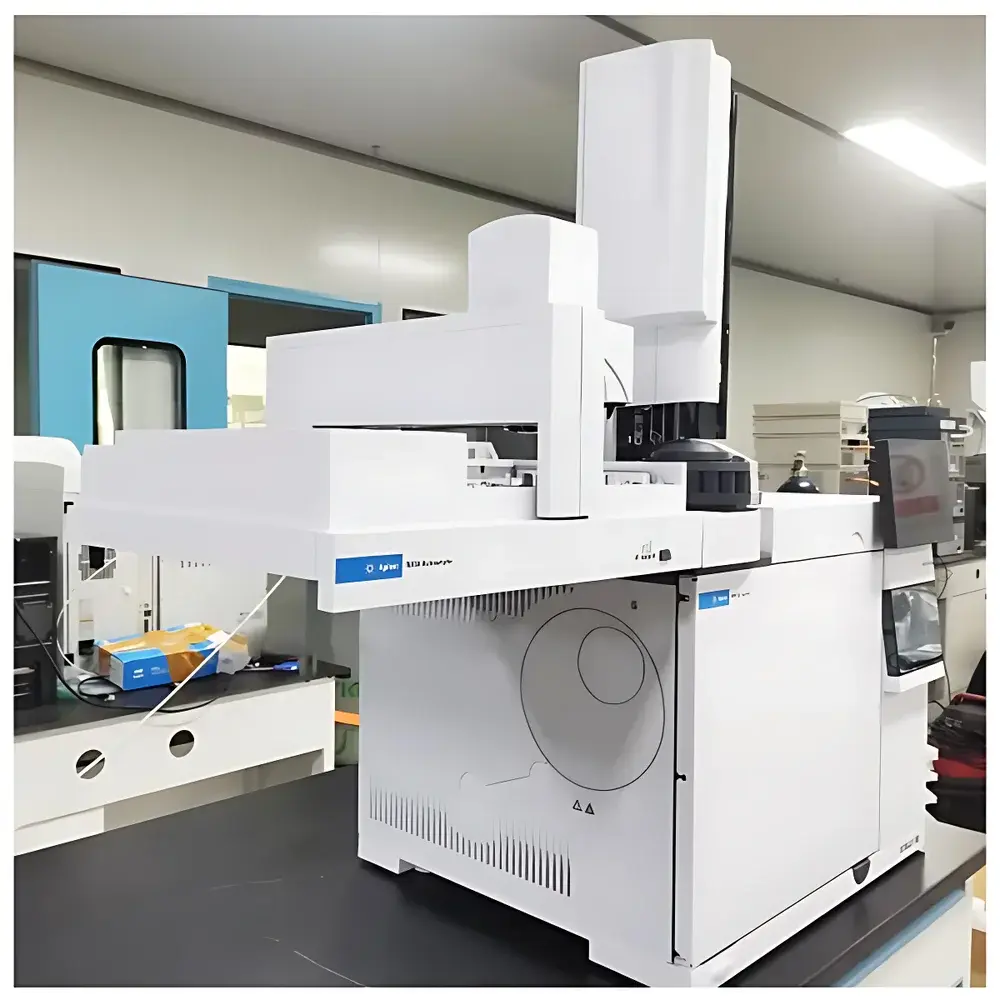
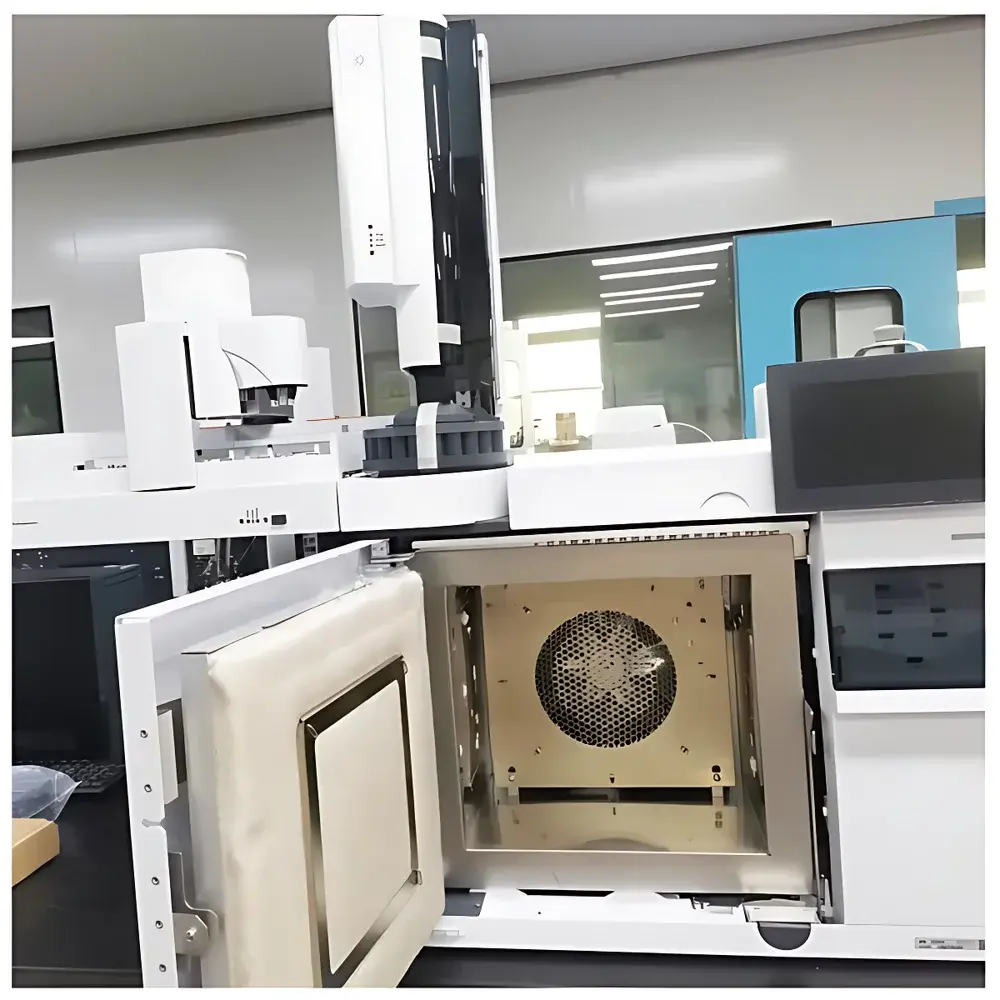
Agilent 8890 Gas Chromatograph
| Brand | Agilent Technologies |
|---|---|
| Origin | USA |
| Model | 8890 |
| Instrument Type | Laboratory Gas Chromatograph |
| Application Scope | General-Purpose |
| Oven Temperature Range | 20–300 °C |
| Oven Ramp Rate | 1 °C/min (minimum) |
| Oven Cool-Down Rate | 1 °C/min (minimum) |
| Carrier Gas Flow Range & Control | 0–1200 mL/min |
| Carrier Gas Pressure Range & Control | 0–900 psi |
| Injector Maximum Operating Temperature | 450 °C |
| Injector Pressure Setting Range | 0–900 psi |
| Injector Total Flow Setting Range | 0–1200 mL/min |
Overview
The Agilent 8890 Gas Chromatograph represents the sixth-generation evolution of Agilent’s high-performance GC platform, engineered for precision, reliability, and seamless integration into modern analytical laboratories. Built upon a dual-core embedded processor architecture, the 8890 delivers real-time parameter monitoring, autonomous system diagnostics, and intelligent leak detection—functionality previously reserved for standalone computing systems. Its core operation follows classical gas chromatographic separation principles: analytes in vapor phase are partitioned between a mobile phase (inert carrier gas) and a stationary phase (capillary column), with retention governed by volatility, polarity, and molecular interaction. The instrument supports isothermal and programmable temperature ramping across a 20–300 °C oven range, enabling robust method development for volatile and semi-volatile organic compounds. Designed for compliance-driven environments, the 8890 meets essential requirements for GLP, GMP, and FDA 21 CFR Part 11–enabled workflows when paired with Agilent OpenLab CDS or MassHunter software.
Key Features
- 6th-generation microfluidic electronic pressure control (EPC) architecture—enhanced resistance to particulate, moisture, and hydrocarbon contamination, extending consumable lifetime and system uptime.
- Integrated color touchscreen interface with intuitive visual system status reporting, method editing, maintenance scheduling, and real-time chromatogram viewing.
- Browser-based user interface (UI) enabling remote access via desktop, tablet, or laptop—supports full instrument control, diagnostic testing, and system log review from any network-connected device within or outside the lab.
- Modular detector and inlet configuration: accommodates up to three inlets (including split/splitless, PTV, cool-on-column, and multimode options), four detectors simultaneously (FID, TCD, NPD, ECD, SCD, NCD), six gas sampling valves, and eight independently heated zones.
- Comprehensive microplate flow technology (CFT) support—including Deans Switch, backflush, dual-tower injection, and comprehensive two-dimensional GC (GC×GC) configurations with flow modulators.
- Intelligent hardware features: helium conservation module, alternative carrier gas compatibility (H₂, N₂), integrated hydrogen sensor (Series 2), and Smart Column Key for automatic method recall and column lifecycle tracking.
Sample Compatibility & Compliance
The Agilent 8890 is validated for analysis of a broad spectrum of sample matrices—including environmental extracts (EPA Methods 502.2, 624, 8260), petrochemical fractions (ASTM D3606, D5186), pharmaceutical impurities (ICH Q2(R2)), food volatiles (AOAC 971.23), and residual solvents (USP <467>). All EPC modules comply with ISO/IEC 17025 calibration traceability requirements. When operated under validated methods with audit-trail-enabled software (e.g., OpenLab CDS v2.5+), the system supports regulatory submissions to FDA, EMA, and PMDA. Optional ACT (Attribution, Certification, Transparency) labels provide environmental impact data across the product lifecycle—aligned with ISO 14040/14044 LCA standards.
Software & Data Management
The 8890 natively integrates with Agilent’s enterprise-grade chromatography data systems: OpenLab CDS (for regulated QC/QA labs) and MassHunter (for GC/MS method development and quantitation). Both platforms enforce role-based access control, electronic signatures, and full 21 CFR Part 11 compliance—including immutable audit trails, secure data archiving, and automated backup protocols. Method transfer tools enable seamless migration from legacy Agilent 7890/6890 systems. Instrument diagnostics generate structured JSON logs compatible with centralized lab analytics platforms (e.g., LabVantage, Thermo Fisher SampleManager) for predictive maintenance planning.
Applications
- Environmental analysis: VOCs in air/water, pesticide residues in soil, PCB congeners in sediment.
- Petrochemical profiling: hydrocarbon typing (PIONA), oxygenate quantitation (MTBE, ETBE), sulfur speciation (mercaptans, sulfides).
- Pharmaceutical quality control: residual solvent screening per ICH Q3C, extractables/leachables studies, stability-indicating assays.
- Food & flavor chemistry: aroma compound fingerprinting, lipid oxidation markers (hexanal, propanal), ethanol content verification.
- Forensic toxicology: blood alcohol determination, drug metabolite screening, accelerant identification in arson investigations.
FAQ
Does the Agilent 8890 support unattended operation for overnight sequence runs?
Yes—the instrument supports fully automated sequences via OpenLab CDS or MassHunter, including auto-zeroing, calibration bracketing, and event-triggered valve switching. Integrated power-fail recovery ensures restart continuity without manual intervention.
Can the 8890 be retrofitted with newer detector technologies after purchase?
Yes—its modular design allows field-upgradeable detector modules (e.g., SCD, NCD, or high-sensitivity FID) without hardware replacement. Firmware updates are delivered via Agilent’s Secure Software Portal with version-controlled release notes.
What carrier gases are supported, and how is hydrogen safety managed?
The system supports He, H₂, and N₂ as carrier gases. The optional Series 2 Hydrogen Sensor continuously monitors for leaks at critical junctions and automatically shuts off gas flow if threshold levels exceed 10% LEL. Calibration is required only every six months per ISO 21087.
Is the 8890 compatible with third-party data systems?
Yes—via ASTM E1394-compliant ASCII export, OPC UA server integration, and RESTful API endpoints for custom LIMS or ELN interfacing. Agilent provides documented SDKs for Python and .NET developers.
How does the Smart Column Key improve method reproducibility?
Each key stores column dimensions, stationary phase chemistry, maximum temperature limits, and recommended flow/pressure settings. When inserted, the GC auto-configures EPC parameters and populates method templates—reducing setup errors and ensuring cross-lab method portability.




