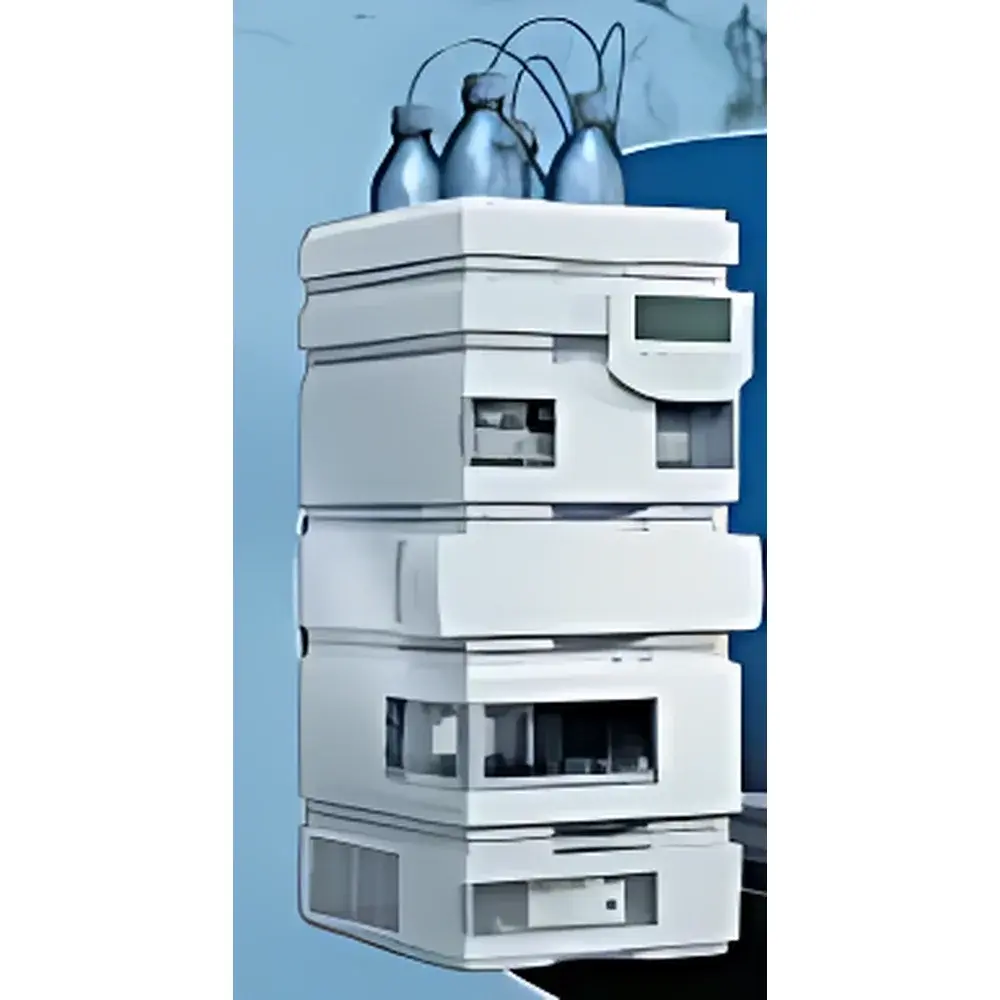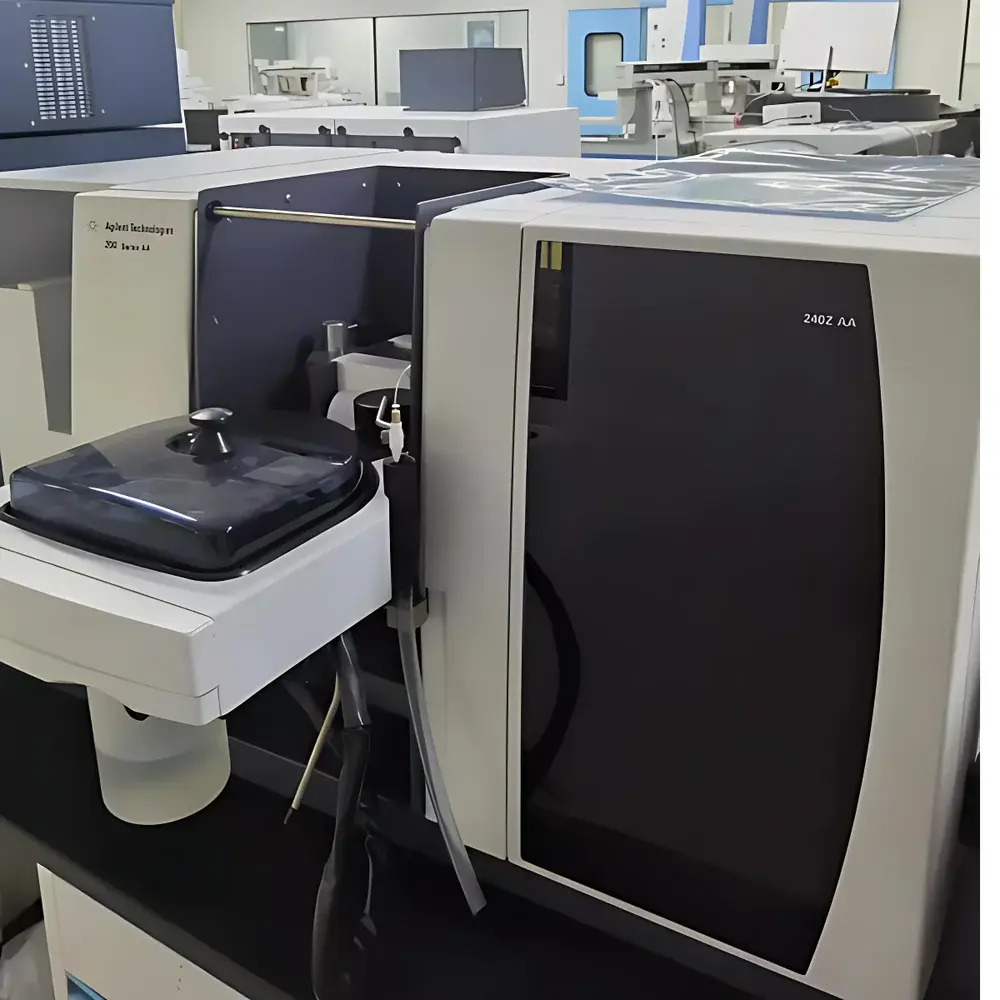
Agilent AA240Z Graphite Furnace Atomic Absorption Spectrophotometer
| Brand | Agilent Technologies |
|---|---|
| Origin | USA |
| Model | AA240Z |
| Instrument Type | Atomic Absorption Spectrophotometer (Graphite Furnace) |
| Optical System | Double-beam, Zeeman background correction |
| Detection Principle | Electrothermal Atomic Absorption Spectrometry (ETAAS) |
| Sample Introduction | Autosampler-equipped graphite furnace |
| Wavelength Range | 190–900 nm |
| Spectral Bandwidth | 0.2, 0.5, 1.0, 2.0 nm (selectable) |
| Detection Limits | Sub-pg to low-pg range for most elements |
| Operating Environment | Lab-grade climate control recommended |
| Compliance | ASTM D3694, ISO 8288, USP <731>, EPA Method 7000B |
| Warranty | 12 months limited parts and labor |
| Service History | Fully refurbished and performance-verified per Agilent OEM specifications |
| Age of Unit | 10 years (in-service since 2014) |
| operational history | 5–7 years of active laboratory use |
| Condition | Refurbished to ≥80% cosmetic and functional standard |
Overview
The Agilent AA240Z Graphite Furnace Atomic Absorption Spectrophotometer is a high-sensitivity, single-furnace electrothermal atomic absorption system engineered for trace elemental quantification in complex matrices. Unlike flame-based AAS systems, the AA240Z employs a transversely heated graphite tube atomizer with integrated Zeeman-effect background correction—enabling accurate measurement of analytes at sub-picogram levels without spectral interference from molecular absorption or light scattering. Its double-beam optical architecture ensures long-term photometric stability, while the temperature-programmable furnace supports precise, multi-step thermal protocols (drying, pyrolysis, atomization, cleaning) optimized per element and matrix. Designed for regulated environments, the instrument meets foundational requirements for method validation under ISO/IEC 17025 and supports audit-ready operation in GLP and GMP laboratories.
Key Features
- Zeeman background correction system with real-time signal deconvolution for enhanced selectivity in high-salt or organic-rich samples
- Transversely heated graphite tube (THGA) with integrated platform for uniform temperature distribution and minimized memory effects
- Integrated autosampler (GFAAS-compatible) enabling unattended analysis of up to 60 samples per run with programmable injection volume (1–100 µL)
- Dual-lamp turret supporting simultaneous lamp alignment and rapid element switching without manual repositioning
- Cooling water recirculation unit (included) maintaining stable furnace cooling rates critical for reproducible atomization kinetics
- Refurbishment includes full optical alignment, monochromator calibration, graphite tube resistance verification, and furnace temperature profiling per Agilent service protocol
Sample Compatibility & Compliance
The AA240Z accommodates aqueous solutions, digested biological tissues, acid-leached environmental solids, and diluted clinical specimens. Its graphite furnace configuration eliminates nebulization inefficiency, delivering superior sensitivity for refractory elements (e.g., As, Cd, Pb, Se, Tl, V) in compliance with EPA Method 7000B and ISO 8288 for water and soil testing. The system supports sample introduction via direct liquid injection or slurry analysis (with appropriate matrix modifiers). All firmware and hardware configurations adhere to Agilent’s legacy support framework for AA240-series instruments and maintain compatibility with ASTM D3694 for fuel metal analysis. Documentation includes refurbishment certification, post-calibration verification reports, and traceable lamp intensity logs.
Software & Data Management
Controlled by Agilent’s original AA WinLab software (v3.x), the system provides method development tools for temperature ramp optimization, peak area/intensity integration, and multi-point calibration with forced zero intercept. Data files are stored in proprietary .AAS format with embedded metadata (lamp ID, slit width, integration time, furnace program version). Audit trail functionality records all user actions—including method edits, calibration updates, and result overrides—with timestamped entries compliant with FDA 21 CFR Part 11 requirements when deployed on validated Windows OS platforms. Export options include CSV, TXT, and XML formats for LIMS integration; raw absorbance vs. time profiles are retained for post-acquisition reintegration.
Applications
- Environmental monitoring: Quantification of heavy metals in drinking water, wastewater, and sediment extracts per EPA regulatory thresholds
- Clinical toxicology: Blood lead (Pb), urinary cadmium (Cd), and serum selenium (Se) analysis at clinically relevant pg/mL concentrations
- Pharmaceutical quality control: Catalyst residue testing (e.g., Pd, Pt, Rh) in active pharmaceutical ingredients per ICH Q2(R2) guidelines
- Food safety: Arsenic speciation screening (total As) in rice, seafood, and infant formula following AOAC 999.10
- Geological research: Rare earth element (REE) determination in acid-digested rock powders with matrix-matched calibration
FAQ
Is this unit factory-refurbished or dealer-refurbished?
This AA240Z system was refurbished by an Agilent-authorized service partner using OEM-specified procedures, including optical recalibration, furnace thermal mapping, and lamp output validation.
Does the one-year warranty cover both parts and labor?
Yes—the warranty includes onsite labor and replacement of defective components excluding consumables (graphite tubes, platform inserts, lamps beyond initial set).
Are original Agilent documentation and software licenses included?
Full electronic documentation package (user manuals, service guides, safety instructions) is provided. Software license is perpetual for AA WinLab v3.x; no subscription required.
Can the system be upgraded to support newer Agilent accessories?
Mechanical and electrical interfaces remain compatible with Agilent’s legacy GFAAS peripheral ecosystem, including ASX-520 autosampler upgrades and advanced modifier dispensers—subject to physical fitment verification.
What pre-delivery verification is performed?
Each unit undergoes a 12-point functional test: wavelength accuracy, photometric linearity, background correction efficacy, furnace temperature ramp fidelity, autosampler precision (RSD ≤ 2%), and detection limit verification against certified reference materials (e.g., NIST SRM 1643e).