
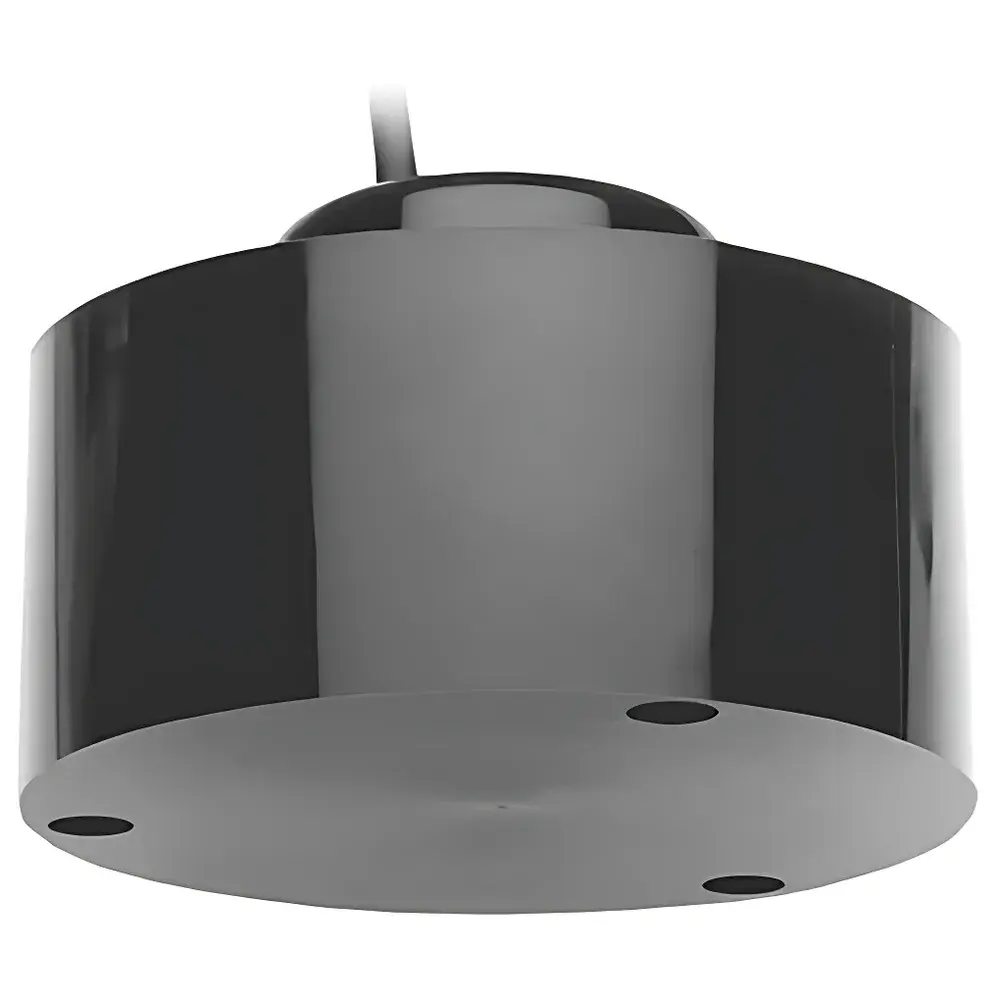
AirMar M192 Depth Sounder
| Brand | AIRMAR |
|---|---|
| Origin | USA |
| Model | M192 |
| Beam Width | Narrow |
| Transducer Array | Ceramic Element Array |
| Operating Frequencies | 15 kHz (wideband), 24 kHz, 28 kHz, 30 kHz, 33 kHz, 38 kHz, 33 & 200 kHz (dual-frequency wideband) |
| Housing Material | SEALCAST™ Polyurethane |
| Encapsulation | Seamless, Impact-Resistant, Cut- and Abrasion-Resistant |
| Mounting Options | Tank-Mounted or Portable Installation |
| Xducer ID® Technology | Yes |
| Cable Type | C-43 Shielded Twisted Pair (2–14 AWG), Braided Shield, Black Neoprene Jacket, Ø10 mm |
| Standard Cable Length | 10 m (max. 40 m) |
| Weight | 7.3–8.0 kg (varies with cable length and configuration) |
| Compliance | CE, RoHS, FCC Part 15, EN 60945 (Marine Electronic Equipment) |
Overview
The AirMar M192 Depth Sounder is a high-performance, narrow-beam echosounder transducer engineered for precise hydrographic surveying, navigational safety, and underwater terrain mapping in both shallow and deep marine environments. Utilizing a ceramic element array architecture, the M192 operates on the principle of pulse-echo sonar: it emits acoustic pulses at user-selectable frequencies and measures the time-of-flight of returning echoes to calculate water depth and resolve bottom topography with high spatial fidelity. Its narrow beamwidth—optimized across multiple discrete and wideband frequency options—minimizes side-lobe interference and enhances vertical and lateral resolution, enabling accurate discrimination of subtle bathymetric features such as rocky outcrops, sediment boundaries, and submerged infrastructure. Designed for integration with industry-standard echo sounders and multibeam processors, the M192 delivers consistent signal integrity under dynamic vessel motion and variable water column conditions.
Key Features
- Narrow-beam ceramic transducer array delivering high sensitivity and low ringing for superior target resolution and minimal signal distortion
- SEALCAST™ seamless polyurethane encapsulation providing full environmental sealing, exceptional resistance to mechanical abrasion, impact, and biofouling
- Patented Xducer ID® technology enabling automatic transducer identification, parameter recall, and calibration data retention within compatible sounder systems
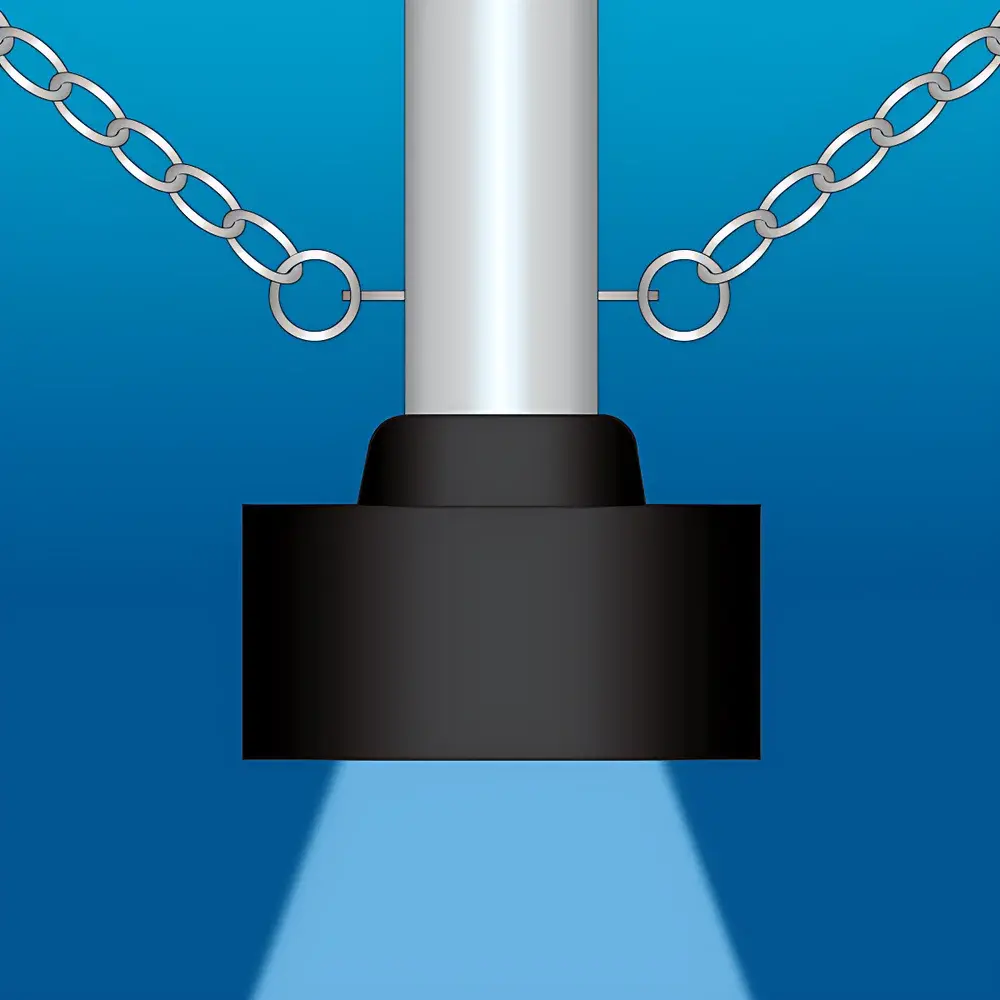
- Flexible mounting compatibility—including through-hull tank installation and portable pole-mount configurations—for rapid deployment across research vessels, survey launches, and autonomous platforms
- Multi-frequency operational support (15 kHz wideband, 24/28/30/33/38 kHz discrete, and 33 + 200 kHz dual-band) to optimize penetration depth, resolution, and noise rejection based on water clarity, salinity, and survey objectives
- C-43 specification cable with braided shielding, neoprene jacketing, and 10 mm outer diameter ensures EMI immunity and long-term durability in harsh marine service
Sample Compatibility & Compliance
The M192 is designed for use in seawater, brackish water, and freshwater environments, with performance validated across temperature ranges from –10 °C to +55 °C and static pressure ratings up to 100 m water column. Its polyurethane acoustic window exhibits minimal attenuation across the operational frequency spectrum and maintains stable impedance matching over extended service life. The transducer complies with international marine electronics standards including IEC 60945 (Maritime Navigation and Radiocommunication Equipment), EN 60945 (European harmonized standard), FCC Part 15 Subpart B (EMI emissions), and RoHS 2011/65/EU. It supports GLP-aligned data acquisition workflows when integrated with compliant echo sounder systems featuring audit-trail logging and timestamped raw data output.
Software & Data Management
The M192 interfaces seamlessly with third-party hydrographic software suites (e.g., QPS QINSy, Hypack, SonarWiz, CARIS HIPS & SIPS) via analog or digital NMEA 2000/0183 outputs. When paired with an Xducer ID®-enabled sounder (e.g., Furuno DFF3D, Raymarine Dragonfly, or Lowrance Elite Ti2), transducer-specific parameters—including beam pattern coefficients, frequency response curves, and calibration offsets—are auto-loaded, eliminating manual configuration errors. Raw echo data can be captured in industry-standard formats (e.g., .all, .gsf, .xtf) for post-processing, QA/QC validation, and archival in compliance with ISO 8582 (Hydrographic Survey Specifications) and IHO S-44 (Order 1a/1b accuracy requirements).
Applications
- High-resolution single-beam bathymetry for coastal zone management and habitat mapping
- Pre- and post-dredging surveys requiring sub-decimeter depth repeatability
- Navigational safety assessments for harbor approaches, channel maintenance, and bridge clearance verification
- Underwater infrastructure inspection (pipelines, cables, breakwaters) using targeted low-ringing pulse profiles
- Integration into AUV/USV platforms for uncrewed hydrographic missions with minimal drag and cavitation signature
- Scientific studies of sediment transport dynamics and seafloor morphology evolution
FAQ
What frequency options are supported by the M192, and how do they affect survey performance?
The M192 offers discrete frequencies (24–38 kHz) for optimized shallow-water resolution and wideband options (15 kHz, 33 + 200 kHz) for deep-water penetration or dual-layer profiling. Lower frequencies yield greater range but reduced resolution; higher frequencies improve detail at the expense of attenuation.
Is the M192 suitable for freshwater applications?
Yes—the transducer’s ceramic array and polyurethane housing are chemically inert and acoustically matched for operation in freshwater, brackish, and full-salinity seawater without performance degradation.
Does the M192 require external matching transformers?
A matching transformer may be required depending on the connected sounder’s output impedance; AirMar provides application-specific transformer kits (e.g., 50 Ω to 150 Ω) to ensure optimal power transfer and signal fidelity.
How is calibration traceability maintained for regulatory reporting?
When used with Xducer ID®-enabled systems, factory calibration coefficients are stored onboard and recalled automatically. For ISO/IEC 17025-compliant workflows, periodic verification against reference targets per ASTM D6534 is recommended.
Can the M192 be installed on fiberglass or aluminum hulls?
Yes—tank-mounted configurations accommodate both materials; hull thickness, curvature, and internal reinforcement must be evaluated per AirMar Technical Bulletin TB-027 to ensure optimal acoustic coupling and beam integrity.







