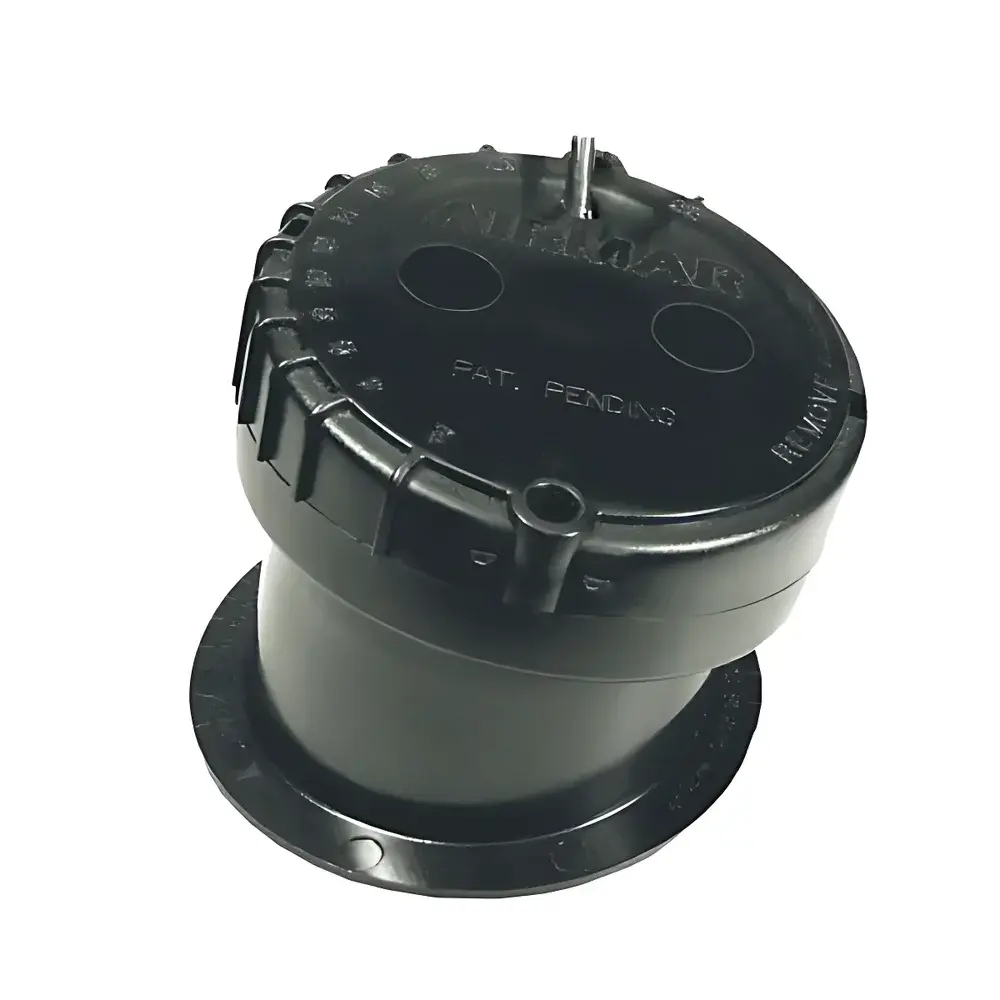
Airmar P79 In-Hull Depth Sounder
| Brand | Airmar |
|---|---|
| Origin | USA |
| Model | P79 |
| Frequency | 50/200 kHz |
| Beam Width | 45° @ 50 kHz, 12° @ 200 kHz |
| Transmit Power | 600 W |
| Installation Type | In-hull (non-invasive) |
| Housing Material | Plastic |
| Sound Window Material | Polyurethane |
| Depth Range | 206–294 m @ 50 kHz, 118–180 m @ 200 kHz |
| Cable Length | 10 m |
| Weight | 2.3 kg |
| Hull Tilt Adjustment Range | 0–22° |
| Compatible Hull Types | Fiberglass, aluminum ≤ 3.8 mm thickness |
| Recommended Vessel Length | Up to 8 m |
| Temperature Sensor | None |
Overview
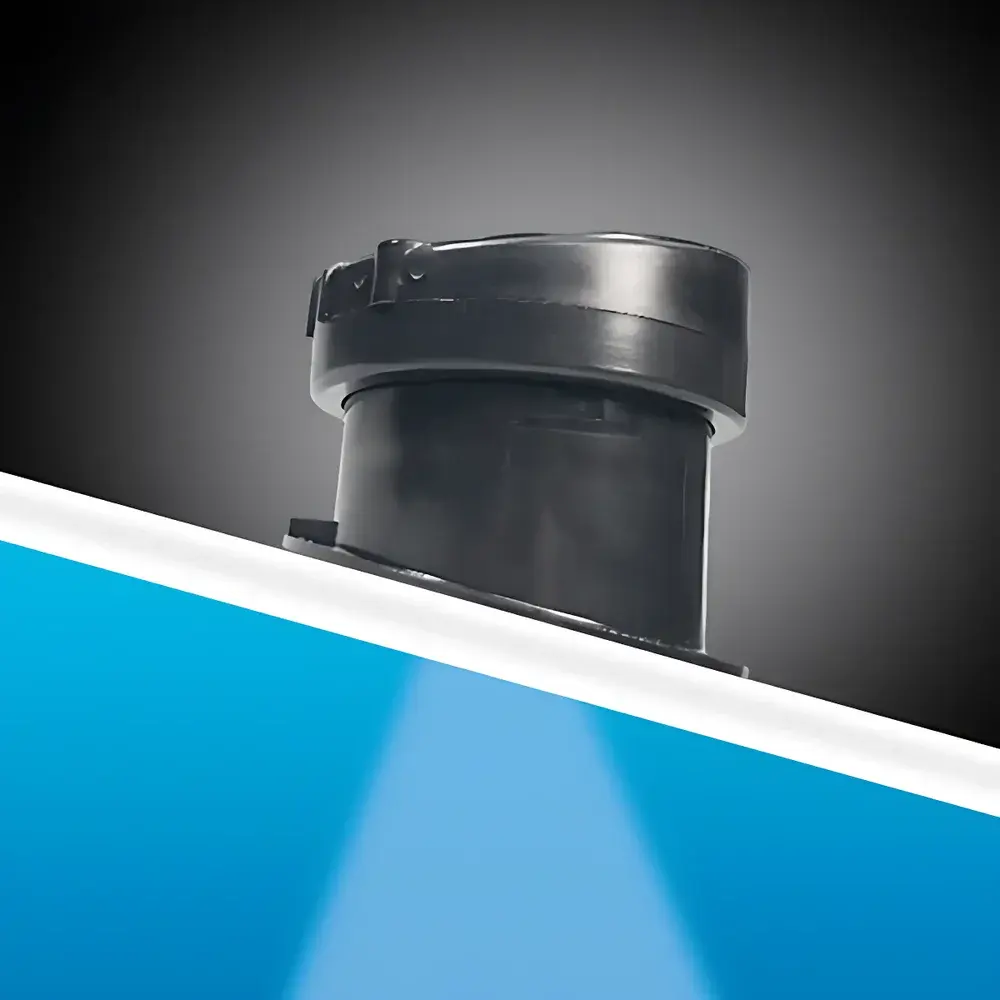
The Airmar P79 is an in-hull depth sounder engineered for precision hydrographic measurement without hull penetration. Unlike through-hull or transom-mount transducers, the P79 employs a non-invasive installation method: its acoustic housing is bonded directly to the interior surface of the hull and acoustically coupled using a proprietary liquid-filled coupling medium. This design eliminates mechanical stress on the hull structure and avoids compromising watertight integrity. The device operates on dual-frequency sonar principles—50 kHz for long-range bathymetric profiling and 200 kHz for higher-resolution shallow-water depth mapping—leveraging pulse-echo time-of-flight measurement calibrated against known sound velocity in seawater (~1500 m/s) and freshwater (~1480 m/s). Its adjustable tilt mechanism (0–22°) enables precise beam alignment perpendicular to the water surface, compensating for hull deadrise angles and ensuring consistent vertical incidence—critical for minimizing depth error due to beam skew and multipath interference.
Key Features
- In-hull mounting with no drilling, hull modification, or external protrusions—preserves structural integrity and hydrodynamic performance.
- Adjustable tilt base allows fine-tuning of transducer orientation from 2° to 22°, enabling optimal beam orthogonality across diverse hull geometries including deep-V, planing, and stepped hulls.
- Acoustically optimized polyurethane sound window ensures efficient ultrasonic energy transmission while providing abrasion resistance and thermal stability over operational temperature ranges (−10°C to +55°C).
- Dual-frequency operation (50/200 kHz) supports flexible deployment: 50 kHz delivers extended range (up to 294 m) with broad beam coverage (45°), ideal for offshore navigation and charting; 200 kHz offers narrower beam (12°) and improved resolution for near-bottom discrimination in depths up to 180 m.
- 600 W peak transmit power provides robust signal-to-noise ratio in turbid, air-entrained, or thermocline-affected water columns.
- Lightweight (2.3 kg) and compact plastic housing facilitates integration into confined console spaces aboard RIBs, sportfishing vessels, sailboats, and workboats up to 8 meters LOA.
Sample Compatibility & Compliance
The P79 is validated for use on fiberglass-reinforced polymer (FRP) hulls and aluminum hulls with thickness ≤ 3.8 mm. It is not recommended for steel, wood, or cored composite hulls due to acoustic attenuation and impedance mismatch. The transducer’s performance complies with IEC 62288 Ed. 2.0 (Maritime navigation and radiocommunication equipment – Presentation of information on navigational displays) for depth data formatting and timing accuracy. While the unit itself does not include built-in temperature compensation, it interfaces seamlessly with NMEA 2000-certified chartplotters (e.g., Furuno TZtouch, Garmin GPSMAP, Raymarine Axiom, Lowrance HDS Live) that apply real-time sound velocity correction based on user-input or networked temperature sensor data. No regulatory certification (e.g., CE marine, FCC Part 15) is required for in-hull sonar devices under current USCG and EASA guidance, as they emit no radiated RF energy beyond the hull boundary.
Software & Data Management
The P79 functions as a dedicated depth transducer and does not incorporate onboard firmware, memory, or configuration software. All parameter control—including frequency selection, gain adjustment, noise rejection thresholds, and depth offset calibration—is performed externally via the host display unit’s NMEA 2000 interface. Depth output is transmitted as standardized NMEA 0183 DPT and DBT sentences and NMEA 2000 PGN 128259 (Water Depth), supporting full integration into vessel management systems (VMS) and electronic chart display and information systems (ECDIS). Audit trails, calibration logs, and configuration history are maintained by the connected multifunction display—not the transducer—ensuring compliance with GLP-aligned operational documentation practices where required.
Applications
- Commercial and recreational small-craft navigation requiring reliable depth data without hull modification.
- Hydrographic survey support for coastal zone mapping, dredging pre-assessment, and marina infrastructure planning.
- Scientific fieldwork aboard research RIBs or rigid-hulled inflatable boats operating in estuarine, lacustrine, and nearshore environments.
- Fleet monitoring for workboats engaged in aquaculture, cable laying, or underwater inspection where hull integrity must remain unaltered.
- Racing sailboat instrumentation systems where weight distribution, drag minimization, and rapid installation/removal are critical.
FAQ
Does the P79 require hull drilling or external mounting?
No. The P79 is designed exclusively for in-hull adhesive installation with liquid acoustic coupling.
Can it be used on aluminum hulls?
Yes—provided hull thickness does not exceed 3.8 mm and the interior surface is clean, dry, and free of paint or coating beneath the bond area.
Is temperature compensation available?
The transducer lacks an integrated temperature sensor; however, compatible chartplotters apply sound velocity correction using external or networked temperature inputs.
What is the maximum recommended vessel length?
8 meters LOA, based on beam geometry, power delivery constraints, and typical hull material attenuation profiles.
Which NMEA protocols does it support?
NMEA 2000 (PGN 128259) and NMEA 0183 (DPT, DBT) for depth data output.