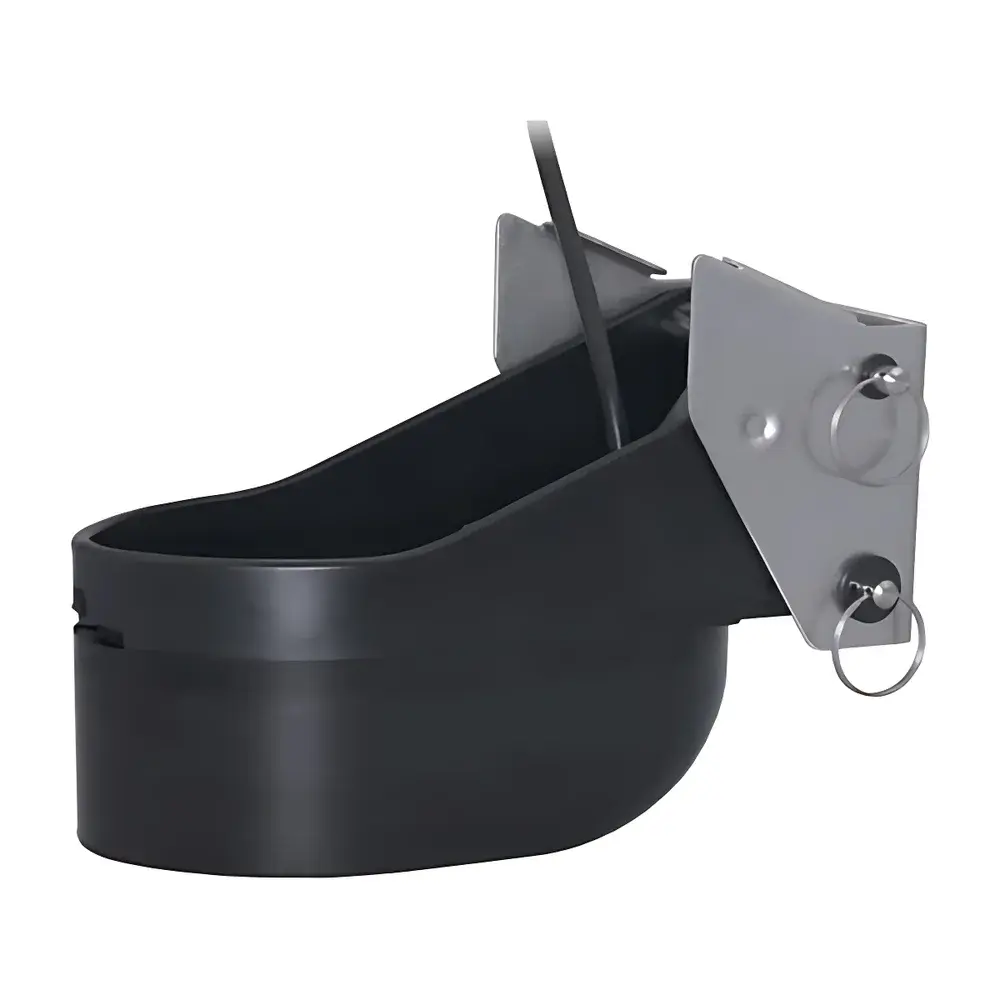
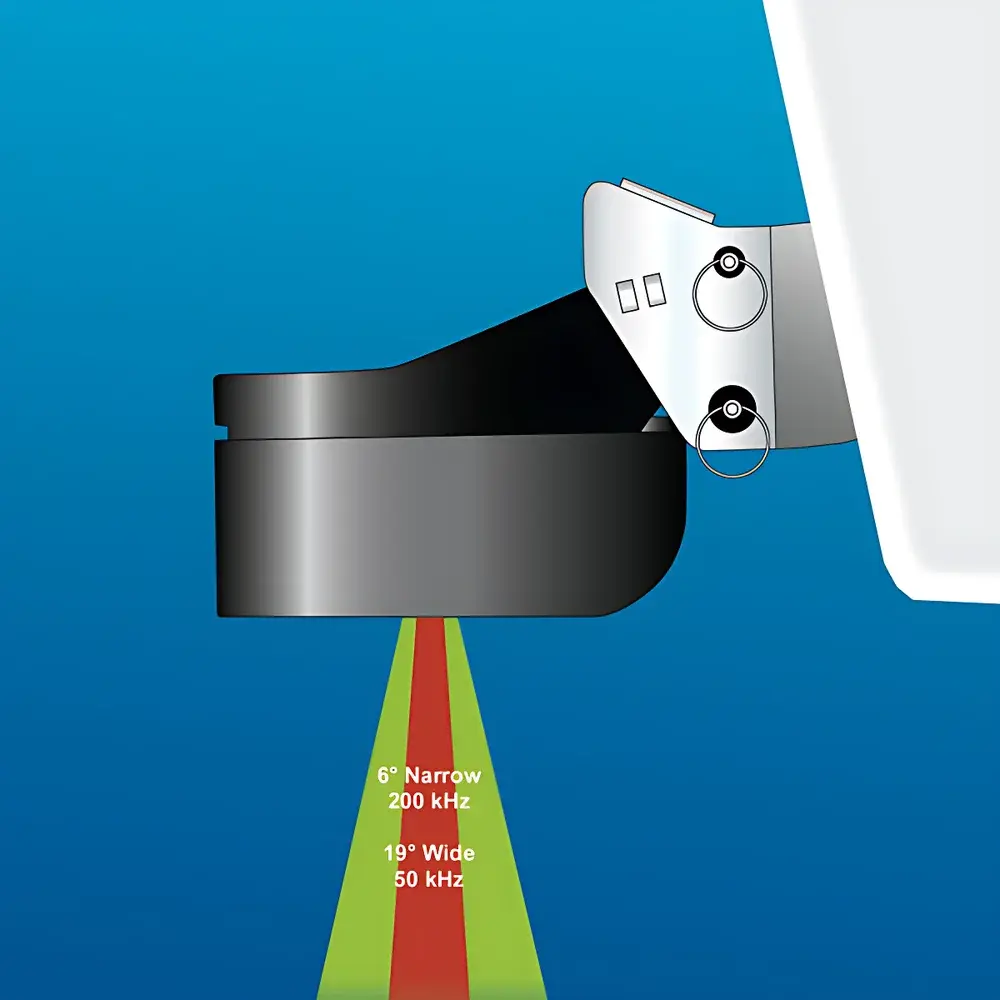
AIRMAR TM265LM Dual-Frequency Chirp Transducer
| Brand | AIRMAR |
|---|---|
| Origin | USA |
| Model | TM265LM |
| Output Power | 1000 W |
| Operating Frequency Bands | Low Band 42–65 kHz (Beam Width 25°–16°, Max Depth 914 m) |
| Total Chirp Bandwidth | 73 kHz |
| Mounting Type | Transom-Mount |
| Housing Material | SEALCAST™ Polyurethane Encapsulation |
| Bracket Material | Stainless Steel |
| Temperature Sensor | Integrated Fast-Response Thermistor |
| Weight | 4 kg |
| Compatible Hull Types | All (Fiberglass, Aluminum, Wood, Composite) |
| Hull Length Support | Up to 10 m |
| Transducer ID | Xducer ID® Enabled |
| Optional Mounts | Through-Hull (B265LM), Pocket/Keeled (PM265LM), In-Tank (CM265LM), In-Hull (M265LM) |
Overview
The AIRMAR TM265LM is a dual-frequency, transom-mounted Chirp sonar transducer engineered for high-fidelity depth profiling, target discrimination, and real-time water temperature monitoring in marine environments. Utilizing broadband frequency-modulated (FM) chirp technology—rather than traditional pulsed echo systems—the TM265LM transmits continuously sweeping signals across two discrete, overlapping bands (42–65 kHz and 85–135 kHz), enabling superior range resolution, signal-to-noise ratio, and target separation capability. This architecture supports simultaneous detection of bottom contours, suspended biomass (e.g., baitfish schools), and discrete pelagic or benthic targets—even at maximum operational depths. The transducer’s low-band operation delivers robust performance in deep-water applications up to 914 meters, while the mid-band provides enhanced lateral resolution and structural definition within the water column and near-bottom zones, making it suitable for both commercial fisheries assessment and precision recreational angling.
Key Features
- Dual-band Chirp architecture with independent low- and mid-frequency sweeps for concurrent deep-water penetration and fine-scale target resolution
- Integrated fast-response thermistor delivering calibrated water temperature data synchronized with depth returns
- 1000 W peak acoustic output power optimized for consistent signal integrity across variable salinity, turbidity, and temperature gradients
- SEALCAST™ seamless polyurethane encapsulation providing corrosion resistance, cavitation suppression, and long-term submersion reliability
- Stainless steel transom bracket with adjustable tilt range (3°–21°) accommodating hull deadrise angles across vessel types up to 10 meters LOA
- Xducer ID® digital identification protocol ensuring plug-and-play compatibility with NMEA 2000 and compatible multifunction displays (MFDs)
- Beam width modulation across frequency bands: 25°–16° (low band), 16°–11° (mid band), supporting adaptive coverage vs. resolution trade-offs
- Support for industry-standard fishing frequencies—50 kHz, 88 kHz, and 107 kHz—within its continuous sweep ranges
Sample Compatibility & Compliance
The TM265LM is designed for deployment on vessels with fiberglass, aluminum, wood, or composite hulls. Its transom-mount configuration eliminates hull modification requirements and ensures consistent acoustic coupling without drilling or through-hull penetrations. The transducer complies with IEC 62238 (marine echosounder equipment) for environmental robustness and EMC performance under ISO 8846 (marine electrical systems). While not certified for safety-critical navigation per IMO Resolution MSC.191(79), it meets functional requirements for auxiliary depth and biomass sensing in accordance with GLP-aligned field data collection protocols used by fisheries research institutions and coastal management agencies.
Software & Data Management
Raw echo data from the TM265LM is transmitted via NMEA 2000 (PGN 128267, 128275) and analog CHIRP-compatible interfaces, enabling integration with chartplotters, ECDIS systems, and third-party hydroacoustic analysis platforms such as SonarWiz, EchoScope, or QPS Qimera. Time-synchronized depth and temperature metadata are embedded in each ping packet, facilitating post-processing alignment with GPS position logs. Firmware updates are performed over NMEA 2000 using vendor-provided utilities; all configuration parameters—including frequency sweep rate, gain profile, and beam steering offsets—are retained in non-volatile memory. Audit-trail logging is supported when paired with MFDs compliant with NMEA 0183 v4.10 or later, satisfying basic traceability requirements for scientific survey documentation.
Applications
- Commercial and artisanal fisheries stock assessment, including pelagic school mapping and demersal habitat characterization
- Recreational angling support—real-time identification of thermoclines, bait layers, structure-associated fish aggregations, and bottom hardness differentiation
- Hydrographic surveying for shallow-to-medium depth inland lakes, estuaries, and continental shelf regions
- Environmental monitoring programs requiring concurrent bathymetric and thermal profile acquisition
- Marine education and undergraduate oceanography field instrumentation where ruggedized, self-contained sonar capability is required
FAQ
Does the TM265LM require a dedicated Chirp-capable display unit?
Yes—it must be connected to an MFD or processing system that supports broadband Chirp decoding (e.g., Garmin Panoptix LiveScope, Raymarine Axiom+, Simrad NSS evo3 with SonicHub 2). Legacy pulse-echo displays cannot interpret its FM sweep output.
Can the TM265LM be used on planing hulls at high speed?
Yes—the SEALCAST™ housing and optimized flow geometry minimize ventilation and cavitation up to 45 knots, provided the transom bracket is correctly aligned and secured.
Is firmware update capability available in the field?
Yes—updates are delivered via NMEA 2000 using AIRMAR’s free PC-based Transducer Configuration Utility (TCU), requiring only a USB-to-NMEA gateway adapter.
What is the warranty coverage for the TM265LM?
AIRMAR provides a standard 2-year limited warranty covering material and workmanship defects under normal marine use conditions; extended service plans are available through authorized distributors.
How does Xducer ID® simplify system integration?
Xducer ID® embeds model-specific calibration coefficients and operating parameters into the transducer’s EEPROM, allowing compatible displays to auto-configure gain, offset, and frequency settings without manual input.