
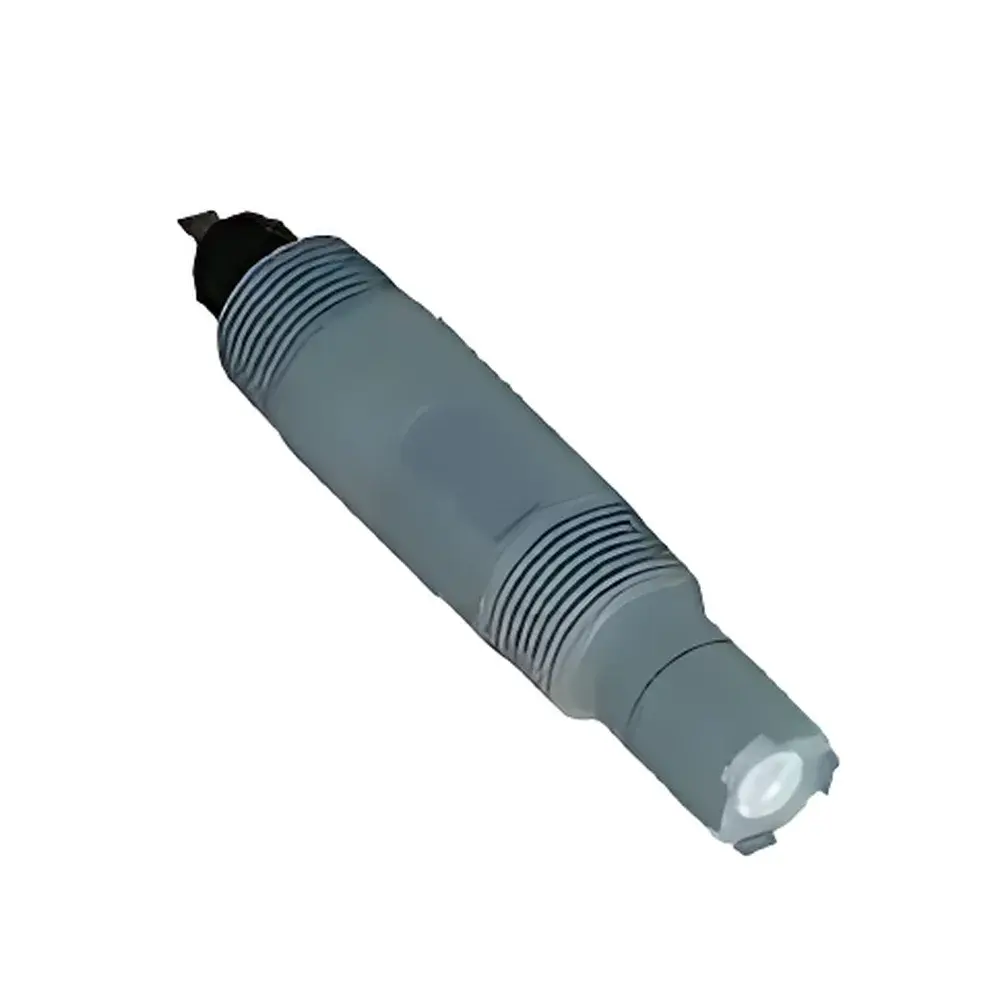
AnalogPlus™ Dissolved Oxygen Electrode (Clark-Type Polarographic Sensor)
| Brand | Thermo Fisher Scientific |
|---|---|
| Origin | USA |
| Manufacturer | Thermo Fisher Scientific |
| Type | Imported |
| Model | AnalogPlus™ Dissolved Oxygen Electrode |
| Pricing | Upon Request |
Overview
The AnalogPlus™ Dissolved Oxygen Electrode is a high-stability, three-electrode polarographic sensor engineered for continuous, reliable dissolved oxygen (DO) measurement in demanding environmental and industrial water quality applications. Based on the Clark membrane principle, it employs a gold cathode, silver anode, and a dedicated silver reference electrode—each electrochemically isolated and optimized for long-term signal integrity. Unlike conventional two-electrode configurations, the AnalogPlus™ system applies a constant polarization voltage to the silver reference electrode, eliminating drift caused by reference potential instability and minimizing interference from redox-active species or variable ionic strength. This architecture delivers superior baseline stability, reduced calibration frequency, and enhanced reproducibility across fluctuating process conditions—from municipal wastewater treatment plants to sterile bioreactor environments.
Key Features
- Three-electrode Clark-type polarographic design with independent silver reference electrode for stable polarization and minimized drift
- Integrated, field-replaceable membrane cap assembly—pre-filled with electrolyte and factory-mounted membrane—enabling sub-10-second membrane replacement without tools or recalibration
- Durable, chemically resistant sensor housing rated for continuous immersion in aggressive aqueous matrices including chlorinated effluents, high-TDS brines, and low-pH fermentation broths
- Linear 0–40 ppm (mg/L) measurement range with 0.01 ppm resolution, traceable to NIST-traceable DO standards
- Analog 4–20 mA output with HART® protocol compatibility for seamless integration into existing SCADA, DCS, and PLC-based monitoring infrastructures
- Temperature-compensated output using integrated Pt1000 RTD, supporting automatic compensation per ASTM D888 and ISO 5814
Sample Compatibility & Compliance
The AnalogPlus™ electrode is validated for use in liquid-phase samples with conductivity ≥50 µS/cm and pH 4–12. It exhibits minimal fouling in suspended solids up to 500 mg/L and remains functional under intermittent air exposure during maintenance cycles. The sensor complies with key regulatory frameworks governing water quality instrumentation, including EPA Method 360.1 (for wastewater), ASTM D888-22 (standard test method for dissolved oxygen), and ISO 5814:2012 (water quality—determination of dissolved oxygen—electrochemical probe method). Its construction meets IP68 ingress protection and conforms to RoHS and REACH directives. For GMP/GLP-regulated facilities, the electrode supports audit-ready documentation packages and optional 21 CFR Part 11-compliant data logging when paired with Thermo Fisher’s Orion Star™ A329 or AquaMate™ controllers.
Software & Data Management
While the AnalogPlus™ electrode operates as a standalone analog transducer, its full operational intelligence is unlocked when interfaced with Thermo Fisher’s ecosystem of water quality management platforms. When connected to the Orion Star™ A329 Benchtop Meter or the AquaMate™ Online Analyzer, users gain access to automated calibration verification logs, temperature-compensation history, membrane life tracking, and predictive maintenance alerts. All data—including timestamped DO readings, temperature, and sensor status flags—are exportable in CSV or XML formats compliant with LIMS integration protocols. Firmware updates are delivered via secure USB or Ethernet, ensuring alignment with evolving ISO/IEC 17025 laboratory accreditation requirements.
Applications
- Municipal and industrial wastewater treatment: real-time DO control in activated sludge basins, denitrification zones, and oxidation ditches
- Aquaculture and hatchery operations: precision DO monitoring in recirculating aquaculture systems (RAS) to prevent hypoxia stress
- Food & beverage processing: DO tracking in pasteurization lines, CIP rinse validation, and fermentation vessel aeration control (e.g., brewing, dairy starter cultures)
- Pulp and paper manufacturing: monitoring DO in bleach plant effluents and closed-loop white water systems
- Pharmaceutical bioprocessing: dissolved oxygen profiling in single-use bioreactors and stainless-steel fermenters under cGMP conditions
- Environmental compliance monitoring: continuous DO surveillance at NPDES discharge points and watershed sentinel stations
FAQ
Is the AnalogPlus™ electrode compatible with third-party analyzers or only Thermo Fisher controllers?
Yes—it provides a standard 4–20 mA analog output with HART® digital overlay, enabling interoperability with most industrial-grade process analyzers, DCS systems, and data acquisition hardware.
What is the expected membrane service life under continuous operation?
Under typical municipal wastewater conditions (20–25°C, 100–300 NTU turbidity), the pre-assembled membrane cap maintains stable performance for ≥6 months; in clean water applications (e.g., purified process water), service intervals extend to 12 months.
Does the electrode require zero-oxygen calibration?
Yes—initial zero-point calibration is performed using sodium sulfite (Na₂SO₃) solution per ASTM D888, followed by span calibration in air-saturated water or certified DO standard solution.
Can the electrode be used in seawater or high-salinity environments?
Yes—the Ag/AgCl reference system and hydrophobic membrane formulation provide robust performance in salinities up to 45 ppt, with built-in salinity compensation activated via controller firmware.
Is cleaning required between membrane replacements?
No routine cleaning is needed if operated within specified pH and contaminant limits; however, periodic gentle wiping with deionized water is recommended after exposure to viscous or biofouling-prone matrices.
Related Products







