
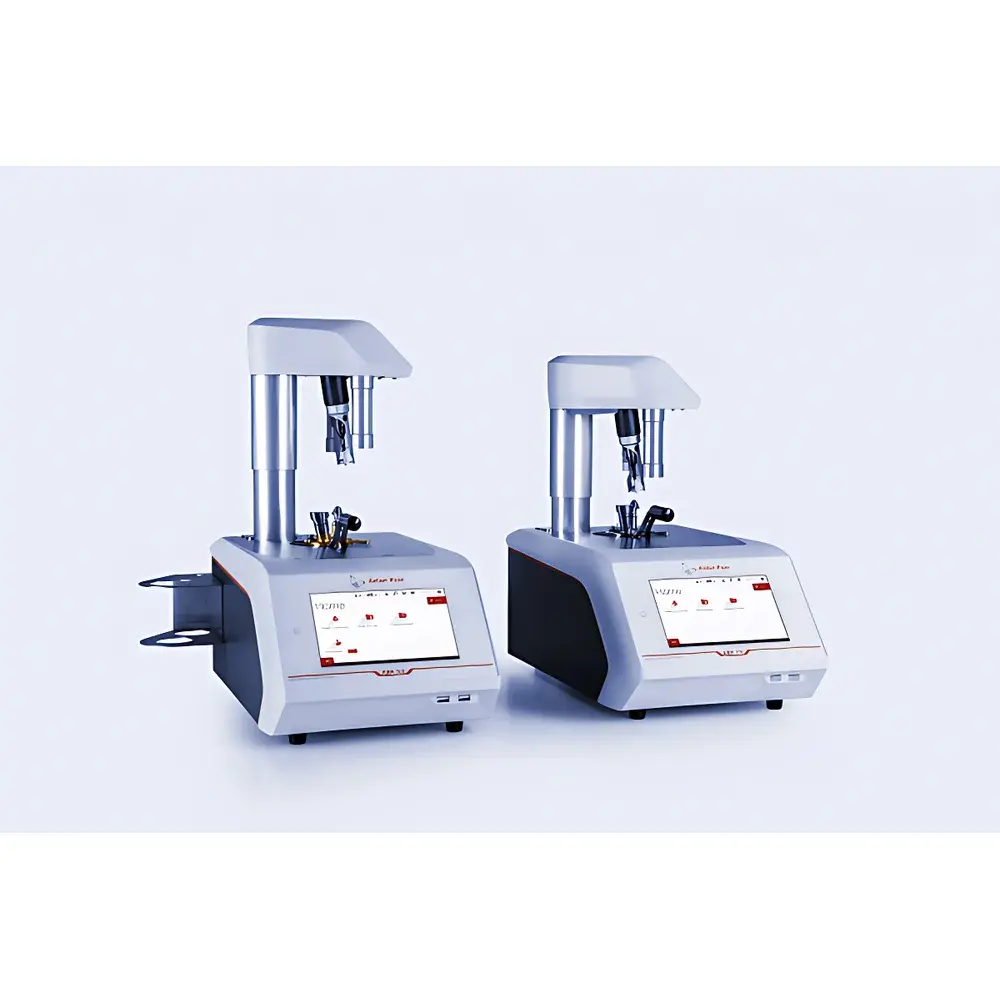
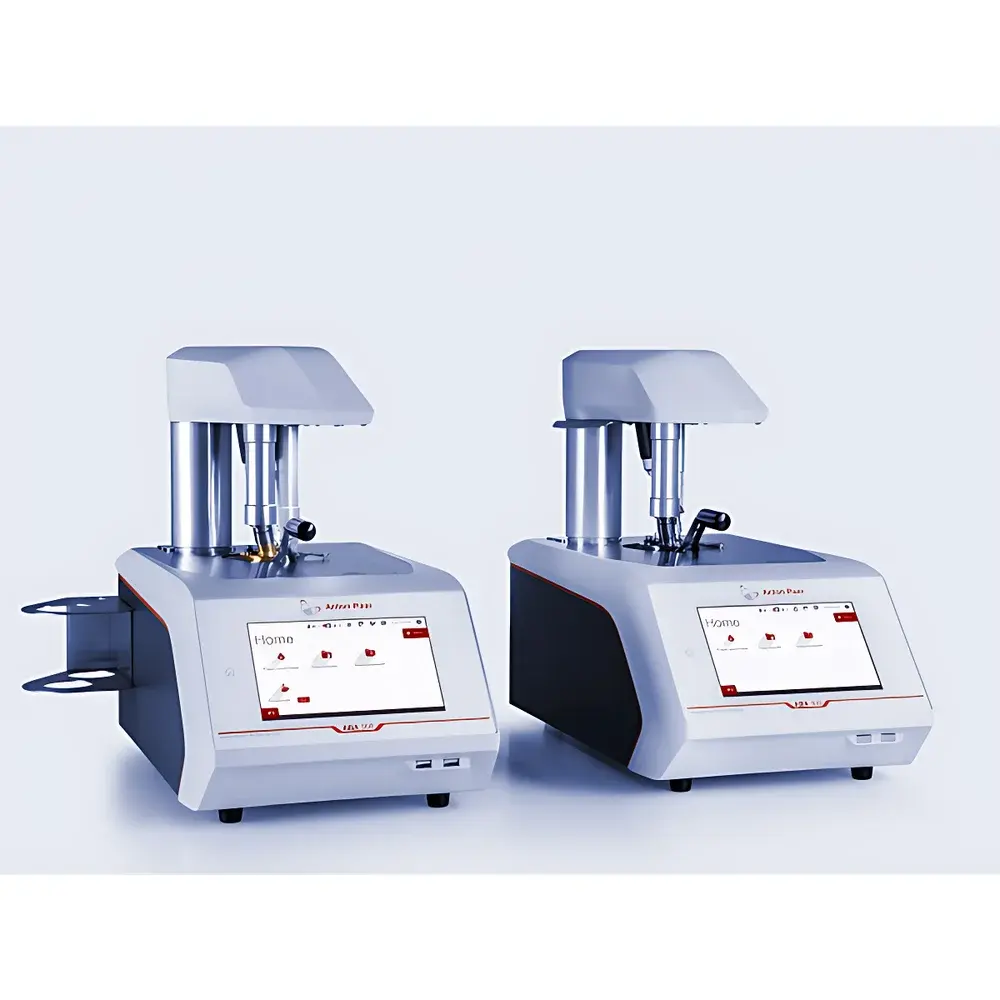
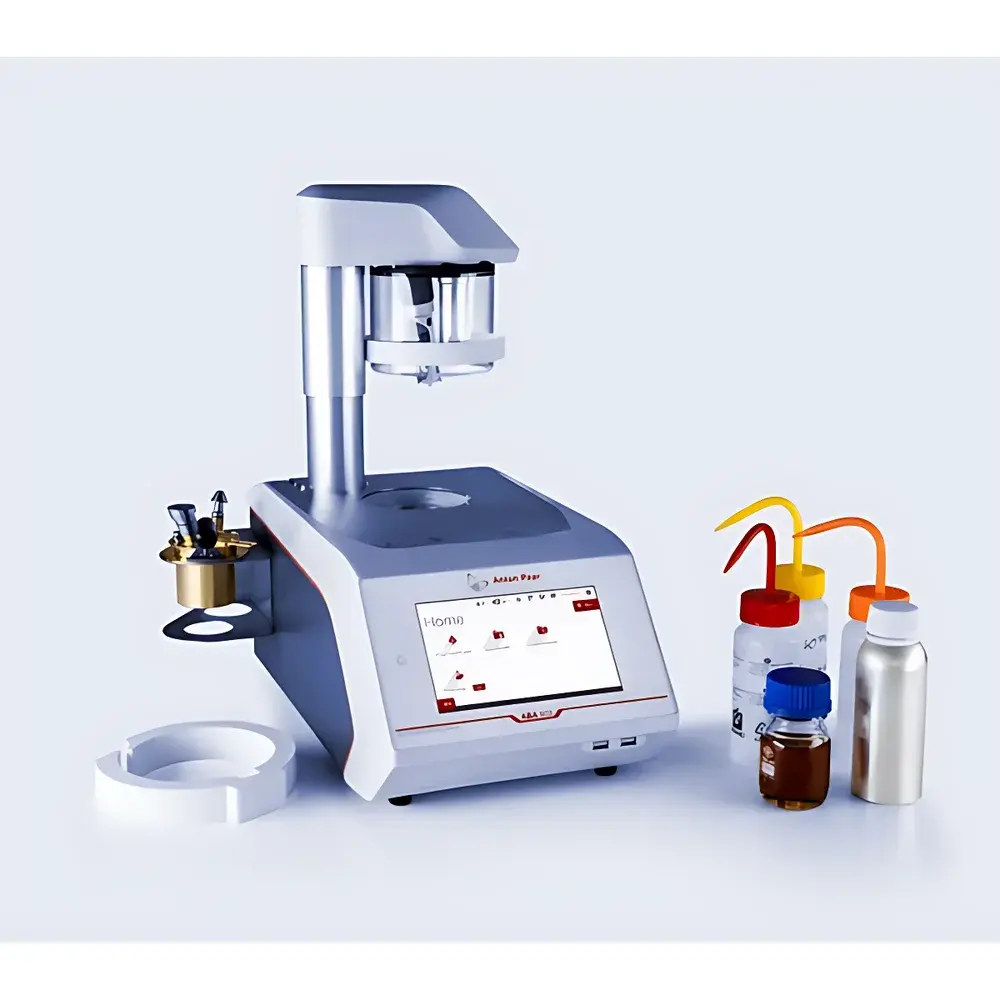
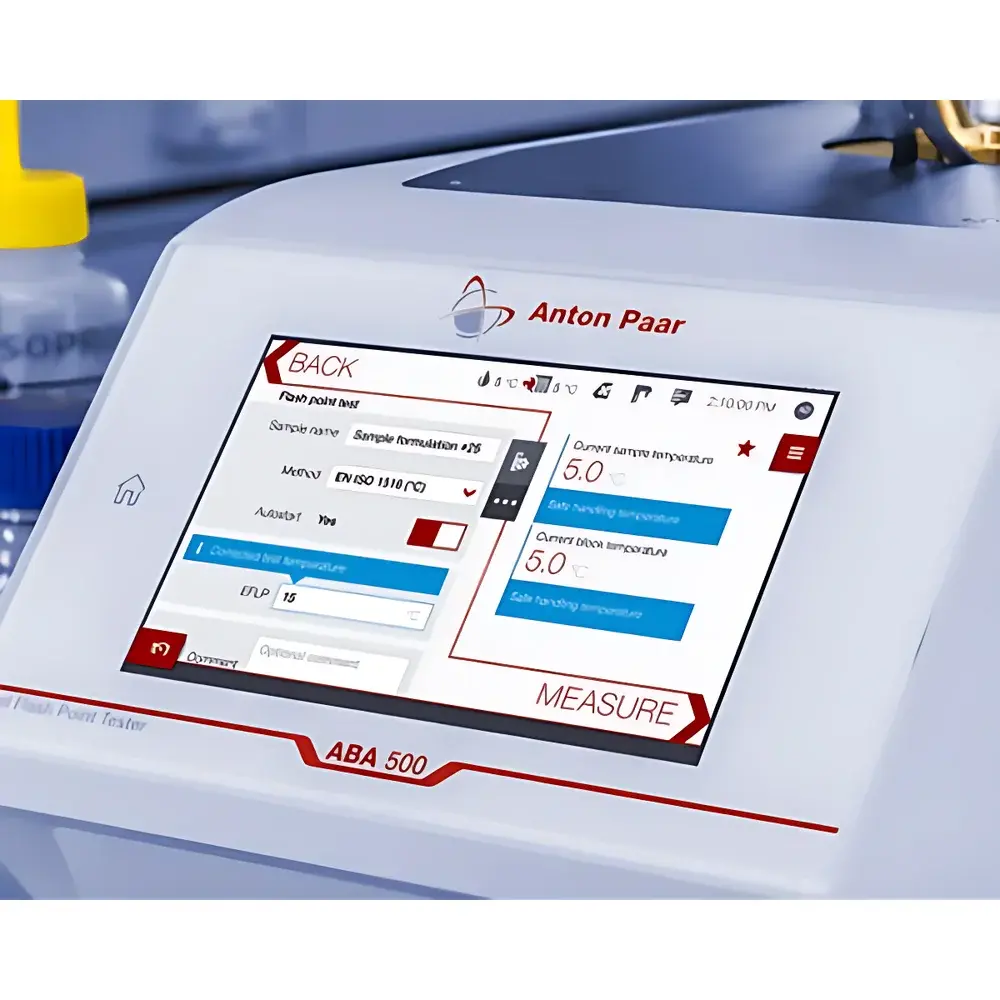
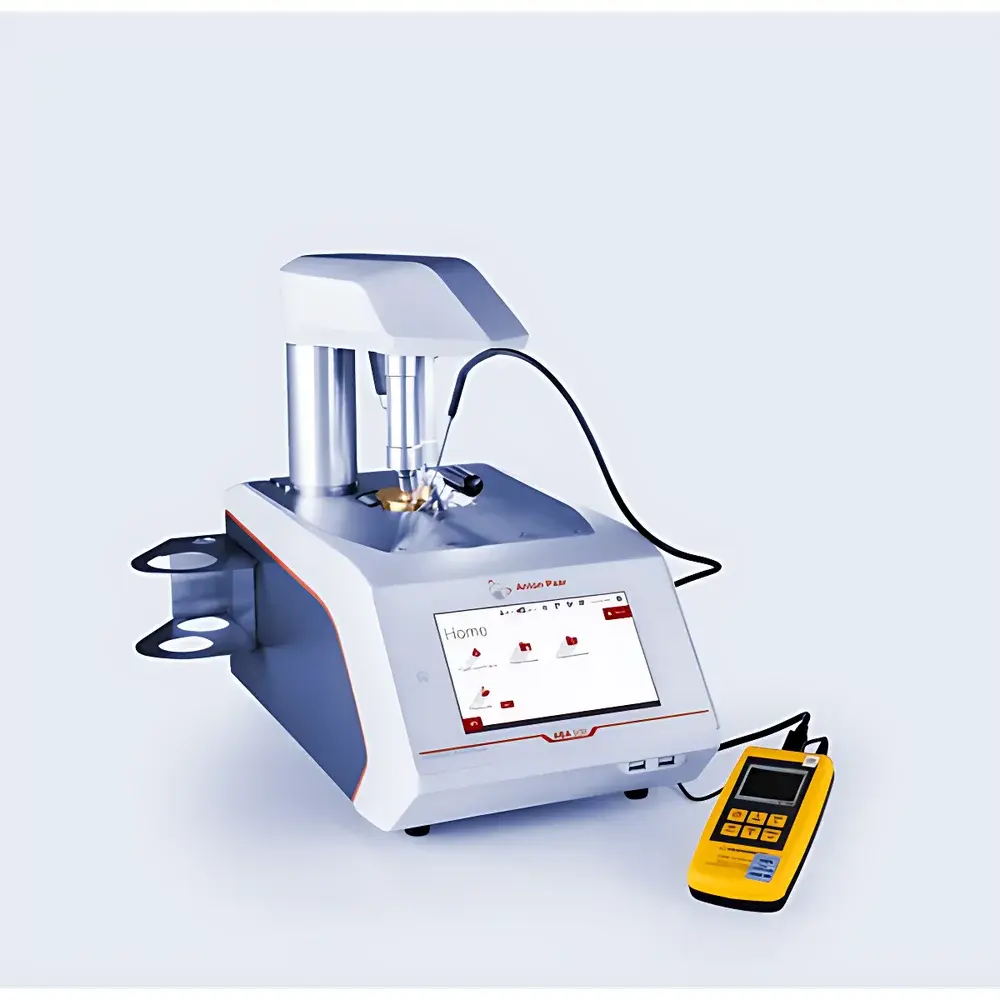
Anton Paar ABA 300 & ABA 500 Automated Abel Flash Point Testers
| Brand | Anton Paar |
|---|---|
| Origin | Germany |
| Manufacturer Type | Manufacturer |
| Origin Category | Imported |
| Model | ABA 300 & ABA 500 |
| Detection Method | Closed-Cup (Abel) |
| Operation Mode | Fully Automatic |
| Temperature Range | 10 °C to 110 °C (air-cooled) |
| Ignition Source | Electronic (encapsulated hot-wire) |
| Repeatability | ±1.4 °C |
| Compliant Standards | ISO 13736, ISO 1516, ISO 1523, GB/T 21789, GB/T 21775, GB/T 21792 |
Overview
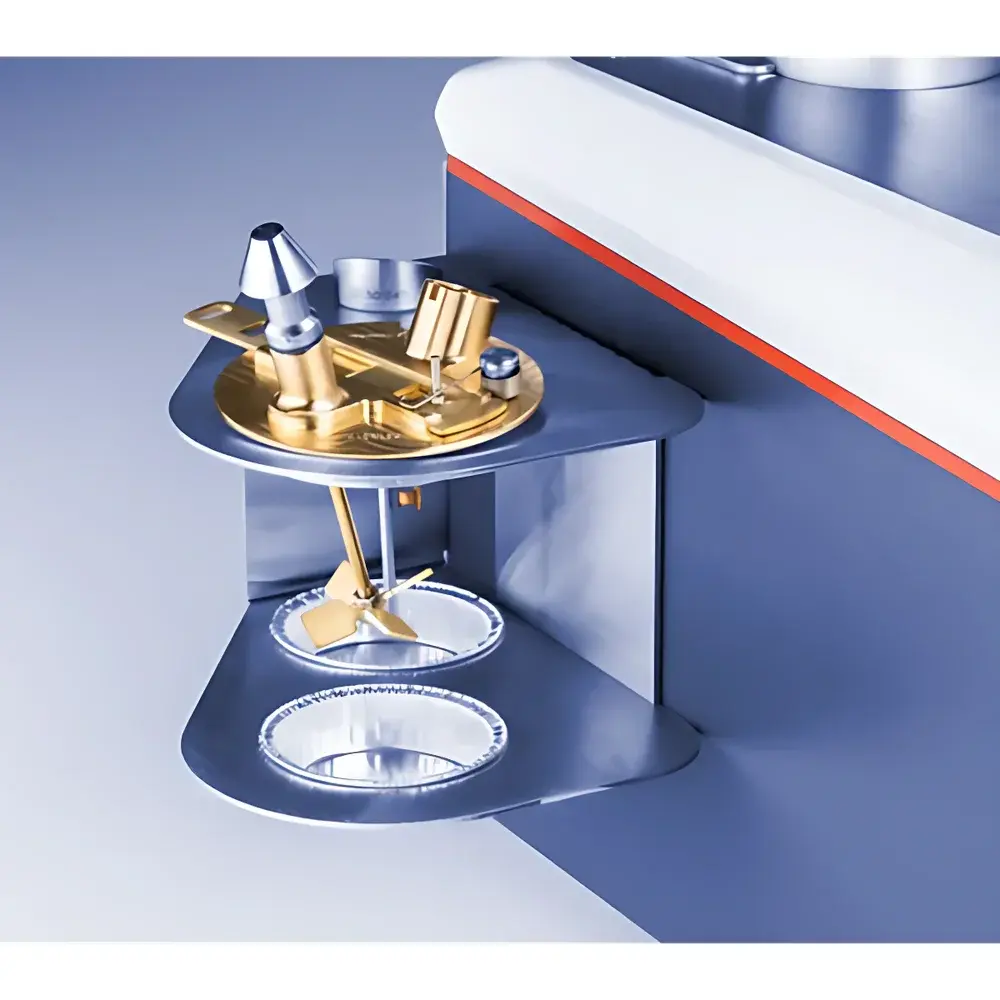
The Anton Paar ABA 300 and ABA 500 are fully automated, high-precision closed-cup flash point testers engineered for rigorous compliance with the Abel method—specifically optimized for aviation turbine fuels (Jet A-1, JP-5), solvents, fragrances, flavorings, and other low-viscosity, volatile organic compounds. These instruments operate on the fundamental principle of controlled heating under sealed conditions, where a calibrated hot-wire ignition source is introduced at predefined temperature intervals while vapor concentration is continuously monitored. Flash point is determined as the lowest temperature at which the sample vapor-air mixture ignites momentarily upon exposure to the ignition source—strictly adhering to the thermodynamic and procedural constraints defined in ISO 13736 and related national standards. Designed for integration into regulated quality control environments, both models feature a robust, single-chamber measurement cell architecture with integrated thermal management and real-time pressure compensation, ensuring measurement integrity across wide ambient and sample volatility gradients.
Key Features
- Fully automated operation with programmable test sequences, eliminating manual intervention from sample loading through result validation and reporting.
- Patented encapsulated hot-wire ignition system delivering >10× service life versus conventional filament-based systems—reducing maintenance frequency and consumables cost without compromising ignition reliability.
- Dual thermal regulation modes: air-cooled configuration (10–110 °C standard; up to 130 °C with optional forced-air enhancement) and liquid-cooled variant supporting extended range from –30 °C to +130 °C—enabling precise flash point determination of cryogenic solvents and high-boiling fractions within a single platform.
- Integrated flame detection and automatic suppression system: optical flame sensors trigger immediate nitrogen purge and thermal cutoff upon confirmed ignition event, satisfying laboratory safety requirements per EN 61000-6-4 and local chemical handling protocols.
- Modular hardware design compliant with IP54 ingress protection, corrosion-resistant stainless-steel sample chamber, and self-diagnostic firmware enabling predictive calibration alerts and fault logging traceable to IEC 62443-3-3 cybersecurity guidelines.
Sample Compatibility & Compliance
The ABA 300/500 supports analysis of transparent, non-opaque liquids with kinematic viscosity below 10 mm²/s at 40 °C—covering aviation fuels, hydrocarbon solvents (e.g., naphtha, xylene), ester-based carriers, and fragrance oil blends. It excludes suspensions, emulsions, or highly viscous residues requiring open-cup methodologies. Regulatory alignment includes full traceability to ISO 13736 (Abel method for petroleum products), ISO 1516 and ISO 1523 (flash point determination of low-flash-point liquids), and Chinese national standards GB/T 21789, GB/T 21775, and GB/T 21792—ensuring data acceptability in customs clearance, refinery QA/QC, and regulatory submission dossiers. Instrument qualification documentation supports IQ/OQ/PQ protocols aligned with GLP and GMP Annex 11 expectations.
Software & Data Management
Controlled via Anton Paar’s AP Connect software suite (v4.2+), the ABA series provides role-based user access, electronic signature support, and full 21 CFR Part 11-compliant audit trails—including operator ID, timestamped parameter changes, raw sensor logs, and result approvals. Data export options include direct LIMS integration via ASTM E1384-compliant HL7 messaging, CSV/Excel batch reporting, and encrypted email transmission with digital certificate verification. All measurement records retain full metadata: ambient humidity/pressure, cooling medium status, ignition energy profile, and thermal ramp fidelity—facilitating root-cause analysis during deviation investigations.
Applications
- Aviation fuel certification labs verifying flash point compliance for Jet A-1 per DEF STAN 91-91 and ASTM D93 Annex A1.
- Chemical manufacturing QC laboratories performing routine release testing of solvent batches against ISO 8217 and REACH SVHC screening thresholds.
- Flavor & fragrance R&D facilities assessing thermal stability and safe handling limits of concentrated aroma compounds.
- Third-party testing organizations conducting accredited flash point determinations under ISO/IEC 17025:2017 scope requirements.
- Research institutions studying ignition kinetics of bio-derived oxygenates (e.g., ethyl levulinate, gamma-valerolactone) under controlled pressure-humidity conditions.
FAQ
What distinguishes the ABA 500 from the ABA 300?
The ABA 500 includes liquid-cooling capability (–30 °C to +130 °C), advanced pressure compensation algorithms, and extended firmware support for multi-standard concurrent execution—while the ABA 300 operates within the air-cooled range (10–130 °C) and targets core ISO 13736 compliance.
Is external calibration required between tests?
No. Each test cycle includes an internal reference check using certified mineral oil standards; full recalibration is recommended annually or after 500 test cycles, traceable to NIST SRM 2721.
Can the instrument be integrated into a centralized lab automation network?
Yes—via Ethernet-connected AP Connect with OPC UA server support, enabling bidirectional communication with DeltaV, LabWare LIMS, and Siemens Desigo CC platforms.
Does the system meet explosion-proof requirements for Zone 1 installations?
The base unit is rated for general laboratory use (non-hazardous area); optional ATEX-certified enclosure kits (II 2G Ex db IIB T3 Gb) are available for classified environments.
How is data integrity maintained during power interruption?
All active measurements are auto-saved to non-volatile memory every 5 seconds; recovery resumes from last valid thermal step upon reboot, with full audit trail continuity preserved.
Related Products





