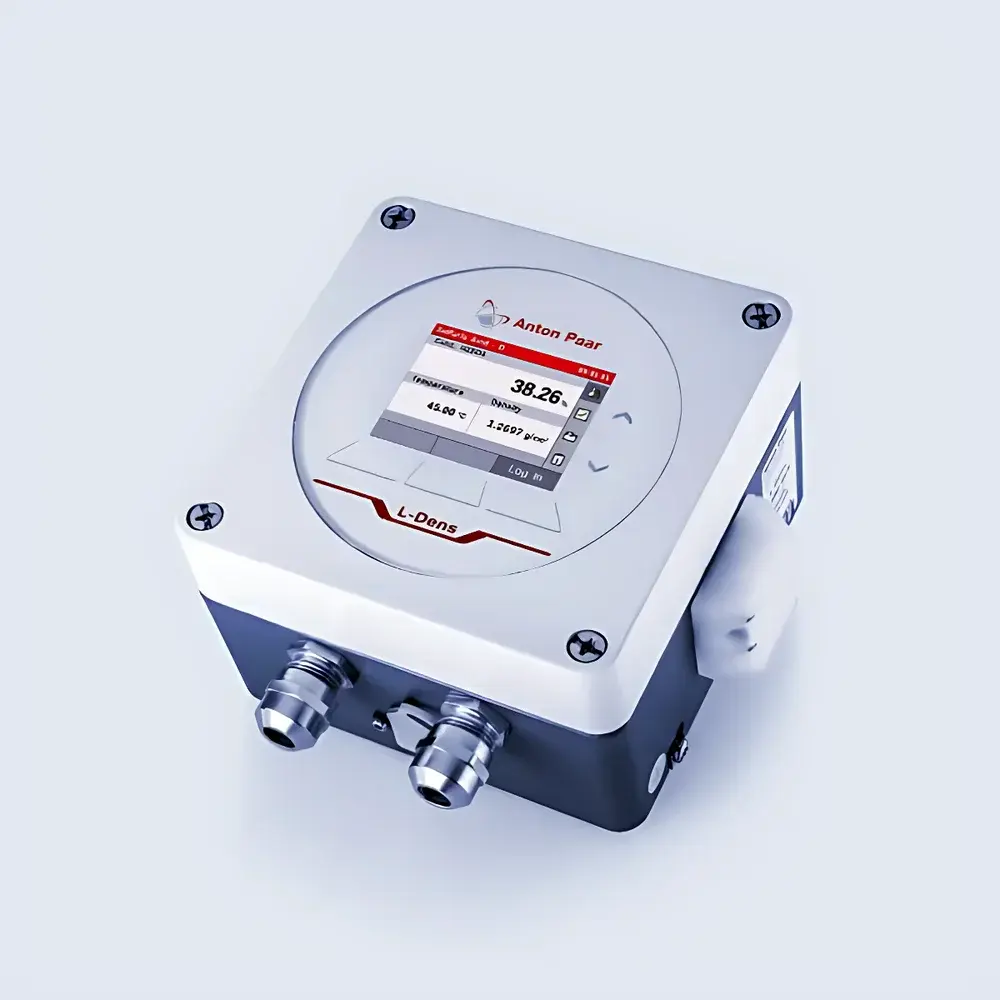
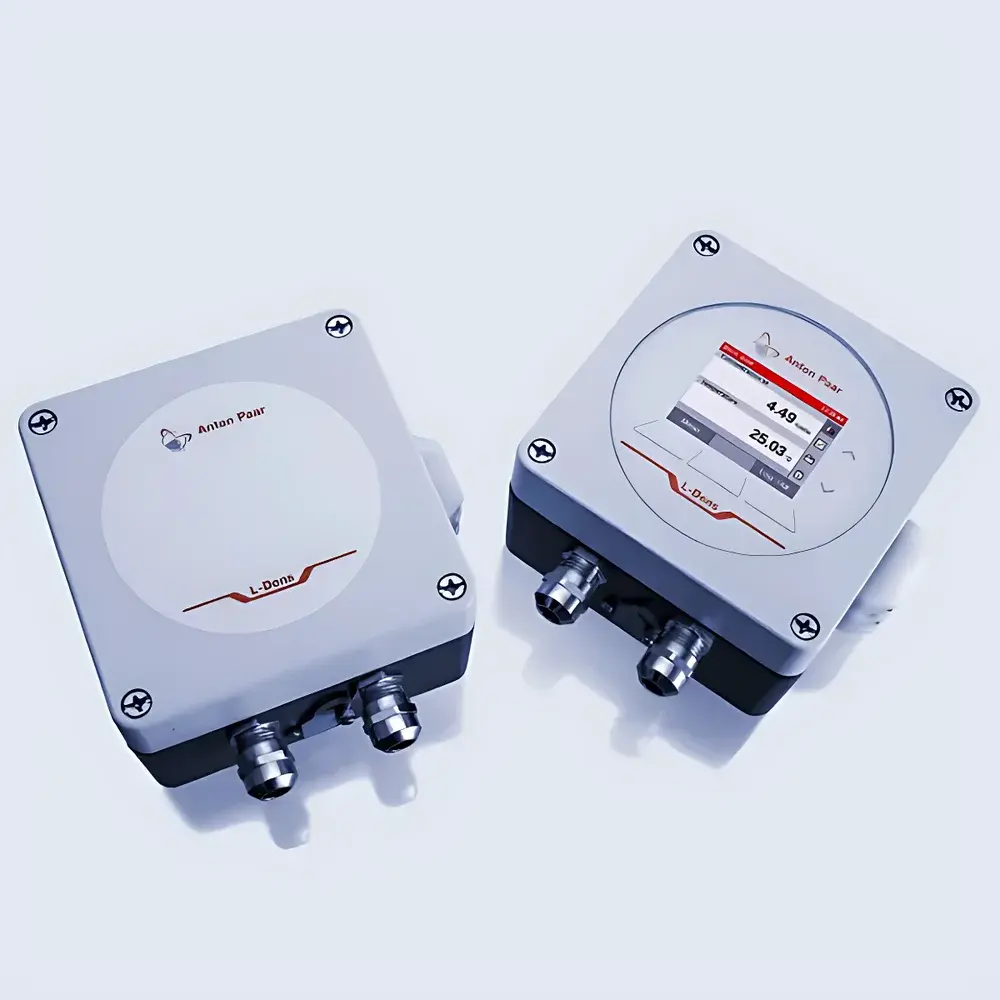
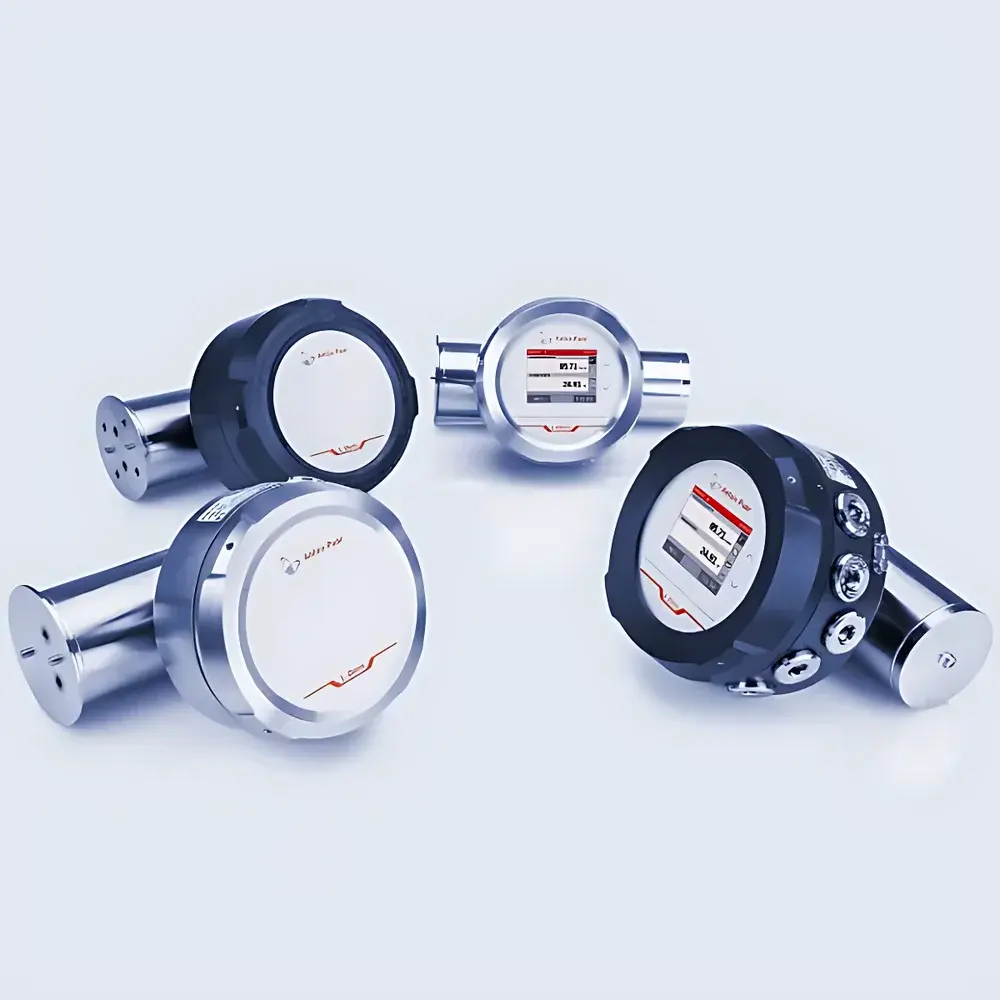
Anton Paar L-Dens 3300 Density Sensor
| Brand | Anton Paar |
|---|---|
| Origin | Austria |
| Manufacturer Type | Manufacturer |
| Origin Category | Imported |
| Model | L-Dens 3300 |
| Pricing | Upon Request |
Overview
The Anton Paar L-Dens 3300 is a high-precision, inline density sensor engineered for continuous, real-time measurement of liquid density and derived concentration parameters in low-flow industrial processes. It operates on the well-established oscillating U-tube principle—where the resonant frequency of a filled, vibrating tube correlates inversely with the density of the fluid—and delivers stable, drift-free measurements with three-digit resolution (e.g., ±0.001 g/cm³ typical repeatability). Designed specifically for flow rates up to 80 L/h, the L-Dens 3300 bridges the gap between laboratory-grade accuracy and robust process instrumentation. Its compact, self-contained architecture eliminates dependency on external controllers or signal conditioners, making it suitable for integration into pilot-scale reactors, benchtop synthesis systems, small-batch production lines, and R&D environments across chemical, petrochemical, food & beverage, and academic research facilities.
Key Features
- Self-contained design with integrated TFT display, capacitive touch keys, and embedded controller—no external hardware required for operation or configuration
- Two wetted tube options: stainless steel (2.1 mm internal diameter) for general-purpose and high-pressure applications; borosilicate glass (2.0 mm ID) for aggressive media including concentrated sulfuric acid, caustics, and organic solvents
- Real-time calculation of density-corrected concentration units: °Brix, °Plato, alcohol content (% v/v), API gravity, and custom-defined linear or polynomial calibration curves
- Onboard temperature compensation using integrated Pt100 sensor (accuracy ±0.1 °C) ensuring traceable, thermally stabilized density output
- No moving parts, no consumables, zero scheduled maintenance—engineered for long-term operational reliability in unattended installations
- IP65-rated enclosure with 316 stainless steel housing and standard 1/2″ NPT or G1/2″ process connections
Sample Compatibility & Compliance
The L-Dens 3300 accommodates a broad range of homogeneous liquids—including hydrocarbons, aqueous solutions, alcohols, acids, bases, syrups, and fermentation broths—provided viscosity remains below 100 mPa·s and particulate content is negligible. The choice of wetted materials (316L stainless steel or Class A borosilicate glass) ensures compatibility with ISO 8502-3–compliant cleaning protocols and resistance to corrosion per ASTM G31 immersion testing guidelines. While not certified for SIL or ATEX/IECEx out-of-the-box, the sensor meets EMC Directive 2014/30/EU and Low Voltage Directive 2014/35/EU. Its measurement stability supports GLP-compliant data integrity when paired with Pico 3000 controller logging (optional), which provides audit-trail functionality aligned with FDA 21 CFR Part 11 requirements for electronic records.
Software & Data Management
The embedded firmware supports Modbus RTU (RS-485) and optional 4–20 mA analog output (HART-enabled) for seamless integration into DCS, SCADA, or PLC-based control systems. When used with the Anton Paar Pico 3000 online controller (sold separately), users gain access to advanced data management features: time-stamped CSV export, configurable alarm thresholds, trend visualization, and secure user-level access control. All calibration events—including zero-point and span adjustments—are automatically logged with timestamp, operator ID, and parameter values, fulfilling basic traceability requirements under ISO/IEC 17025 and USP analytical instrument qualification frameworks.
Applications
- Concentration monitoring in batch and continuous sugar refining (°Brix), brewing (°Plato), and distillation (alcohol %)
- Density verification during catalyst slurry preparation and solvent recovery in fine chemical synthesis
- API gravity tracking in upstream petroleum blending and custody transfer pre-checks
- In-line quality assurance for pharmaceutical excipient solutions and cleaning-in-place (CIP) rinse validation
- Real-time reaction progress analysis in lab-scale flow chemistry reactors and microreactor platforms
FAQ
What is the minimum and maximum recommended flow rate for accurate measurement?
The L-Dens 3300 is optimized for flow rates between 0.5 L/h and 80 L/h. Below 0.5 L/h, air entrapment may affect stability; above 80 L/h, damping effects reduce oscillation amplitude and compromise precision.
Can the sensor be calibrated in situ without removing it from the process line?
Yes—zero calibration can be performed with dry air or nitrogen; span calibration requires a certified reference liquid (e.g., water at 20 °C, ethanol at 20 °C) introduced via a bypass loop or sample port.
Is temperature control of the process stream required?
No—integrated Pt100 sensing enables automatic temperature compensation; however, rapid ambient fluctuations (>2 °C/min) may temporarily affect thermal equilibrium and should be mitigated by insulation or shielding.
Does the L-Dens 3300 support hazardous area installation?
Not natively—the base unit lacks intrinsic safety certification; explosion-proof enclosures or remote mounting with purge systems are required for Zone 1/2 deployment.
How often does the sensor require recalibration?
Under stable operating conditions and consistent media, annual verification against traceable standards is sufficient; more frequent checks are advised after process changes involving new chemistries or temperature ranges.
Related Products