
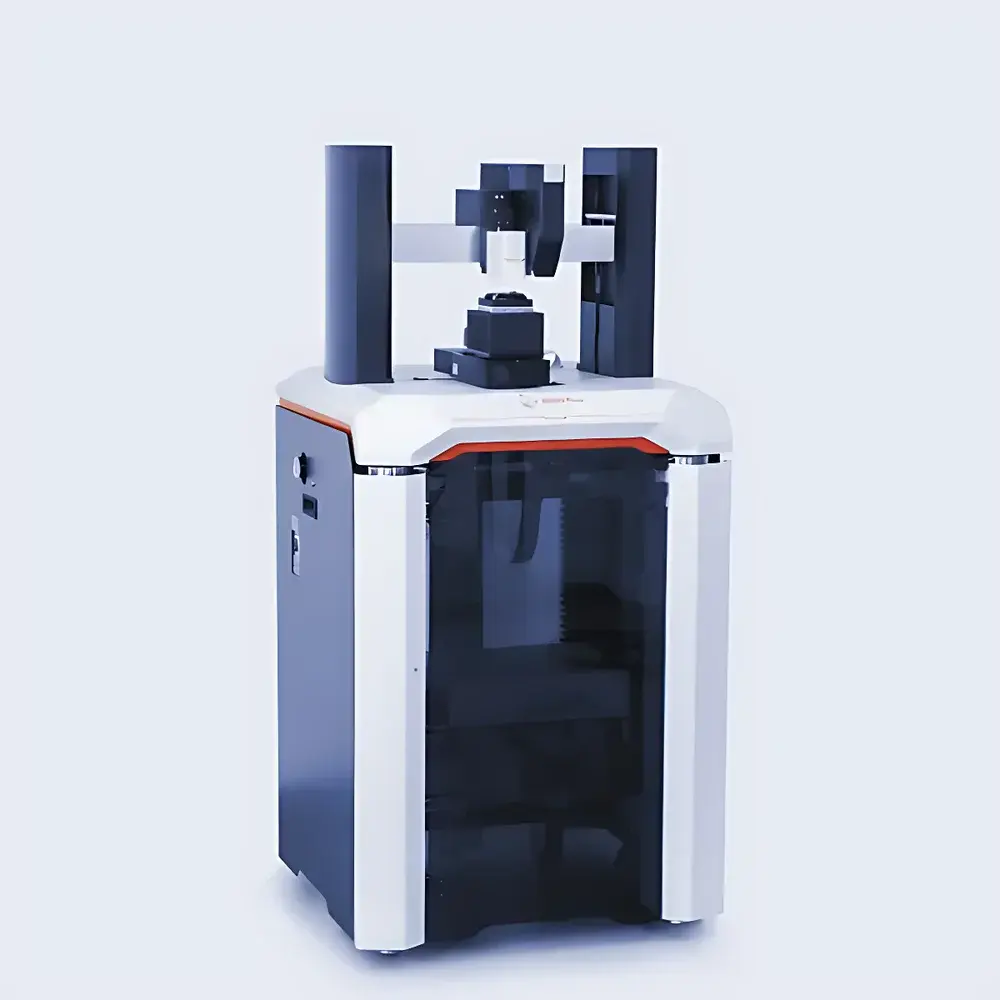
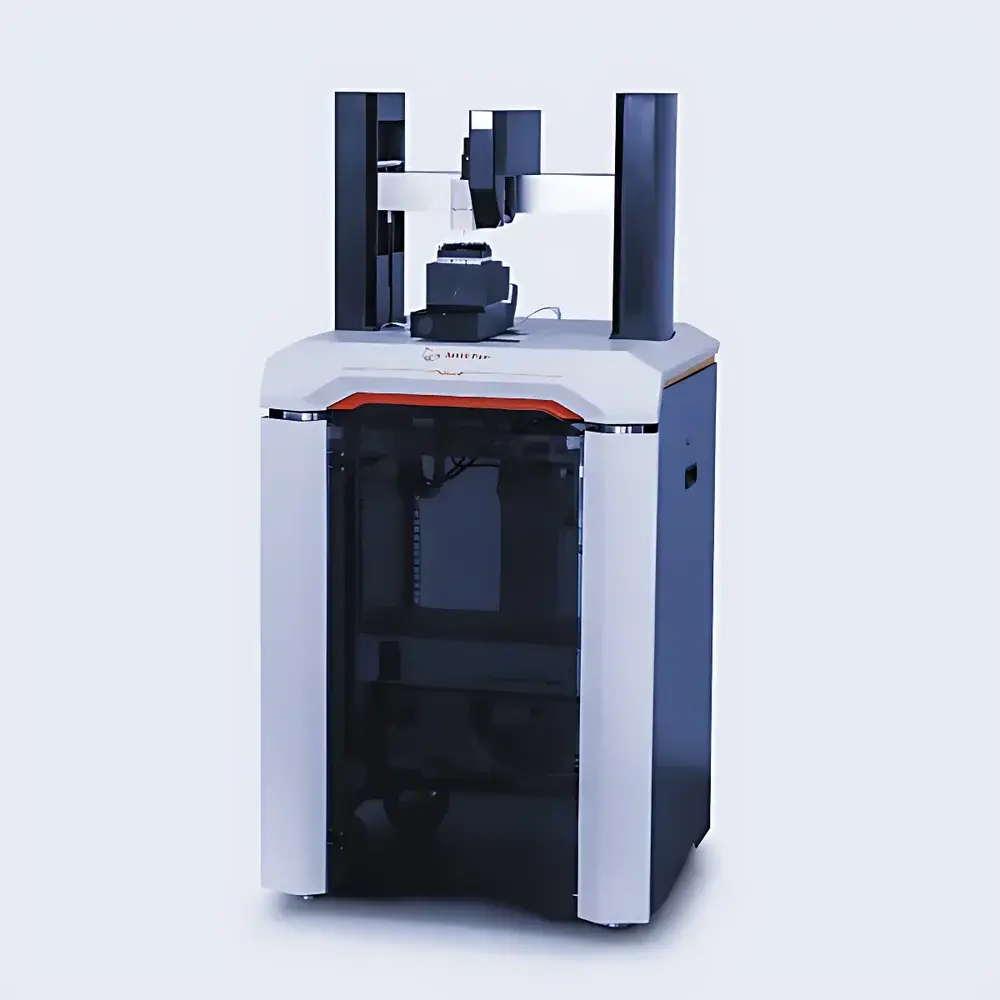
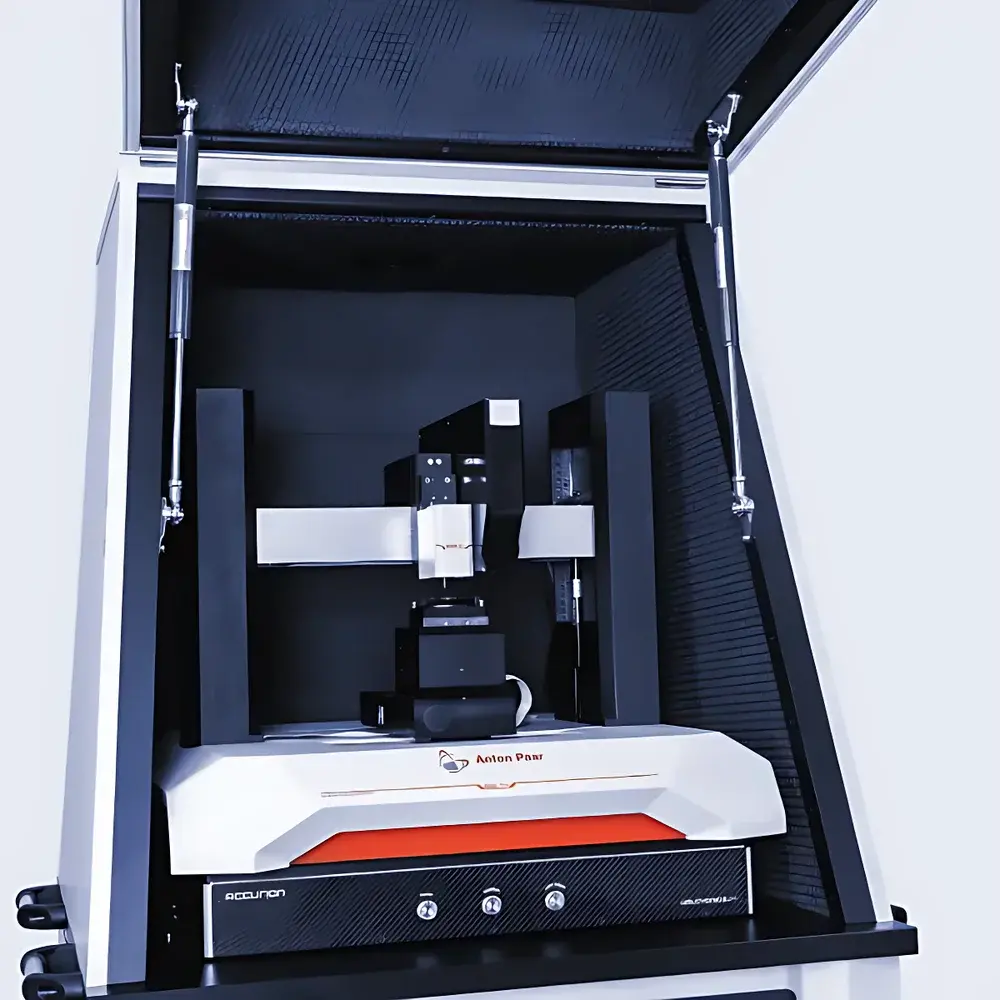
Anton Paar UNHT³ Bio Biological Nanoindenter
| Brand | Anton Paar |
|---|---|
| Origin | Switzerland |
| Manufacturer Type | Manufacturer |
| Origin Category | Imported |
| Model | UNHT³ Bio |
| Instrument Type | Biological Nanoindenter |
| Maximum Indentation Depth | 100 µm |
| Effective Load Range | 20 mN |
| Load Resolution | 1 nN |
| Displacement Resolution | 0.006 nm |
Overview
The Anton Paar UNHT³ Bio is a high-precision biological nanoindenter engineered specifically for the mechanical characterization of ultra-soft, hydrated, and viscoelastic biomaterials—including native soft tissues (e.g., cornea, cartilage, arterial wall), hydrogels, decellularized scaffolds, and 3D bioprinted constructs. Unlike conventional nanoindenters optimized for hard or stiff materials, the UNHT³ Bio employs a dual-sensor architecture combining a high-sensitivity piezoresistive load sensor and an interferometric displacement sensor to achieve sub-nanometer depth resolution and sub-nanonewton force resolution—critical for quantifying low-modulus materials (typically < 1 MPa) without substrate interference or excessive creep-induced artifacts. Its measurement principle is based on controlled quasi-static and dynamic depth-sensing indentation, compliant with ISO 14577-1:2015 and ASTM E2546–19 standards for instrumented indentation testing. The system operates under ambient or liquid-immersed conditions, supporting physiological saline or culture medium environments to preserve sample viability during in situ mechanical interrogation.
Key Features
- Dual-sensor metrology: Independent high-fidelity load (1 nN resolution) and displacement (0.006 nm resolution) sensing eliminates cross-talk and ensures traceable, reproducible measurements across the full 0–20 mN load range.
- Bio-optimized control algorithms: Adaptive contact detection, creep-compensated loading/unloading ramps, and Hertzian contact modeling—validated for spherical, flat-punch, and conical indenters—enable robust elastic modulus extraction from shallow, non-linear indentation curves typical of soft tissues.
- Integrated long-working-distance optical microscope: 10×–50× magnification with motorized focus enables precise tip positioning over heterogeneous tissue regions (e.g., zonal cartilage, epithelial-stromal interfaces) and real-time observation of deformation onset.
- Step Platform modularity: The UNHT³ Bio mounts on Anton Paar’s Step platform, allowing seamless integration with complementary modules—such as nanoscratch, microscratch, or AFM-coupled surface mapping—within a single instrument footprint, facilitating multi-scale mechanical profiling from nanoscale stiffness to macro-scale adhesion failure.
- Thermally stable design: Active temperature stabilization (±0.1 °C) and low-drift mechanics support extended-duration creep and stress-relaxation experiments—essential for characterizing time-dependent viscoelastic behavior per ISO 10113 and ASTM D695.
Sample Compatibility & Compliance
The UNHT³ Bio accommodates a wide range of biological specimens: fresh/frozen tissue sections (5–500 µm thick), hydrogel discs (≥3 mm diameter), cell-laden constructs, and ex vivo organ explants. Sample mounting uses biocompatible vacuum chucks or custom holders compatible with petri dishes and flow chambers. All hardware and software comply with ISO/IEC 17025 requirements for testing laboratories and support GLP/GMP-aligned audit trails via configurable user roles, electronic signatures, and FDA 21 CFR Part 11–compliant data integrity features—including immutable raw data logging, version-controlled method templates, and timestamped parameter change history.
Software & Data Management
The proprietary iNano software provides a validated, workflow-driven interface for test definition, real-time monitoring, and automated post-processing. Users define indentation arrays (grid, line, or ROI-based), select biomechanically relevant models (Hertz, Sneddon, Oliver–Pharr with bio-adapted unloading fitting), and apply statistical filtering (e.g., Weibull distribution analysis for modulus heterogeneity). Raw force–displacement curves are stored in HDF5 format; ASCII export supports third-party analysis (MATLAB, Python SciPy). Batch processing enables comparative analysis across cohorts (e.g., healthy vs. osteoarthritic cartilage), while built-in reporting tools generate ISO-compliant test certificates with uncertainty budgets per GUM (JCGM 100:2008).
Applications
- Mechanical phenotyping of articular cartilage degeneration in osteoarthritis research
- Validation of biomimetic hydrogel stiffness gradients for neural or cardiac tissue engineering
- Quantitative assessment of corneal biomechanics pre- and post-refractive surgery
- Time-resolved monitoring of scaffold degradation-induced modulus loss in vitro
- Correlation of local elastic modulus with histological staining (e.g., collagen II, proteoglycan content)
- Development and regulatory testing of injectable biomaterials per USP and ISO 13485
FAQ
What indentation models are supported for soft tissue analysis?
The UNHT³ Bio includes Hertzian contact modeling (for spherical indenters), Sneddon theory (for conical tips), and a modified Oliver–Pharr algorithm with creep correction—each selectable per test protocol and validated against reference elastomers (PDMS, agarose) per ASTM F2624.
Can the system perform tests in liquid immersion?
Yes—the stage and transducer assembly are fully compatible with PBS, DMEM, or other aqueous media; optional fluid cells with temperature control (20–40 °C) and gas perfusion (O₂/CO₂) are available.
Is the software compliant with FDA 21 CFR Part 11?
Yes—iNano v4.2+ implements full electronic signature workflows, audit trail generation, and role-based access control, certified for use in regulated biomedical R&D and preclinical device evaluation.
How is thermal drift minimized during long-term creep tests?
The instrument integrates active thermal shielding, low-expansion ceramic components, and real-time drift compensation using dual-sensor baseline referencing—achieving <0.05 nm/min drift over 1-hour hold periods under ISO-standard lab conditions.
What indenter geometries are supplied as standard?
Standard options include spherical tips (R = 1, 5, 20, and 50 µm), flat-punch (10 and 25 µm diameter), Berkovich, and cube-corner; custom geometries (e.g., large-radius spheres up to 500 µm) are manufacturable upon request.



