
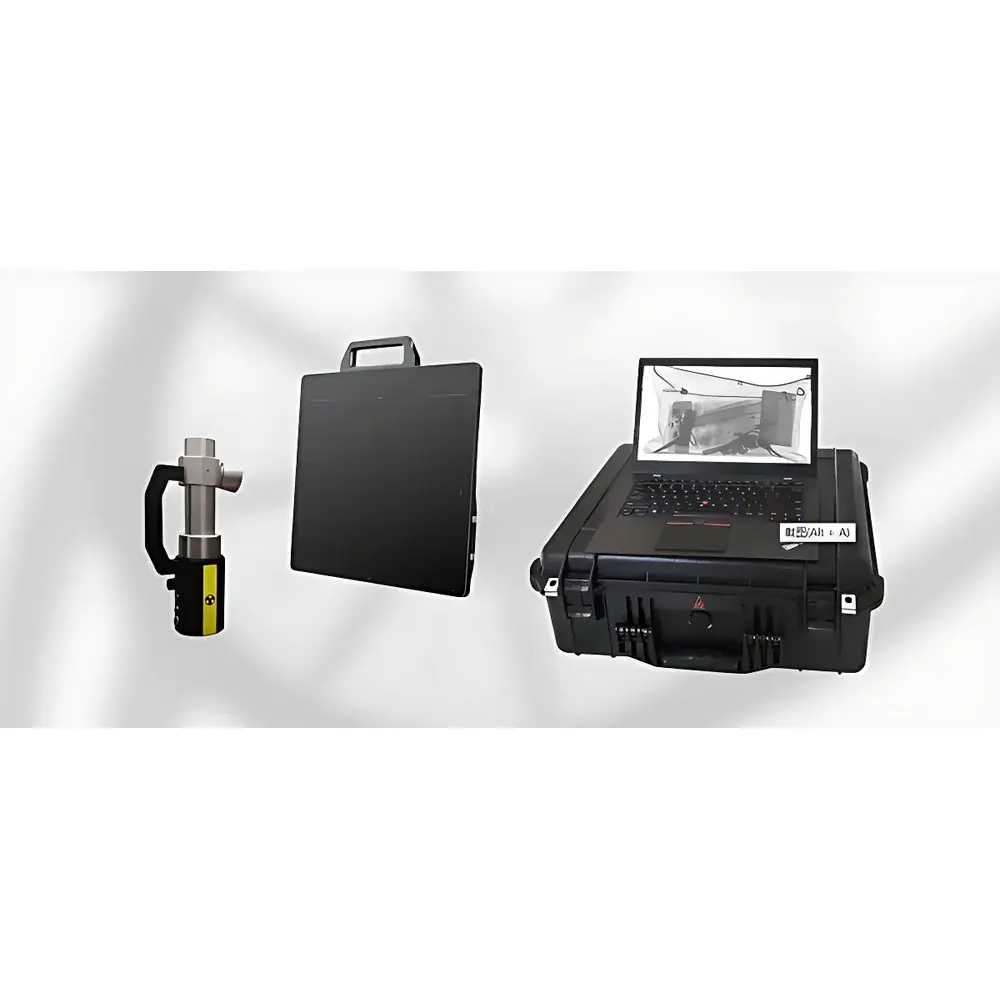
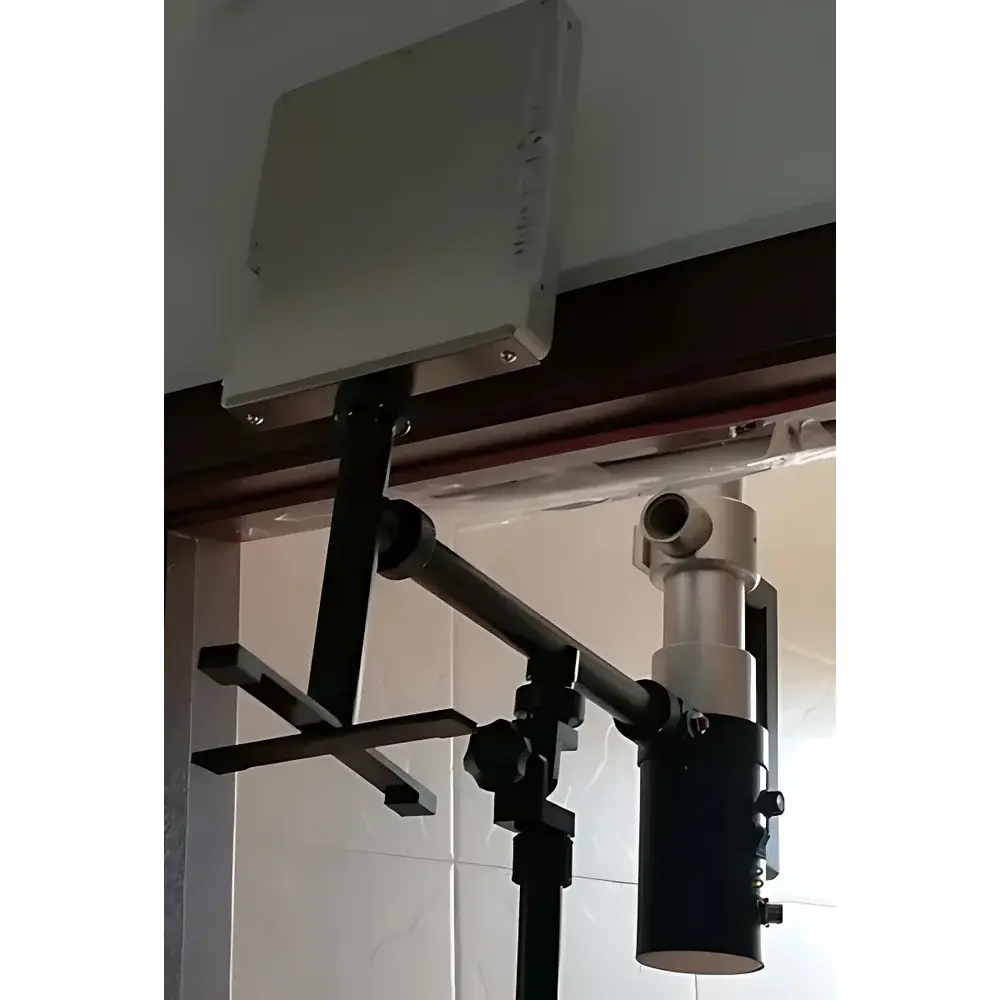
Aolong AL-DR-80 Portable X-ray Digital Radiography (DR) Imaging System for Security Applications
| Brand | Aolong |
|---|---|
| Origin | Liaoning, China |
| Manufacturer Type | Manufacturer |
| Origin Category | Domestic |
| Model | AL-DR-80 |
| Price Range | USD 140,000 – 280,000 |
Overview
The Aolong AL-DR-80 is a purpose-engineered portable digital radiography (DR) imaging system designed specifically for field-deployable security and forensic inspection tasks. Based on pulsed X-ray generation and direct-conversion flat-panel detector technology, the system delivers real-time, high-contrast radiographic images with spatial resolution optimized for detecting concealed threats in low-density to medium-density materials—such as plastics, textiles, ceramics, and organic compounds—commonly encountered in baggage, parcels, vehicles, and human remains. Unlike conventional film-based or computed radiography (CR) systems, the AL-DR-80 employs a CsI-based amorphous silicon (a-Si) digital detector (MP2530 model) coupled with a compact 80 kVp X-ray source (AL80 generator), enabling immediate image acquisition without chemical processing or phosphor plate scanning. Its architecture adheres to fundamental principles of X-ray attenuation physics (Lambert–Beer law), where differential absorption across material interfaces generates contrast directly proportional to atomic number, density, and thickness—critical for distinguishing explosives, narcotics, weapons components, or tampered evidence.
Key Features
- Compact, single-operator ergonomic design: Total system weight < 28 kg; fully integrated into a wheeled transit case compliant with IATA Section 2.3 for air transport of radiation-emitting equipment.
- High-efficiency X-ray source: AL80 generator with adjustable tube voltage (40–80 kVp) and pulsed exposure control (1–100 ms), minimizing dose while maintaining contrast-to-noise ratio (CNR) across varying object densities.
- MP2530 digital detector: 25 cm × 30 cm active area, 127 µm pixel pitch, >70% detective quantum efficiency (DQE) at 60 kVp, supporting both static and dynamic (real-time fluoroscopic) acquisition modes.
- Dual-power operation: Integrated Li-ion battery pack provides ≥5 hours of continuous operation after 60-minute charge; also compatible with 100–240 VAC input via universal power adapter.
- Wireless remote control: IEEE 802.15.4-based telemetry enables safe operation at distances up to 10 m from the X-ray emitter, with hardware interlocks preventing accidental exposure during setup or repositioning.
- Optimized beam collimation: Adjustable collimator with ≤5° divergence angle and integrated lead shielding meeting GBZ 138–2002 and IEC 62463:2016 requirements for stray radiation containment.
Sample Compatibility & Compliance
The AL-DR-80 supports non-destructive inspection of heterogeneous objects ranging from postal envelopes and courier packages (≤60 cm × 40 cm × 30 cm) to vehicle undercarriages and anthropomorphic specimens. It complies with Chinese national standards GB/T 25758–2010 (Performance Requirements for Portable X-ray Inspection Systems) and GBZ 138–2002 (Protection Standards for X-ray Equipment in Public Security Applications). While not certified to EU CE/EN 62463 or FDA 21 CFR Part 1020.40, its mechanical and electrical safety architecture—including redundant exposure termination circuits, emergency stop button, and automatic beam cutoff upon signal loss—is engineered to support GLP-aligned operational protocols. Dose output is calibrated and traceable to CNAS-accredited reference laboratories, facilitating audit-ready documentation for internal QA programs.
Software & Data Management
The bundled Windows-based image acquisition and analysis suite supports DICOM 3.0 export, lossless PNG/TIFF archiving, and configurable annotation layers (ROI measurement, edge enhancement, dual-energy subtraction simulation). Audit trails record operator ID, exposure parameters, timestamp, and detector calibration status—enabling compliance with ISO/IEC 17025 clause 7.9 for data integrity. Image metadata includes embedded GPS coordinates (when connected to external GNSS module), ambient temperature/humidity logs, and battery state-of-charge—critical for evidentiary chain-of-custody documentation in forensic deployments. Software updates are delivered via secure HTTPS portal with SHA-256 signature verification.
Applications
- Counter-terrorism and EOD operations: Rapid identification of IED components (power sources, initiators, shrapnel) within suspect luggage or vehicles.
- Customs and border protection: High-throughput screening of air cargo, maritime containers, and diplomatic pouches for contraband narcotics, counterfeit goods, or undeclared currency.
- Forensic pathology: Non-invasive skeletal survey and foreign-body localization during postmortem examination without tissue disruption.
- Arson investigation: Detection of accelerant residues, hidden wiring, or incendiary devices embedded in charred structural elements.
- Logistics security: Verification of package integrity, detection of tampering or internal voids in high-value shipments.
FAQ
What is the maximum detectable object thickness for steel equivalence?
The AL-DR-80 achieves up to 22 mm steel-equivalent penetration at 80 kVp with optimal detector integration time; performance varies with material composition and geometry.
Does the system support regulatory reporting formats required by INTERPOL or WCO?
Yes—DICOM-compliant image exports include embedded structured metadata fields aligned with WCO SAFE Framework Annex B and INTERPOL’s I-24/7 forensic imaging guidelines.
Is detector calibration traceable to international standards?
Calibration certificates reference CNAS-accredited primary standards (e.g., NIM SRM-123); annual recalibration is recommended per ISO/IEC 17025 clause 6.6.
Can the system operate in extreme ambient temperatures?
Operational range: −10 °C to +45 °C; battery performance degrades below 0 °C, requiring thermal preconditioning prior to use.
What cybersecurity measures are implemented in the acquisition software?
Role-based access control (RBAC), AES-256 encrypted local storage, and disabled default network services mitigate unauthorized data access or firmware tampering.



