
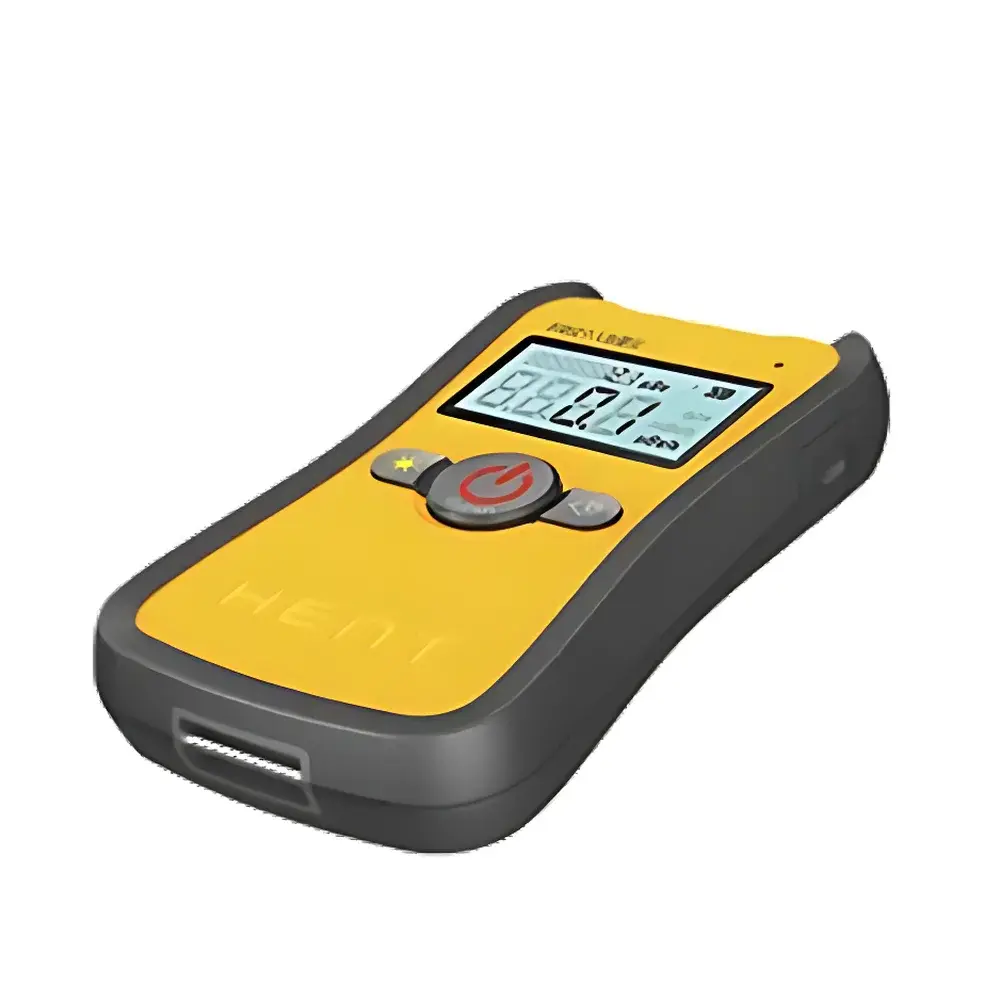
Aolong RAMO-C Personal Radiation Alarm Dosimeter
| Brand | Aolong |
|---|---|
| Model | HENT31-022A |
| Type | Portable Radiation Dose Rate & Accumulated Dose Monitor |
| Detector | Scintillation-based (Energy-Compensated) |
| Measured Radiation | X-ray and Gamma (γ) Radiation |
| Dose Rate Range | 0.01 µSv/h to 10 mSv/h |
| Energy Response Range | 30 keV to 3 MeV |
| Accuracy | < ±15% (Dose Rate) |
| IP Rating | IP65 |
| Operating Temperature | −10 °C to +50 °C |
| Power Supply | 2 × AA batteries |
| Display | Real-time Dose Rate & Cumulative Dose |
| Alert Modes | Audible Tones (Frequency-Modulated), Visual LED (Color + Flash Rate), Vibration |
| Compliance | Designed for IEC 60846-1:2014 (Radiation Protection Instrumentation — Ambient and/or Directional Dose Equivalent (Rate) Meters and/or Monitors for Photons), Supports GLP/GMP-relevant operational traceability |
Overview
The Aolong RAMO-C Personal Radiation Alarm Dosimeter (Model HENT31-022A) is a compact, field-deployable instrument engineered for real-time monitoring of ambient photon radiation fields—specifically X-ray and gamma (γ) radiation—in occupational and environmental settings. Unlike traditional Geiger-Müller (GM) tube-based dosimeters, the RAMO-C employs an energy-compensated scintillation detector, offering enhanced detection efficiency and faster response time across a broad photon energy spectrum (30 keV to 3 MeV). Its core measurement principle relies on pulse-height analysis of scintillation light output, calibrated to deliver dose equivalent rate (H′(10)) in µSv/h and cumulative dose (HT) in µSv or Sv, conforming to the operational definitions in ICRP Publication 116 and IEC 60846-1:2014. Designed for continuous wear by personnel in nuclear power plants, radiopharmaceutical manufacturing facilities, radiotherapy departments, radioactive waste handling units, and regulatory inspection teams, the device meets the functional requirements for personal dosimetry in controlled and supervised areas per IAEA Safety Standards Series No. GSR Part 3.
Key Features
- Scintillation detector with integrated energy compensation—optimized for flat response across 30 keV–3 MeV, minimizing over- or under-response at low and high energies.
- Triple-mode alert system: dynamically modulated audible tone frequency, multi-color LED indicator (green/yellow/red) with variable flash rate, and tactile vibration—all triggered proportionally to instantaneous dose rate.
- IP65-rated enclosure: dust-tight and protected against water jets from any direction, enabling reliable operation in outdoor, industrial, or humid environments including reactor containment peripheries and decommissioning zones.
- Real-time dual-parameter display: simultaneous readout of current dose rate (0.01 µSv/h–10 mSv/h) and accumulated dose (0.1 µSv–1 Sv), updated every 2 seconds with auto-ranging and unit selection (µSv/h, mSv/h, µSv, mSv).
- Low-power architecture: powered by two standard AA alkaline cells, supporting >2000 hours of continuous monitoring at typical background levels (<0.2 µSv/h); battery status displayed with low-voltage warning.
- Ergonomic, one-hand operable housing with non-slip grip and recessed button layout—designed for glove-compatible use in PPE-enforced zones.
Sample Compatibility & Compliance
The RAMO-C is calibrated and verified for use with common photon-emitting radionuclides encountered in industrial and medical applications—including 137Cs (662 keV), 60Co (1.17/1.33 MeV), 192Ir (300–610 keV), and diagnostic X-ray spectra (40–150 kVp). It does not measure alpha, beta, or neutron radiation. The instrument complies with the performance criteria defined in IEC 60846-1:2014 for portable ambient dose equivalent (rate) meters, including angular dependence (±20% up to 60°), temperature dependence (±10% over −10 °C to +50 °C), and linearity (≤±15% deviation over full range). While not a legal metrology device for official dose of record, it supports ALARA (As Low As Reasonably Achievable) implementation and serves as a primary alarm tool in accordance with national radiation protection regulations (e.g., NRC 10 CFR Part 20, EU Directive 2013/59/Euratom).
Software & Data Management
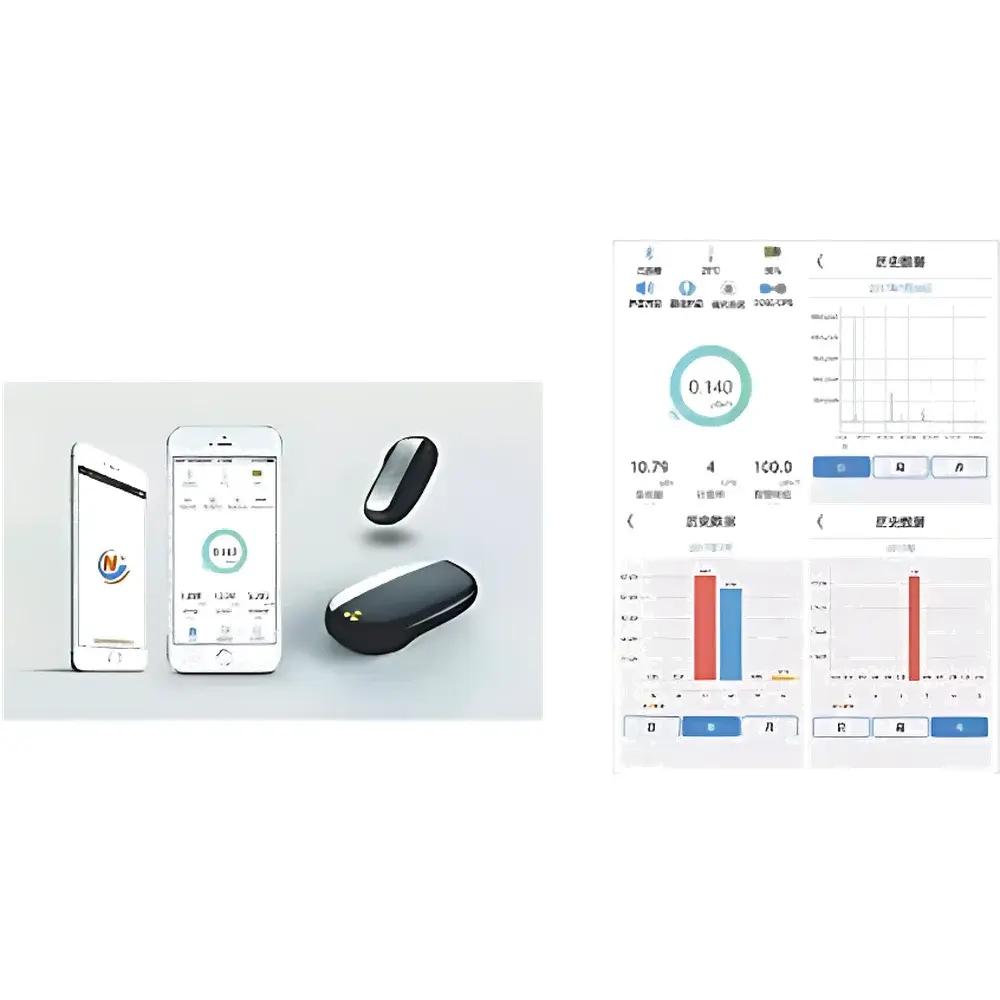
The RAMO-C operates as a standalone, embedded-system device with no onboard data logging or Bluetooth/Wi-Fi connectivity. All measurements are retained only in volatile memory during active use; no internal storage or export capability is provided. This design prioritizes electromagnetic compatibility (EMC), intrinsic safety, and immunity to cyber intrusion—critical in nuclear facility control rooms and MRI-adjacent zones. For audit purposes, users may manually record threshold alarms and cumulative readings at shift handover or during periodic calibration checks. Optional external calibration certificates (traceable to NIM or CNAS-accredited labs) include full energy-response curves and dose-rate linearity verification reports. The device supports GLP-aligned usage logs when paired with facility-specific procedural documentation.
Applications
- Radiation protection officers conducting perimeter surveys around hot cells, irradiators, or spent fuel pools.
- Nuclear medicine technologists monitoring exposure during 99mTc or 18F-FDG preparation and administration.
- Decommissioning crews assessing residual contamination levels in legacy uranium processing sites.
- Environmental health & safety (EHS) staff performing routine checks in industrial radiography workspaces.
- Regulatory inspectors verifying compliance with local dose rate limits during site audits.
- First responders equipped with rapid-deployment kits for radiological incident triage (e.g., orphan source recovery).
FAQ
Does the RAMO-C meet FDA or ISO 13485 requirements for medical device use?
No—it is classified as a radiation protection instrument, not a medical device. It is not intended for patient dose assessment or diagnostic imaging QA.
Can it be used for neutron or beta radiation detection?
No. The scintillator and shielding configuration are optimized exclusively for photons (X/γ). Neutron or beta particles will not produce measurable signal above background.
Is factory recalibration required annually?
Yes. Per IEC 60846-1 Clause 7.3, periodic verification against traceable reference sources is recommended at least once per year—or after mechanical shock, extreme thermal cycling, or suspected detector degradation.
What is the minimum detectable dose rate?
At 30 keV, the lower limit of reliable detection is 0.01 µSv/h (1 nGy/h), corresponding to ~2.5 cps above electronic noise floor under typical background conditions.
Does it support user-defined alarm thresholds?
Yes. Thresholds for dose rate (e.g., 5 µSv/h, 50 µSv/h) and cumulative dose (e.g., 100 µSv/shift) can be configured via three-button menu navigation without proprietary software.







