AquapHOx-TX Underwater Multiparameter Online Monitor for Dissolved Oxygen, pH, and Temperature
| Origin | Germany |
|---|---|
| Manufacturer Type | Authorized Distributor |
| Origin Category | Imported |
| Model | AquapHOx-TX |
| Pricing | Upon Request |
Overview
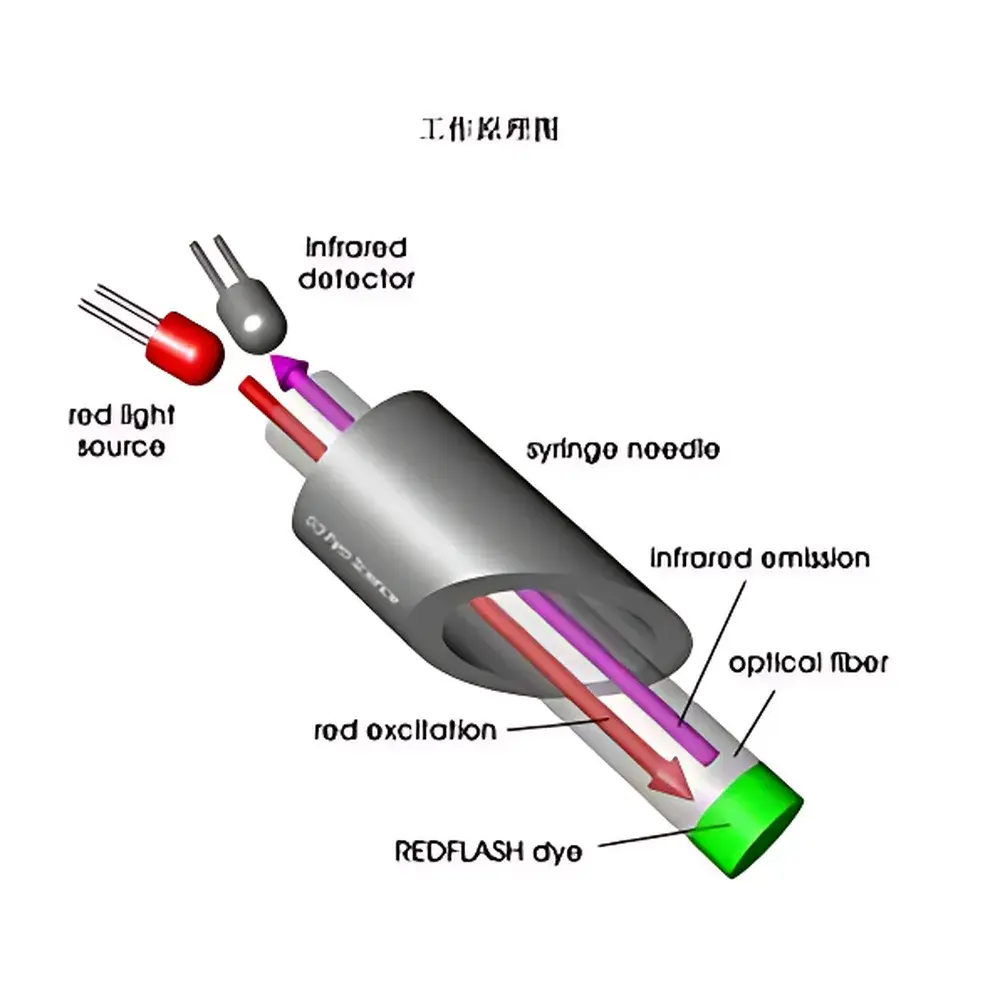
The AquapHOx-TX is a submersible, optical-based multiparameter monitoring system engineered for high-fidelity, long-term in situ measurement of dissolved oxygen (DO), pH, and temperature in marine and coastal environments. It operates on RedFlash (RF) technology — a solid-state, fluorescence-based sensing principle that eliminates electrochemical drift, membrane fouling, and electrolyte depletion common in traditional Clark-type or glass-electrode sensors. In RF technology, a red-orange LED (610–630 nm) excites immobilized indicator dyes housed in optically coupled sensor patches. The resulting near-infrared fluorescence emission (760–790 nm) is intensity- and lifetime-modulated by partial pressure of O₂, H⁺ activity (pH), and thermal energy — enabling simultaneous, cross-sensitive-compensated quantification of all three parameters from a single optical readout path. This architecture delivers intrinsic immunity to ambient light interference, minimal biofouling susceptibility, and negligible power consumption — critical for autonomous deployments up to 4000 m depth. Developed with co-funding from the European Union’s Horizon 2020 programme, the AquapHOx-TX meets rigorous design standards for deep-ocean observatories, benthic landers, and fixed-platform environmental monitoring networks.
Key Features
- Triple-parameter optical sensing (DO, pH, temperature) via integrated RedFlash detection engine
- Depth-rated variants: 4000 m (titanium housing, 400 bar max static pressure) and 100 m (POM housing, 10 bar)
- Modular sensor interface: Single –SUB underwater connector supporting interchangeable optical pH and O₂ sensor patches
- High-speed data acquisition: Up to 40 Hz sampling rate (25 ms resolution) with dual 16-bit analog outputs (0–5 V and 4–20 mA) and RS485 digital interface (USB 2.0 adapter included)
- Low-power operation: ≤30 mA at 5–15 VDC (RS485/USB mode); ≤30 mA at 10–15 VDC (analog output mode)
- Integrated NTC thermistor with 0.005 °C resolution, ±0.05 °C accuracy, and 0.5 s response time
- Compact cylindrical form factor: Ø63 mm × 300 mm; mass = 1.31 kg (deep-sea) / 0.406 kg (shallow)
- Operating temperature range: –5 °C to +40 °C; storage range: –10 °C to +60 °C
Sample Compatibility & Compliance
The AquapHOx-TX is validated for continuous deployment across diverse saline aquatic matrices — including open-ocean water columns, continental shelf sediments, coral reef lagoons, estuarine transition zones, and enclosed bioreactors. Its optical sensors are calibrated and certified for salinity ranges from 0 to 50 PSU (practical salinity units), ensuring stable performance across freshwater-influenced coastal systems and hypersaline brines. All optical sensor variants comply with ISO 5814:2012 (electrochemical DO measurement — referenced for traceability), ASTM D888-22 (dissolved oxygen in water — adapted for optical validation protocols), and EU Marine Strategy Framework Directive (MSFD) Annex I parameter definitions. The instrument’s firmware and data logging architecture support audit-trail-enabled operation compliant with GLP principles; raw timestamped datasets include embedded metadata (sensor ID, calibration coefficients, pressure compensation flags) required for regulatory reporting under IMO Resolution A.1155(32) and OSPAR Commission guidelines.
Software & Data Management
The AquapHOx-TX is operated via a dedicated Windows-based PC application developed in accordance with IEC 62443-3-3 cybersecurity framework principles for industrial control systems. The software enables full configuration of sampling intervals, analog output scaling, alarm thresholds, and sensor-specific calibration routines (two-point pH, zero/span O₂). Real-time visualization includes synchronized time-series plots with overlayable secondary axes, dynamic histograms, and derivative-based event detection (e.g., rapid O₂ drawdown events). All measurements are saved in HDF5 format — a self-describing, hierarchical data structure compatible with MATLAB, Python (h5py), and R — ensuring long-term archival integrity and interoperability with oceanographic data infrastructures such as ERDDAP and IOOS NetCDF conventions. Export options include CSV (with ISO 8601 timestamps), PDF reports (including calibration certificates), and direct integration into SCADA platforms via Modbus RTU over RS485.
Applications
- Long-term hypoxia monitoring in oxygen minimum zones (OMZs) and continental margin sediments
- High-sensitivity trace O₂ profiling (<50 µg/L) in anoxic basins and microbial mat interfaces
- Salinity-invariant pH monitoring across tidal gradients and river plumes using ratiometric dye response
- Non-invasive O₂ flux quantification in benthic chamber incubations and microcosm reactors
- High-resolution vertical O₂ and pH profiling through water-column stratification layers using towed or ROV-mounted configurations
- Eddy covariance O₂ flux estimation when paired with ultrafast O₂ sensors (response time <300 ms) and synchronized 3D current velocity data from Nortek AD2CP units
FAQ
Is the AquapHOx-TX suitable for deployment in hydrothermal vent environments?
No — while rated to 4000 m depth, its operational temperature limit is –5 °C to +40 °C; hydrothermal vent fluids exceed this range and may degrade optical dye stability.
Can the same sensor patch measure both DO and pH simultaneously?
Yes — each optical patch contains co-immobilized O₂- and pH-sensitive fluorophores; the RedFlash detection algorithm resolves both signals independently via spectral deconvolution and lifetime gating.
Does the system meet FDA 21 CFR Part 11 requirements for electronic records?
The firmware supports user authentication, electronic signatures, and immutable audit logs; however, full Part 11 compliance requires site-specific validation under GxP protocols — documentation templates are provided upon request.
How often must optical sensors be recalibrated in field deployments?
Typical recalibration interval is 6–12 months depending on biofouling exposure; the system stores factory calibration coefficients and allows in situ two-point verification using certified buffer solutions and zero-O₂ titrant.
Is analog output galvanically isolated?
Yes — both 0–5 V and 4–20 mA outputs feature reinforced isolation rated to 1500 VDC, preventing ground-loop interference in multi-instrument seabed arrays.