
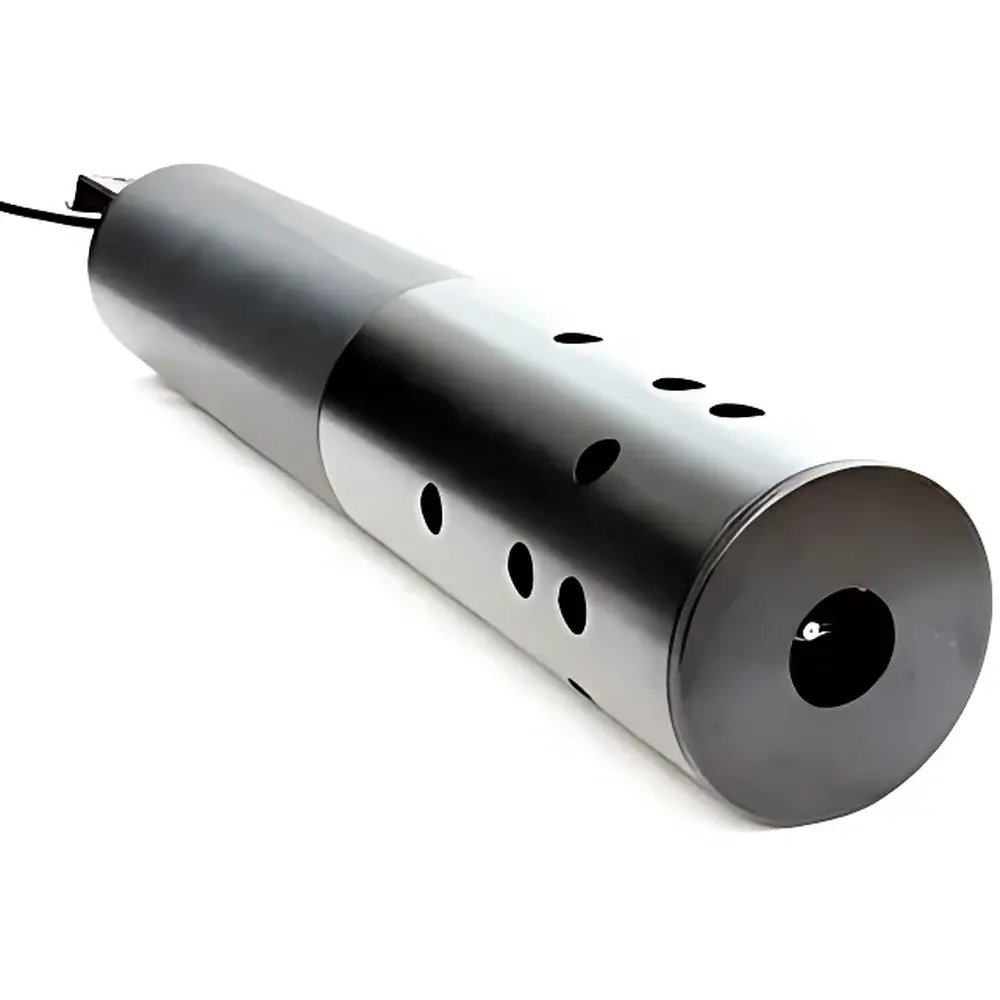
AquaProbes AP-2000 Portable Multi-Parameter Water Quality Analyzer
| Origin | United Kingdom |
|---|---|
| Type | Portable / Handheld Water Quality Analyzer |
| Model | AP-2000 |
| Detection Parameters | pH, ORP, Dissolved Oxygen (DO), Electrical Conductivity, TDS, Salinity, Resistivity, Temperature, Depth, Atmospheric Pressure, GPS Positioning |
| Sensor Options | Ion-Selective Electrodes (NH₄⁺, NO₃⁻, Cl⁻, F⁻, Ca²⁺), Optical Probes (Chlorophyll-a, Phycocyanin, Turbidity, Oil-in-Water) |
| IP Rating | IP67 |
| Operating Temperature | -20 °C to +70 °C |
| Data Storage | 1900 records |
| GPS Accuracy | ±10 m (12-channel built-in antenna) |
| Power Supply | Replaceable internal batteries |
Overview
The AquaProbes AP-2000 Portable Multi-Parameter Water Quality Analyzer is an engineered field-deployable instrument designed for high-reliability in-situ assessment of freshwater, estuarine, and coastal aquatic systems. It integrates electrochemical, optical, and physical sensing modalities within a single ruggedized handheld platform to deliver simultaneous, temperature-compensated measurements of critical water quality parameters—including pH, oxidation-reduction potential (ORP), dissolved oxygen (DO), electrical conductivity, total dissolved solids (TDS), salinity, resistivity, temperature, depth, and barometric pressure. The system operates on the principle of potentiometric measurement for ion-selective and redox sensors, amperometric detection for DO, and conductometric principles for conductivity and derived parameters. Its modular architecture supports rapid sensor interchange—enabling mission-specific configuration without recalibration or firmware modification. Designed for compliance with field data integrity requirements, the AP-2000 logs all measurements with synchronized GPS coordinates and timestamp metadata, satisfying traceability prerequisites for environmental monitoring programs governed by ISO 17025, EPA Method 160.1, and EU WFD (Water Framework Directive) reporting standards.
Key Features
- Rugged IP67-rated enclosure tested for immersion up to 1 meter for 30 minutes and dust-tight operation under adverse field conditions
- Integrated 12-channel GPS receiver with ±10 m positional accuracy and automatic geotagging of every measurement
- High-resolution backlit LCD display (80-character capacity) optimized for daylight readability and low-power operation
- Auto-ranging dual-scale sensors for conductivity (0–200 mS/cm), TDS (0–100,000 mg/L), and resistivity (5 Ω·cm – 1 MΩ·cm), eliminating manual range selection errors
- Real-time temperature compensation across all electrochemical and conductometric sensors using integrated NTC thermistor (±0.5 °C accuracy)
- Expandable sensor interface supporting up to two additional ISE probes (e.g., NH₄⁺, NO₃⁻) or optical modules (e.g., turbidity, chlorophyll-a) via standardized digital bus
- Onboard memory storing 1900 full-parameter datasets with time, location, and sensor status flags
- RS-485/RS-232 serial interface compliant with Modbus RTU protocol for integration into SCADA or telemetry networks
Sample Compatibility & Compliance
The AP-2000 is validated for direct immersion in natural waters—including rivers, lakes, reservoirs, wastewater effluents, and marine environments—without pre-filtration for most parameters. Its stainless-steel and PEEK sensor housings resist biofouling and chemical corrosion, ensuring stable performance across pH 0–14 and salinities up to 70 PSU. All electrochemical sensors meet ASTM D1293 (pH), D3693 (conductivity), and D888 (dissolved oxygen) specifications. The device supports audit-ready data export with embedded calibration history and sensor diagnostics, aligning with GLP documentation practices and enabling FDA 21 CFR Part 11–compliant workflows when paired with validated desktop software. Regulatory readiness extends to ISO 5667-3 (water sampling) and EN ISO 7888 (electrical conductivity) test protocols.
Software & Data Management
Data retrieval and post-processing are managed through AquaProbes Desktop Suite—a Windows-based application supporting raw binary file import, unit conversion, statistical summarization (min/max/mean/stdev), and automated report generation in PDF or CSV formats. The software maintains immutable audit trails for calibration events, sensor swaps, and firmware updates. Exported datasets include embedded metadata fields (GPS WGS84 coordinates, UTC timestamps, operator ID, and sensor serial numbers) to satisfy chain-of-custody requirements. For enterprise deployment, optional API access enables integration with LIMS platforms via RESTful endpoints, supporting structured query language (SQL) ingestion and automated QA/QC flagging based on user-defined parameter thresholds.
Applications
- Regulatory surface water monitoring under national EPA or EU Member State programs
- Wastewater treatment plant influent/effluent characterization and process control
- Aquaculture site health assessment including ammonia-nitrogen (NH₄⁺) and dissolved oxygen profiling
- Wetland restoration project baseline and long-term trend analysis
- Emergency response to chemical spills or algal bloom events using real-time turbidity and phycocyanin detection
- Academic limnology and oceanography field campaigns requiring portable, GPS-synchronized multivariate data capture
FAQ
Does the AP-2000 require factory recalibration between field deployments?
No—each sensor module retains its own calibration coefficients and self-diagnostic logs; field verification using certified buffer solutions is sufficient per ISO 17025 Section 7.7.
Can the device operate continuously underwater for extended logging?
It is rated IP67 for temporary immersion only; for long-term deployment, AquaProbes recommends the fixed-mount DSYS series with submersible housing and telemetry options.
Is GPS data stored with each measurement in the internal memory?
Yes—geographic coordinates (latitude/longitude in WGS84), altitude, and UTC timestamp are embedded in every recorded dataset.
What is the battery life under typical field use conditions?
Approximately 12 hours of continuous operation at 15-second sampling intervals; batteries are user-replaceable AA alkaline or lithium cells.
Are sensor cross-sensitivity corrections applied automatically?
Yes—the firmware applies matrix-based compensation algorithms for known interferences (e.g., temperature-dependent DO solubility, ionic strength effects on pH electrode response).







