
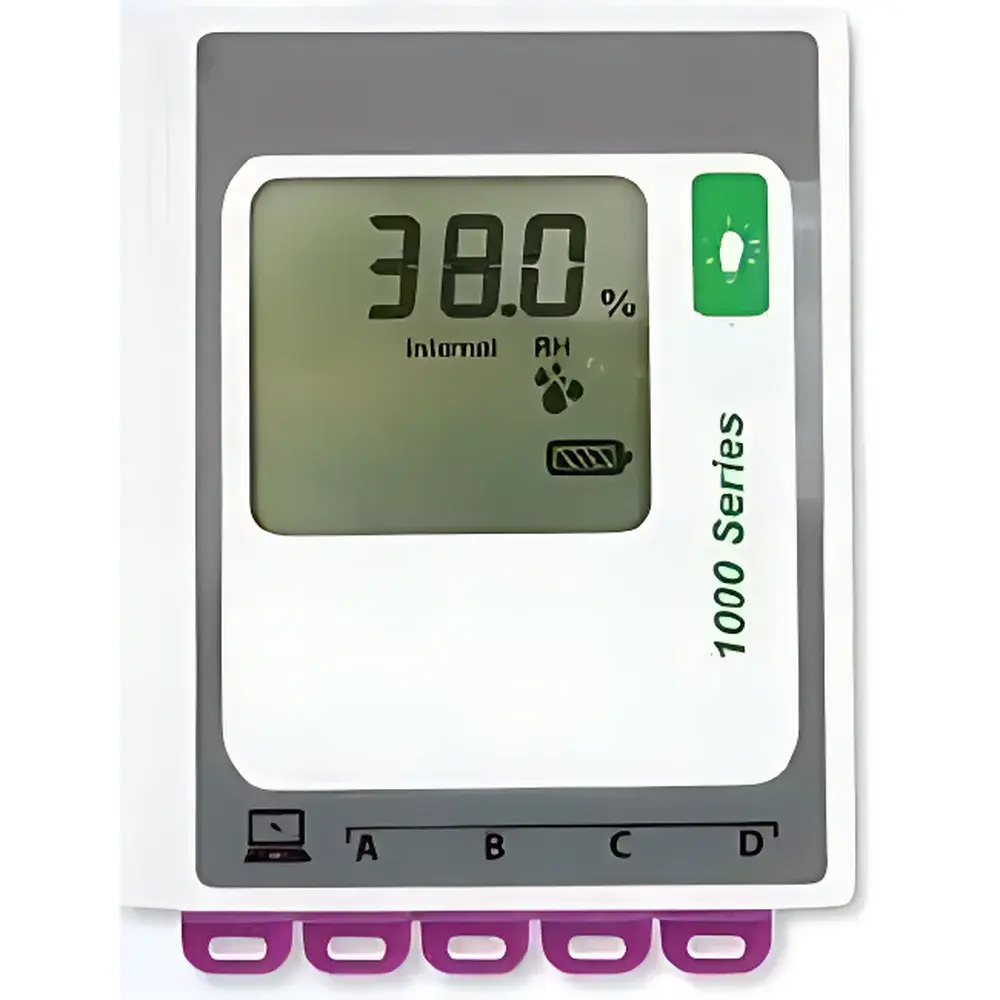
Campbell Scientific 1000 Series Compact Agricultural Weather Station
| Origin | USA |
|---|---|
| Manufacturer Type | Authorized Distributor |
| Origin Category | Imported |
| Model | 1000 Series |
| Instrument Type | Portable Weather Station |
| Temperature Range | −40 to 85 °C (−40 to 185 °F) |
| Temperature Accuracy | ±0.6 °C (±1.1 °F) at −20 to 50 °C |
| Relative Humidity Range | 0–100% RH |
| RH Accuracy | ±3% RH at 25 °C |
Overview
The Campbell Scientific 1000 Series Compact Agricultural Weather Station is a field-deployable, low-power environmental monitoring system engineered for precision data acquisition in agronomic research, irrigation scheduling, pest and disease modeling, and microclimate characterization. Built upon a modular datalogger architecture, it employs industry-standard analog and SDI-12 sensor interfaces to support real-time measurement of core meteorological parameters—including air temperature, relative humidity, wind speed and direction, solar radiation, precipitation, and soil moisture—without requiring periodic physical retrieval of memory cards or manual data offloading. Its operational principle relies on calibrated analog voltage or digital serial output from certified sensors, converted via high-resolution ADCs (16-bit minimum) and timestamped with internal temperature-compensated quartz clocking. Designed for unattended operation in remote fields, orchards, vineyards, and greenhouse perimeters, the system meets long-term stability requirements for USDA ARS, FAO agro-climatic reporting, and ISO 17025-accredited environmental laboratories conducting GLP-compliant field trials.
Key Features
- Integrated backlit LCD display enabling real-time parameter viewing without external software or connectivity
- Modular sensor interface architecture supporting plug-and-play integration of third-party and Campbell-certified SDI-12, analog (0–5 V, 4–20 mA), and pulse-count sensors
- Programmable scan intervals from 1 second to 24 hours, configurable via PC-based LoggerNet or mobile-compatible Connect software
- Robust aluminum enclosure rated IP65 for dust and water resistance; operating temperature range extends from −40 °C to +60 °C ambient
- Internal rechargeable lithium battery (optional solar charging kit available) enabling >6 months continuous operation at 15-minute logging intervals
- Onboard 4 MB non-volatile memory with automatic data rollover and time-synchronized storage (NTP-capable via optional cellular or LoRaWAN modem)
Sample Compatibility & Compliance
The 1000 Series accommodates a broad spectrum of agricultural-grade sensors—including aspirated radiation-shielded temperature/humidity probes (e.g., HMP155), ultrasonic anemometers (e.g., WXT530), pyranometers (e.g., CMP3), tipping-bucket rain gauges (e.g., TE525), and multi-depth soil volumetric water content sensors (e.g., CS650). All sensor configurations comply with WMO Guide to Meteorological Instruments and Methods of Observation (CIMO Guide) Chapter 8 standards for agricultural weather stations. The system supports traceable calibration documentation per ISO/IEC 17025 requirements and facilitates audit-ready metadata tagging—including sensor serial numbers, installation dates, height above ground level (AGL), and land cover classification codes (FAO LCCS v3). Data outputs conform to CF Standard Names and NetCDF-4/HDF5 formats for interoperability with USDA SCAN, CIMIS, and EEA Copernicus services.
Software & Data Management
Data configuration, visualization, and export are managed through Campbell Scientific’s LoggerNet (Windows desktop) and the web-based Connect platform. LoggerNet provides deterministic program compilation, firmware update management, and automated data retrieval via direct USB, Ethernet, or radio telemetry. Connect enables role-based user access, scheduled report generation (PDF/CSV), and API-driven integration with farm management information systems (FMIS) such as Granular, Climate FieldView, and Agworld. All data files include embedded audit trails compliant with FDA 21 CFR Part 11 (electronic signatures, change history, and user-level permissions), supporting GxP-aligned field trials under ICH E6(R3) and OECD GLP Principles. Raw and processed datasets are exportable in CF-compliant NetCDF, JSON, or tab-delimited ASCII for downstream statistical analysis in R, Python (pandas/xarray), or SAS.
Applications
- Precision irrigation decision support using real-time ETo calculation via FAO-56 Penman-Monteith implementation
- Frost risk forecasting for orchard and berry crop protection through sub-zero temperature trend analysis
- Disease severity index modeling (e.g., Grapevine Powdery Mildew Risk Index, Apple Scab Infection Periods)
- Validation of satellite-derived land surface temperature (LST) and evapotranspiration products (e.g., MOD16, SSEBop)
- Long-term phenocam site co-location for vegetation greenness correlation with microclimatic drivers
- Calibration reference for low-cost sensor networks deployed across watershed-scale agricultural monitoring programs
FAQ
Can the 1000 Series operate without cellular or internet connectivity?
Yes. It functions autonomously with local LCD display, onboard memory, and battery power. Connectivity modules are optional add-ons for remote data telemetry.
Is sensor calibration traceable to NIST standards?
All factory-calibrated sensors ship with individual calibration certificates referencing NIST-traceable reference standards; field recalibration services are available through Campbell-authorized labs.
What is the maximum number of sensors supported?
Up to 16 analog or SDI-12 sensors may be connected simultaneously, depending on power budget and scan interval configuration.
Does the system meet USDA NRCS Water and Climate Information System (WCIS) requirements?
Yes. When configured with approved sensors and installed per NRCS TR-55 and CTA-102 specifications, it qualifies for inclusion in WCIS-certified networks.
How is time synchronization maintained during extended power outages?
The internal TCXO (temperature-compensated crystal oscillator) maintains timekeeping accuracy within ±1 minute per month; GPS or NTP sync restores full precision upon reconnection.







