
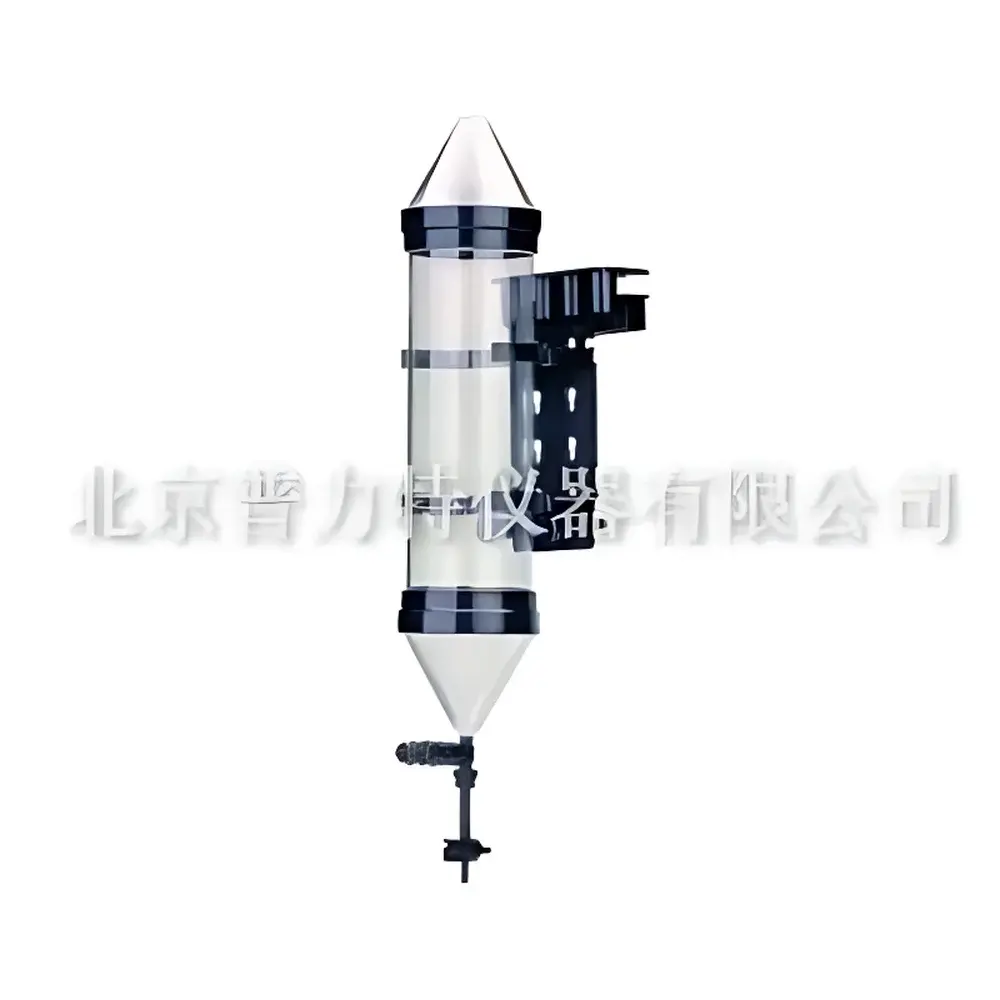
Artemia Hatching and Cultivation System AB1000
| Origin | Germany |
|---|---|
| Manufacturer Type | Authorized Distributor |
| Origin Category | Imported |
| Model | AB1000 |
| Quotation | Available Upon Request |
| Volume | 1 L |
| Internal Diameter | 80 mm |
| Length | 45 cm |
| Tubing Port | 6 mm |
Overview
The Artemia Hatching and Cultivation System AB1000 is a precision-engineered, laboratory-grade incubation platform designed for the standardized hatching of Artemia franciscana cysts and subsequent rearing of nauplii through early developmental stages. Based on the well-established conical-column aeration principle—where controlled upward water column movement simulates natural hydrodynamic conditions—the AB1000 ensures uniform oxygenation, consistent light exposure, and minimal mechanical stress during embryonic activation and larval development. This system operates under defined salinity (typically 25–35 g/L NaCl), temperature (25–28 °C), and photoperiod (1,500–2,000 lux, 12–24 h light/dark cycles) regimes to maximize hatch rate (>90% under optimized conditions) and synchronize developmental progression. As a critical tool in aquaculture nutrition research and live feed quality assurance, the AB1000 supports reproducible production of high-viability nauplii—essential for feeding larval stages of marine finfish, crustaceans (e.g., Penaeus vannamei), and bivalves in controlled hatchery environments.
Key Features
- Single-batch capacity of up to 2 × 10⁶ viable nauplii per 1 L culture volume, scalable via parallel unit operation
- Optimized conical-cylindrical geometry (80 mm internal diameter, 45 cm height) enabling laminar, low-shear water circulation and efficient cyst suspension
- Integrated 6 mm silicone or Tygon® tubing ports for connection to calibrated air pumps, pH/DO probes, and recirculating filtration modules
- Chemically resistant borosilicate glass construction compliant with ISO 3585 and USP Class A specifications for aqueous biological media
- Modular design compatible with standard lab benchtop footprints (≤300 × 200 mm base area) and ambient lighting infrastructure
- Temperature-stable operation across 20–30 °C ambient range; optional external water-jacket integration for precise thermal control
Sample Compatibility & Compliance
The AB1000 accommodates commercially available decapsulated or non-decapsulated Artemia cysts (e.g., San Francisco Bay Brand, INVE Aquaculture), as well as enriched nauplii formulations (e.g., Selco®, Algamac®-3000). It supports both static-hatch and continuous-flow protocols aligned with FAO Technical Paper No. 571 (“Live Feed in Aquaculture”) and ISO/IEC 17025-accredited hatchery SOPs. The system’s materials meet EU Regulation (EC) No. 1935/2004 for food-contact surfaces and are compatible with standard disinfection protocols using 100 ppm sodium hypochlorite or 70% ethanol—ensuring traceability and sterility in GLP-compliant nutritional studies.
Software & Data Management
While the AB1000 is a standalone hardware platform, its modular interface allows seamless integration with third-party environmental monitoring systems (e.g., Hanna Instruments HI98194 multiparameter loggers, YSI ProDSS) via analog 4–20 mA or digital RS-485 outputs. When paired with data acquisition software such as LabVIEW™ or MATLAB® Instrument Control Toolbox, users can record time-series profiles of dissolved oxygen, temperature, and turbidity—enabling correlation of hatching kinetics (T₅₀, T₉₀) with real-time physicochemical parameters. Audit trails and user-access logs may be maintained in accordance with FDA 21 CFR Part 11 requirements when deployed within validated GMP aquaculture R&D facilities.
Applications
- Standardized production of nutritionally consistent nauplii batches for larviculture feeding trials
- Evaluation of cyst viability, shelf-life stability, and post-storage hatch performance under controlled stressors (e.g., UV exposure, oxidative challenge)
- Development and validation of enrichment protocols using microalgae, phospholipids, or ω-3 fatty acid emulsions
- Toxicity screening of aquaculture therapeutics or environmental contaminants using naupliar LC₅₀ endpoints (ASTM D7722-14)
- Training and proficiency testing in aquatic animal health and nutrition curricula at FAO-recognized aquaculture centers
FAQ
What is the recommended aeration rate for optimal hatching efficiency?
A flow rate of 150–250 mL/min (measured at the air stone outlet) maintains adequate cyst suspension without causing mechanical damage to developing nauplii.
Can the AB1000 be used for extended culture beyond nauplius stage?
Yes—when coupled with phytoplankton supplementation (e.g., Tetraselmis suecica) and staged salinity reduction, the system supports development to metanauplius and early juvenile stages over 10–14 days.
Is sterilization of the unit required between batches?
Sterilization is mandatory for pathogen-sensitive applications; validated protocols include 30-min immersion in 100 ppm sodium hypochlorite followed by triple deionized water rinse and UV-C exposure (254 nm, 15 mJ/cm²).
Does the system comply with ISO or ASTM standards for live feed production?
The AB1000 enables adherence to ISO 14040 (life cycle assessment of feed inputs) and ASTM D7722-14 (standard guide for toxicity testing using Artemia), though final compliance depends on full operational SOP documentation and facility-level QA validation.
How is calibration verified for repeatable hatching outcomes?
Calibration is performed using NIST-traceable thermistors and optical density references (e.g., Formazin standards at 400 nm); batch-to-batch consistency is confirmed via hatch rate (%), naupliar motility index (NMI), and dry weight yield (mg/L) metrics.
Related Products







