
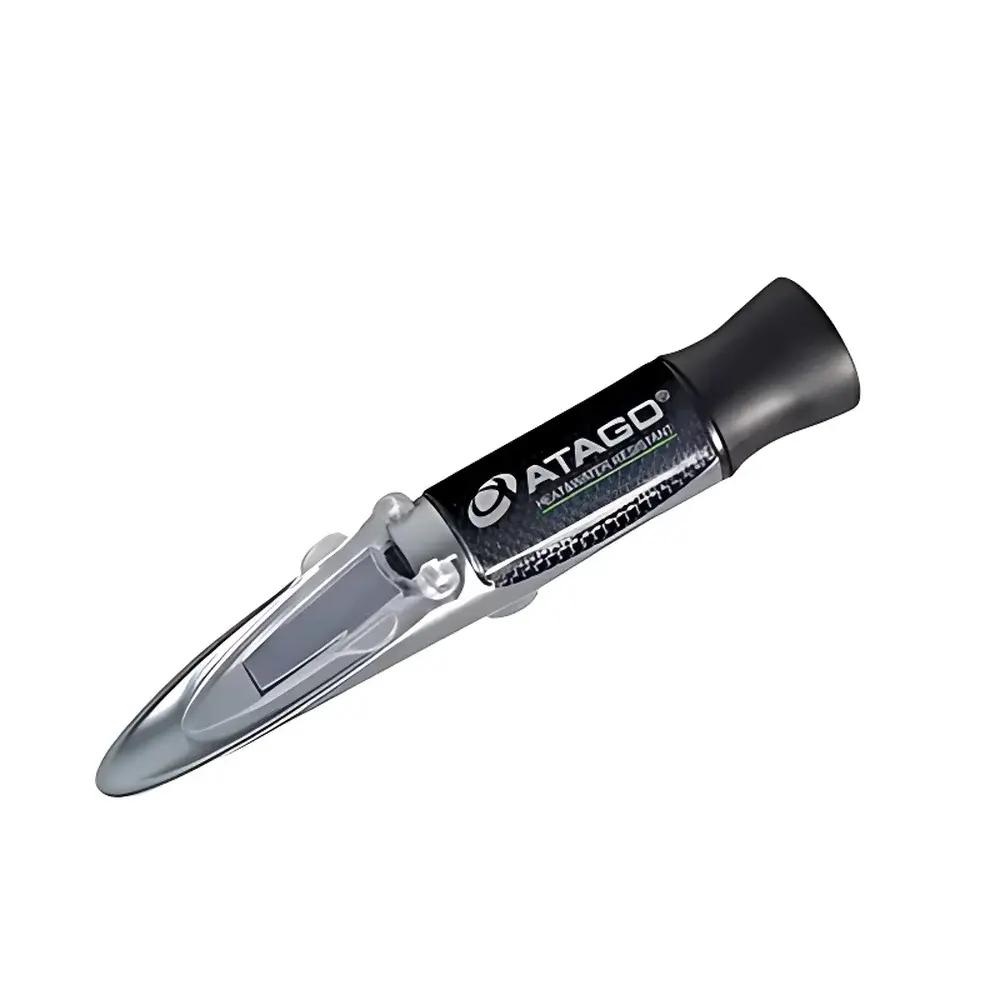
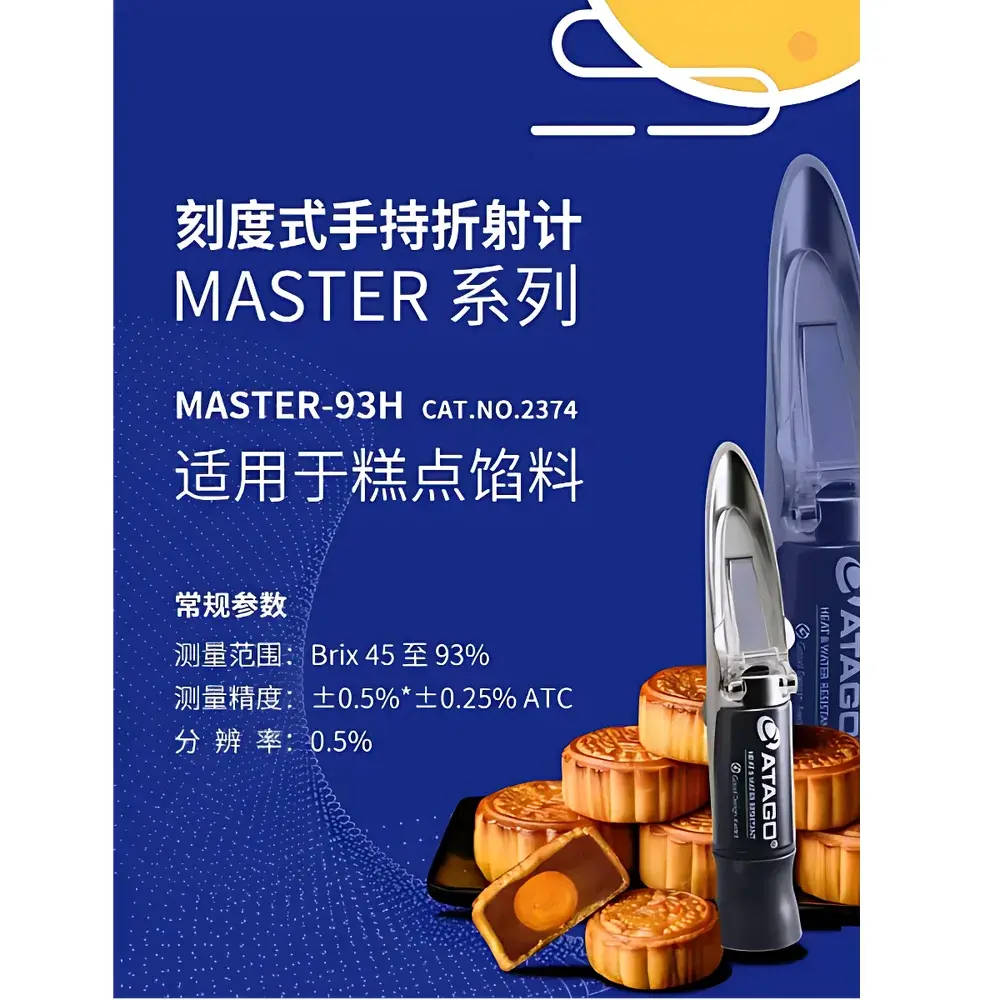
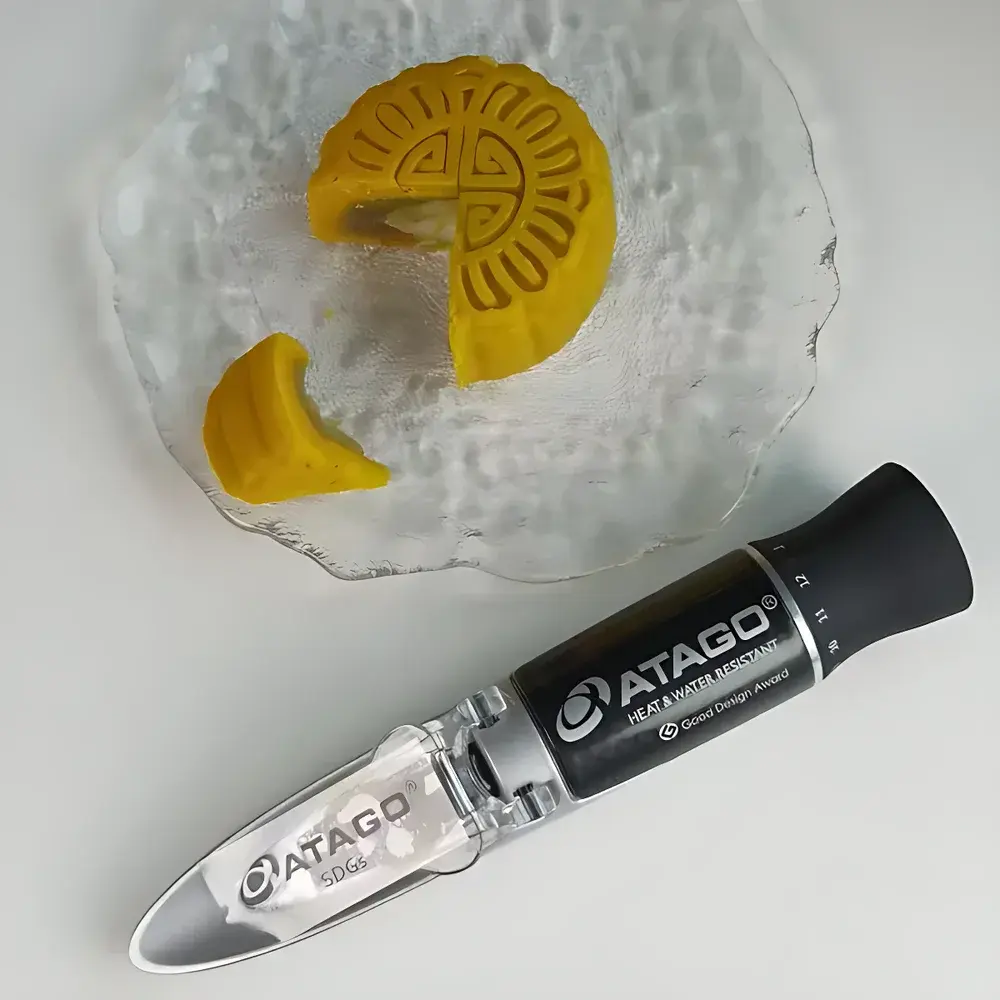
ATAGO MASTER-93H High-Temperature Refractometer for Mooncake Filling Sugar Content Analysis
| Brand | ATAGO |
|---|---|
| Origin | Japan |
| Model | MASTER-93H |
| Type | Destructive Sampling Refractometer |
| Application | High-Temperature Syrups, Jams, and Viscous Food Pastes |
| Temperature Compensation | Automatic (5–100°C) |
| Construction | Stainless Steel Housing |
| IP Rating | IP65 |
| Measurement Principle | Abbe Refractometry (nD @ 589.3 nm) |
| Units | °Brix (0–93%), Resolution: 0.1°Brix |
| Compliance | ASTM D1218, ISO 2173, AOAC 932.12, GB/T 10786 (Chinese Standard for Fruit and Vegetable Products) |
Overview
The ATAGO MASTER-93H is a high-precision, temperature-compensated benchtop refractometer engineered specifically for rapid, on-site quantification of soluble solids concentration—expressed as °Brix—in thermally demanding food matrices. Unlike conventional handheld or standard benchtop refractometers, the MASTER-93H integrates a patented heat-resistant prism assembly and real-time automatic temperature compensation (ATC) calibrated across 5–100°C, enabling direct measurement of freshly cooked, viscous, and high-sugar formulations without dilution or cooling. Its optical design follows the Abbe refractometry principle, utilizing sodium D-line illumination (589.3 nm) to determine the refractive index of samples under controlled thermal conditions. This makes it uniquely suited for quality assurance in mooncake filling production, where sugar content directly governs texture stability, microbial shelf life, water activity (aw), and regulatory compliance with national standards such as GB/T 19855–2015.
Key Features
- Stainless steel body with IP65-rated enclosure for resistance to steam, splashes, and ambient humidity in production-floor environments
- Integrated ATC system with platinum resistance thermometer (PT100) ensures ±0.2°C thermal accuracy and eliminates manual correction tables
- Destructive sampling mode accommodates semi-solid, particulate-laden, or highly viscous materials—including lotus seed paste, red bean paste, salted egg yolk emulsions, and caramelized syrup blends
- 0–93% °Brix measurement range with 0.1% resolution, optimized for concentrated systems exceeding 70% total soluble solids
- No requirement for sample filtration or homogenization prior to measurement—reducing analytical bias from phase separation or particle settling
- Prism surface treated with anti-adhesion coating to minimize residue buildup during repeated high-sugar analysis
Sample Compatibility & Compliance
The MASTER-93H is validated for use with heterogeneous, thermally unstable, and high-viscosity food pastes that cannot be reliably assessed using flow-cell or digital density-based methods. It meets critical requirements outlined in GB/T 19855–2015 (Mooncakes), GB/T 10786 (Fruit and Vegetable Products), and AOAC Official Method 932.12 (Refractometric Determination of Soluble Solids). For regulatory verification of “low-sugar” (≤5 g/100 g) or “sugar-free” (≤0.5 g/100 g) claims per GB 28050–2011 (Nutrition Labeling Standard), the instrument delivers traceable, repeatable readings traceable to NIST-traceable sucrose reference standards. Its measurement uncertainty (<±0.25% °Brix at 80% Brix, 80°C) supports internal QA protocols aligned with ISO/IEC 17025–2017 and fulfills documentation requirements for GMP-compliant food manufacturing audits.
Software & Data Management
While the MASTER-93H operates as a standalone analog-digital hybrid instrument, its output is fully compatible with external data logging via RS-232 or optional USB interface (with ATAGO’s optional PC Link software). All measurements include embedded timestamp, sample ID field, and temperature reading, satisfying FDA 21 CFR Part 11 requirements when deployed with validated electronic record systems. Audit trails can be exported in CSV or PDF format for integration into LIMS platforms or HACCP documentation workflows. Calibration history—including date, operator ID, standard used (e.g., 10%, 40%, 70% sucrose w/w), and deviation values—is retained in non-volatile memory for GLP audit readiness.
Applications
- Real-time monitoring of sugar concentration during cooking, cooling, and filling stages in traditional Chinese bakery production lines
- Verification of syrup consistency in osmotic dehydration processes for fruit fillings
- Batch release testing of preserved jellies, candied fruits, and nut-based pastes prior to packaging
- Raw material screening of invert sugar syrups, glucose-fructose blends, and maltodextrin solutions
- R&D support for reformulation targeting reduced-sugar compliance without compromising rheological integrity or Maillard browning kinetics
- Cross-functional use in beverage concentrate blending, confectionery gel formation, and dairy-based dessert base development
FAQ
Is the MASTER-93H suitable for measuring samples above 80°C?
Yes—the instrument is rated for continuous operation up to 100°C sample temperature, with thermal stabilization achieved through dual-layer prism housing and dynamic ATC algorithm.
Does it require daily calibration verification?
Per ISO 2173, calibration should be verified before each shift using certified sucrose standards; full recalibration is recommended after 200 measurements or weekly, whichever occurs first.
Can it measure non-sucrose-based sweeteners like maltitol or erythritol?
It reports total soluble solids as °Brix, which correlates closely with sucrose but requires matrix-specific correlation curves for alternative sweeteners due to differing refractive increments.
How is cleaning performed after high-viscosity sample measurement?
The prism surface is wiped with lint-free cloth moistened with distilled water or ethanol; abrasive cleaners or ultrasonic baths are prohibited to preserve optical coating integrity.
Is user training required for ISO/IEC 17025 compliance?
Yes—ATAGO provides certified operator qualification modules covering measurement uncertainty estimation, traceability documentation, and environmental condition control per ISO/IEC 17025 Clause 6.2.





