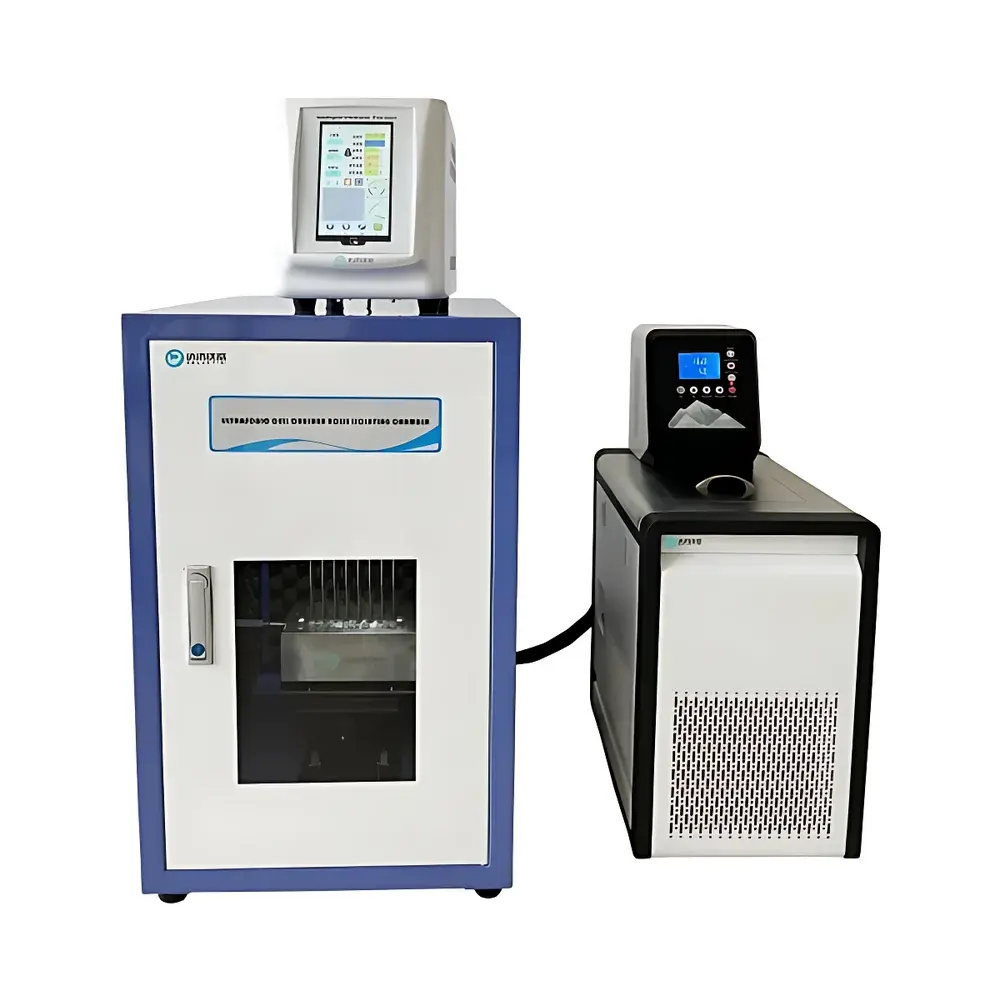
Daxluot Dxluot-4SKI 4-Channel Benchtop Ultrasonic Cell Disruptor
| Brand | Daxluot |
|---|---|
| Model | Dxluot-4SKI |
| Origin | Shanghai, China |
| Instrument Type | Ultrasonic Cell Disruptor |
| Ultrasonic Power Output | 12–1200 W (continuously adjustable) |
| Operating Frequency | 20–25 kHz (auto-frequency tracking) |
| Sample Volume per Channel | 1–10 mL |
| Number of Simultaneous Samples | 4 |
| Temperature Control Range | −5 to 100 °C |
| Probe Material | Titanium Alloy (Ti-6Al-4V) |
| Amplitude Regulation | Automatic load-compensated |
| Programmable Parameters | 20 user-defined protocols |
| Ultrasound On/Off Time | 0.1–99.9 s (adjustable) |
| Total Cycle Duration | 0.1 s – 99 h 59 min 59 s |
| Safety Protections | Overtemperature, Overpower, Overtime |
| Display | 7-inch TFT capacitive touchscreen |
| Input Power | AC 220 V ±5%, 50 Hz (110 V optional) |
| Communication Interface | RS-232 or USB (optional) |
| Footswitch Support | Optional |
| Data Logging | Timestamped protocol execution history |
| Cooling Integration | Integrated Peltier-assisted cold block with recirculating thermal management |
Overview
The Daxluot Dxluot-4SKI is a precision-engineered 4-channel benchtop ultrasonic cell disruptor designed for high-throughput, reproducible lysis of biological samples under controlled thermal and mechanical conditions. It operates on the principle of high-intensity focused ultrasound (HI-FUS), generating cavitation bubbles in liquid media that collapse asymmetrically near cellular structures—inducing shear stress, microstreaming, and localized shockwaves sufficient to disrupt membranes, organelles, and protein complexes without significant thermal denaturation when operated within validated duty cycles. Unlike single-probe systems, the Dxluot-4SKI synchronizes four independent titanium alloy probes (Φ3 mm) with real-time amplitude compensation, enabling parallel processing of up to four 1–10 mL samples while maintaining inter-sample consistency critical for comparative omics workflows, QC batch analysis, and GLP-compliant sample preparation.
Key Features
- Simultaneous 4-channel operation with synchronized ultrasonic output and independent amplitude feedback control per probe
- Auto-frequency tracking circuitry ensures stable resonance across variable sample viscosities and temperatures (20–25 kHz)
- Titanium alloy (Ti-6Al-4V) probes engineered for chemical resistance to organic solvents, acidic/basic buffers, and chaotropic agents
- Integrated Peltier-based cooling module with circulating thermal block maintains sample temperature between −5 °C and +100 °C with ±0.5 °C stability
- 7-inch capacitive touchscreen interface running Daxluot’s proprietary firmware with password-protected user access levels
- 20 programmable protocols with timestamped execution logs, supporting audit-ready documentation per FDA 21 CFR Part 11 requirements
- Dynamic amplitude modulation compensates for load impedance shifts during sonication, preserving consistent energy delivery regardless of sample volume or density
- Comprehensive safety suite including overtemperature cutoff, power surge detection, and automatic shutdown after timeout or fault condition
Sample Compatibility & Compliance
The Dxluot-4SKI accommodates standard microcentrifuge tubes (1.5–10 mL), cryovials, and custom reaction vessels compatible with its universal tube holder system. It supports lysis of Gram-positive/negative bacteria, yeast, mammalian cells, plant tissues, viral particles, and spores—validated per ISO 13485-aligned manufacturing practices. All electronic subsystems comply with IEC 61010-1:2010 for laboratory equipment safety; electromagnetic compatibility meets EN 61326-1:2013. For regulated environments, optional RS-232/USB data export enables integration into LIMS platforms and supports electronic signature workflows compliant with 21 CFR Part 11 Annex 11 and EU GMP Annex 11.
Software & Data Management
Firmware includes embedded logging of all operational parameters—including actual delivered power (W), frequency drift (Hz), cumulative exposure time (s), and thermal profile (°C)—with automatic CSV export via USB or serial interface. Each protocol stores metadata such as operator ID, date/time stamp, and cycle count. Audit trail functionality records all parameter modifications, user logins, and error events with immutable timestamps. Optional PC software provides graphical trend analysis, comparative sonication efficiency mapping, and automated report generation aligned with ISO/IEC 17025 documentation standards.
Applications
- Preparation of fragmented genomic DNA for NGS library construction and ChIP-seq assays
- Extraction of intracellular proteins, metabolites, and nucleic acids from recalcitrant microbial or plant matrices
- Homogenization of soil and sediment samples for environmental microbiome profiling
- Dispersion and deagglomeration of nanomaterials (e.g., carbon nanotubes, rare-earth oxides) in aqueous or organic suspensions
- Accelerated solvent extraction of bioactive compounds from traditional Chinese medicinal herbs
- Controlled emulsification and particle size reduction in food-grade colloidal systems
- Enhancement of enzymatic reaction kinetics through acoustic cavitation-induced mass transfer improvement
FAQ
Can the Dxluot-4SKI be used for temperature-sensitive samples such as enzyme solutions or antibodies?
Yes—the integrated Peltier-cooled thermal block and programmable duty cycling allow precise control of net thermal load, enabling effective lysis at sub-4 °C average sample temperature when configured with appropriate on/off ratios and external chiller support.
Is probe calibration traceable to national metrology standards?
Each titanium probe undergoes factory resonance characterization at 22 °C in deionized water; calibration certificates include Q-factor, impedance spectrum, and nominal amplitude response curves—traceable to CNAS-accredited reference labs.
Does the system support remote monitoring or network integration?
Via optional RS-232 or USB-to-Ethernet adapters, the device can transmit real-time status and log files to centralized lab informatics infrastructure using Modbus RTU or custom TCP/IP protocols.
What maintenance is required for long-term reliability?
Annual verification of probe tip erosion (via optical profilometry), transducer capacitance drift, and thermal sensor accuracy is recommended; no consumables beyond standard centrifuge tubes are required.
How does the Dxluot-4SKI ensure inter-batch reproducibility in regulated workflows?
By combining auto-frequency tracking, closed-loop amplitude control, and timestamped digital protocol enforcement, it eliminates operator-dependent variables—meeting USP & EP requirements for method robustness in pharmaceutical raw material testing.