
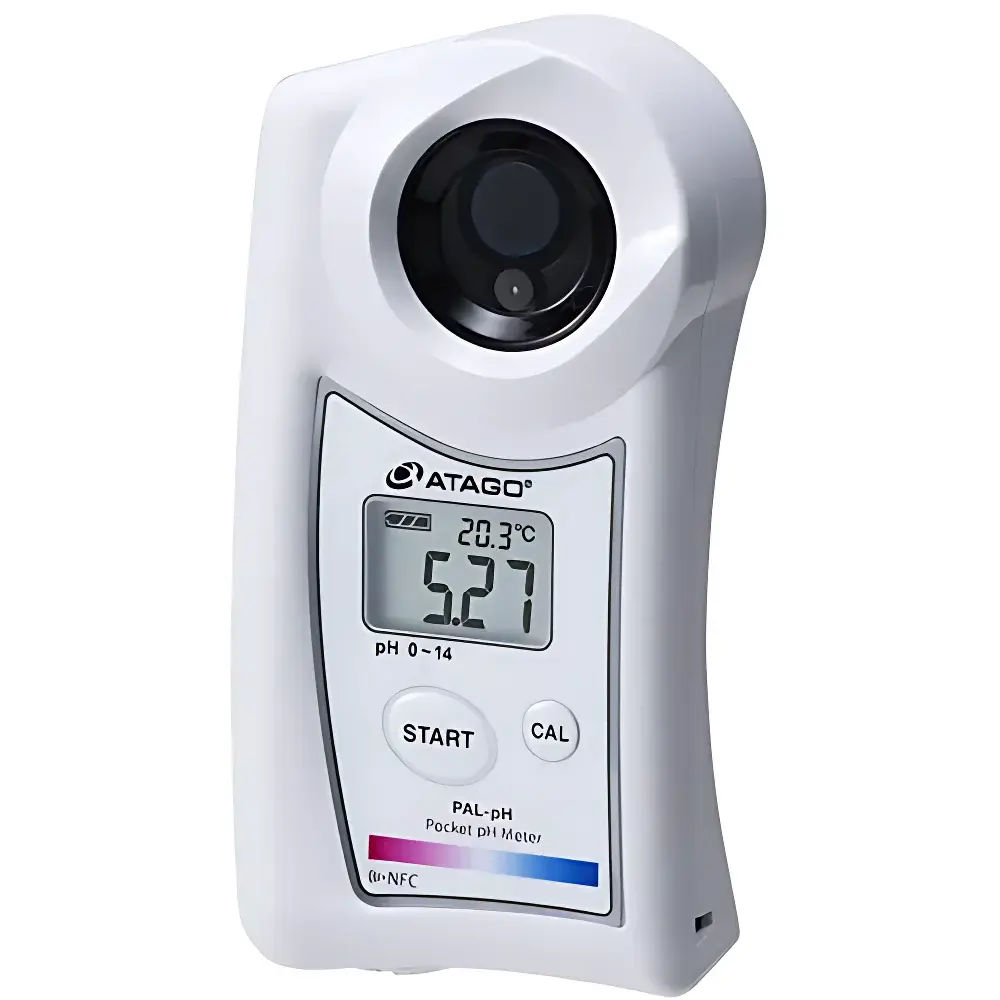
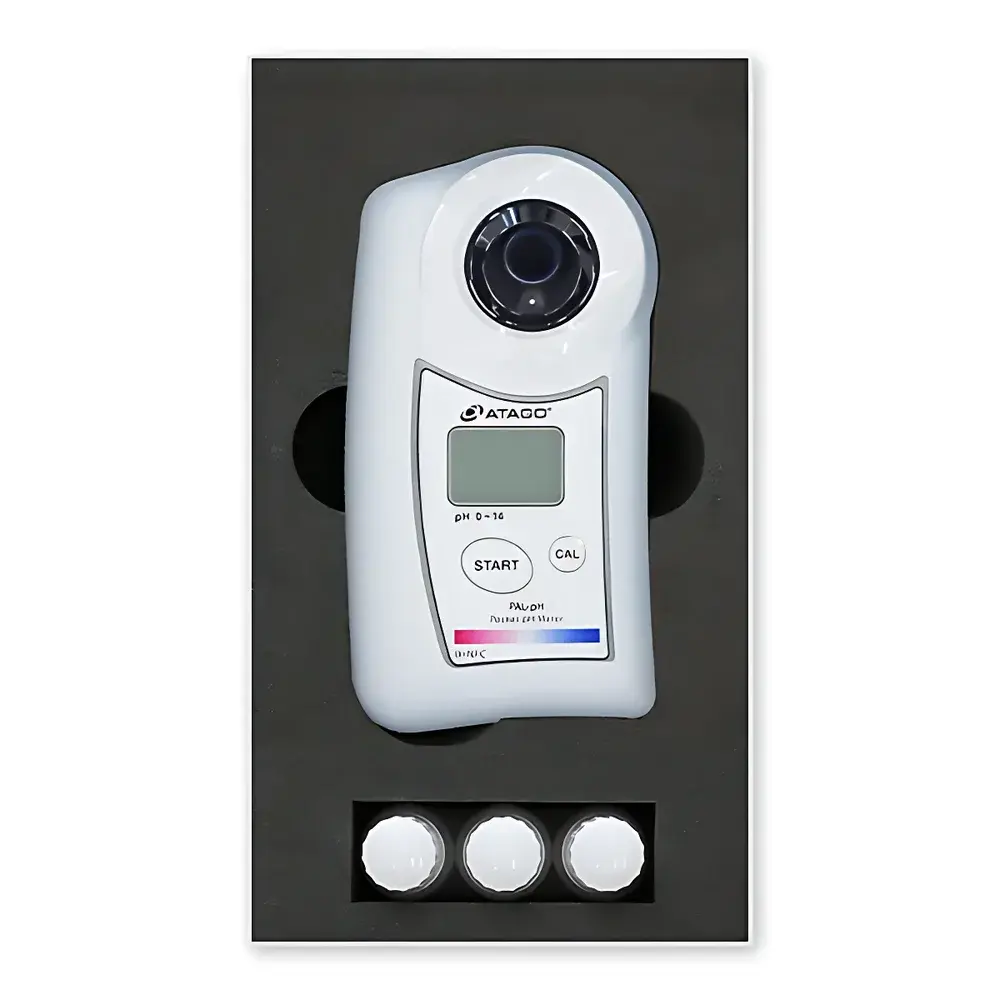
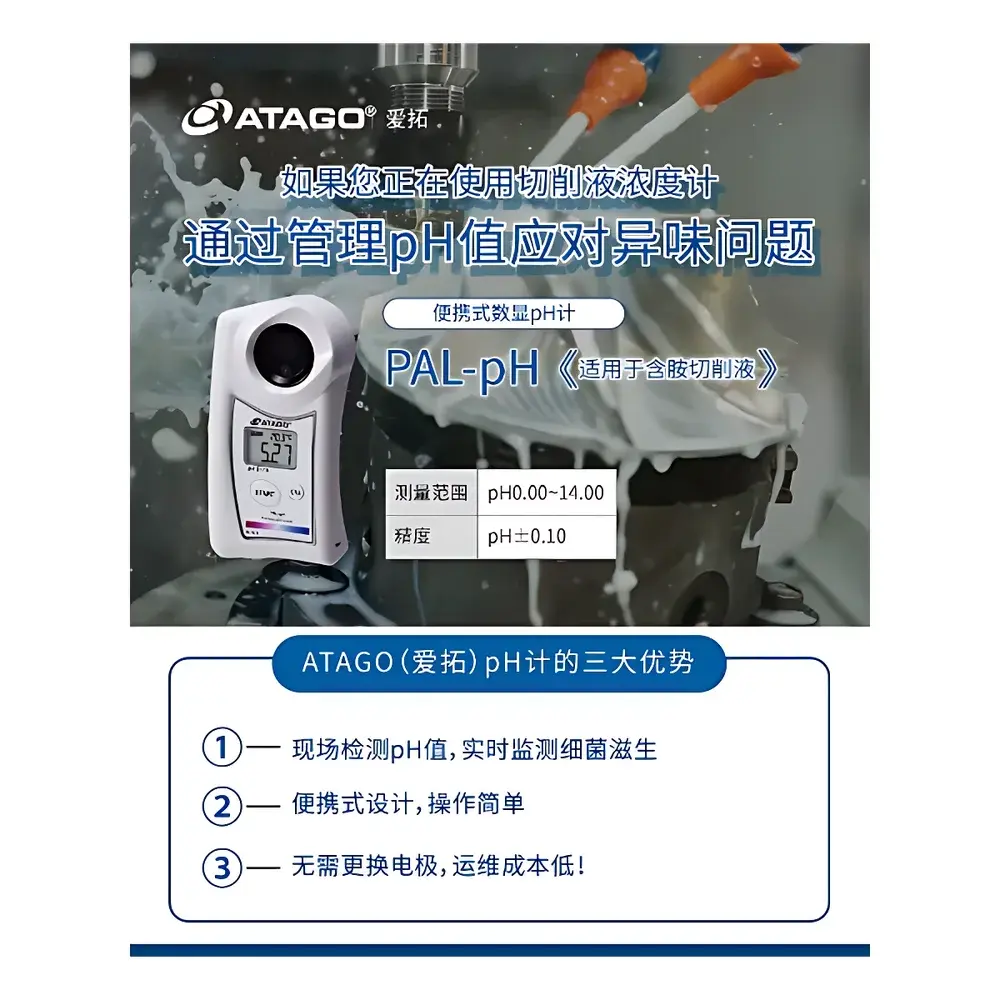
ATAGO PAL-pH Cutting Fluid pH Meter
| Brand | ATAGO |
|---|---|
| Origin | Japan |
| Model | PAL-pH |
| Instrument Type | Portable pH Meter |
| Parameter Type | Single-Parameter (pH) |
| Measurement Range | 0.00–14.00 |
| Resolution | 0.01 pH |
| Accuracy | ±0.10 pH |
| Precision | 0.01 pH |
| Electrode Type | Integrated Smooth-Surface Glass Electrode with Built-in Reference |
| Housing Material | PBT Resin |
| IP Rating | IP65 (Water Resistant – Prism Rinseable) |
| Sample Volume Required | 0.6 mL |
| Stabilization Time | 40–60 s |
| Calibration Buffers Supplied | pH 4.01, 6.86, and 9.18 (3 vials) |
Overview
The ATAGO PAL-pH Cutting Fluid pH Meter is a purpose-engineered portable electrochemical instrument designed specifically for rapid, on-site pH measurement of metalworking cutting fluids in industrial manufacturing environments. It operates on the potentiometric principle, measuring the electromotive force (EMF) generated across a pH-sensitive glass membrane relative to a stable internal reference electrode—both integrated into a single, robust sensing element. Unlike general-purpose benchtop or handheld pH meters, the PAL-pH addresses critical operational challenges associated with amine-containing coolants: electrode fouling, mechanical fragility, and calibration drift. Its smooth-surface glass electrode minimizes surface adhesion of oily residues and particulates, while its PBT thermoplastic housing ensures chemical resistance against common amine-based additives and emulsifiers found in semi-synthetic and synthetic cutting fluids. The device complies with ISO 7888 (water quality — determination of pH) methodology principles and supports routine quality control aligned with internal manufacturing SOPs and ISO 9001-certified process monitoring frameworks.
Key Features
- Integrated smooth-surface glass pH electrode with permanently sealed internal reference system—eliminates need for KCl refilling or external reference junction maintenance
- PBT resin housing engineered for mechanical durability and resistance to amine-based coolants, solvents, and light hydrocarbon exposure
- IP65-rated enclosure with rinseable prism assembly—enables quick post-measurement cleaning under low-pressure tap water without compromising sensor integrity
- Minimal sample requirement (0.6 mL) and short stabilization time (40–60 seconds), optimized for shop-floor efficiency and reduced coolant waste
- No pre-soaking required: electrode is factory-conditioned and ready for immediate use after initial 20-minute activation in deionized water
- High-resolution digital display (0.01 pH units) with automatic temperature compensation (ATC) via built-in thermistor for consistent readings across ambient workshop temperatures (5–40 °C)
Sample Compatibility & Compliance
The PAL-pH is validated for direct measurement of water-miscible cutting fluids—including soluble oils, semi-synthetics, and full synthetics—regardless of amine content, viscosity (< 50 cP), or suspended particulate load typical in machining sumps. Its electrode geometry and surface finish mitigate clogging and coating by tramp oil, fine swarf, or biocide residues. While not intended for highly viscous or non-aqueous fluids (e.g., neat oils), it conforms to ASTM D1536 and ISO 11276 guidelines for pH measurement in aqueous industrial process streams. Device calibration and verification protocols align with GLP documentation requirements; calibration history (date, buffer used, offset value) is retained in non-volatile memory and exportable via optional IR interface (not included). The unit meets CE marking directives for electromagnetic compatibility (2014/30/EU) and low-voltage safety (2014/35/EU).
Software & Data Management
The PAL-pH operates as a standalone field instrument with no embedded Bluetooth, USB, or cloud connectivity. All data are displayed and retained locally on the LCD screen during active measurement. Calibration events—including date stamp, buffer pH values entered, and measured mV offset—are stored in internal memory (up to 10 calibration logs). For traceability in regulated environments, users may manually record calibration and measurement data into paper-based or LIMS-integrated electronic logbooks. The device supports audit-ready operation when paired with controlled buffer dispensing systems and documented calibration SOPs compliant with ISO/IEC 17025 clause 6.4.2 (equipment verification) and FDA 21 CFR Part 11 Annex A (electronic records—where manual transcription is employed).
Applications
- Routine pH surveillance of central coolant sumps to prevent microbial proliferation (optimal range: pH 8.5–9.5) and corrosion of machine tool components
- Verification of coolant replenishment ratios during make-up dosing to maintain alkalinity reserve and buffering capacity
- Troubleshooting workpiece staining, rust formation, or premature tool wear linked to acidic degradation (pH 10.0)
- On-the-spot validation prior to coolant disposal or recycling—supporting environmental compliance with local wastewater discharge limits (e.g., EPA 40 CFR Part 438)
- Training and cross-functional QA/QC support across maintenance, production engineering, and EHS teams in automotive, aerospace, and precision machining facilities
FAQ
Does the PAL-pH require regular electrolyte refilling or storage in KCl solution?
No. The integrated reference electrode is gel-filled and sealed for life—no refilling, soaking, or wet-storing is necessary.
Can the PAL-pH be used for non-cutting-fluid samples such as wastewater or rinse water?
Yes, provided the sample is aqueous, low-viscosity (< 50 cP), and free of heavy solids or abrasive particles that could scratch the electrode surface.
How often should calibration be performed in a high-volume machining environment?
Daily calibration is recommended before first use; additional mid-shift verification using pH 6.86 buffer is advised if ambient temperature fluctuates >5 °C or after measuring >10 samples.
Is the device suitable for ISO/IEC 17025-accredited laboratories?
It serves as a field verification tool—not a primary reference standard—but may be incorporated into accredited scope when operated under documented procedures, traceable buffers, and periodic inter-laboratory comparison.
What maintenance is required beyond rinsing the prism after each use?
Occasional gentle wiping of the electrode surface with lint-free tissue; avoid alcohol, acetone, or abrasive cleaners. No disassembly or user-serviceable parts exist.




