
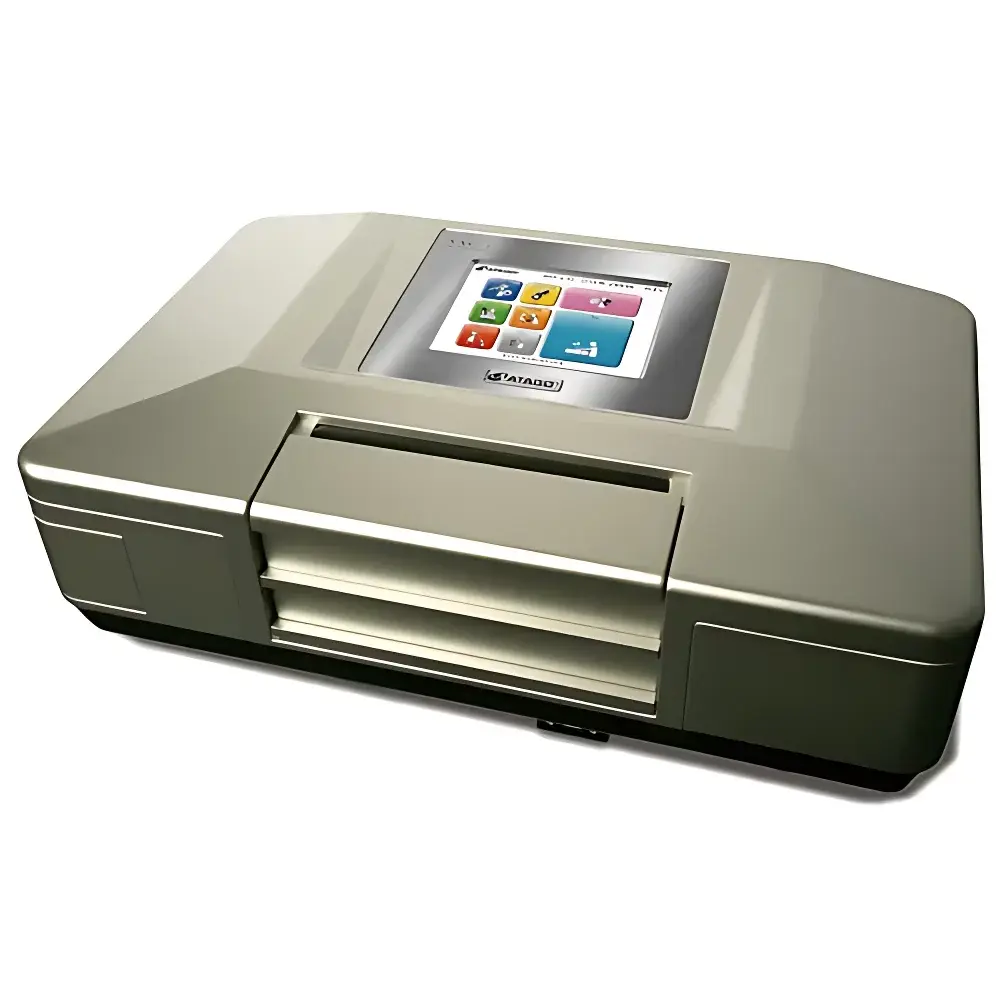
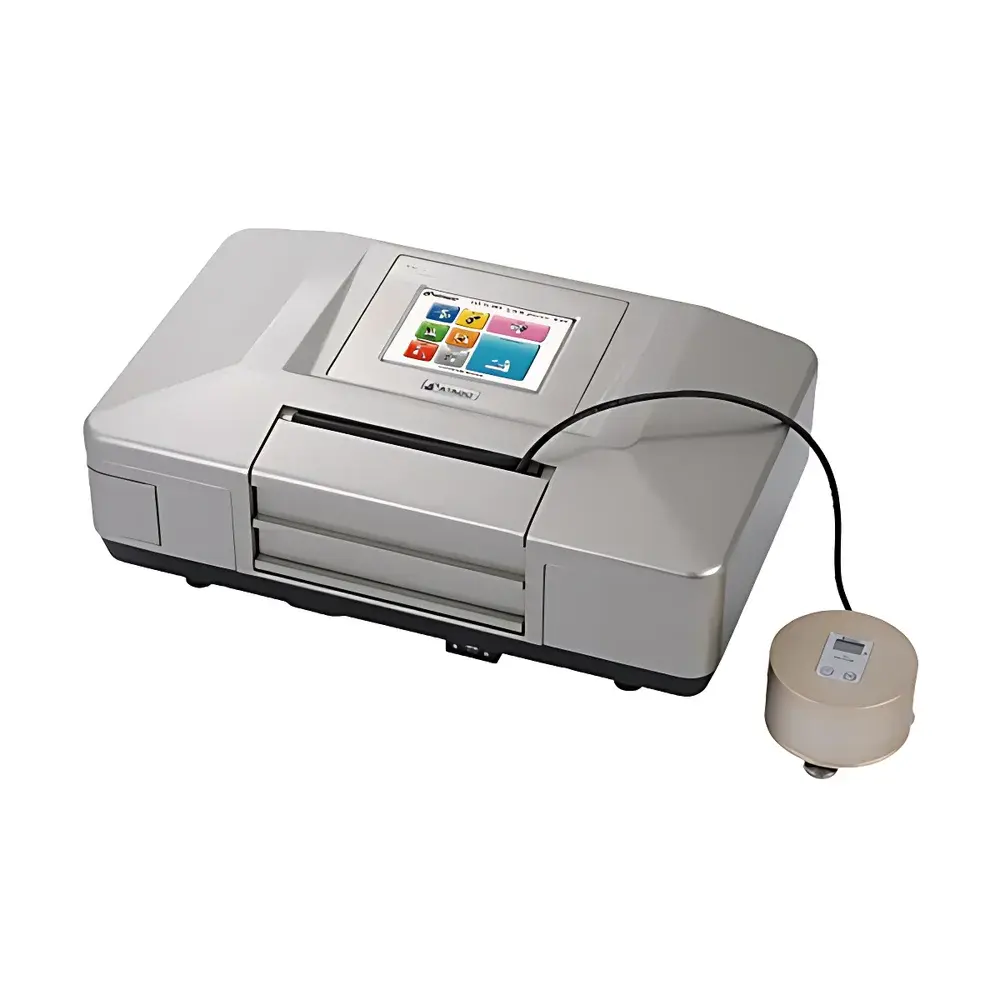
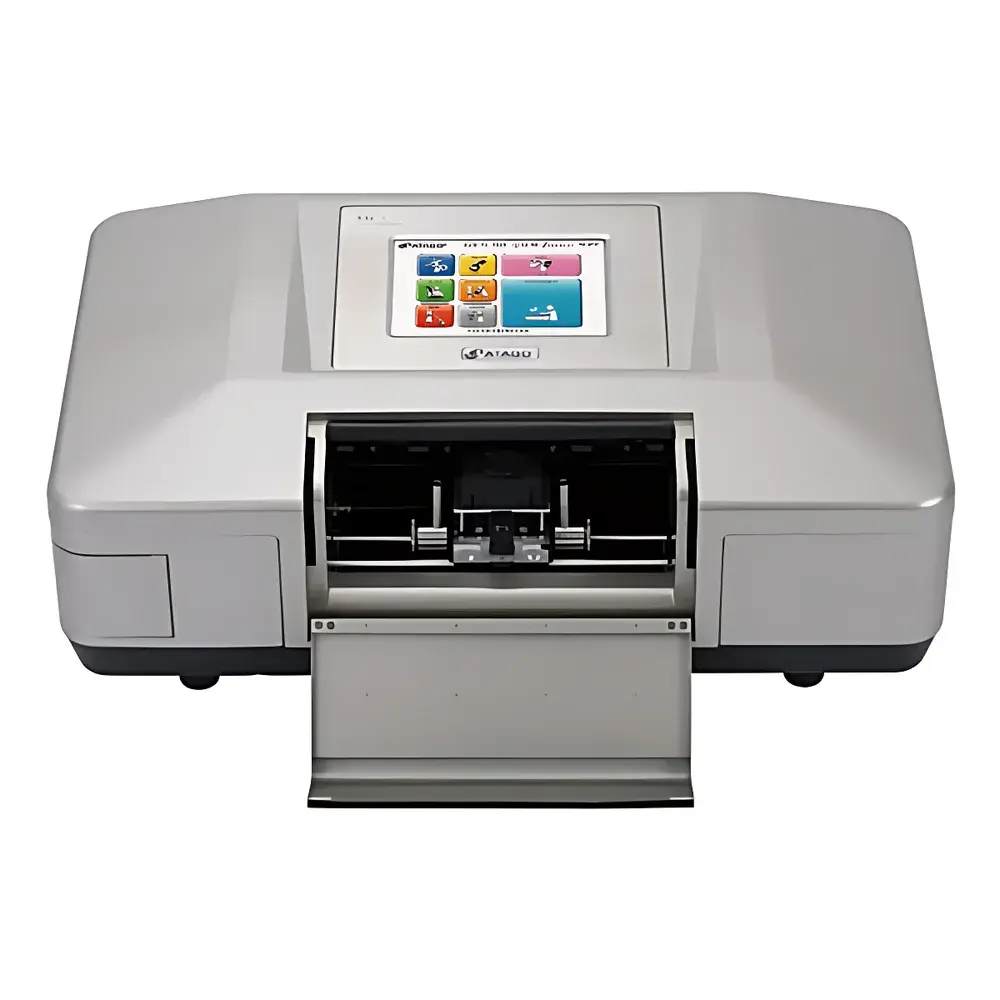
ATAGO SAC-i Advanced Dual-Wavelength Automatic Polarimeter
| Brand | ATAGO |
|---|---|
| Origin | Japan |
| Model | SAC-i 589/882 |
| Type | Fully Automatic Polarimeter |
| Temperature Control | Integrated Peltier-based Thermostat (10–40 °C) |
| Display | 7.5″ Color LCD Touchscreen |
| Light Source | LED with Interference Filters at 589 nm and 882 nm |
| Measurement Range | –89.9999 to +90.0000° (AR) and –360.0000 to +360.0000° (AR extended) |
| Resolution | 0.0001° (AR), 0.0001°Z (ISS) |
| Accuracy | ±0.002° (AR, –5.0000 to +5.0000° @ 589 nm), ±0.010° (AR, full range) |
| Repeatability | ±0.003° (AR) |
| Sample Cell Compatibility | Up to 200 mm path length |
| Compliance | ICUMSA Method GS3/3-12, FDA 21 CFR Part 11 (audit trail, electronic signature, user access control), GLP/GMP-ready |
| Data Output | USB flash drive (CSV), RS-232C, optional DP-AD/DP-63 thermal printer |
| Interface | Front-mounted USB-A port, touchscreen GUI with 6 UI themes and dual background options |
Overview
The ATAGO SAC-i Advanced Dual-Wavelength Automatic Polarimeter is an engineered solution for high-precision optical rotation measurement in regulated and research-intensive environments. Based on the fundamental principle of optical activity—where chiral molecules rotate the plane of polarized light—the SAC-i employs a robust Glan-Taylor prism polarizing system and dual-wavelength LED illumination (589 nm, approximating the sodium D-line, and 882 nm near-infrared) to deliver traceable, temperature-compensated measurements across diverse sample matrices. Unlike conventional polarimeters requiring external water baths, the SAC-i integrates a Peltier-based thermostatic module capable of maintaining sample temperature between 10 °C and 40 °C with ±0.2 °C stability—enabling compliance with ICUMSA sugar analysis standards and eliminating thermal drift artifacts in concentration or purity determinations. Its measurement architecture supports both angular rotation (AR) and International Sugar Scale (ISS) reporting, with automatic conversion to specific rotation ([α]), concentration, and purity when paired with ATAGO RX-series refractometers via digital interface.
Key Features
- Dual-wavelength capability (589 nm and 882 nm) enables accurate analysis of deeply colored or turbid samples—such as molasses, caramelized syrups, or botanical extracts—without decolorization pretreatment.
- Integrated Peltier temperature control ensures stable, reproducible measurements without reliance on external circulation baths; eliminates setup complexity and reduces footprint.
- High-resolution angular detection (0.0001° AR resolution) and exceptional repeatability (±0.003° AR) meet stringent method validation requirements for QC laboratories operating under ISO/IEC 17025 or pharmaceutical GMP frameworks.
- Seven measurement modes—including Stability-Auto, High-Speed Auto, Manual Standard, and Delayed Start—support adaptive workflows from routine batch verification to kinetic optical rotation studies.
- 7.5-inch capacitive touchscreen with customizable UI (6 themes, 3 graph styles, 2 background options) enhances operator ergonomics and minimizes training overhead in multi-user facilities.
- Front-access USB-A port simplifies data export to flash drives in CSV format; RS-232C interface enables legacy LIMS integration; optional thermal printers (DP-AD/DP-63) support audit-ready hardcopy output.
Sample Compatibility & Compliance
The SAC-i accommodates standard and extended-path quartz cells up to 200 mm (10 mL volume), supporting low-concentration analytes and highly viscous media without dilution or filtration. Its 882 nm channel significantly improves signal-to-noise ratio for optically dense samples by reducing absorption interference—critical for food-grade invert sugar, pharmaceutical intermediates, and natural product isolates. Regulatory alignment includes full support for ICUMSA GS3/3-12 (sucrose quantification), USP (Optical Rotation), and FDA 21 CFR Part 11 through built-in electronic signatures, role-based user authentication, immutable audit trails, and data integrity safeguards. Temperature compensation algorithms apply real-time correction across 10–40 °C, ensuring conformity with ISO 5725 (accuracy and precision) and ASTM E291 (standard test methods for optical rotation).
Software & Data Management
The embedded firmware provides native storage of up to 999 sequential measurements with auto-calculated mean, SD, and CV statistics. Measurement history (last 10 entries) is accessible directly from the acquisition screen via intuitive tap navigation. Custom scale definitions—including user-defined calibration curves for proprietary APIs or excipients—can be authored, validated, and archived within instrument memory. All exported CSV files contain timestamp, operator ID, wavelength, temperature, cell path length, and raw AR/ISS values—facilitating traceability during internal audits or regulatory inspections. Data encryption, session timeout, and password-protected configuration menus enforce data governance per ALCOA+ principles (Attributable, Legible, Contemporaneous, Original, Accurate, Complete, Consistent, Enduring, Available).
Applications
- Pharmaceutical QC: Enantiomeric excess determination of chiral active pharmaceutical ingredients (APIs) per ICH Q5C and EP 2.2.7 guidelines.
- Sugar & Sweetener Analysis: Sucrose, glucose, and fructose quantification in cane/beet processing, HFCS production, and honey authenticity testing per ICUMSA and AOAC Official Methods.
- Food & Beverage R&D: Monitoring enzymatic inversion kinetics, Maillard reaction progression, and caramelization degree via time-resolved optical rotation.
- Natural Products: Quantification of essential oil enantiomeric composition (e.g., limonene, pinene) and botanical extract standardization.
- Academic Research: Teaching optical activity fundamentals, validating chiral synthesis routes, and characterizing polymer helicity in biomaterials.
FAQ
Does the SAC-i require external temperature control equipment?
No. The instrument features a built-in Peltier thermostat that maintains precise sample temperature between 10 °C and 40 °C without auxiliary chillers or water baths.
Can the SAC-i measure samples with high absorbance at 589 nm?
Yes. The 882 nm NIR channel provides reliable signal acquisition for dark-colored or particulate-laden samples where visible-light transmission is compromised.
Is FDA 21 CFR Part 11 compliance hardware- or software-enabled?
Compliance is implemented via firmware-level controls including electronic signatures, audit trail logging, user role management, and data immutability—verified during factory calibration and documented in the instrument’s IQ/OQ protocol.
What is the maximum allowable path length for sample cells?
The SAC-i accepts standard and custom quartz cells up to 200 mm in length, accommodating both low-concentration and high-viscosity applications.
How does the SAC-i interface with ATAGO refractometers?
Via dedicated digital handshake protocol; simultaneous acquisition of refractive index and optical rotation enables real-time purity calculation using established correlation models for sucrose, lactose, and other optically active solutes.




