
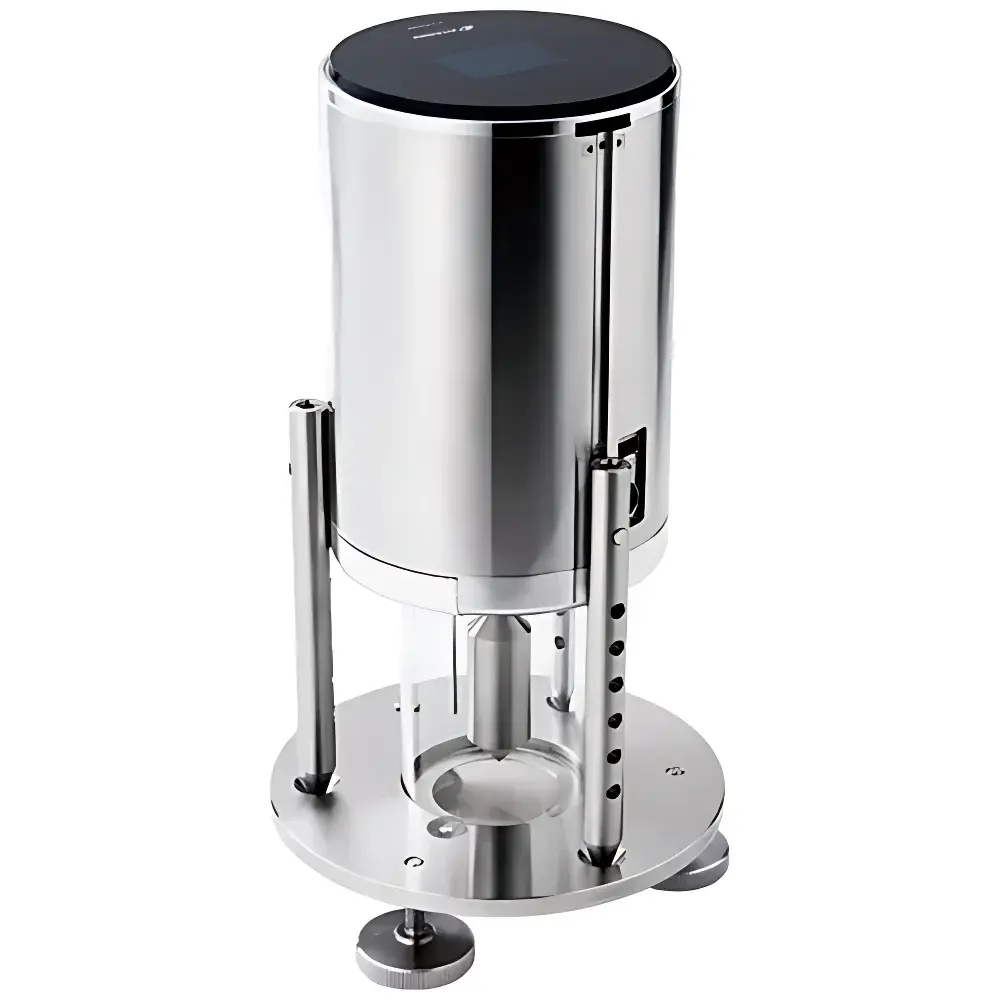
ATAGO VISCO™ Advanced Rotational Viscometer
| Brand | ATAGO |
|---|---|
| Origin | Japan |
| Model | VISCO™ Standard Kit |
| Instrument Type | Benchtop Rotational Viscometer |
| Viscosity Range | 1 to 350,000,000 mPa·s |
| Temperature Range | 0.0 to 100.0 °C |
| Temperature Resolution | 0.1 °C |
| Temperature Accuracy | ±0.2 °C |
| Speed Range | 0.5–250 rpm (20 steps) |
| Torque Measurement | 0.0–100.0% (recommended operating range: 10.0–100.0%) |
| Power Supply | AC adapter (100–240 V AC) or 4 × AA alkaline batteries (DC 6 V) |
| Data Interface | USB port for PC connectivity |
| Sample Volume | 15 mL |
| Display | LCD showing viscosity (mPa·s/cP), temperature (°C/°F), torque (%), rotor ID, and max measurable viscosity at selected speed |
| Construction | Full stainless-steel body, base, and mounting hardware |
| Dimensions (main unit) | 12 × 12 × 20 cm |
| Weight (main unit) | 1.2 kg |
| Compliance | Designed for GLP/GMP-aligned workflows |
Overview
The ATAGO VISCO™ Advanced Rotational Viscometer is an engineered solution for precise, repeatable viscosity measurement across diverse industrial and research environments. Based on the Couette principle of rotational rheometry, the instrument applies controlled shear stress via a rotating spindle immersed in the sample, measuring the resulting torque to determine dynamic viscosity (in mPa·s or cP). Its modular design integrates a high-stability stainless-steel chassis, precision-machined spindle geometry, and thermally compensated electronics—ensuring consistent performance under variable ambient conditions. Unlike capillary or falling-ball viscometers, the VISCO™ delivers direct, real-time shear-rate-dependent data without calibration drift, making it suitable for non-Newtonian fluids including pseudoplastic, dilatant, and thixotropic systems. The device operates within a validated temperature window (0.0–100.0 °C) with ±0.2 °C accuracy, enabling temperature-controlled rheological profiling critical for QC release testing and formulation development.
Key Features
- Stainless-steel construction throughout—body, base, mounting screws, and optional accessories—for corrosion resistance, cleanability, and long-term dimensional stability in regulated labs.
- Minimal sample requirement (15 mL) compatible with disposable paper cups or standard laboratory beakers—eliminating cross-contamination risk and reducing cleaning validation burden.
- Dual power mode: AC adapter operation for benchtop continuity or four AA alkaline batteries supporting up to 7 hours of continuous use at 60 rpm—ideal for field audits, production line checks, and mobile QA teams.
- Intuitive one-button operation with contextual LCD display showing real-time viscosity, temperature, torque %, rotor identification, and upper measurement limit at current speed—reducing operator training time and minimizing misinterpretation.
- USB interface enables direct data streaming to Windows-based PCs for integration into LIMS, ELN, or statistical process control (SPC) platforms—supporting traceable, timestamped export with user authentication logs.
- 20-step programmable speed control (0.5–250 rpm) ensures optimal shear rate selection across low-viscosity solvents and ultra-high-viscosity polymer melts or pastes.
Sample Compatibility & Compliance
The VISCO™ accommodates Newtonian and non-Newtonian liquids across food, pharmaceutical, chemical, coatings, and petroleum sectors—including syrups, suspensions, emulsions, gels, molten resins, and lubricants. Its rotor configurations (A1, A2, A3) provide calibrated coverage from 50 mPa·s to 2,000,000 mPa·s, while extended-range measurements up to 350,000,000 mPa·s are achievable using optional high-torque spindles and extended timing protocols. All measurements comply with ISO 2555, ASTM D2196, and USP guidelines for rotational viscosity determination. When paired with ATAGO’s optional Peltier-based temperature controller (sold separately), the system meets ISO 3219 and ASTM D445 thermal equilibration criteria—enabling stable, water-free temperature regulation without microbial growth risks associated with traditional water baths.
Software & Data Management
The VISCO™ does not require proprietary software for basic operation but supports standardized USB CDC communication protocols for seamless integration with third-party applications. Raw output includes timestamp, rotor ID, speed (rpm), measured torque (%), calculated viscosity (mPa·s), and sample temperature (°C). Exported CSV files contain all metadata required for 21 CFR Part 11 compliance—including operator ID fields (when entered manually), electronic signatures, and audit trail generation when deployed with validated ELN/LIMS systems. Firmware updates are delivered via ATAGO’s secure support portal, ensuring ongoing alignment with evolving regulatory expectations for instrument qualification (IQ/OQ/PQ).
Applications
- Food & Beverage: Quality control of jams, honey, dairy products, plant-based creams, chocolate masses, and concentrated fruit pulps—ensuring batch-to-batch consistency and shelf-life prediction.
- Pharmaceuticals: Viscosity verification of ophthalmic solutions, parenteral suspensions, topical gels, and excipient blends—supporting USP monograph compliance and formulation robustness assessment.
- Personal Care & Cosmetics: Rheological screening of shampoos, conditioners, toothpastes, and serums—correlating viscosity profiles with sensory attributes and pump dispensing performance.
- Chemicals & Polymers: Monitoring polymer solution degradation, adhesive tack development, and surfactant micelle formation—facilitating in-process optimization during synthesis and blending.
- Industrial Lubricants: Viscosity grading of hydraulic oils, gear oils, and cutting fluids per ISO VG classifications—verifying conformance to OEM specifications and wear protection thresholds.
FAQ
What standards does the VISCO™ comply with for viscosity measurement?
The instrument conforms to ISO 2555, ASTM D2196, and USP , with traceable calibration options available through ATAGO’s ISO/IEC 17025-accredited service centers.
Can the VISCO™ measure non-Newtonian fluids accurately?
Yes—the rotational method inherently captures shear-thinning and shear-thickening behavior when multiple speeds are tested; full flow curves require manual speed stepping or external scripting via USB.
Is temperature control mandatory for accurate readings?
Temperature significantly affects viscosity; the built-in sensor provides real-time correction, but for strict regulatory testing, use with the optional Peltier temperature controller is recommended to maintain ±0.1 °C stability.
How is data integrity ensured during export?
USB output includes embedded timestamps and configurable operator IDs; when integrated with validated software, full 21 CFR Part 11 audit trails—including user actions, parameter changes, and result modifications—are supported.
What maintenance is required for long-term accuracy?
Annual recalibration is advised; spindle geometry inspection, bearing lubrication check, and torque sensor verification are included in ATAGO’s certified service packages.



