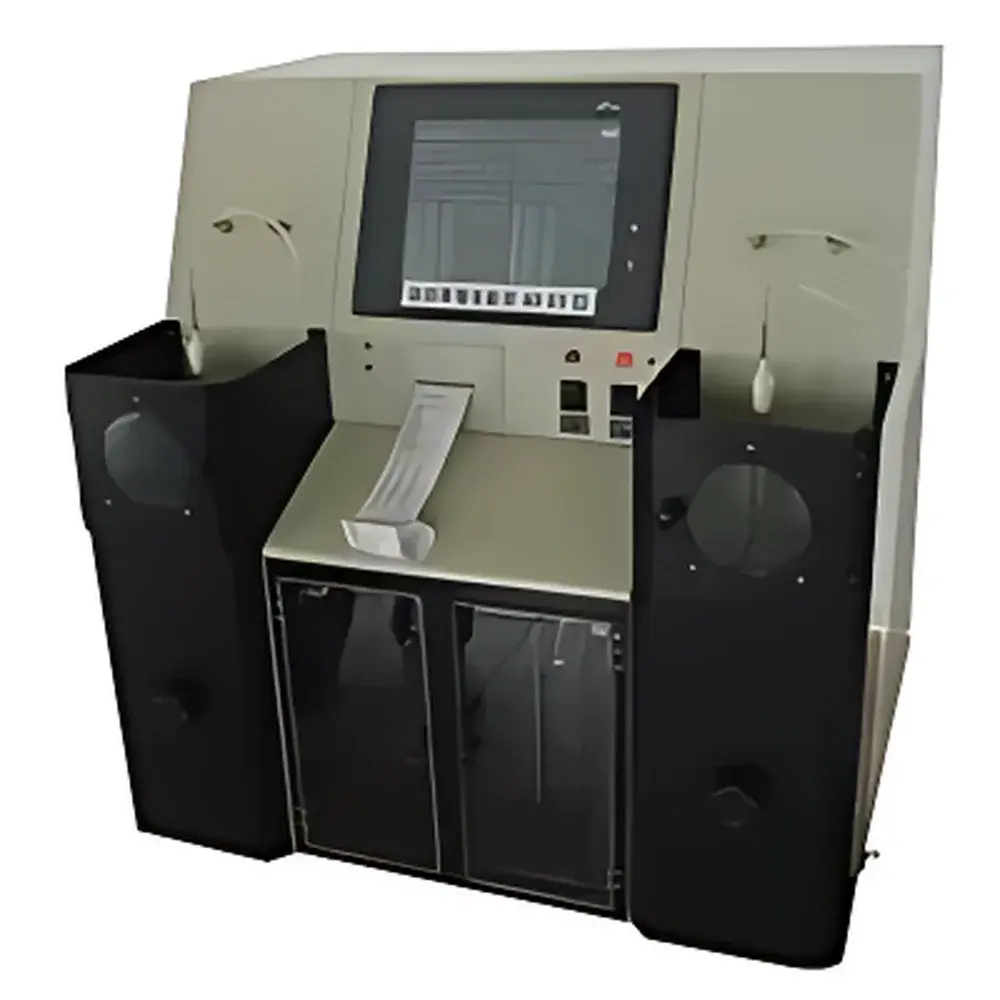
Xufeng XF-6536B Dual-Channel Automated Petroleum Distillation Apparatus
| Brand | Xufeng |
|---|---|
| Origin | Shanghai, China |
| Model | XF-6536B |
| Standards Compliance | ASTM D86, D850, D1078, D2892 |
| Temperature Range | 10 °C to 400 °C (0.1 °C resolution) |
| Distillate Rate Control | 2–9 mL/min (adjustable in 0.5 mL increments, PID-regulated) |
| Condenser Temp Control | 0–80 °C (Peltier + resistive heating) |
| Receiver Bath Temp Control | 0/4 °C to ambient |
| Detection | Photometric meniscus tracking (half-meniscus), CRC thermocouple dry-point sensor, Pt100 temperature sensing |
| Power Supply | AC 220 V, 50/60 Hz, 1500 W |
| Dimensions | 740 W × 650 D × 680 H mm |
| Weight | ~75 kg |
Overview
The Xufeng XF-6536B Dual-Channel Automated Petroleum Distillation Apparatus is an engineered solution for precise, repeatable, and standards-compliant distillation analysis of petroleum products and related hydrocarbon mixtures. Designed in accordance with the fundamental physical principles of atmospheric and reduced-pressure batch distillation, the instrument implements a controlled heating–vaporization–condensation–collection sequence governed by real-time feedback loops. Its dual-channel architecture enables concurrent execution of two independent distillation tests—critical for laboratories performing routine quality control, refinery process monitoring, or regulatory compliance testing. The system supports full implementation of ASTM D86 (distillation of petroleum products at atmospheric pressure), ASTM D850 and D1078 (low-boiling solvents and benzene fractions), and ASTM D2892 (true boiling point distillation of crude oil). It also meets the procedural requirements of GB/T 6536 (China’s national standard equivalent to ASTM D86), ISO 3405, IP 123, and JIS K2254. All thermal, volumetric, and timing parameters are managed via an embedded microcontroller with closed-loop PID regulation, ensuring stability across variable ambient conditions and long-term operational consistency.
Key Features
- Dual independent test channels—enabling simultaneous ASTM D86 and ASTM D850 analyses, or parallel replicate runs per method without cross-contamination or thermal interference.
- Full-color capacitive touchscreen interface with Windows-style navigation, supporting intuitive method selection, parameter entry, and real-time graphical display of distillation curves (temperature vs. volume % distilled).
- Integrated Peltier-based cooling and resistive heating for both condenser and receiver bath, delivering precise thermal control from 0 °C to 80 °C (condenser) and 0/4 °C to ambient (receiver), eliminating external chiller dependency.
- High-accuracy meniscus detection using optical half-meniscus tracking—ensuring reliable, operator-independent volume measurement with sub-milliliter resolution.
- Automated dry-point (D.P.) detection via CRC thermocouple sensor, validated against ASTM-defined criteria for termination of distillation based on temperature inflection.
- Multi-point auto-calibration suite—including temperature (distillation, condenser, receiver, ambient), atmospheric pressure, volumetric capacity, and time synchronization—traceable to NIST-equivalent reference standards.
- Programmable distillation termination logic: configurable to end at final boiling point, dry point, specified recovered volume, or target temperature—supporting flexible protocol adaptation.
- RS-232C serial interface compliant with ASTM E1382 data exchange protocols, enabling integration into LIMS environments and automated report generation.
- Thermal management architecture featuring Ni-Cr heating elements (1 kW), forced-air cooling, and software-compensated temperature correction—maintaining repeatability despite heater aging or ambient drift.
Sample Compatibility & Compliance
The XF-6536B accommodates a broad range of petroleum-derived samples, including gasoline, naphtha, kerosene, diesel fuel, jet fuel, crude oil cuts, and aromatic solvents (e.g., benzene, toluene, xylene). Its mechanical design supports interchangeable distillation flasks (100 mL, 125 mL, 200 mL, 250 mL) and receiver assemblies conforming to ASTM D86 Figure 1 geometry, as well as specialized configurations for ASTM D850/D1078 (low-boiling organics) and ASTM D2892 (crude assay). All operational sequences adhere strictly to the procedural constraints defined in referenced standards—including initial heating rate, vapor temperature rise limits, and reflux management. The instrument’s firmware enforces method-specific guardrails (e.g., maximum allowable distillate rate, minimum condenser temperature) to prevent noncompliant execution. Data integrity is maintained under GLP and GMP frameworks through audit-trail-enabled logging, user-access controls, and electronic signature support (when paired with compliant laboratory software).
Software & Data Management
The onboard operating system provides native support for 20 preconfigured test methods, each storing complete parameter sets—including heating profile, collection rate, termination criteria, and calibration offsets. Real-time data acquisition records temperature (±0.1 °C), volume collected (±0.1 mL), elapsed time, and ambient pressure at 1-second intervals. Raw datasets are exportable via RS-232C in ASCII format compatible with ASTM E1382 and ISO/IEC 17025 reporting templates. Optional PC-based software (sold separately) enables advanced curve fitting, statistical comparison of replicates, deviation mapping against reference materials, and PDF report generation with embedded digital signatures. All calibration events, method modifications, and error logs are timestamped and user-attributed—satisfying FDA 21 CFR Part 11 requirements when deployed within validated IT infrastructure.
Applications
This apparatus serves critical functions across upstream, midstream, and downstream petroleum operations. In refinery QC labs, it verifies volatility specifications (e.g., T10, T50, T90) for gasoline blending and diesel cetane improver qualification. R&D teams apply it to characterize fractional composition of cracked feedstocks or evaluate solvent recovery efficiency. Independent testing laboratories use it for third-party certification under API MPMS Chapter 10.3 or ISO 8217 marine fuel verification. Environmental labs deploy it for distillation profiling of contaminated soils or waste oils per EPA SW-846 Method 9060A. Its dual-channel capability significantly reduces turnaround time for high-volume sample batches while preserving inter-method comparability essential for ASTM round-robin studies.
FAQ
Does the XF-6536B comply with ASTM D2892 for crude oil assay?
Yes—the instrument supports full implementation of ASTM D2892, including programmable slow-heating ramp rates, fraction-cut collection triggers, and pressure-controlled condensation zones. Optional accessories include 200 mL and 250 mL flasks with calibrated side-arm geometry.
Can distillation data be exported directly to LIMS?
Yes—via RS-232C serial output in fixed-field ASCII format, compatible with most LIMS platforms. Custom parsing scripts are available upon request.
Is atmospheric pressure compensation automatic?
The system supports both manual barometric input and optional external pressure transducer integration (sold separately) for real-time dynamic correction per ASTM D86 Annex A1.
What maintenance is required for long-term accuracy?
Annual verification of Pt100 sensor linearity, meniscus detector alignment, and volumetric receiver calibration is recommended. Full calibration kits—including certified reference thermometers and NIST-traceable volume standards—are available.
Does the instrument support GLP-compliant audit trails?
When operated with validated PC software and enabled user authentication, all method changes, calibration actions, and test executions are logged with immutable timestamps and operator IDs—meeting core GLP record-keeping requirements.