
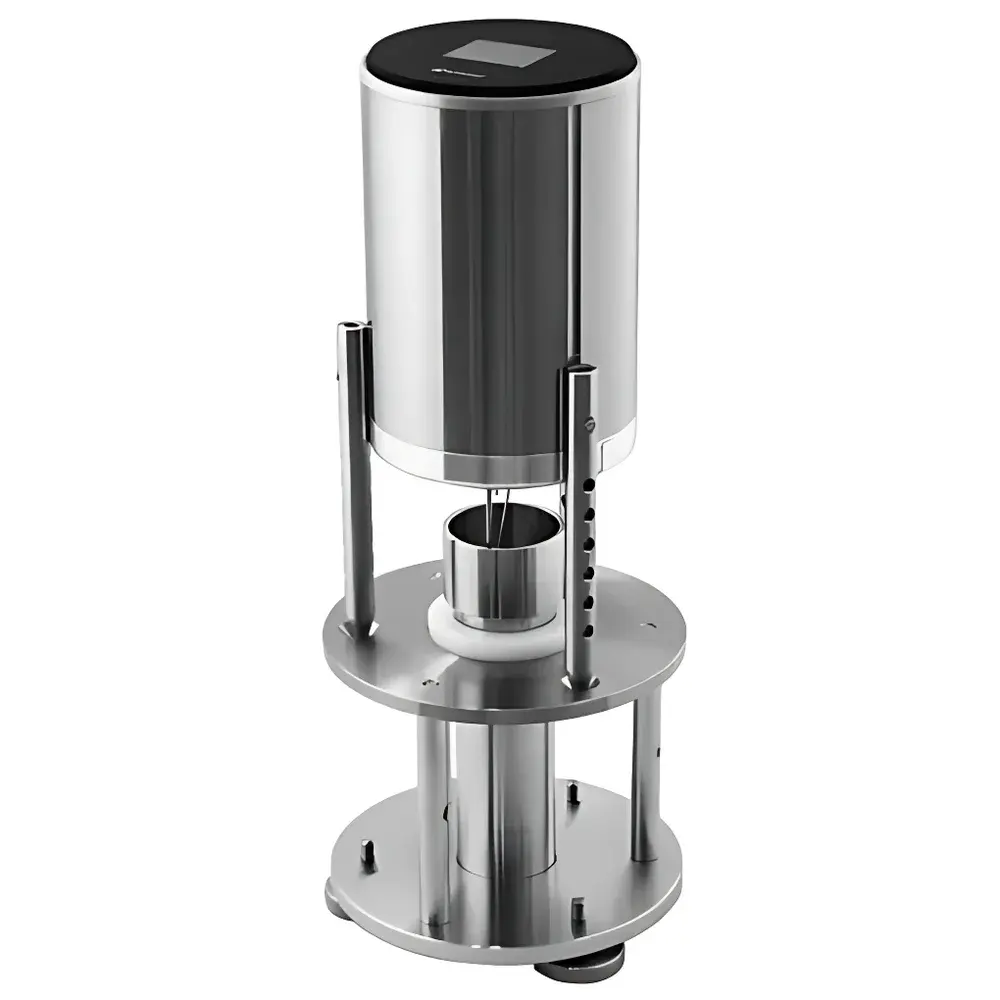
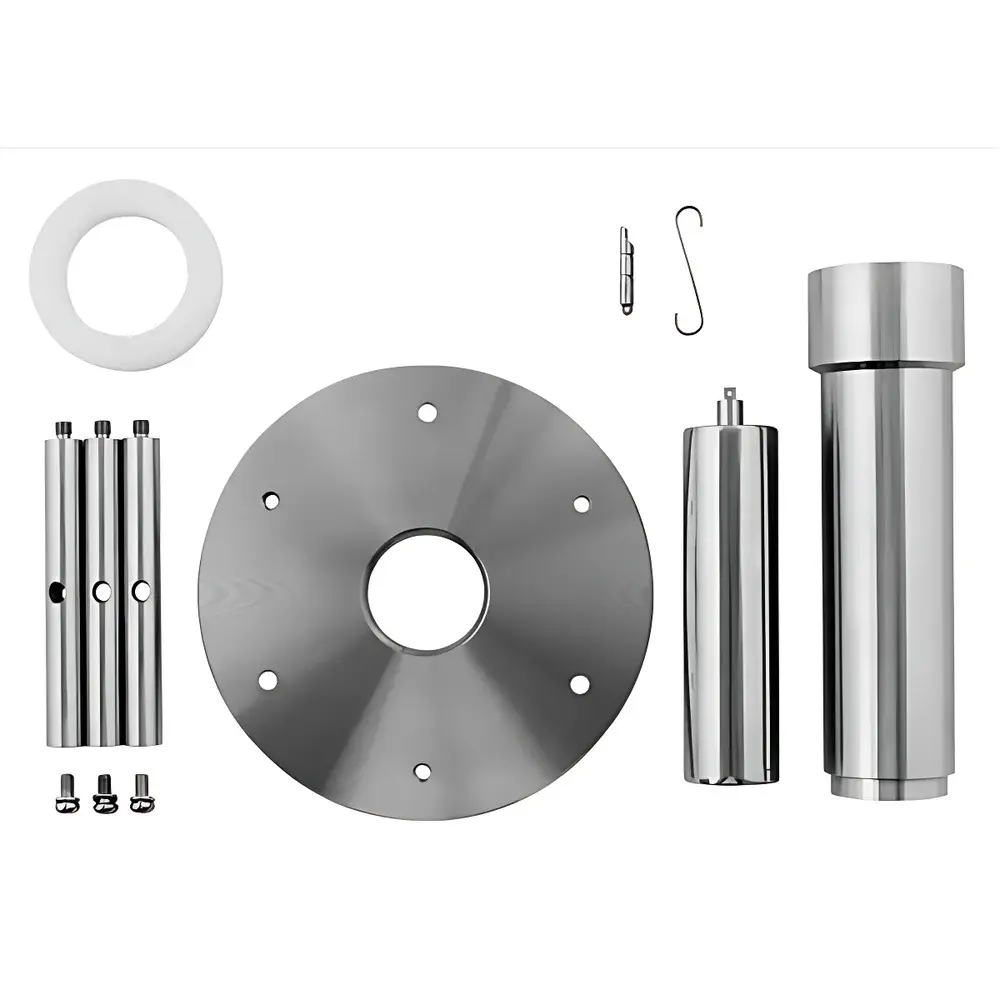
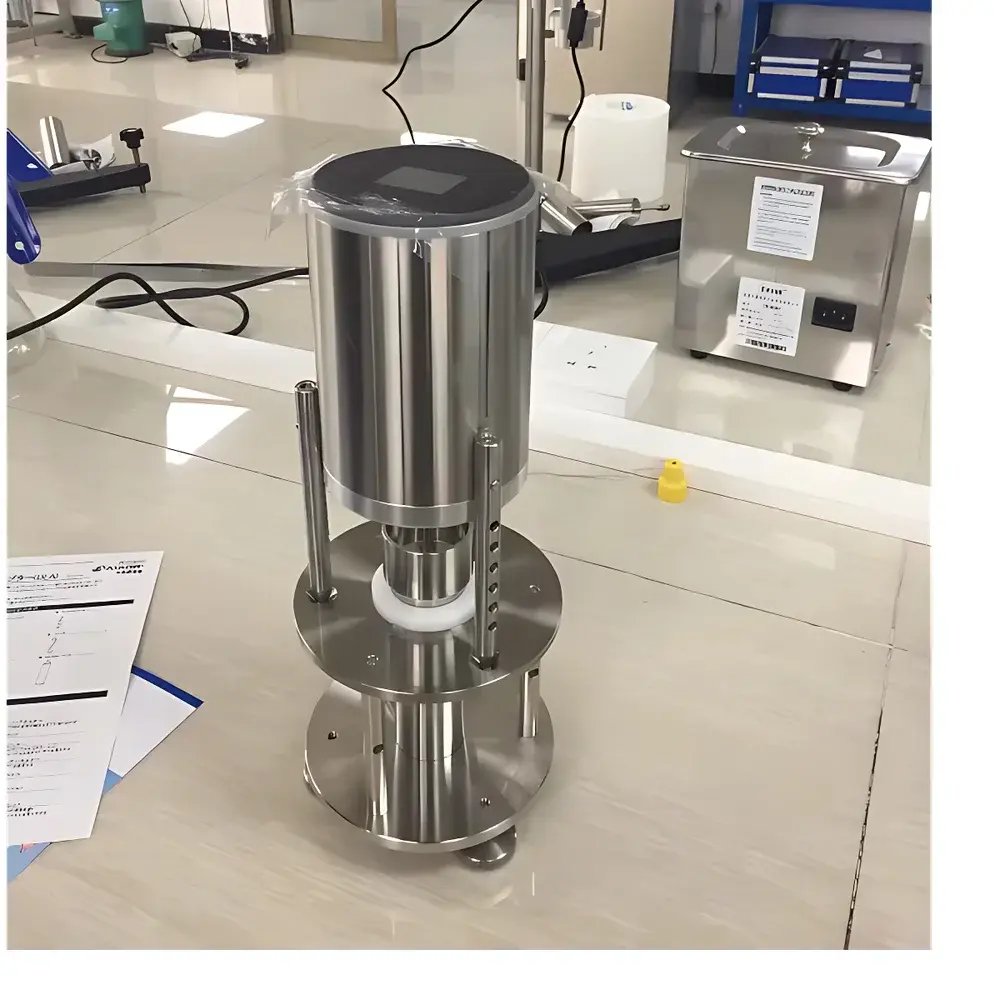
ATAGO VISCO Ultra-Low-Viscosity Rotational Viscometer
| Brand | ATAGO |
|---|---|
| Origin | Japan |
| Manufacturer Type | Authorized Distributor |
| Product Category | Imported Instrument |
| Model | VISCO Ultra-Low-Viscosity Rotational Viscometer |
| Instrument Type | Portable Rotational Viscometer |
| Operating Environment | Ambient Temperature |
| Viscosity Range | 1–2,000 mPa·s |
| Temperature Range | 0.0–100.0 °C |
| Measurement Adapter | ULA (Ultra-Low-Viscosity Adapter) |
| Sample Volume | 15 mL |
| Display | LCD with viscosity, % torque, rotor ID, and max measurable viscosity at selected speed |
| Power Supply | AC adapter + AA batteries |
| Data Interface | USB |
Overview
The ATAGO VISCO Ultra-Low-Viscosity Rotational Viscometer is a precision-engineered portable instrument designed for reliable, repeatable measurement of low-to-ultra-low viscosity fluids using controlled-shear rotational rheometry. Based on the Couette principle—where torque exerted on a rotating spindle immersed in a sample is proportional to its dynamic viscosity—the VISCO system delivers high reproducibility across a defined shear rate profile. Unlike capillary or falling-ball viscometers, this rotational platform enables direct quantification of apparent viscosity under standardized spindle geometry and rotational speed conditions. Its core application domain includes quality control and process monitoring in industries where fluid behavior at low shear stress is critical: ink formulation, coating development, pharmaceutical suspensions, food emulsions, and electronic chemical dispensing. The inclusion of the dedicated ULA (Ultra-Low-Viscosity Adapter) ensures optimal sensitivity and signal-to-noise ratio for samples as low as 1 mPa·s—addressing a key gap in conventional spindle-based viscometry.
Key Features
- Ultra-low viscosity measurement capability: 1–2,000 mPa·s with ULA adapter, optimized for Newtonian and near-Newtonian fluids
- Portable, lightweight design (≤1.2 kg) with rugged stainless-steel housing for field deployment and benchtop use
- Minimal sample requirement: only 15 mL per test—compatible with disposable paper cups to eliminate cross-contamination and cleaning downtime
- Dual power mode: operates on standard AA batteries (up to 20 hours continuous use) or optional AC adapter for lab continuity
- Intuitive single-button operation with real-time LCD display showing viscosity (mPa·s), % torque, rotor identification, and maximum measurable viscosity at current speed
- USB interface compliant with CDC class drivers—enables direct data streaming to Windows-based PCs without proprietary software installation
- Temperature-controlled compatibility: supports external Peltier or water-bath temperature regulation within 0.0–100.0 °C range (external thermostat required)
Sample Compatibility & Compliance
The VISCO system is validated for use with low-viscosity Newtonian and pseudo-plastic liquids exhibiting minimal thixotropic hysteresis over short measurement intervals (<60 s). Common compliant matrices include solvent-based inks (gravure, flexo), UV-curable coatings, aqueous surfactant solutions, dilute polymer dispersions, edible oils, soft drinks, and cosmetic lotions. While not certified for regulated GMP environments out-of-the-box, the instrument supports traceable calibration via NIST-traceable standard oils (e.g., Cannon-Manning series) and complies with ASTM D2196 and ISO 2555 methodologies when operated under documented SOPs. Its mechanical architecture meets IEC 61010-1 safety standards for laboratory electrical equipment. For GLP/GMP applications, users may implement audit-ready procedures including manual logbook entries, periodic verification against reference fluids, and firmware version tracking.
Software & Data Management
The VISCO does not require proprietary software for basic operation; however, its native USB HID protocol allows integration with third-party data acquisition platforms (e.g., LabVIEW, MATLAB, Python via pySerial). Raw output includes timestamped viscosity, torque percentage, spindle ID, RPM, and temperature (if external probe is connected). Users may export comma-separated values (.csv) directly to spreadsheet applications for statistical process control (SPC) charting—including X-bar/R charts per ISO 7870-2. No embedded database or user-accessible firmware update mechanism is provided—ensuring deterministic behavior and long-term measurement consistency across device generations. Audit trail functionality is implemented externally through host-system logging.
Applications
- Printing ink QC: Monitoring viscosity drift during solvent evaporation in gravure/flexographic workflows per GB/T 13217.4–2008 guidelines
- Adhesive formulation: Verifying dilution consistency of cyanoacrylates, PVAc emulsions, and hot-melt pressure-sensitive adhesives
- Food & beverage R&D: Characterizing flow behavior of dairy beverages, plant-based milks, and low-sugar syrups under ambient shear conditions
- Pharmaceutical excipient screening: Assessing viscosity of aqueous hydrophilic polymer solutions (e.g., HPMC, PVP) prior to lyophilization or spray drying
- Electronics manufacturing: Controlling dispersion stability of photoresist thinners and conductive ink carriers
- Educational labs: Teaching fundamental rheological concepts—including shear rate dependence, Newtonian validation, and calibration traceability
FAQ
What spindle configuration is used for ultra-low-viscosity measurements?
The ULA (Ultra-Low-Viscosity Adapter) is a concentric cylindrical geometry with a narrow annular gap, specifically engineered to maximize viscous drag signal while minimizing end-effects and inertia artifacts at low torque levels.
Is temperature control integrated into the VISCO unit?
No—the VISCO itself lacks built-in thermoregulation. Accurate temperature-dependent measurements require an external circulating bath or Peltier stage with a calibrated Pt100 sensor interfaced to the host PC.
Can the VISCO meet FDA 21 CFR Part 11 requirements?
Out-of-the-box, it does not support electronic signatures or audit trails; however, when deployed within a validated workflow using external SPC software and procedural controls, it may be included in Part 11-compliant systems.
What calibration standards are recommended?
NIST-traceable silicone oil standards (e.g., Cannon-Manning Viscosity Standards, Grade 100–1000 cSt) are advised for routine verification; annual recalibration by an ISO/IEC 17025-accredited lab is recommended for QC-critical applications.
Is the ULA adapter interchangeable with other ATAGO viscometers?
The ULA is mechanically and electronically compatible only with the VISCO series (Cat. No. 6800); it is not backward-compatible with older PAL or RE series instruments due to differing communication protocols and torque sensor specifications.
Related Products



