
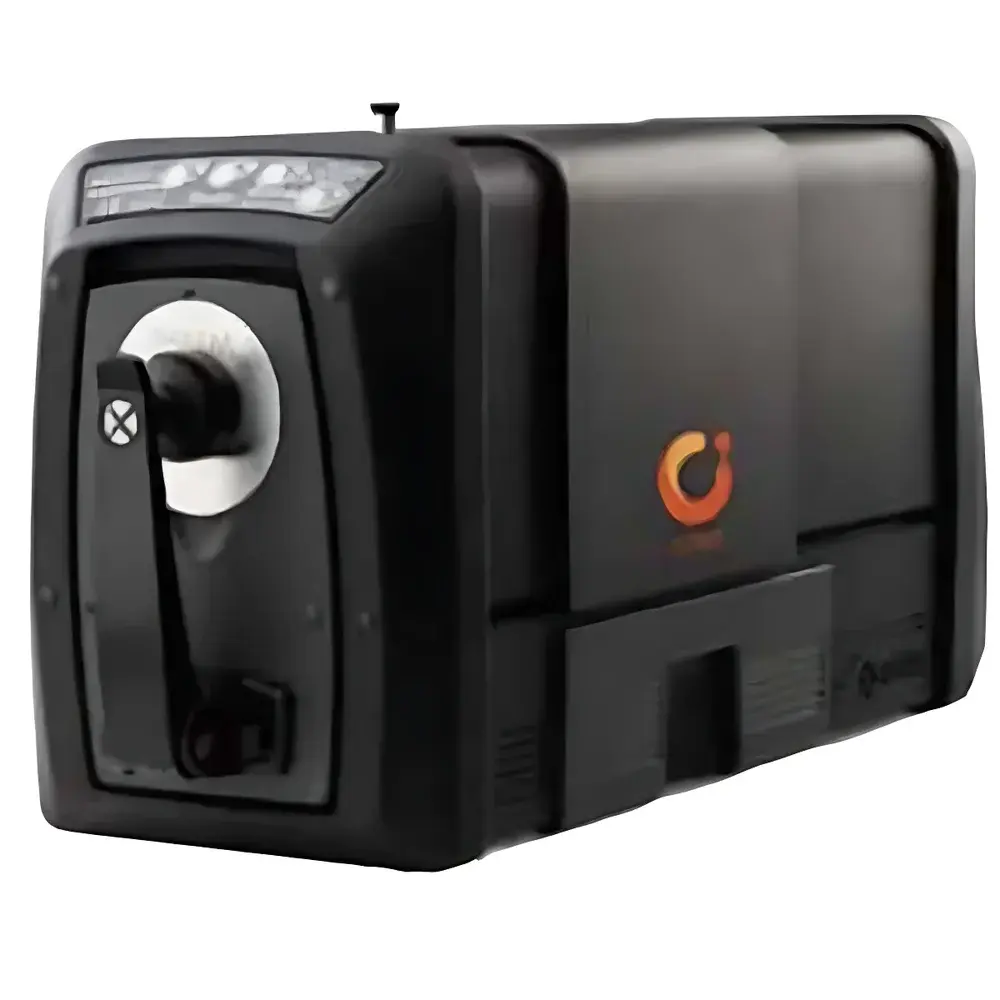
Auniontech Ci7800 / Ci7600 Benchtop Spectrophotometer
| Brand | Auniontech |
|---|---|
| Origin | Shanghai, China |
| Manufacturer Type | Authorized Distributor |
| Product Category | Domestic |
| Model | Ci7800 / Ci7600 |
| Pricing | Available Upon Request |
| Measurement Principle | Diffuse d/8° geometry with integrated sphere, dual-beam spectral acquisition |
| Wavelength Range | 360–780 nm (Ci7800), 360–750 nm (Ci7600) |
| Spectral Resolution | ≤1 nm |
| Illuminant Options | D65, A, C, F2, F7, F11, F12 |
| Observer Angle | 10° standard, 2° optional |
| Aperture Options | Reflectance – 25 mm, 17 mm, 10 mm, 6 mm, 3.5 mm (optional) |
| UV Control | Three programmable UV filter settings (420 nm, 460 nm cutoff, full UV) |
| Repeatability (ΔE* RMS) | 0.01 (Ci7800), 0.03 (Ci7600) |
| Inter-instrument Agreement (ΔE* avg. SCI) | 0.08 (Ci7800), 0.15 (Ci7600) |
| Photometric Resolution | 0.001% (Ci7800), 0.01% (Ci7600) |
| Built-in Environmental Sensors | Temperature & Relative Humidity |
| Compliance Standards | CIE No. 15:2018, ASTM D1003, ASTM E1164, DIN 5033-7, JIS Z 8722:2012, ISO 7724-1:1984 |
Overview
The Auniontech Ci7800 and Ci7600 benchtop spectrophotometers are engineered for high-fidelity color measurement in globally distributed supply chains—particularly within textile, plastics, coatings, and packaging industries where inter-site color consistency is mission-critical. These instruments operate on the CIE-compliant d/8° diffuse illumination geometry with integrated sphere optics, supporting both specular component included (SCI) and excluded (SCE) modes. Dual-beam spectral acquisition ensures stable photometric performance across extended measurement sessions, while real-time environmental monitoring (temperature and relative humidity) enables automatic compensation for ambient drift—essential for GLP-aligned lab workflows and long-term data comparability. Designed to replace legacy platforms such as the CE7000A, Color i5, and Color i7, the Ci7800/Ci7600 series preserves full backward compatibility with historical spectral libraries and color specification files, eliminating migration risk during instrument fleet modernization.
Key Features
- Precision aperture selection: Five reflectance apertures (25 mm, 17 mm, 10 mm, 6 mm, and optional 3.5 mm) and up to four transmission apertures (25 mm, 17 mm, 10 mm, 6 mm on Ci7800; three on Ci7600) enable optimal sampling of textured, curved, or heterogeneous surfaces.
- Intelligent optical scaling: The measurement lens automatically adjusts magnification upon aperture change—ensuring consistent field-of-view registration and eliminating manual repositioning errors.
- Programmable UV control: Three selectable UV filter configurations (420 nm cutoff, 460 nm cutoff, and full UV) support accurate fluorescence whitening agent (FWA) assessment per ISO 105-J03 and AATCC TM183.
- Integrated laser targeting: Coaxial visible laser guides operators to precise measurement locations—even on low-contrast or patterned substrates—reducing operator-dependent variability.
- On-device LED interface: High-contrast monochrome display with intuitive navigation supports rapid setup verification and real-time status feedback without dependency on external PCs.
- Automated workflow configuration: Predefined job templates—including sample ID rules, tolerance sets, reporting formats, and pass/fail logic—minimize training time and enforce procedural consistency across shifts and sites.
Sample Compatibility & Compliance
The Ci7800 and Ci7600 accommodate a broad spectrum of physical sample types: rigid plaques, flexible films, woven/nonwoven textiles, injection-molded parts, powder beds, and liquid dispersions (with optional transmission cell holders). Both models comply with international colorimetric standards including CIE Publication No. 15:2018 (Colorimetry), ASTM D1003 (Haze and Luminous Transmittance of Transparent Plastics), ASTM E1164 (Standard Practice for Obtaining Spectrometric Data for Object-Color Evaluation), DIN 5033 Teil 7 (Photometry and Colorimetry), JIS Z 8722:2012 (Methods of Color Measurement), and ISO 7724-1:1984 (Colorimetry — Part 1: CIE Standard Colorimetric Observers). Their optical architecture meets requirements for routine QC in ISO/IEC 17025-accredited laboratories and supports audit-ready documentation for FDA 21 CFR Part 11 compliance when paired with validated software modules.
Software & Data Management
Instrument control and data analysis are managed via Auniontech’s ColorFlow™ desktop application—a platform designed for traceable, version-controlled color management. Each measurement record includes embedded metadata: device serial number, calibration timestamp, environmental sensor readings, aperture/UV/filter configuration, illuminant/observer selection, and a geotagged image of the measured area (via integrated camera option). Audit trails capture all user actions—including parameter edits, result overrides, and report exports—with immutable timestamps and operator IDs. Legacy spectral data from CE7000A, Color i5, and Color i7 instruments import natively without interpolation or loss of resolution. Export formats include CxF/X, CGATS, QTX, and CSV—enabling seamless integration into enterprise PLM, ERP, and LIMS systems.
Applications
- Textile dye lot approval: Quantify batch-to-batch ΔE* differences against master standards under multiple illuminants (D65, A, F2) to predict metamerism.
- Plastic compound qualification: Monitor pigment dispersion homogeneity using multi-spot measurements across molded parts, correlating spectral shape deviations with mechanical property variations.
- Coatings formulation validation: Track spectral shift during curing cycles to quantify binder crosslinking kinetics and VOC reduction efficacy.
- Recycled polymer sorting: Discriminate PET, PP, and HDPE fractions by characteristic near-UV absorption features (360–400 nm) using high-resolution spectral fingerprinting.
- Medical device color release: Enforce Class IIa/III regulatory tolerances (e.g., ISO 10993-12) with documented uncertainty budgets derived from instrument repeatability and inter-instrument agreement specifications.
FAQ
Are the Ci7800 and Ci7600 compliant with FDA 21 CFR Part 11?
Yes—when operated with validated ColorFlow™ software configured for electronic signatures, audit trail logging, and role-based access control, the system satisfies Part 11 requirements for electronic records and signatures in regulated environments.
Can I use my existing Color i7 spectral database with the Ci7800?
Absolutely. All spectral data files (.spc, .qtx, .cxf) generated on Color i5/i7 and CE7000A platforms are fully readable and interoperable without conversion or recalibration.
What is the difference between SCI and SCE measurement modes?
SCI (Specular Component Included) captures total reflected energy—including surface gloss—and is used for material-intrinsic color evaluation (e.g., pigment matching). SCE (Specular Component Excluded) excludes mirror-like reflection and better correlates with visual appearance under typical viewing conditions.
Do these instruments require annual factory recalibration?
No. Each unit ships with NIST-traceable calibration certificates and includes onboard diagnostic routines. Users perform daily verification with supplied ceramic tiles; full recalibration is recommended only after physical impact, major environmental exposure, or at intervals defined by internal quality protocols (typically 12–24 months).
Is remote firmware update supported?
Yes—ColorFlow™ provides over-the-air firmware update capability with rollback functionality and integrity checksum verification to ensure deployment reliability.





