
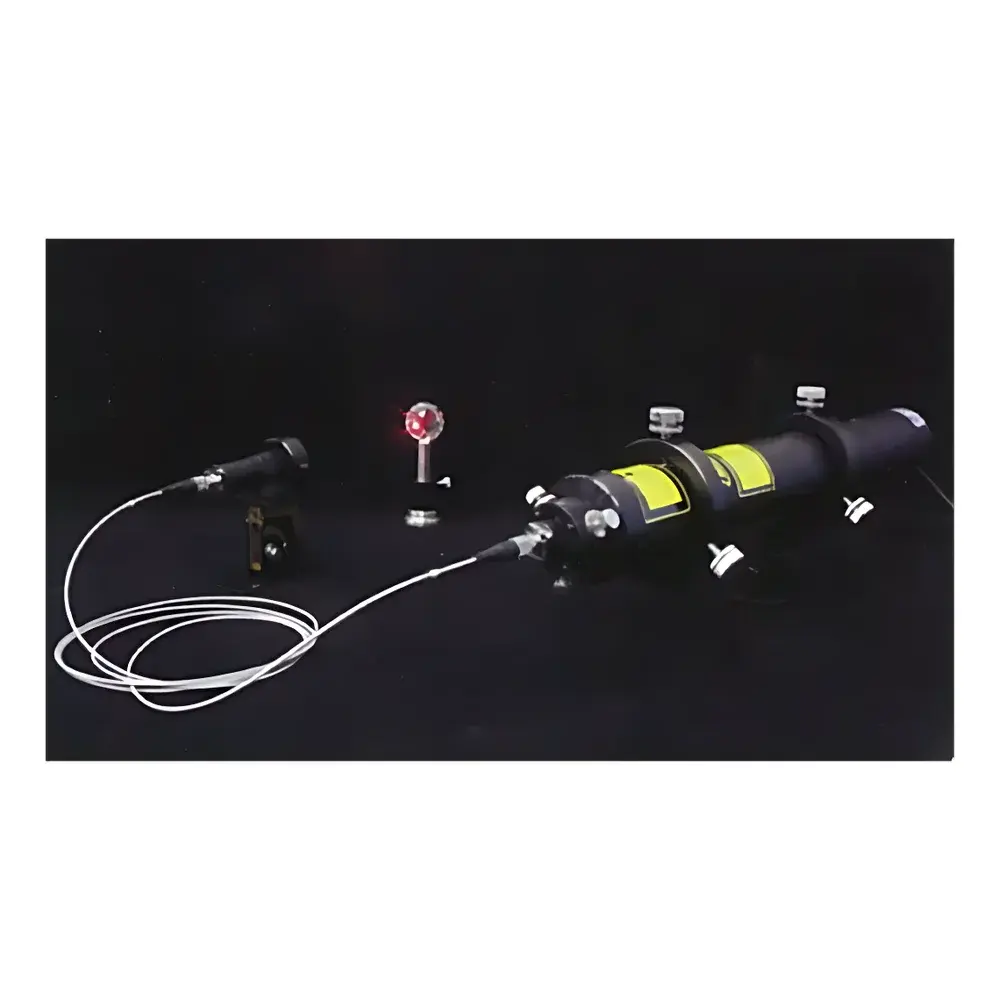
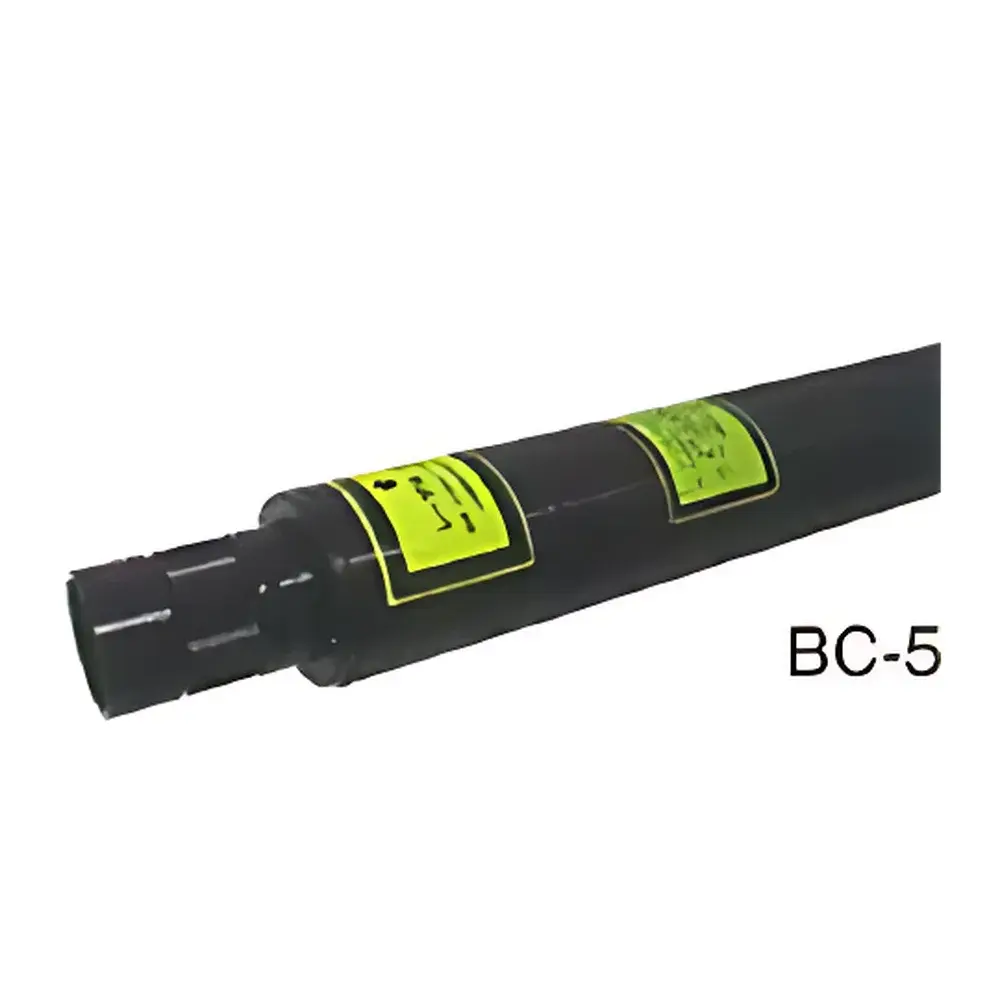
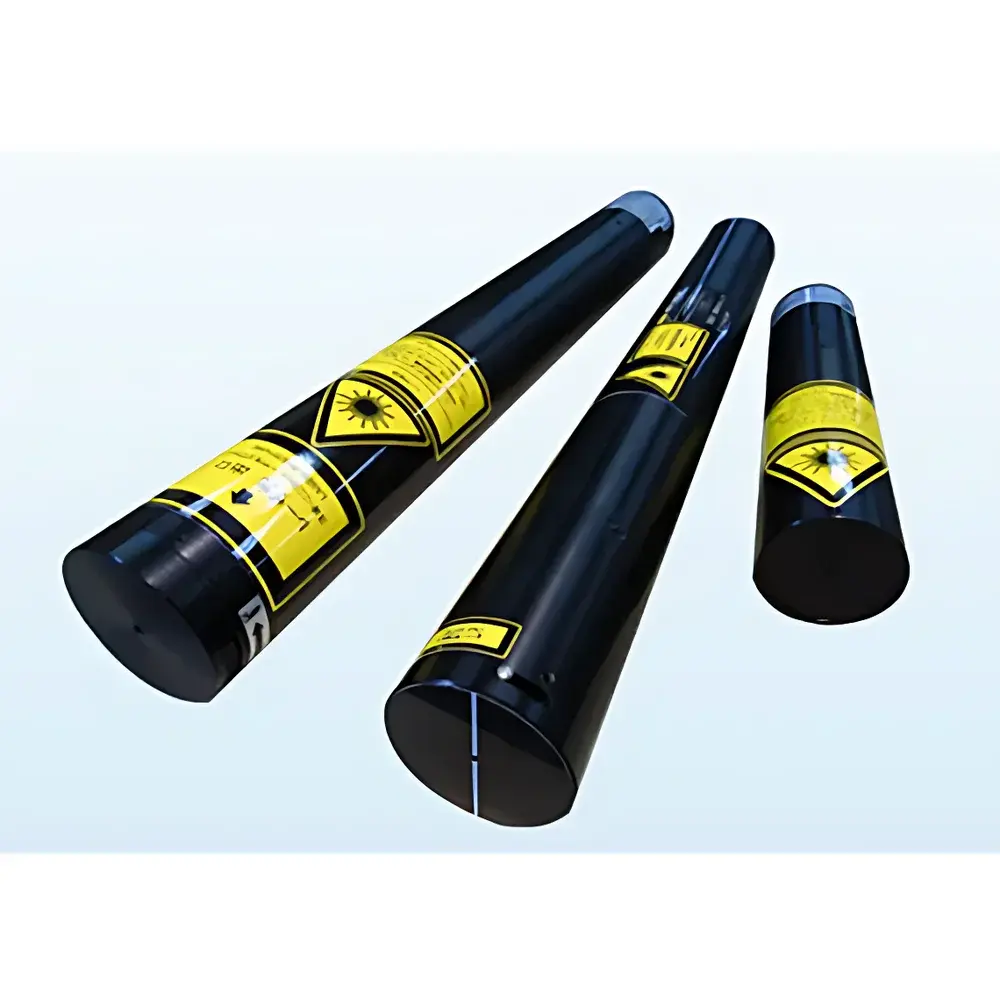
Auniontech HeNe Laser (632.8 nm, 0.5–35 mW, Single-Frequency)
| Brand | Auniontech |
|---|---|
| Wavelength | 632.8 nm |
| Output Power Range | 0.5–35 mW |
| Laser Type | Single-Longitudinal-Mode (SLM) Gas Laser |
| Operating Medium | Helium–Neon Mixture |
| Polarization | Linear, >500:1 |
| Beam Diameter (1/e²) | ~0.65 mm |
| Beam Divergence (full angle) | <1.5 mrad |
| Coherence Length | >20 cm (typical for SLM operation) |
| Warm-up Time | <15 min to stable output |
| Lifetime | >20,000 hours (MTBF) |
| Origin | Shanghai, China |
| Compliance | CE-marked per EN 60825-1:2014 (Class 3B Laser Product) |
Overview
The Auniontech HeNe Laser (632.8 nm, 0.5–35 mW, Single-Frequency) is a continuous-wave (CW), gas-based laser source engineered for high spectral purity, exceptional beam stability, and long-term operational reliability. Based on the well-established four-level energy transfer mechanism between helium and neon atoms within a sealed plasma tube, this laser operates via collisional excitation: metastable helium atoms (2³S₁ and 2¹S₀) transfer energy resonantly to neon’s 5s and 4s energy levels, enabling stimulated emission at 632.8 nm (3s₂→2p₄ transition). As a single-longitudinal-mode (SLM) device, it delivers narrow-linewidth output (20 cm), and low intensity noise (<0.5% RMS, 10 Hz–10 MHz), making it suitable for interferometric metrology, holography, and precision alignment where phase stability and wavelength reproducibility are critical.
Key Features
- Stable single-frequency (SLM) operation with longitudinal mode spacing (FSR) determined by cavity length—typically 150–450 MHz depending on model configuration
- Linearly polarized output with polarization extinction ratio exceeding 500:1, optimized for use with waveplates, electro-optic modulators, and interferometric setups
- Hermetically sealed, all-metal-ceramic plasma tube with integrated Brewster windows or internal mirrors, ensuring >20,000 hours mean time between failures (MTBF)
- Low-noise power supply with active current regulation and thermal stabilization to minimize mode-hopping and power drift (<±1% over 8 hours at constant ambient)
- Compliant with IEC/EN 60825-1:2014 Class 3B safety requirements; includes key-controlled enable circuitry, emission indicator LED, and interlock connector for integration into controlled environments
- Compact OEM-compatible mechanical housing with standardized kinematic mounting (e.g., Ø25.4 mm or M30×1 thread options) and SMA905 or FC/PC fiber-coupling adaptability (optional)
Sample Compatibility & Compliance
This HeNe laser is compatible with standard optical breadboards, vibration-isolated tables, and vacuum-compatible enclosures when equipped with appropriate feedthroughs. Its 632.8 nm output couples efficiently with common silica-based optics, interference filters (e.g., OD6 notch filters centered at 632.8 nm), and photodetectors (Si PIN, avalanche photodiodes). The system meets electromagnetic compatibility (EMC) requirements per EN 55011:2016 Group 1, Class B. For regulated laboratory environments, it supports GLP/GMP documentation packages including factory calibration certificates traceable to NIST standards, and optional audit-ready log files for power stability monitoring. While not intrinsically rated for hazardous locations, it may be integrated into Class I, Division 2 systems when housed in appropriate enclosures per NEC Article 500.
Software & Data Management
No embedded firmware or proprietary software is required for basic operation; analog modulation input (0–5 V) enables external power control with bandwidth up to 10 kHz. Optional USB- or RS-232–enabled controller modules provide real-time monitoring of tube current, case temperature, and output power via ASCII command protocol. Logged data (timestamped power readings, fault codes, runtime hours) can be exported in CSV format for compliance reporting. All digital interfaces conform to FDA 21 CFR Part 11 requirements when deployed with validated third-party SCADA or LIMS platforms supporting electronic signatures and audit trails.
Applications
- Interferometry: Used as a reference source in Michelson, Mach–Zehnder, and Twyman–Green configurations for displacement measurement, surface flatness testing (e.g., ISO 10110-7), and gravitational wave detector prototype alignment
- Precision metrology: Calibration of encoder scales, autocollimators, and coordinate measuring machines (CMMs) per ISO 10360 and VDI/VDE 2617 standards
- Holographic recording: Enables high-fidelity transmission and reflection holograms due to long coherence length and low spatial coherence artifacts
- Laser Doppler velocimetry (LDV): Paired with Bragg cells or acousto-optic modulators for bidirectional flow velocity profiling in microfluidics and wind tunnel studies
- Education and research labs: Demonstrates quantum energy transfer, cavity resonance, polarization optics, and laser threshold behavior in undergraduate and graduate physics curricula
- Alignment and guidance: Integrated into semiconductor lithography steppers, particle accelerator beamlines, and large-scale construction surveying tools requiring sub-arcsecond pointing stability
FAQ
What is the typical warm-up time to achieve frequency and power stability?
Full thermal equilibrium and mode stabilization are achieved within 12–15 minutes under ambient conditions (20–25 °C); power variation remains within ±0.8% after 30 minutes.
Can this laser be fiber-coupled, and what coupling efficiency can be expected?
Yes—when fitted with an optional collimator/focusing assembly and matched to a 4.5 µm core single-mode fiber (e.g., Thorlabs 780HP), coupling efficiencies of 45–55% are routinely achieved with active alignment.
Is the output polarization maintained under varying load conditions?
Yes—the linear polarization state is preserved across the full 0.5–35 mW operating range, with extinction ratio degradation limited to <10% even at maximum rated power.
Does the laser include a factory calibration certificate?
Standard delivery includes a traceable power calibration certificate (NIST-traceable photodiode standard) valid for 12 months; extended calibration intervals and uncertainty budgets are available upon request.
How is lifetime defined, and what failure modes are most commonly observed?
Lifetime is specified as MTBF ≥20,000 hours under continuous operation at rated current; dominant wear mechanisms include cathode sputtering and helium diffusion through glass envelope—both mitigated by optimized gas fill ratios and cold-cathode design.



