
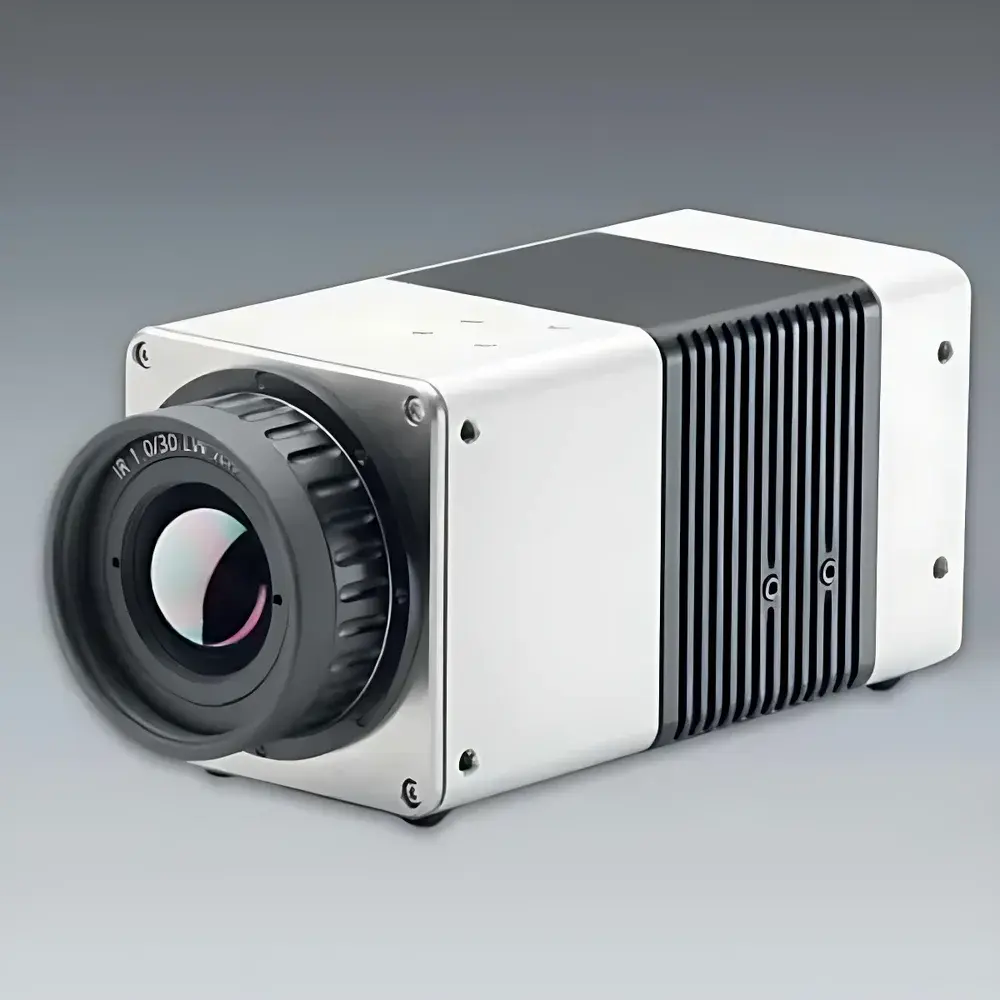
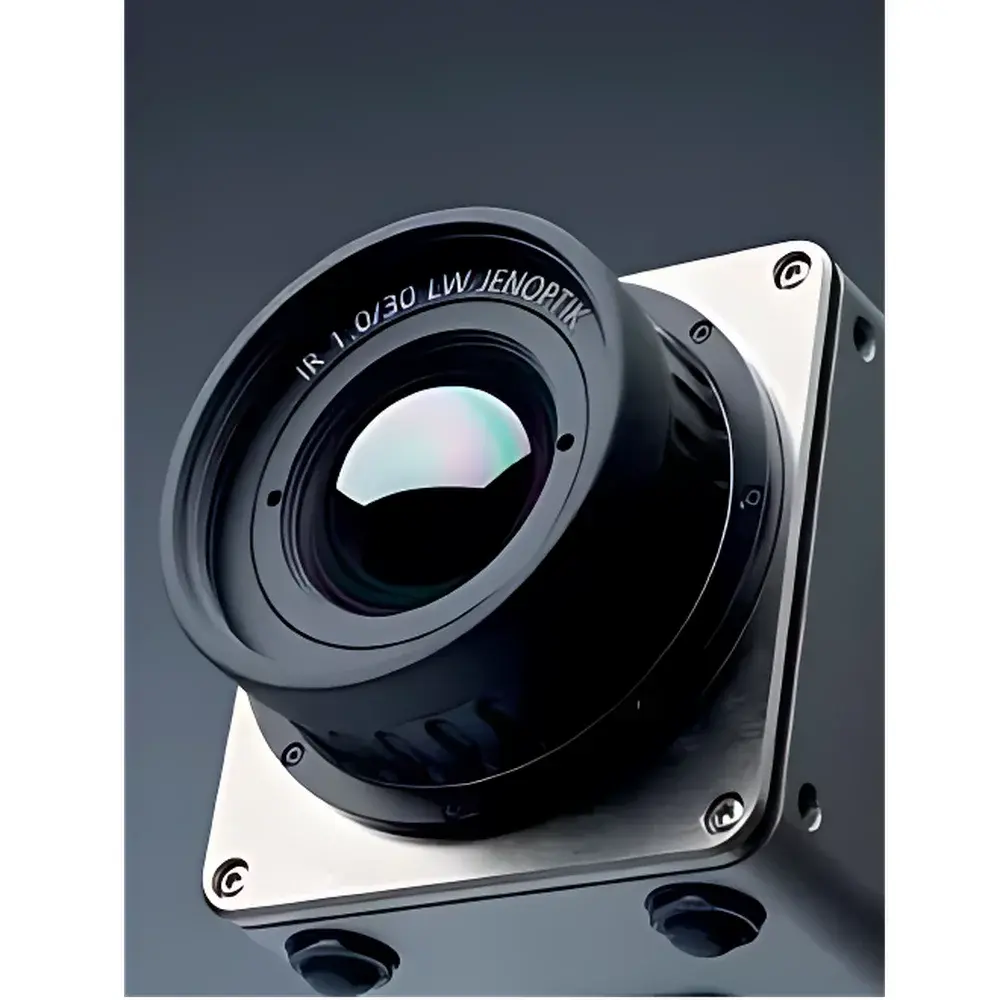
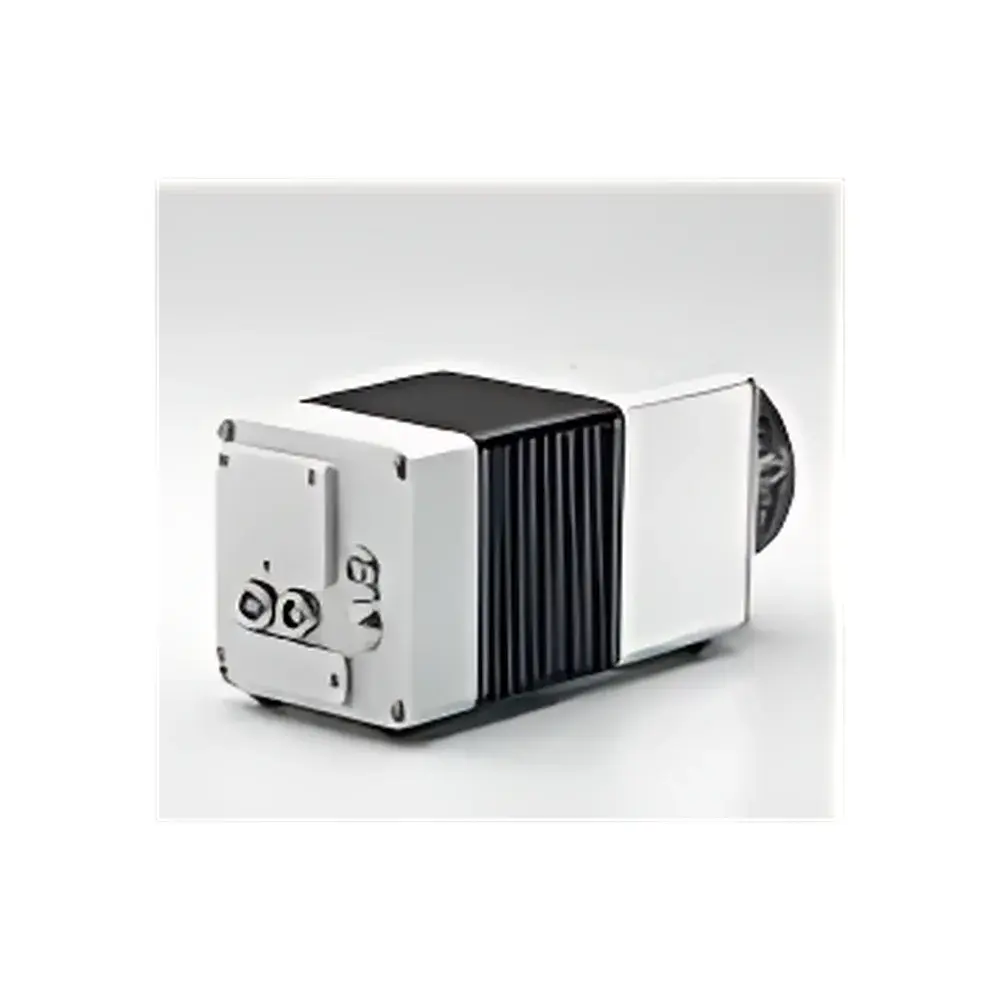
Auniontech IR-TCM HD 2048 Fixed-Mount High-Resolution Infrared Thermal Imaging Camera
| Brand | Auniontech |
|---|---|
| Origin | Shanghai, China |
| Model | IR-TCM HD 2048 RE |
| Measurement Method | Non-contact radiometric imaging |
| Application Type | Precision temperature mapping |
| Thermal Sensitivity (NETD) | ≤ 40 mK |
| Infrared Resolution | 2048 × 1536 (with pixel super-resolution enhancement) |
| Temperature Range | −40 °C to +1200 °C (high-temp option up to +2000 °C) |
| Accuracy | ±1.5 K or ±1.5% of reading |
| Frame Rate | 30 Hz |
| Interface | GigE Vision, DVI-D, WLAN |
| Housing | IP67-rated ruggedized enclosure |
| Detector Type | Uncooled microbolometer array |
Overview
The Auniontech IR-TCM HD 2048 is a fixed-mount, radiometric infrared thermal imaging camera engineered for industrial and scientific applications requiring high spatial fidelity in surface temperature distribution analysis. Utilizing an uncooled vanadium oxide (VOx) microbolometer detector with proprietary pixel super-resolution enhancement technology, it delivers a native thermal resolution of 2048 × 1536 pixels—equivalent to 3.1 megapixels—among the highest available in commercially deployed uncooled thermal imaging systems. Unlike cooled photon detectors, this architecture eliminates cryogenic cooling requirements, enabling zero-maintenance operation, extended service life, and stable long-term calibration traceability. The system operates on first-principles radiometry: calibrated digital output values are directly convertible to absolute temperature (in °C or K) per pixel using Planck’s law, emissivity correction, and atmospheric transmission compensation. Designed for permanent installation in demanding environments—including factory floors, solar thermal plants, and automated test benches—the camera features a sealed, IP67-rated aluminum housing with integrated thermal stabilization to minimize drift under ambient fluctuations.
Key Features
- 3.1 MP radiometric thermal resolution (2048 × 1536) achieved via hardware-accelerated super-resolution interpolation and sub-pixel sampling—enabling detection of sub-millimeter thermal anomalies on large-area targets.
- True radiometric output: each pixel provides calibrated temperature data compliant with ISO 18434-1 and ASTM E1933 standards for infrared thermography.
- GigE Vision 2.0 and GenICam-compliant interface ensures seamless integration into machine vision platforms, SCADA systems, and custom LabVIEW or Python-based acquisition software.
- Real-time streaming at 30 Hz with full 16-bit dynamic range and non-uniformity correction (NUC) applied onboard—no host-side post-processing required for quantitative analysis.
- Ruggedized industrial enclosure rated IP67, operating temperature range −10 °C to +50 °C, and shock/vibration resistance per IEC 60068-2-6 and IEC 60068-2-27.
- Configurable emissivity tables, reflected apparent temperature compensation, and multi-point ambient reference inputs support metrologically rigorous measurements across diverse material classes.
Sample Compatibility & Compliance
The IR-TCM HD 2048 supports non-contact temperature measurement across electrically insulating and conductive surfaces—including composite laminates, silicon wafers, ceramic substrates, metallic heat sinks, and photovoltaic absorber plates—without perturbing thermal equilibrium. Its spectral response (7.5–13.5 µm) minimizes solar loading artifacts and atmospheric absorption interference. All models comply with CE marking requirements (EMC Directive 2014/30/EU, RoHS 2011/65/EU), and firmware implements audit-trail logging aligned with GLP/GMP documentation practices. Radiometric calibration is NIST-traceable and performed at three temperature points (−20 °C, 50 °C, 500 °C); certificate of calibration included with shipment. Optional high-temperature lens variants extend operational validity to +2000 °C per ASTM E1256-21 guidelines for extreme-condition pyrometry.
Software & Data Management
The camera ships with Auniontech’s IR-Studio Suite—a modular, Windows/Linux-compatible SDK supporting C/C++, Python, MATLAB, and .NET APIs. Core capabilities include real-time thermal video recording (AVI, SEQ, or HDF5), batch emissivity mapping, ROI-based statistical analysis (min/max/mean/std dev), isotherm overlay generation, and automated anomaly detection via thermal gradient thresholding. Export formats include CSV (per-frame pixel matrices), TIFF (16-bit radiometric), and DICOM-IR for cross-platform medical or aerospace reporting workflows. For regulated environments, optional FDA 21 CFR Part 11-compliant module adds electronic signatures, user role management, and immutable audit logs synchronized with system clock (PTPv2 over GigE).
Applications
- Photovoltaic Plant Monitoring: Continuous thermal surveillance of concentrated solar power (CSP) receiver tubes and parabolic trough absorbers to detect hot-spot formation, coating degradation, or flow blockage before catastrophic failure.
- Electronics Manufacturing: In-line thermal validation of PCB reflow profiles, solder joint integrity assessment, and thermal runaway screening in battery module assembly lines.
- Automotive R&D: Brake disc thermal fatigue analysis, EV battery pack cold-plate uniformity mapping, and exhaust manifold thermal cycling characterization under transient load conditions.
- Materials Science: Non-destructive evaluation (NDE) of delamination, disbonds, or fiber misalignment in CFRP composites via lock-in thermography or pulsed phase thermography protocols.
- Industrial Process Control: Real-time monitoring of extrusion die temperatures, rolling mill strip cooling uniformity, and furnace refractory lining erosion via long-term thermal trend analysis.
- Aerospace Ground Testing: Thermal signature validation of UAV airframes during environmental chamber testing, adhering to MIL-STD-810H thermal shock and stability requirements.
FAQ
Is the 2048 × 1536 resolution native or interpolated?
The IR-TCM HD 2048 RE employs a physically fabricated 1024 × 768 microbolometer array combined with proprietary temporal and spatial super-resolution algorithms—delivering effective resolution equivalent to 2048 × 1536 while preserving radiometric accuracy and noise-equivalent temperature difference (NETD) performance.
Does the camera support external triggering and synchronization?
Yes—hardware trigger input (TTL/LVTTL) and programmable strobe output enable precise temporal alignment with motion stages, laser sources, or other instrumentation in time-resolved thermography setups.
Can the system be calibrated for specific emissivity values across heterogeneous surfaces?
Absolutely—the embedded calibration engine supports per-ROI emissivity assignment, multi-spectral emissivity lookup tables, and automatic correction based on measured background radiation and atmospheric humidity/pressure inputs.
What is the recommended recalibration interval under continuous operation?
Auniontech recommends annual NIST-traceable recalibration; however, onboard non-uniformity correction (NUC) and shutterless drift compensation maintain measurement stability for ≥12 months in controlled ambient environments.
Is third-party software integration supported beyond the native SDK?
Yes—GenICam-compliant drivers ensure compatibility with HALCON, OpenCV (via Aravis), Common Vision Blox, and commercial HMI/SCADA platforms including Siemens WinCC, Rockwell FactoryTalk, and National Instruments DIAdem.



