
Auniontech Standard & Custom Polymer Optical Components – Injection-Molded Lenses and Molded Optical Elements
| Brand | Auniontech |
|---|---|
| Origin | USA |
| Manufacturer Type | Authorized Distributor |
| Product Category | Imported Optical Components |
| Model | Aspheric Lenses |
| Component Type | Optical Elements |
Overview
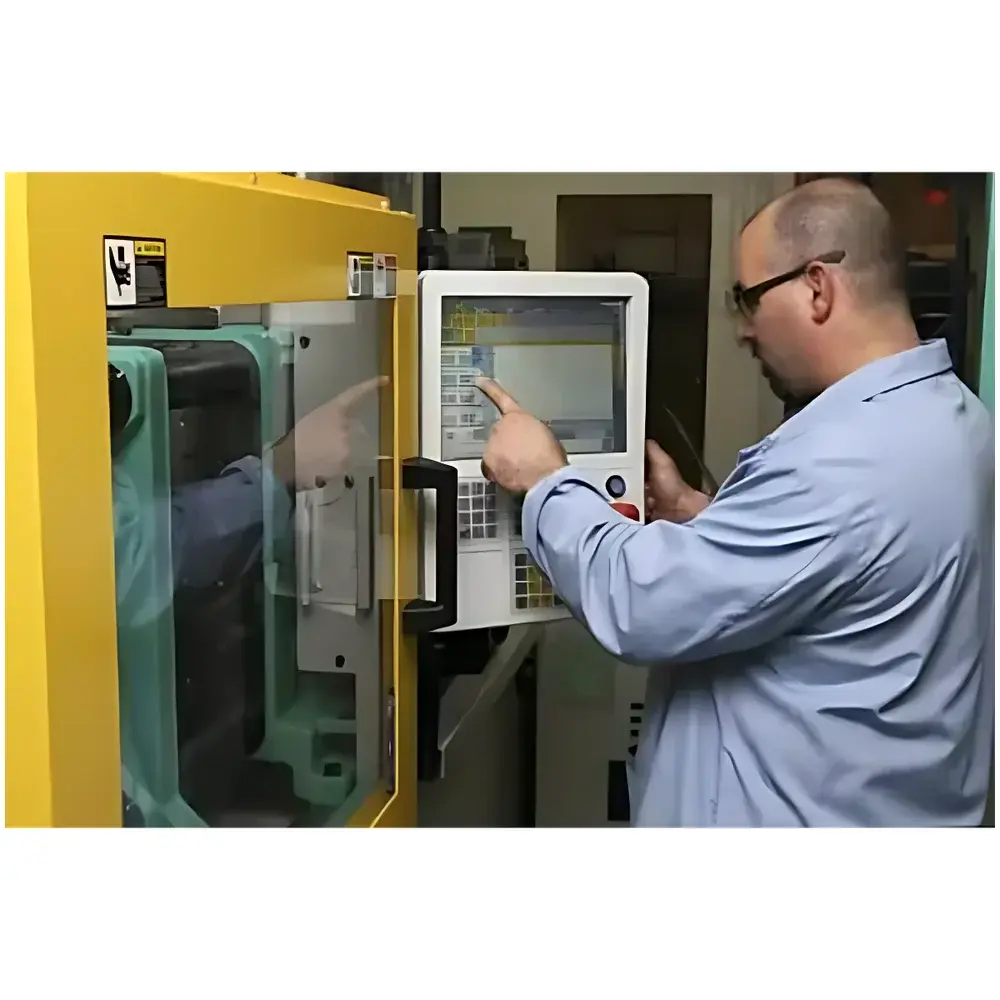
Auniontech’s standard and custom polymer optical components are precision injection-molded optical elements engineered for high-volume, high-reproducibility applications in imaging, sensing, illumination, and emerging photonic systems. Unlike traditional glass optics fabricated via grinding, polishing, and diamond turning, these components leverage thermoplastic polymer materials—such as PMMA (polymethyl methacrylate), cyclic olefin polymers (COP, e.g., Zeonex®), polycarbonate (PC), polyethylene terephthalate (PET, e.g., OKP-4), and polystyrene—processed via scientific injection molding. The process relies on high-precision steel or nickel-phosphorus alloy mold inserts, CNC-machined with sub-micron surface fidelity and nanometer-level form accuracy, enabling faithful replication of aspheric and freeform surfaces across production batches. This manufacturing paradigm is grounded in rheological control, cavity pressure monitoring, and thermal management to ensure consistent refractive index homogeneity, minimal residual stress, and dimensional stability—critical parameters for wavefront error control and modulation transfer function (MTF) performance.
Key Features
- Injection-molded aspheric and freeform optical surfaces with surface form accuracy down to λ/4 PV (633 nm) and RMS roughness < 5 nm
- Integrated mechanical features—including mounting flanges, alignment bosses, snap-fit structures, and datum surfaces—co-molded with optical surfaces to reduce assembly steps and part count
- Material options optimized for spectral transmission (380–1100 nm), low birefringence, and thermal stability under controlled processing conditions
- Multi-cavity mold capability for scalable production of identical optical elements with tight batch-to-batch repeatability
- Scientific molding process validated per ISO 10110-5 (surface form tolerances) and ISO 10110-7 (surface imperfections), with traceable metrology protocols
Sample Compatibility & Compliance
These polymer optical components comply with RoHS Directive 2011/65/EU and REACH Regulation (EC) No. 1907/2006. Material certifications—including UL94 flammability ratings (HB or V-0), FDA-compliant grades (for non-invasive optical housings), and ISO 10993 biocompatibility documentation—are available upon request. While not intended for primary optical paths in Class III/IV laser systems or high-temperature (>120 °C continuous) environments, they meet specification requirements for commercial-grade AR/VR waveguides, automotive HUD combiners, machine vision lenses, LED collimators, and biomedical sensor windows. Surface quality adheres to MIL-PRF-13830B scratch-dig standards (e.g., 60-40 or 40-20), verified via automated digital microscopy and interferometric null testing where applicable.
Software & Data Management
Design support includes Zemax OpticStudio and Code V-compatible surface data files (ZMX, DAT, STEP), along with GD&T annotations aligned with ASME Y14.5–2018. Auniontech provides full traceability documentation: mold cavity ID, lot-specific material batch numbers, first-article inspection reports (FAIR), and Cpk/Cpm statistical process control (SPC) summaries for critical dimensions (e.g., center thickness, effective focal length, surface vertex offset). For regulated industries, audit-ready records—including equipment calibration logs, environmental chamber validation reports, and operator qualification records—support GLP and GMP-aligned quality systems. All metrology data is archived in secure, time-stamped formats compatible with FDA 21 CFR Part 11 electronic record requirements.
Applications
- Head-up display (HUD) combiner optics and projection lens arrays for automotive and aviation platforms
- Freeform light guides and pupil expanders in augmented reality (AR) near-eye displays
- Compact imaging modules for industrial machine vision, drone-based surveillance, and consumer electronics
- Collimating and focusing optics for structured-light 3D scanners and time-of-flight (ToF) sensors
- Optical windows and cover lenses in medical diagnostic devices operating within visible/NIR bands
FAQ
What polymer materials are available for injection-molded optics, and how do their optical properties compare?
Standard offerings include PMMA (high UV transparency, low water absorption), COP (low birefringence, high Tg ~140 °C), PC (impact resistance, broad IR transmission), and PET (dimensional stability, cost efficiency). Refractive indices range from 1.49 (PMMA) to 1.53 (COP), with Abbe numbers between 57 and 59—narrower than crown glasses but sufficient for many achromatic doublet designs when paired with appropriate coatings.
Can aspheric or freeform surfaces be measured without custom null optics?
Yes—contact profilometry (e.g., Taylor Hobson Talysurf) and coordinate measuring machines (CMMs) with optical probes are routinely used for form verification. For high-accuracy wavefront assessment, computer-generated hologram (CGH)-based interferometry or stitching interferometry is employed, with traceability to NIST standards.
What is the typical lead time for custom mold development and first-article delivery?
Mold design and fabrication typically require 10–14 weeks; first-article inspection and process validation add 2–3 weeks. Standard catalog items ship from US inventory within 5 business days.
Do you support hybrid optical-mechanical assemblies?
Yes—design-for-manufacturing (DFM) collaboration includes tolerance stack-up analysis, thermal expansion matching, and co-simulation of optical performance under mechanical load using ANSYS Mechanical + Zemax OpticStudio coupling workflows.




