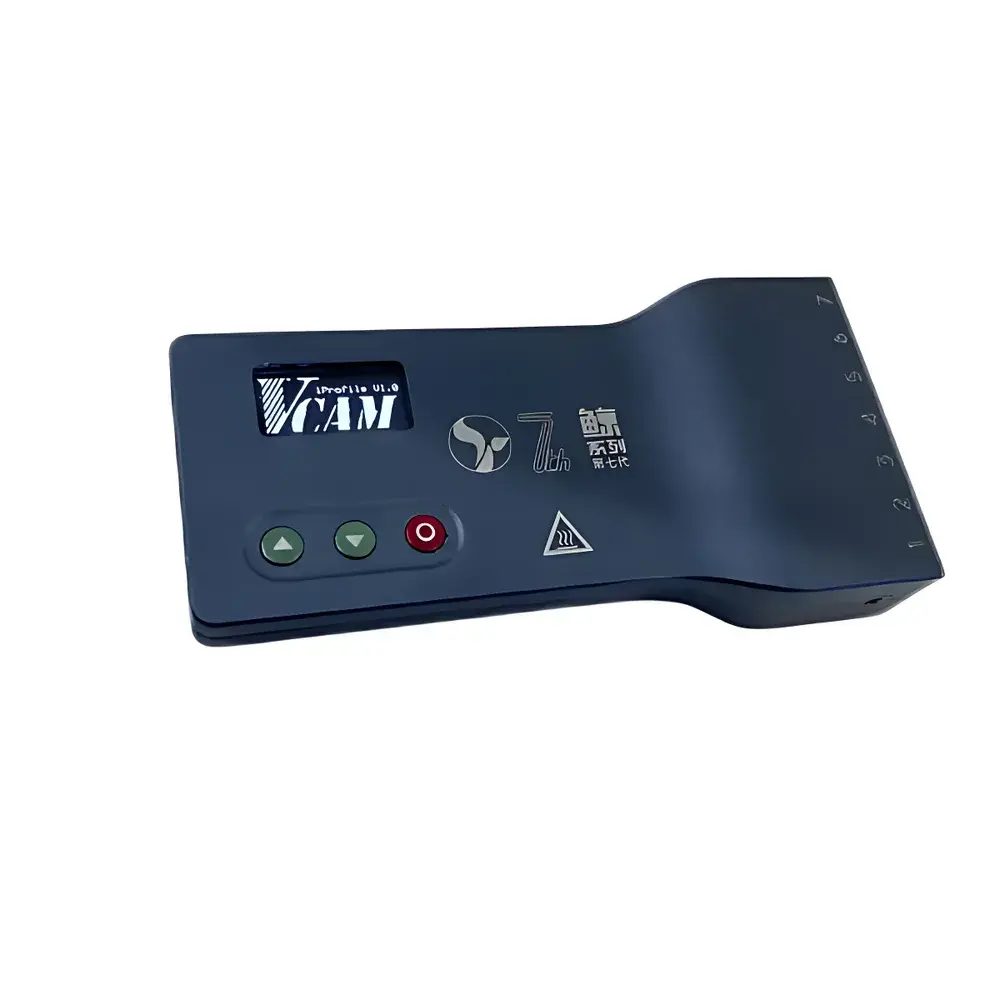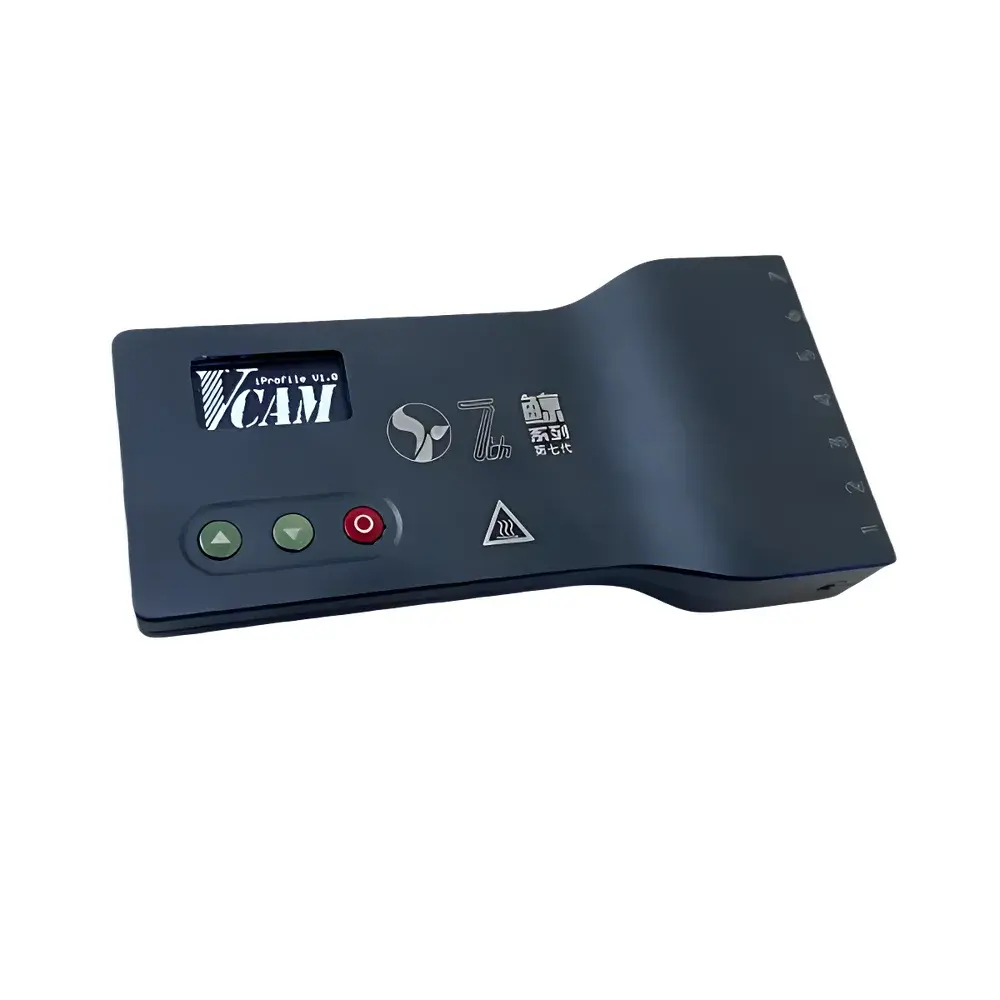
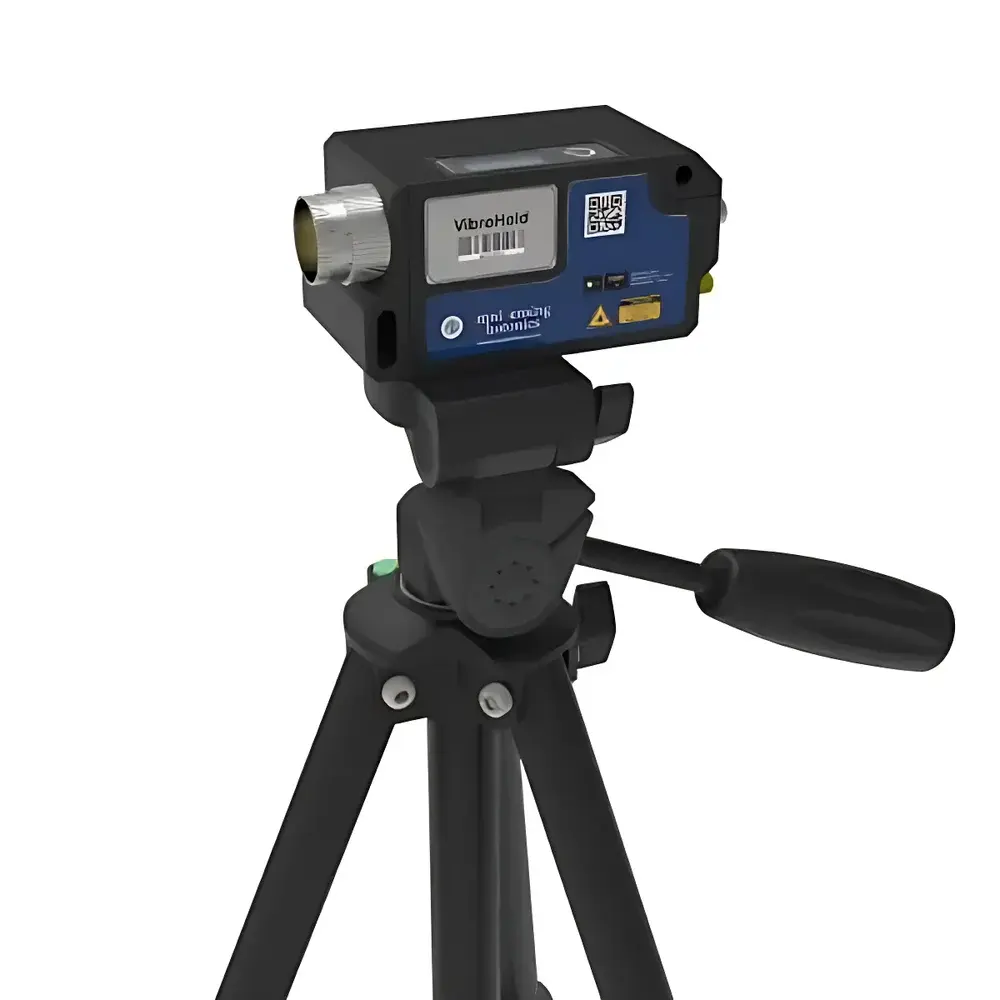
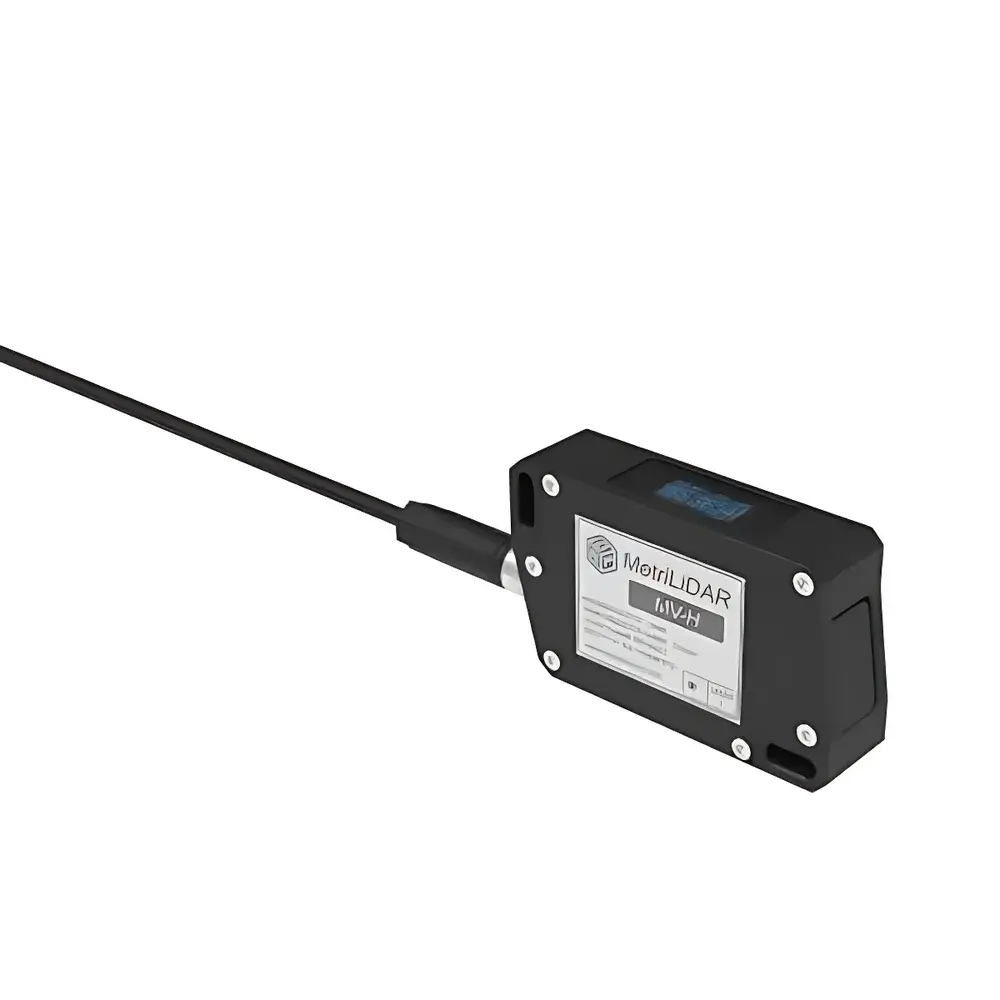
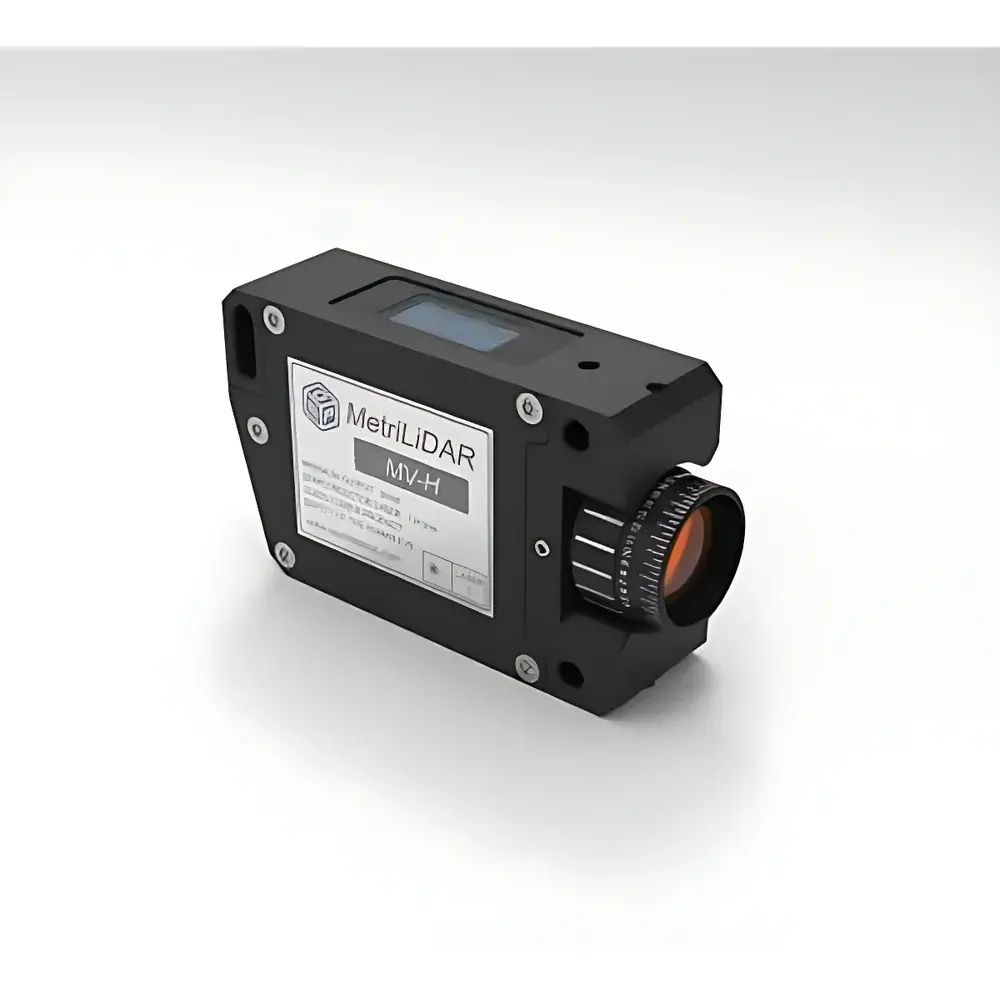
Auniontech ULV-1310 Miniature Ultrasonic Vibrometer / Laser Doppler Vibrometer
| Brand | Auniontech |
|---|---|
| Origin | Shanghai, China |
| Model | ULV-1310 |
| Laser Wavelength | 1310 nm |
| Output Power | <5 mW |
| Safety Class | Class I (IEC 60825-1) |
| Frequency Range | DC to 2.5 MHz |
| Displacement Noise Density | 5 pm/√Hz |
| Displacement Resolution | 1.28 nm |
| Max. Velocity Range | 4.5 m/s |
| Velocity Resolution | <0.1 µm/s |
| Frequency Accuracy | ±0.02% |
| Displacement Repeatability (>10 Hz) | 1 nm |
| Displacement Repeatability (<10 Hz) | 10 nm |
| Optical Working Distance | 20 mm – 500 mm (adjustable via manual focus lens) |
| Dynamic Range | >120 dB (velocity) |
| Sampling Rate | 5 MS/s (digital acquisition) |
| Signal Output | Ethernet (TCP/IP, UDP), digital quadrature |
| Power Supply | 12–24 V DC |
| Power Consumption | <4 W |
| Operating Temperature | 0–50 °C |
| Relative Humidity | 35–85% RH (non-condensing) |
| Housing Material | Anodized aluminum alloy |
| Dimensions | 83.7 × 50 × 22 mm |
| Weight | 180 g |
| Ambient Light Immunity | >60,000 lux |
| Compliance | ISO 18436-1 (vibration condition monitoring), ASTM E1876 (impulse excitation of vibration), GLP-ready data logging architecture |
Overview
The Auniontech ULV-1310 Miniature Ultrasonic Vibrometer is a compact, fiber-coupled laser Doppler vibrometer engineered for high-fidelity, non-contact vibration metrology in ultrasonic and high-frequency mechanical domains. Unlike conventional piezoelectric accelerometers or capacitive sensors—whose mass loading, mounting constraints, and bandwidth limitations impair measurement fidelity—the ULV-1310 employs coherent frequency-modulated continuous-wave (FMCW) interferometry at 1310 nm. This principle enables phase-resolved velocity and displacement demodulation with sub-nanometer resolution, eliminating mechanical coupling artifacts while preserving true dynamic response up to 2.5 MHz. Its monolithic photonic integrated circuit (PIC)-based optical head replaces bulk optics with chip-scale waveguide components, ensuring thermal stability, polarization insensitivity, and immunity to misalignment—critical for long-duration measurements on ultrasonic transducers, MEMS resonators, piezoceramic stacks, and acoustic metamaterials.
Key Features
- FMCW-based coherent detection architecture delivering intrinsic phase-linearity and low-noise velocity output without analog filtering artifacts
- Class I eye-safe 1310 nm laser source (<5 mW), compliant with IEC 60825-1, enabling operation in open-lab environments without safety interlocks
- Adjustable telecentric focusing optics supporting working distances from 20 mm to 500 mm—optimized for near-field scanning of transducer radiating surfaces
- Real-time 5 MS/s digital sampling with on-board FPGA-based spectral analysis, supporting FFT, PSD, and time-domain envelope extraction
- Simultaneous dual-output capability: calibrated velocity (mm/s) and derived acceleration (m/s²) with traceable NIST-traceable calibration certificates available
- Robust aluminum housing (IP50-rated), designed for integration into automated test benches, environmental chambers, and production line QA stations
Sample Compatibility & Compliance
The ULV-1310 operates independently of surface reflectivity, color, texture, or material composition—including polished metals, black elastomers, anodized aluminum, and sintered ceramics—eliminating the need for retroreflective tape or surface preparation. It meets the optical robustness requirements of ISO 20816-3 (machinery vibration evaluation) and supports traceable verification per ISO/IEC 17025 when used with certified reference shakers. Data acquisition workflows are compatible with FDA 21 CFR Part 11-compliant electronic signatures and audit trails when deployed with validated software modules. The system’s low-displacement noise floor (5 pm/√Hz) satisfies ASTM E1876 criteria for impulse-excited resonance characterization of brittle or temperature-sensitive specimens.
Software & Data Management
The included VibroStudio™ control and analysis suite provides real-time spectrum monitoring, modal parameter extraction (natural frequency, damping ratio, mode shape interpolation), and batch-mode reporting compliant with GLP documentation standards. Raw quadrature signals are streamed over Ethernet using IEEE 1588 PTP-synchronized timestamps, enabling multi-sensor synchronization across distributed test setups. Export formats include HDF5 (for MATLAB/Python post-processing), CSV (for Excel-based QA review), and XML-based metadata containers embedding calibration history, environmental logs, and operator annotations. Optional API support (C/C++, Python, LabVIEW) allows integration into custom CI/CD pipelines for automated ultrasonic transducer qualification.
Applications
- Characterization of piezoelectric transducer vibration modes (radial, thickness, flexural) during R&D and final acceptance testing
- In-process validation of ultrasonic welding horn amplitude uniformity and nodal stability under load
- Non-destructive assessment of micro-crack initiation in ceramic resonators via nonlinear vibration signature tracking
- Dynamic calibration of reference accelerometers against primary laser interferometric standards
- Vibration mapping of MEMS ultrasonic arrays for beamforming verification in medical imaging probe development
- Thermo-mechanical coupling studies in high-power transducers operating under pulsed duty cycles
FAQ
Is the ULV-1310 suitable for measuring vibrations on highly absorptive or transparent materials?
Yes—its 1310 nm wavelength exhibits superior scattering efficiency on low-reflectivity surfaces (e.g., rubber, carbon composites) compared to visible or 1550 nm systems, and its FMCW architecture rejects specular reflection losses inherent in single-beam interferometers.
Can multiple ULV-1310 units be synchronized for multi-point vibration analysis?
Yes—Ethernet-based PTP v2 synchronization ensures sub-microsecond timing alignment across up to 16 units, enabling full-field operational deflection shape (ODS) reconstruction without external trigger cabling.
Does the system support real-time FFT analysis at full 2.5 MHz bandwidth?
Yes—the onboard FPGA performs streaming 16,384-point FFTs at 1 kHz update rate, with selectable averaging (linear/RMS/peak hold) and configurable overlap (0–90%) for statistical confidence in resonant peak identification.
What calibration documentation is provided with shipment?
Each unit ships with a factory calibration report referencing NIST-traceable laser wavelength and velocity sensitivity, plus optional ISO 17025-accredited calibration by an ILAC-MRA signatory laboratory.
Is the optical head compatible with vacuum or inert-gas environments?
The standard head is rated for ambient air; however, a hermetically sealed variant with fused silica viewport and vacuum-compatible mounting flange is available under model ULV-1310-VAC (consult technical sales for pressure rating and outgassing specifications).