
Baltic FuelCells QCF50 Quick-Connect Fuel Cell Fixture
| Brand | Baltic FuelCells |
|---|---|
| Origin | Germany |
| Model | QCF50 |
| Active Area | 50 cm² |
| Pressure Control | Pneumatically Actuated, Continuously Adjustable |
| Temperature Compatibility | –50 °C to +250 °C (with optional TCU) |
| Compliance | Designed for ISO/IEC 17025-compliant lab environments |
| Customization | Available for PEMFC, AEMFC, electrolysis, and metal–air cells |
| Accessories | CMD compression monitor, CSL current distribution scanner, DHRE_Pt reference electrode, HSE humidity sensors, flow-field customization, liquid-cooled/heated manifolds |
Overview
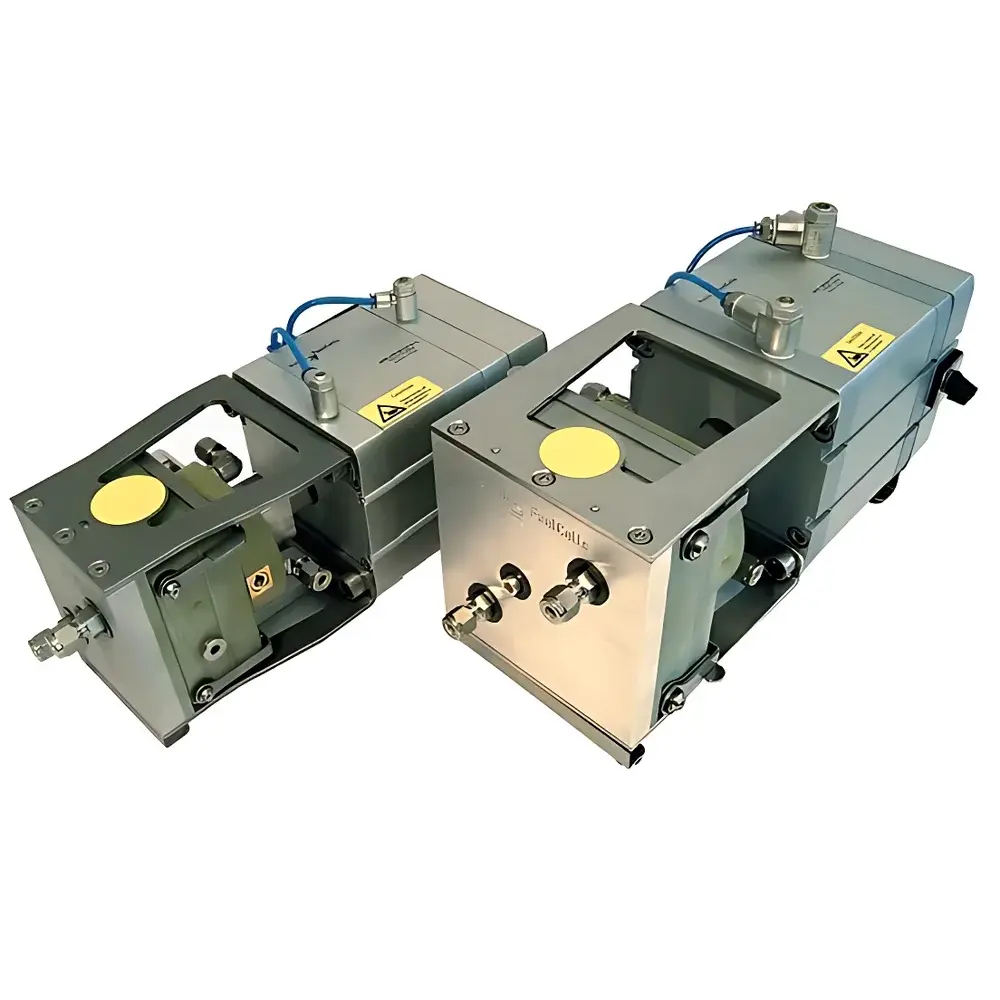
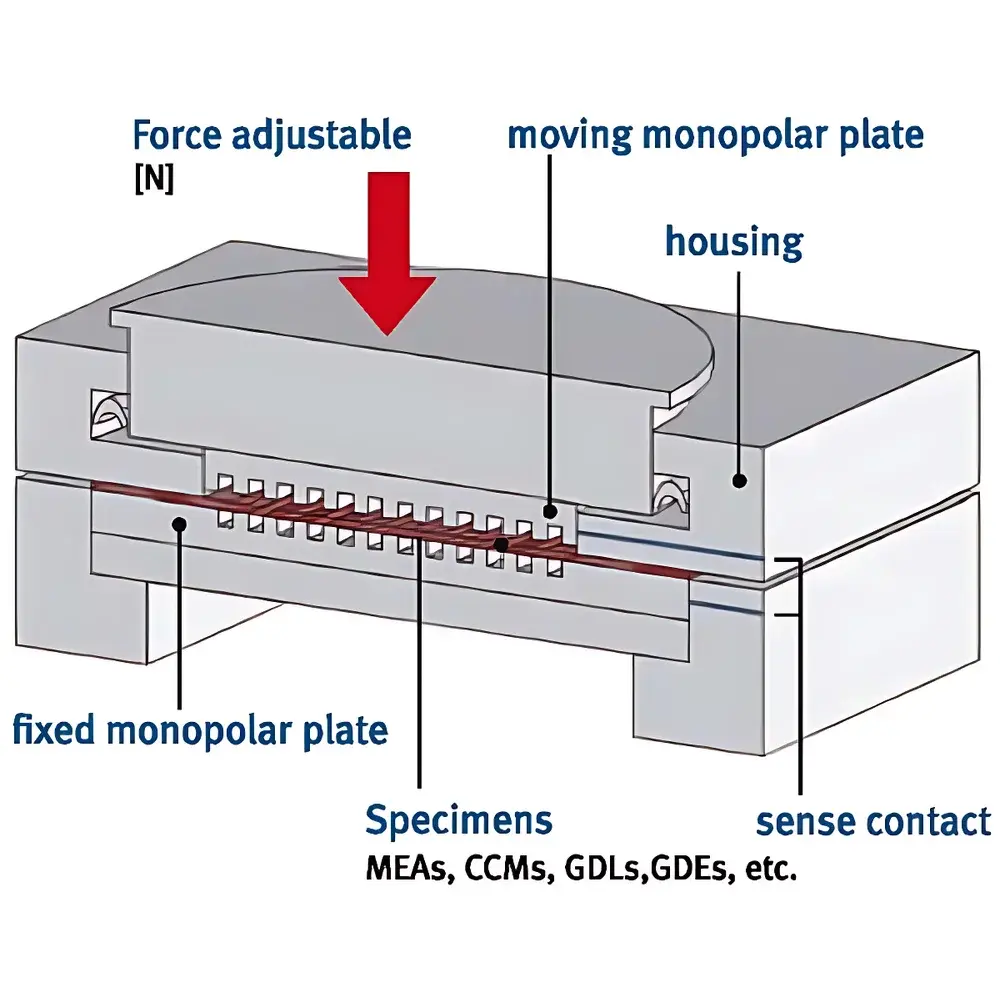
The Baltic FuelCells QCF50 Quick-Connect Fuel Cell Fixture is an engineered mechanical test platform designed for high-fidelity, repeatable evaluation of proton exchange membrane fuel cell (PEMFC) components under controlled compressive load and thermal conditions. Unlike conventional bolted fixtures, the QCF50 employs a pneumatically driven actuation system that applies uniform, continuously adjustable contact pressure directly across the active electrochemical area (50 cm²), enabling precise correlation between interfacial contact resistance, gas diffusion layer (GDL) deformation, membrane hydration, and overall cell voltage efficiency. Its modular architecture supports both R&D validation and production-line quality assurance workflows, conforming to standardized testing protocols referenced in ASTM D7239, ISO 14687, and DOE Hydrogen Program Best Practices for MEA Characterization.
Key Features
- Pneumatic force transmission system with real-time pressure feedback—eliminates torque variability and ensures ±2% repeatability in clamping load across ≥1000 cycles
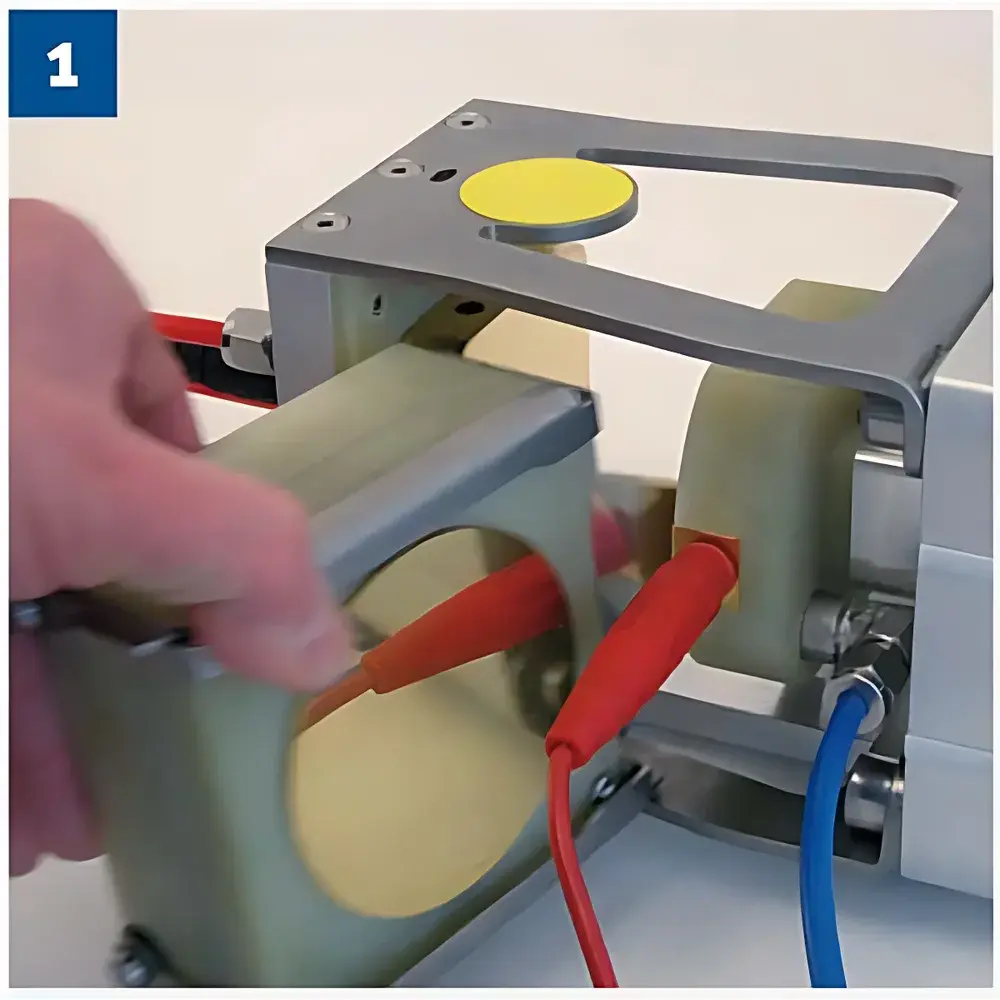
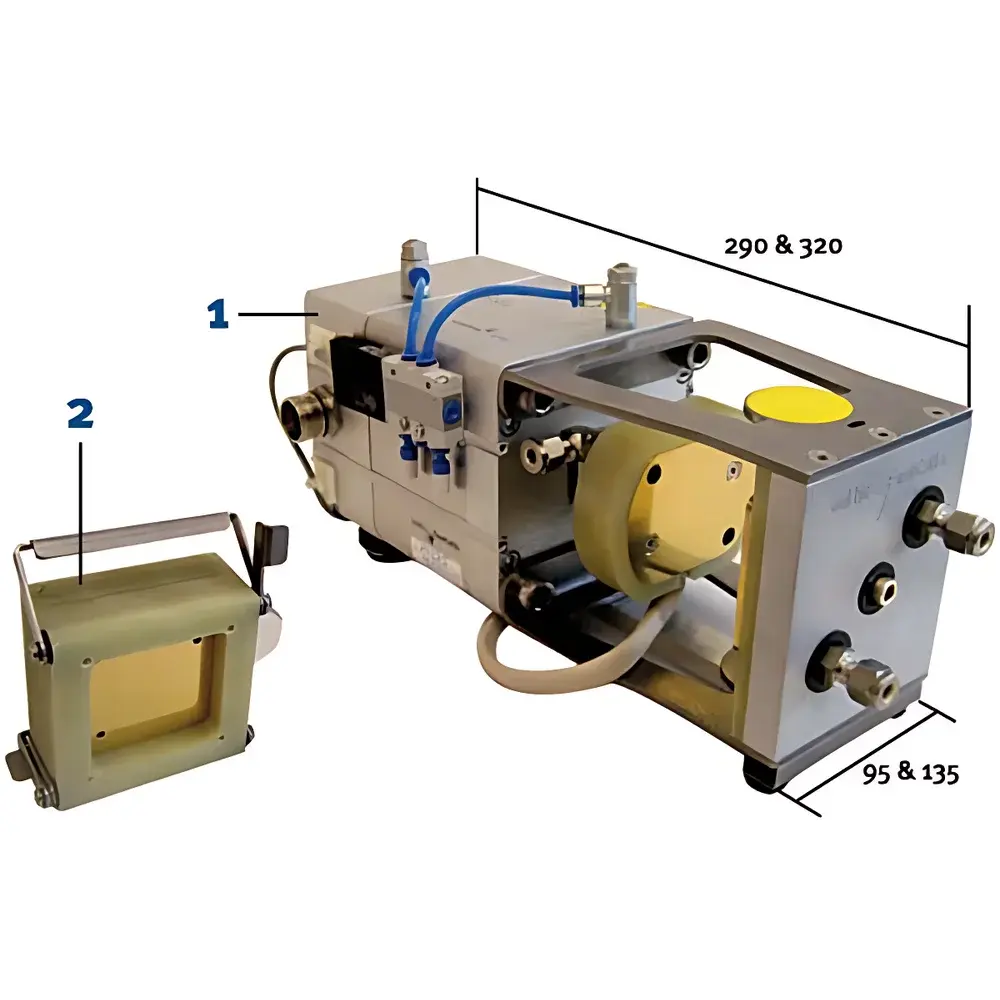
- Tool-free assembly/disassembly: single-motion clamp mechanism enables full MEA or CCM replacement in <90 seconds without wrenches, adapters, or alignment jigs
- Integrated thermal interface compatibility: accepts standard TCU (Temperature Control Unit) modules for isothermal operation from –50 °C to +250 °C
- Modular flow-field integration: accommodates graphite, stainless steel, titanium, and chromium-coated bipolar plates; supports custom serpentine, parallel, and interdigitated channel geometries
- Patented dual-stage sealing: primary elastomeric gasket combined with secondary dynamic piston seal prevents gas crossover during transient pressure ramping
- Standardized mechanical interface: compatible with vertical environmental test stations (e.g., FuelCon, GreenLight, Scribner 850e), enabling seamless integration into automated test sequences
Sample Compatibility & Compliance
The QCF50 fixture is validated for use with membrane electrode assemblies (MEAs), catalyst-coated membranes (CCMs), gas diffusion layers (GDLs), gas diffusion electrodes (GDEs), and anode/cathode flow fields of varying thickness (0.1–3.5 mm) and compressibility (15–85% strain at 1.5 MPa). It meets structural requirements for GLP-compliant laboratories per OECD Principles of Good Laboratory Practice and supports audit-ready documentation when paired with FDA 21 CFR Part 11–compliant data acquisition software. All metallic components are passivated per ASTM A967 and certified free of nickel leaching per EN 1811 for biomedical-grade applications.
Software & Data Management
While the QCF50 is a hardware-only mechanical platform, it is fully interoperable with industry-standard fuel cell test stations via analog I/O (0–10 V pressure feedback, 4–20 mA temperature loop) and digital RS-485 Modbus RTU. When integrated with Scribner FC-TestSuite, GreenLight LabVIEW-based controllers, or FuelCon CellTest software, users can log compression force vs. time profiles alongside polarization curves, EIS spectra, and local current density maps (when used with CSL accessory). Audit trails include timestamped calibration certificates for load cells and thermal sensors traceable to PTB (Physikalisch-Technische Bundesanstalt).
Applications
- R&D optimization of catalyst layer adhesion and ionomer distribution under realistic stack-relevant compression
- Accelerated durability testing of novel GDL substrates under cyclic loading/unloading conditions
- Quality control screening of commercial MEAs prior to short-stack integration
- Parametric studies on humidity-dependent contact resistance in low-Pt and Pt-free cathodes
- Validation of multi-layer composite membranes (e.g., reinforced PFSA, hydrocarbon blends) under constrained swelling
- Electrolyzer mode characterization of anion exchange membrane (AEM) water splitting cells at elevated pressures
FAQ
Is the QCF50 compatible with non-PEM fuel cell chemistries?
Yes—custom variants support alkaline (AEMFC), phosphoric acid (PAFC), and direct methanol (DMFC) configurations through modified sealing materials, thermal interface design, and corrosion-resistant flow-field alloys.
Can the fixture be used for small-area screening (e.g., 25 cm²) or larger active zones?
The base QCF50 is optimized for 50 cm², but Baltic FuelCells offers mechanically identical QCF25 and QCF100 variants, as well as bespoke solutions up to 225 cm² with reinforced support frames and distributed load compensation.
Does the pneumatic actuation require external air supply?
Yes—a clean, oil-free compressed air source (4–8 bar) is required; integrated regulators and filters are available as optional add-ons to meet ISO 8573-1 Class 2 purity standards.
Are calibration certificates provided with each unit?
Each QCF50 ships with factory-verified load cell calibration (traceable to DAkkS-accredited labs) and dimensional inspection reports compliant with DIN EN ISO 9001:2015.
How is long-term maintenance handled outside Germany?
Baltic FuelCells authorizes regional service partners in North America, Japan, and Singapore for pneumatic system servicing, seal replacement, and mechanical recalibration—spare parts kits and technical bulletins are accessible via secure customer portal.



