
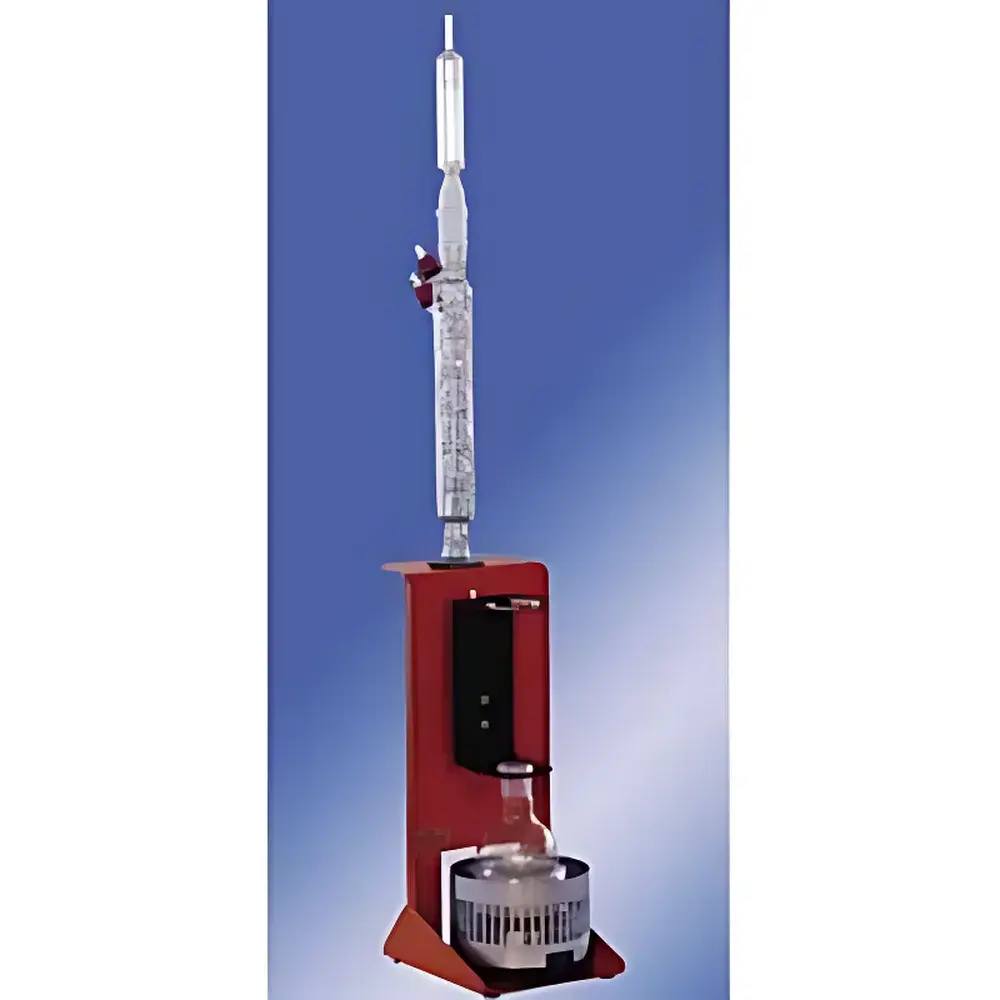
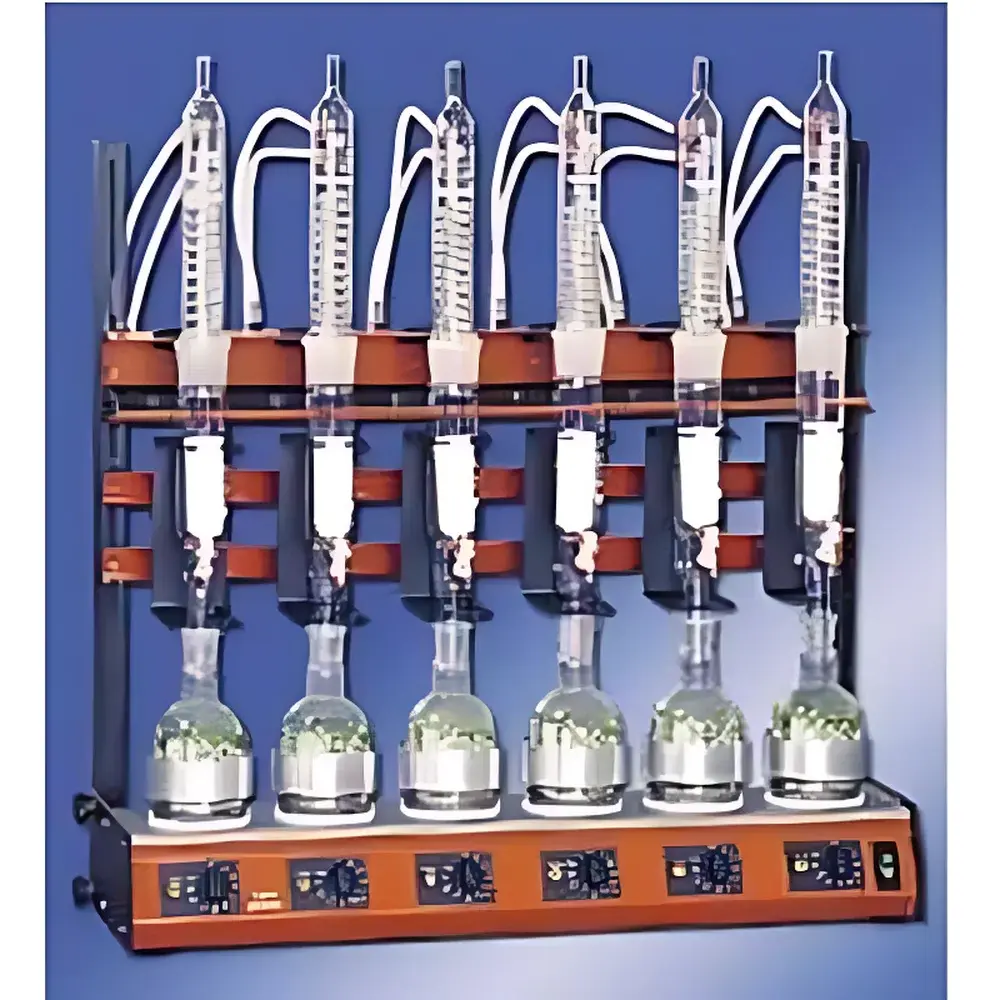
Behr KSMA Compact Heavy Metal Digestion System
| Origin | Germany |
|---|---|
| Manufacturer Type | Distributor |
| Origin Category | Imported |
| Model | Behr KSMA |
| Pricing | Upon Request |
| Voltage | 230 VAC / 115 VAC |
| Frequency | 50/60 Hz |
| Current | 3 A / 6 A |
| Power Consumption | 450 W |
| Weight | approx. 6 kg |
| Dimensions (W × D × H) | approx. 230 × 330 × 800 mm |
Overview
The Behr KSMA Compact Heavy Metal Digestion System is a benchtop, electrically heated digestion unit engineered for controlled, open-vessel acid digestion of solid and semi-solid samples prior to trace metal analysis by ICP-OES, ICP-MS, or AAS. Designed in accordance with classical wet digestion principles—specifically optimized for aqua regia (HCl:HNO₃, 3:1) and other strong mineral acid mixtures—the KSMA system enables reproducible decomposition of organic matrices (e.g., soils, sediments, biological tissues, sludges, and foodstuffs) while minimizing analyte loss, contamination, and volatile element volatilization. Its compact vertical architecture integrates a thermostatically regulated heating block, precision-machined glassware support frame, and chemically resistant PTFE-coated connection tubing, ensuring thermal homogeneity across up to eight parallel digestion vessels (e.g., borosilicate glass Kjeldahl tubes or quartz digestion tubes). Unlike microwave-assisted systems, the KSMA operates under atmospheric pressure and ambient ventilation, making it suitable for routine QC/QA laboratories requiring simplicity, operational transparency, and full manual control over ramping profiles and hold times.
Key Features
- Compact footprint (230 × 330 × 800 mm) designed for standard laboratory benches—no fume hood retrofitting required when used with auxiliary exhaust ducting
- Dual-voltage compatibility (230 VAC/115 VAC, 50/60 Hz) supporting global deployment without transformer dependency
- Stable, PID-controlled heating block delivering uniform temperature distribution (±2 °C) from ambient to 220 °C; maximum operating temperature limited by glassware specifications
- Modular assembly: base unit, heating module, adjustable stainless-steel support rack, PTFE-lined vapor condensation tubing, and certified borosilicate glass digestion vessels (not included)
- No moving parts or complex electronics—engineered for long-term reliability, low maintenance, and GLP-compliant documentation via external loggers
- Compliance-ready design: compatible with ISO 11047 (soil digestion), EPA Method 3050B (acid digestion of sediments and soils), and ASTM D3682 (trace metals in water and wastewater)
Sample Compatibility & Compliance
The KSMA system accommodates standard digestion tube formats (e.g., 16–20 mm OD, up to 300 mL capacity), enabling direct integration with existing labware inventories. It supports digestion protocols for a broad range of sample types—including environmental solids (sludge, fly ash, compost), agricultural products (grains, forage), clinical specimens (hair, tissue), and industrial materials (plastics, catalysts)—provided appropriate acid selection and procedural validation are applied. All structural components are inert to concentrated HNO₃, HCl, HF (with quartz vessel option), and H₂O₂. The system itself does not carry CE, UKCA, or FDA certification as a standalone device; however, its operation conforms to ISO/IEC 17025:2017 requirements for method validation when deployed within an accredited testing laboratory’s documented SOPs. Users are responsible for validating digestion efficiency (e.g., spike recovery, CRM analysis) per USP , ISO 17294-2, or client-specific QA criteria.
Software & Data Management
The Behr KSMA is a hardware-only, analog-controlled instrument with no embedded firmware, touchscreen interface, or proprietary software. Temperature regulation is achieved via mechanical thermostat and calibrated potentiometer—ensuring deterministic behavior, auditability, and immunity to cybersecurity vulnerabilities. Laboratories seeking electronic data capture may integrate external Class I thermocouple loggers (e.g., compliant with NIST-traceable calibration) connected to LIMS or ELN platforms. This architecture aligns with FDA 21 CFR Part 11 requirements for systems where operator-entered parameters (e.g., heating duration, acid volume) are recorded manually in bound lab notebooks or validated electronic records. No electronic signature, audit trail, or user access control is implemented natively—consistent with its classification as a general-purpose laboratory heating apparatus under GMP Annex 15 and EU GMP Chapter 4.
Applications
- Routine heavy metal screening (Pb, Cd, As, Cr, Hg, Ni) in environmental monitoring programs (e.g., landfill leachate, urban dust, river sediments)
- Regulatory compliance testing for RoHS, WEEE, and REACH restricted substances in polymers and electronic components
- Method development and reference material characterization in national metrology institutes and proficiency testing providers
- Preparation of certified reference material (CRM) digests for inter-laboratory comparison studies
- Teaching laboratories emphasizing fundamental analytical chemistry principles—acid–base reactivity, redox dissolution mechanisms, and matrix interference mitigation
FAQ
Is the KSMA system compatible with hydrofluoric acid (HF)?
Yes—when used with quartz digestion tubes and PTFE or PFA vapor tubing (sold separately); standard borosilicate glassware must not be exposed to HF.
Does the system include digestion vessels?
No—vessels are selected and supplied by the user based on application requirements (e.g., borosilicate for aqua regia, quartz for HF-containing mixtures).
Can the KSMA be operated inside a fume hood?
It is strongly recommended; although the unit generates no internal pressure, acid vapors require continuous local exhaust ventilation per OSHA and EN 14175 standards.
What is the typical digestion cycle time for soil samples?
Using EPA 3050B protocol (aqua regia, 95 °C, 2 h pre-digestion + 1 h reflux), total cycle time ranges from 3–4 hours depending on sample mass and organic load.
Is technical support available outside Germany?
Yes—authorized distributors provide installation guidance, SOP review, and troubleshooting assistance in accordance with ISO 9001-certified service agreements.



