
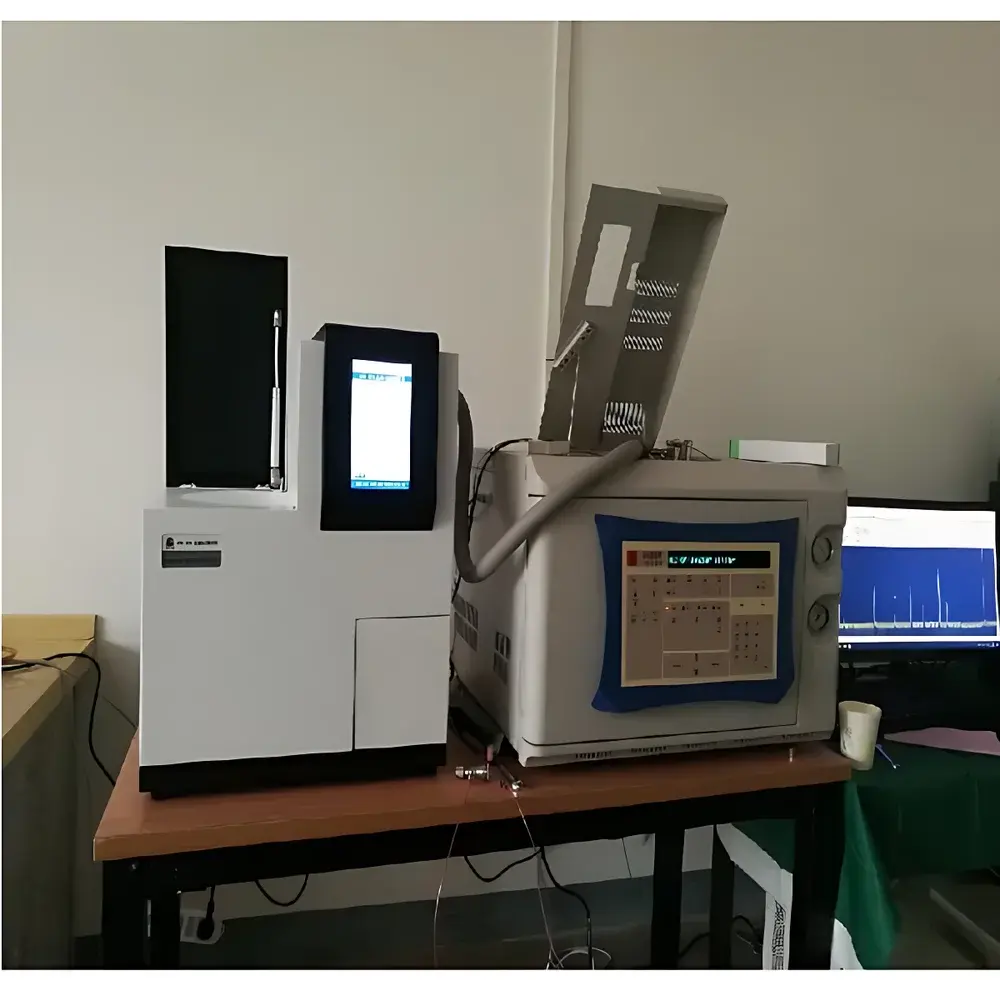
Beifen Sanpu A2TDS-20A Fully Automated Two-Stage Thermal Desorber for VOC and Carbonyl Analysis per HJ/T 400–2007
| Brand | Beifen Sanpu |
|---|---|
| Origin | Beijing, China |
| Manufacturer Type | Direct Manufacturer |
| Instrument Type | Two-Stage Thermal Desorber |
| Primary Desorption Temp Range | Ambient to 450 °C |
| Secondary Desorption Temp Range | 100–450 °C |
| Cold Trap Temp Range | −35 °C to Ambient |
| Desorption Recovery Rate | >99% (compound-dependent) |
| Sample Capacity | 20 positions |
| Cold Trap Cooling Method | Electronic Refrigeration |
| Temperature Control Accuracy | ±0.5 °C |
| RSD | ≤2.5% (for 0.05 μg benzene in methanol) |
| Sample Tube Format | 1/4″ OD × 3.5″ (ASTM D6196-compliant) |
Overview
The Beifen Sanpu A2TDS-20A is a fully automated two-stage thermal desorber engineered for high-fidelity quantification of volatile organic compounds (VOCs) and carbonyl species—including formaldehyde, acetaldehyde, and acetone—in complex air matrices. Designed specifically to comply with the Chinese environmental standard HJ/T 400–2007 “Method for Sampling and Determination of Volatile Organic Compounds and Aldehydes/Ketones in Vehicle Interiors”, this instrument implements a rigorously controlled dual-stage desorption process coupled with cryogenic focusing. It operates on the principle of thermal desorption gas chromatography (TD-GC), where analytes pre-concentrated on Tenax® TA or similar sorbent tubes are sequentially released—first from the sorbent bed (primary desorption), then refocused in a cryogenically cooled trap (−35 °C), and finally injected as a narrow, solvent-free band into a capillary GC system. This architecture ensures superior peak shape, minimized breakthrough, and enhanced sensitivity for trace-level aldehydes and semi-volatiles commonly found in automotive cabin air, indoor environments, and building materials testing.
Key Features
- Fully automated 20-position sample carousel with unattended operation and integrated self-diagnostic routines
- Independent four-zone temperature control: primary desorption oven, secondary desorption zone, transfer line, and six-port valve—all heated to ≤450 °C with ±0.5 °C stability
- Electronic refrigeration cold trap capable of sustained −35 °C operation, enabling sharp, reproducible band focusing without liquid cryogens
- Motor-driven six-port valve with programmable timing for precise synchronization of desorption, purge, re-desorption, injection, and back-flush cycles
- Integrated tube activation module supporting automated conditioning of sorbent tubes prior to sampling or post-analysis regeneration
- Simulated sampling mode for direct calibration curve generation using certified standard gases or permeation sources
- Back-flush functionality for both transfer line and valve to eliminate carryover between samples
- Universal GC interface compatibility—including dedicated adapters for Agilent, Thermo Fisher, Shimadzu, and PerkinElmer instruments
- Touchscreen HMI with real-time status animation, method storage, and audit-ready event logging
Sample Compatibility & Compliance
The A2TDS-20A accommodates standard 1/4″ OD × 3.5″ stainless steel or quartz sorbent tubes compliant with ASTM D6196, ISO 16017-1, and HJ/T 400–2007 specifications. It supports multi-sorbent configurations (e.g., Tenax TA + Carbograph 1TD + Carboxen 1000) for broad VOC coverage up to C16. The system meets method requirements for regulatory applications including HJ/T 400–2007, HJ 644–2013, HJ 583–2010, GB/T 18883–2002, and GB 50325–2020. Its hardware architecture and software logic support GLP-compliant data integrity: all temperature setpoints, timing events, and error flags are timestamped and stored locally. When paired with 21 CFR Part 11–enabled GC data systems (e.g., OpenLab CDS or Chromeleon), full electronic audit trails—including user authentication, method versioning, and raw signal retention—are achievable.
Software & Data Management
The embedded firmware provides intuitive method programming via touchscreen interface, supporting multi-step temperature ramps, flow-controlled purging, and conditional logic for valve actuation. All operational parameters—including desorption times, trap hold durations, and back-flush volumes—are saved with metadata (operator ID, date/time, tube ID). Exportable CSV logs contain complete thermal profiles and cycle timestamps for external validation. Optional integration with BF-2002 Chromatography Workstation enables synchronized GC start triggers, automatic peak integration, and report generation aligned with HJ/T 400–2007 reporting templates (e.g., individual compound concentrations, TVOC summation, and compliance pass/fail flags). System diagnostics include heater resistance monitoring, thermocouple drift detection, and cold trap performance verification.
Applications
This thermal desorber is routinely deployed in accredited environmental laboratories for: vehicle interior air quality assessment per HJ/T 400–2007; indoor air quality screening in residential and commercial buildings; emissions testing of automotive interior trim materials (e.g., dashboards, seat fabrics); compliance verification against GB 27630–2023 (mandatory passenger vehicle IAQ standard); source identification of formaldehyde and acetaldehyde in renovation-related off-gassing studies; and ambient air monitoring for BTEX and oxygenated VOCs under HJ 734–2014. Its robustness and reproducibility make it suitable for routine QC/QA workflows in third-party testing labs serving OEMs, regulatory agencies, and certification bodies.
FAQ
Does the A2TDS-20A support single-stage desorption protocols?
Yes—it can be configured via software to operate in single-stage mode for simpler applications requiring only primary desorption without cold trapping.
What sorbent tube types are validated for use with this instrument?
Standard 1/4″ OD × 3.5″ tubes packed with Tenax TA, Carbograph 1TD, or mixed-bed sorbents (e.g., Tenax GR + Carboxen 1000) are fully supported and referenced in HJ/T 400–2007 Annex B.
Is remote monitoring or network connectivity available?
The unit includes Ethernet and RS-232 ports for external command triggering and status polling; however, it does not feature built-in web server or cloud upload capabilities.
How is calibration verified across the 20-sample carousel?
Each position undergoes independent thermal mapping during factory qualification; users may perform positional uniformity checks using a certified multi-component standard and replicate injections across all slots.
Can the cold trap be operated at temperatures below −35 °C?
No—the electronic cooling system is rated for a minimum of −35 °C; lower temperatures require external liquid nitrogen cryo-traps, which are not integrated into this platform.




