
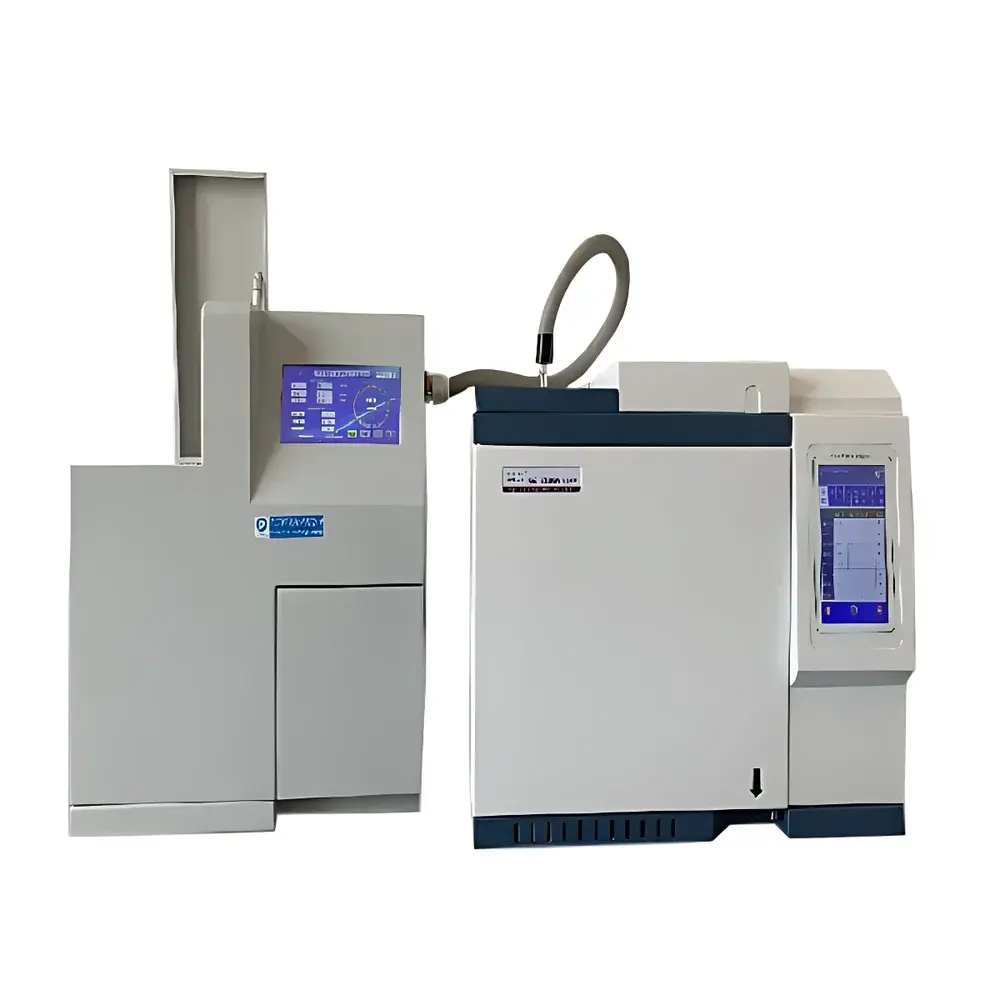
Beifen Sanpu AHS-20A Plus Fully Automated Static Headspace Sampler
| Brand | Beifen Sanpu |
|---|---|
| Origin | Beijing, China |
| Manufacturer Type | OEM Manufacturer |
| Instrument Type | Static Headspace Sampler |
| Automation Level | Fully Automated |
| Sample Vial Heating Range | Ambient to 200 °C (1 °C increments) |
| Valve & Transfer Line Temperature Control Range | 40–220 °C (±1 °C accuracy) |
| Quantitative Loop Volume | 1 mL |
| Sample Position Capacity | 20 positions |
| Compatible Vial Sizes | 10 mL or 20 mL vials |
| Temperature Stability | < ±0.5 °C |
| RSD | < 1.0% (for 100 ppm ethanol in water) |
| Pressure Control Range | 0–0.25 MPa (continuously adjustable) |
| Sampling Time | 0–30 min |
| Injection Time | 0–999 s |
| Purge/Flush Time | 0–30 min |
| Minimum Time Resolution | 1 ms |
| Communication Interface | USB |
| Compliance | GB/T 16886.7–2001, USP <467>, ISO 10993-7, ASTM D6866, HJ 642–2013, HJ 643–2013, HJ 714–2014, HJ 810–2016, ChP 2015 Vol. III & IV, FDA 21 CFR Part 11 (via compatible CDS) |
Overview
The Beifen Sanpu AHS-20A Plus is a fully automated static headspace sampler engineered for precise, reproducible extraction and introduction of volatile organic compounds (VOCs) from solid or liquid matrices into gas chromatography (GC) systems. It operates on the principle of phase equilibrium partitioning: samples sealed in heated vials reach thermodynamic equilibrium between the condensed phase (liquid/solid) and the headspace vapor phase; a precisely metered volume of this equilibrated vapor is then transferred via pressurized injection into the GC inlet. This technique eliminates matrix interference, minimizes column contamination, and delivers high sensitivity for trace-level VOC analysis—particularly critical in regulated environments such as medical device sterilization validation, pharmaceutical residual solvent testing, environmental monitoring, and food safety compliance.
Key Features
- Fully automated 20-position carousel with intelligent vial detection—automatically skips empty or misaligned positions to prevent mechanical collision and ensure uninterrupted operation.
- Independent, PID-controlled heating zones for sample vials (ambient to 200 °C), six-port valve (40–220 °C), and transfer lines (40–220 °C), all maintained within ±1 °C accuracy and < ±0.5 °C stability—eliminating cold spots and preserving analyte integrity.
- 1 mL high-precision quantitative loop with inert, deactived fused-silica or SilcoNert®-treated stainless-steel tubing throughout the entire flow path—ensuring negligible carryover, no adsorption, and long-term reproducibility (RSD < 1.0% at 100 ppm ethanol in water).
- Positive-pressure sampling mechanism enables robust analysis of heterogeneous samples—including viscous liquids, powders, gels, and porous solids—without baseline drift or pressure surges.
- 7-inch graphical LCD touchscreen interface with intuitive icon-driven workflow navigation and real-time status monitoring; supports both front-panel and remote USB-based parameter configuration.
- Comprehensive self-diagnostic system: automatic position calibration, fault detection for motor stall, heater failure, sensor disconnection, and vial recognition errors—with audible/visual alerts and safe shutdown protocols.
- Flexible injection modes: single-vial multi-injection, single-vial single-injection, and multi-vial single-injection—optimized for method development, QC batch processing, or unattended overnight runs.
- Integrated EPC-compatible electronic pressure control (optional) for enhanced method robustness and inter-system transferability.
Sample Compatibility & Compliance
The AHS-20A Plus accommodates standard 10 mL and 20 mL crimp-top headspace vials (custom sizes up to 100 mL available upon request). Its inert flow path and precise thermal management support compliant analysis across pharmacopeial and regulatory frameworks, including USP Residual Solvents, EP 2.4.24, ICH Q3C(R8), ISO 10993-7 (EO residue in medical devices), GB/T 16886.7–2001, and FDA 21 CFR Part 11 when paired with audit-trail-enabled chromatography data systems (CDS). It meets requirements for GLP/GMP laboratories performing EO sterilization validation per ISO 11135, as well as environmental testing under HJ 642–2013 (soil VOCs), HJ 810–2016 (water VOCs), and HJ 714–2014 (solid waste halocarbons).
Software & Data Management
The instrument communicates via standard USB 2.0 interface and is fully controllable through third-party GC software (e.g., Chromeleon, OpenLab CDS, Empower) or Beifen Sanpu’s BF-2002 chromatographic data station. All method parameters—including equilibration time, pressurization duration, sampling loop fill time, injection delay, and post-injection purge—are programmable and stored with full versioning. When integrated into a validated workflow, the system supports electronic signatures, user access levels, audit trail generation, and raw data immutability—meeting ALCOA+ principles and facilitating 21 CFR Part 11 compliance. Sequence files include timestamps, operator ID, vial position mapping, and real-time temperature/pressure logs for full traceability.
Applications
- Residual ethylene oxide (EO) quantification in sterile medical devices, packaging materials, and pharmaceutical excipients per ISO 10993-7 and USP .
- Residual solvents in drug substances and products (e.g., methanol, acetone, dichloromethane) aligned with ICH Q3C guidelines.
- VOC profiling in environmental matrices: drinking water (GB 5749–2006), soil (HJ 642–2013), sediment (HJ 714–2014), and industrial wastewater.
- Flavor and fragrance compound analysis in food, cosmetics, and tobacco products (YC/T 207–2014, SN/T 4068–2014).
- Quality control of polymer additives, adhesives, coatings, and recycled cellulose films where solvent retention impacts performance or safety.
FAQ
What sample types can be analyzed using the AHS-20A Plus?
Solid, semi-solid, and liquid samples—including medical device components, pharmaceutical tablets, soil cores, aqueous solutions, and polymer films—as long as target analytes exhibit sufficient vapor pressure at controlled incubation temperatures.
Is the system compatible with GC-MS platforms?
Yes. The inert flow path, precise pressure control, and low-dead-volume valve design ensure optimal coupling with both single-quadrupole and triple-quadrupole mass spectrometers without signal suppression or peak broadening.
Can the instrument be validated for GMP use?
Absolutely. Full IQ/OQ documentation packages are available, and the system supports 21 CFR Part 11 compliance when operated with validated CDS software, electronic signatures, and audit-trail functionality.
What maintenance is required for long-term reliability?
Routine tasks include periodic replacement of septa and O-rings, verification of vial seal integrity, and annual calibration of temperature sensors and pressure transducers—procedures detailed in the ISO/IEC 17025-aligned service manual.
Does it support method transfer between laboratories?
Yes. Method portability is ensured through standardized parameter definitions (equilibration time, oven temperature, valve temp, loop volume), EPC-ready pressure settings, and vendor-neutral sequence file export formats (CSV, XML).






