
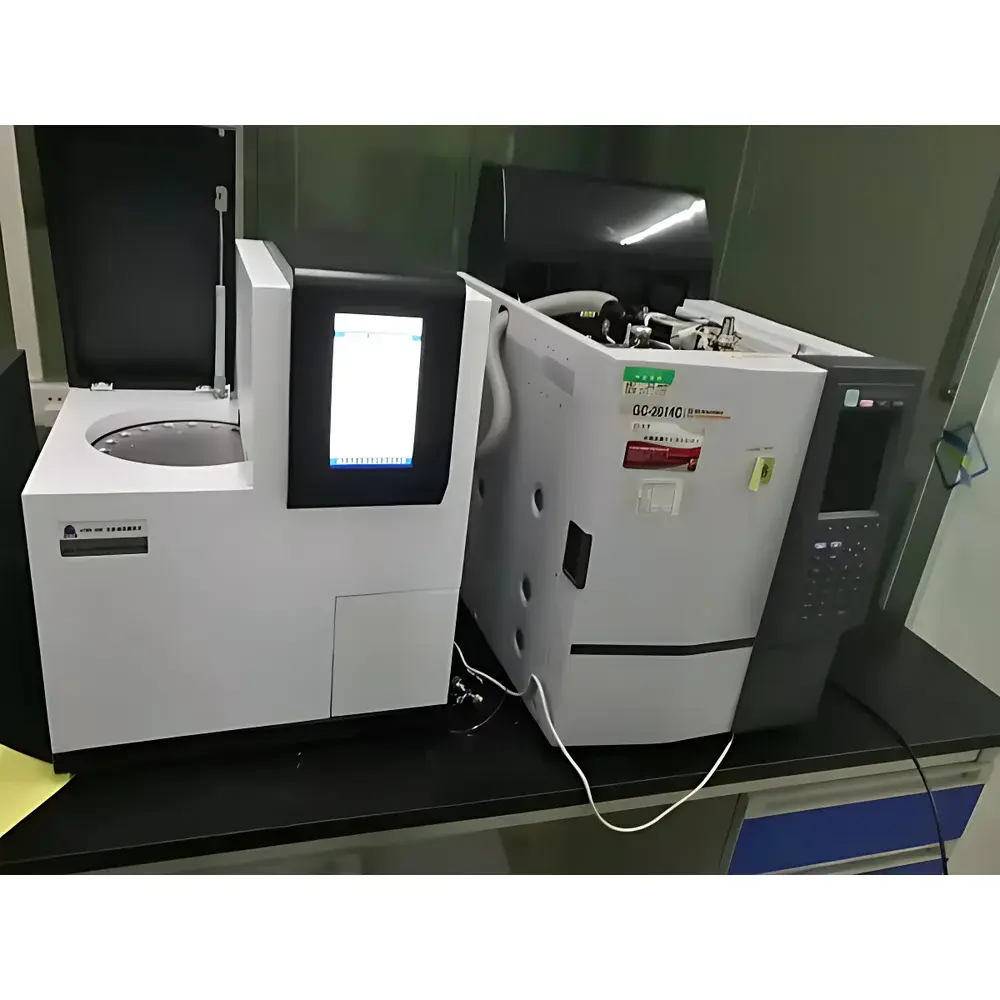
Beifen Sanpu ATD7S-20A Dual-Stage Thermal Desorber for TVOC Analysis in Ambient Air
| Brand | Beifen Sanpu |
|---|---|
| Origin | Beijing, China |
| Manufacturer Type | OEM Manufacturer |
| Instrument Type | Dual-Stage Thermal Desorber |
| Sample Position Capacity | 1 |
| Desorption Temperature Range | Ambient to 400 °C (programmable) |
| Cold Trap Temperature Range | –40 °C to –10 °C (electronic cooling) |
| Analyte Recovery Rate | ≥95% for C6–C12 VOCs |
| Compliance | Fully compatible with GB/T 18883–2002, HJ 644–2013, ISO 16000-6, ASTM D6196 |
Overview
The Beifen Sanpu ATD7S-20A is a fully automated dual-stage thermal desorber engineered for precise, reproducible quantification of Total Volatile Organic Compounds (TVOC) in ambient and indoor air matrices. It operates on the principle of two-step thermal desorption: first, analytes are thermally released from sorbent tubes (e.g., Tenax TA, Carbopack B/C, or multi-bed configurations); second, volatilized compounds are cryogenically focused in a low-temperature cold trap before rapid injection into a gas chromatograph (GC) or GC–MS system. This architecture eliminates band broadening, enhances sensitivity by 5–10× over single-stage desorption, and ensures high-fidelity retention of labile and semi-volatile compounds (boiling point range: 50–260 °C), as defined by WHO (1989) and GB/T 18883–2002. The instrument is designed for seamless integration with both domestic and international GC platforms—including Agilent, Thermo Fisher, Shimadzu, and Beifen Sanpu’s own GC-3420A—enabling compliance-driven workflows in environmental monitoring laboratories, third-party testing facilities, and occupational health labs.
Key Features
- Automated dual-stage desorption sequence with independent temperature control for primary desorption oven and secondary cold trap
- Programmable desorption ramping (0.1–40 °C/s) and isothermal hold (up to 30 min) to optimize recovery of target analytes including benzene, toluene, ethylbenzene, xylenes (BTEX), styrene, ethyl acetate, and undecane
- Electronic Peltier-based cold trap capable of stable operation at –40 °C, enabling sharp focusing of C6–C12 compounds without liquid nitrogen dependency
- Integrated leak-tight sample path with inert (silco-treated stainless steel) flow channels and zero-dead-volume connections to minimize adsorption losses and memory effects
- Onboard calibration mode supporting standard addition and external standard quantitation; full support for internal standard correction (e.g., deuterated toluene-d8)
- Compliance-ready hardware architecture: RS-232/USB interface, audit trail logging, and configurable method locking per GLP/GMP requirements
Sample Compatibility & Compliance
The ATD7S-20A accepts standard 6 mm OD × 90 mm quartz or stainless-steel sorbent tubes (e.g., Tenax TA, Carbopack B, Carboxen 1000, or custom multi-bed tubes). Tube resistance is verified to meet ≤2.5 kPa at 100 mL/min (per GB/T 18883–2002 Annex B). Method validation adheres to HJ 644–2013 (Environmental air—Determination of volatile organic compounds—Thermal desorption/gas chromatography–mass spectrometry) and ISO 16000-6:2011 (Indoor air—Part 6: Determination of volatile organic compounds in indoor and test chamber air by active sampling on Tenax TA sorbent, thermal desorption and gas chromatographic analysis). All thermal profiles, flow rates, and timing parameters are traceable to NIST-traceable references. Instrument qualification includes IQ/OQ documentation packages aligned with ISO/IEC 17025 and CNAS accreditation criteria.
Software & Data Management
Control and data acquisition are managed via BF-2002 Chromatography Data System (CDS), a Windows-based platform compliant with FDA 21 CFR Part 11 for electronic signatures, user role-based access control, and immutable audit trails. The software supports automated method sequencing across up to 16 sample tubes (with optional autosampler upgrade), real-time monitoring of desorption temperature, cold trap status, and carrier gas pressure. Quantitative reports include retention time alignment, peak symmetry assessment (tailing factor <1.5), and relative standard deviation (RSD) calculation for replicate injections. Raw data files (.cdf) are exportable in AIA format for LIMS integration and long-term archival per ISO 14644-1 and GLP retention policies.
Applications
The ATD7S-20A is validated for routine analysis of TVOC in multiple regulatory and research contexts: indoor air quality assessment per GB/T 18883–2002 and ISO 16000 series; workplace exposure monitoring per OSHA Method 05 and NIOSH 1501; building material emission testing (e.g., carpets, adhesives, paints); and ambient air surveillance in urban, industrial, and roadside environments. Its dual-stage architecture enables reliable detection of low-concentration VOCs (<0.5 µg/m³) without preconcentration artifacts—critical for assessing chronic exposure risks associated with formaldehyde-free TVOC definitions (i.e., excluding HCHO, CH₃OH, and other non-Tenax-retained species).
FAQ
What sorbent tubes are recommended for TVOC analysis per GB/T 18883–2002?
Tenax TA tubes (60/80 mesh) are specified; Beifen Sanpu supplies pre-conditioned, resistance-tested tubes meeting ≤2.5 kPa pressure drop at 100 mL/min.
Can the ATD7S-20A be used with GC–MS systems?
Yes—its ultra-low dead volume interface and precise splitless transfer ensure compatibility with Agilent 5977/8890, Thermo ISQ, and Shimadzu QP2020NX platforms.
Is cold trap cooling dependent on liquid nitrogen?
No—Peltier-based electronic cooling eliminates LN₂ handling, reducing operational cost and improving safety in routine lab environments.
How is analyte recovery validated?
Recovery is assessed using certified EPA TO-17 standards (e.g., SUPELCO 47120-U) across three concentration levels (0.5, 5, and 50 ng per tube), with mean recovery ≥95% and RSD <5% (n=6).
Does the system support unattended overnight operation?
Yes—full automation includes tube auto-loading (with optional 20-position tray), method scheduling, and fault-triggered email alerts via integrated Ethernet communication.





