
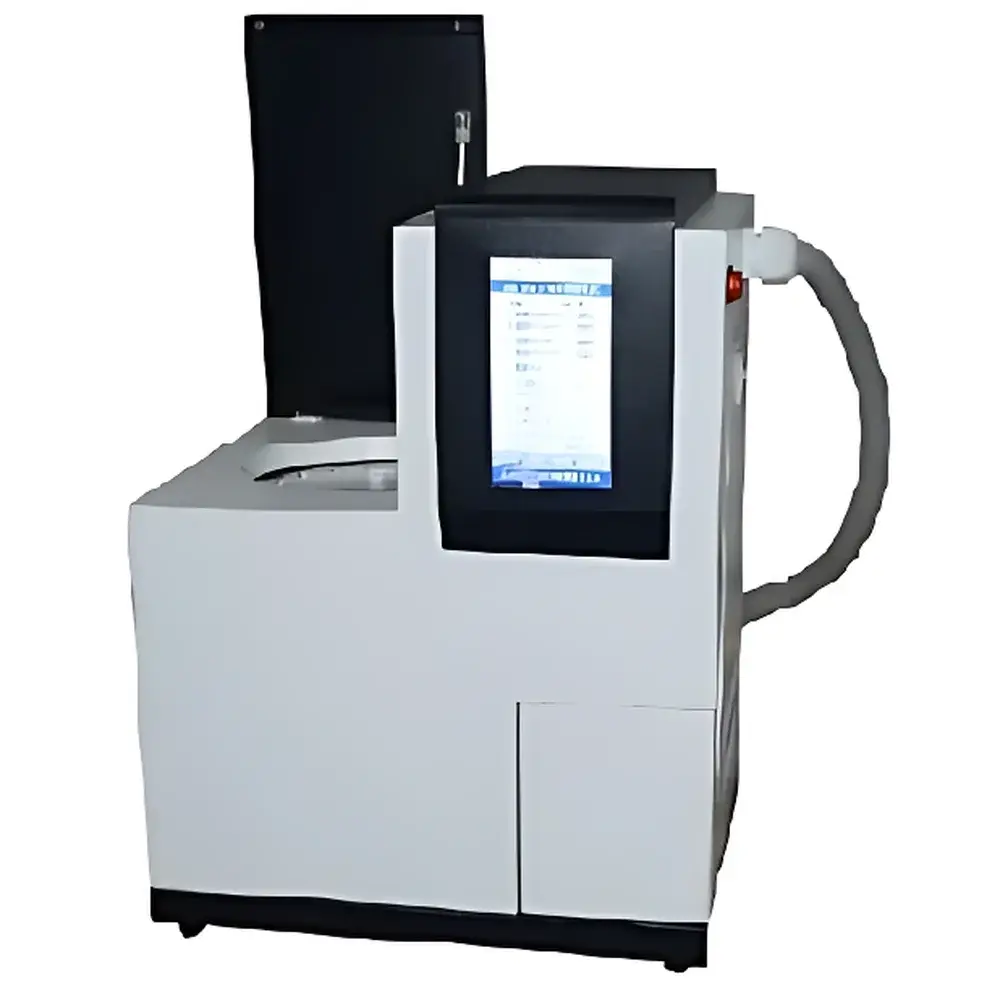
Beifen Sanpu ATDS-20A Automated Two-Stage Thermal Desorber for TVOC Analysis in Ambient Air
| Brand | Beifen Sanpu |
|---|---|
| Origin | Beijing, China |
| Manufacturer Type | OEM Manufacturer |
| Region of Origin | Domestic (China) |
| Model | ATDS-20A |
| Instrument Category | Two-Stage Thermal Desorber |
| Primary Heating Zone Temperature Range | Ambient to 400 °C |
| Secondary Desorption Zone Temperature Range | 100–400 °C |
| Cold Trap Temperature Range | Down to –35 °C |
| Analyte Recovery Rate | >90% |
| Sample Capacity | 20 adsorption tubes |
Overview
The Beifen Sanpu ATDS-20A is an automated two-stage thermal desorber engineered for precise, high-fidelity quantification of total volatile organic compounds (TVOC) in ambient and indoor air matrices. It operates on the principle of thermally assisted desorption coupled with cryogenic focusing—enabling quantitative transfer of trace-level VOCs (boiling point ≤ 250 °C, e.g., benzene, toluene, ethylbenzene, xylenes, styrene, and C6–C12 aliphatics/aromatics) from Tenax® TA or equivalent sorbent tubes into a gas chromatograph (GC) or GC–MS system. Unlike single-stage desorption, the ATDS-20A implements sequential thermal release: first-stage desorption from the sampling tube at controlled ramp rates, followed by cryo-focusing of analytes onto a narrow-diameter cold trap held at ≤ –35 °C, and subsequent rapid flash desorption into the GC inlet. This architecture minimizes band broadening, improves peak symmetry, enhances sensitivity (detection limits typically sub-ng/m³), and ensures reproducible recovery across complex environmental samples.
Key Features
- Automated, programmable two-stage thermal desorption with independent temperature control for primary desorption zone (ambient to 400 °C), secondary desorption zone (100–400 °C), and cryogenic trap (–35 °C to +300 °C)
- Integrated sample carousel accommodating 20 standard 6 mm OD × 89 mm sorbent tubes (e.g., Tenax TA, Carbopack B/C, or multi-bed configurations)
- High-recovery desorption path with inert flow path materials (siliconized stainless steel, fused silica-lined tubing) and zero-dead-volume connections to minimize carryover and catalytic degradation
- Real-time pressure monitoring and carrier gas flow regulation (He or N2) during both desorption and transfer phases
- Compatible with all major GC and GC–MS platforms—including Agilent, Thermo Fisher, Shimadzu, and domestic systems—via standardized pneumatic and electrical interfaces (RS-232/USB)
- Pre-installed method templates aligned with GB 50325–2020 (Code for Control of Indoor Environmental Pollution in Civil Building Engineering) and HJ 644–2013 (Environmental Air—Determination of Volatile Organic Compounds—Thermal Desorption/Gas Chromatography–Mass Spectrometry)
Sample Compatibility & Compliance
The ATDS-20A supports standardized air sampling per ISO 16000-6 and EPA TO-17 protocols using 3.5 L–10 L volumes drawn through sorbent tubes at 0.1–1.5 L/min. It is validated for analysis of regulated VOCs including benzene, toluene, ethylbenzene, xylenes (BTEX), styrene, and C6–C10 alkanes and cycloalkanes. The system meets requirements for GLP-compliant laboratories conducting indoor air quality (IAQ) assessments, building material emissions testing (e.g., packaging films, inks, adhesives), and workplace exposure monitoring. Its performance aligns with ISO/IEC 17025 method validation criteria for recovery (>90%), repeatability (RSD < 5% for n=7), and linearity (r² ≥ 0.999 over 0.5–500 ng/tube range). Audit-ready electronic records support compliance with FDA 21 CFR Part 11 when paired with compliant chromatography data systems.
Software & Data Management
Controlled via BF-2002 chromatography data system (CDS) or third-party GC software (e.g., OpenLAB, Chromeleon), the ATDS-20A enables full method scripting—including tube conditioning, sampling time synchronization, desorption ramp profiles, cold trap hold times, and GC trigger logic. All instrument parameters, run logs, and calibration history are timestamped and stored with user-accessible audit trails. Raw desorption event metadata (temperature setpoints, actual readings, flow rates, pressure transients) are embedded in GC data files for traceability. Optional integration with LIMS allows automatic sample ID propagation from barcode scanners and direct result export to regulatory reporting formats (e.g., XML for GB 50325 submissions).
Applications
- Indoor air quality assessment in residential, commercial, and institutional buildings per GB 50325–2020 and ISO 16000 series
- TVOC screening in tobacco packaging, printed cartons, flexible laminates, and ink formulations (e.g., residual solvents in gravure or flexographic inks)
- Material emission testing for furniture, flooring, insulation, and composite wood products
- Occupational hygiene monitoring in printing, coating, and chemical manufacturing facilities
- Method development and validation for accredited environmental testing laboratories (CNAS-CL01 accredited labs)
- Research-grade VOC profiling in atmospheric chemistry studies requiring low-background, high-recovery thermal desorption
FAQ
What sorbent tubes are compatible with the ATDS-20A?
Standard 6 mm OD × 89 mm stainless steel or glass tubes packed with Tenax TA, Carbopack B/C, or multi-bed sorbents (e.g., Tenax GR + Carbopack X + Carbosieve SIII) are supported.
Can the ATDS-20A be used with GC–MS systems?
Yes—the instrument’s fast transfer kinetics, low dead volume, and precise timing synchronization make it fully compatible with quadrupole and triple-quadrupole GC–MS platforms for compound identification and trace quantitation.
Is cold trap temperature programmable?
Yes—the cryogenic trap offers adjustable setpoints from –35 °C to +300 °C with ±0.5 °C stability, enabling optimization for volatile (e.g., acetone) versus semi-volatile (e.g., naphthalene) analytes.
Does the system include tube conditioning capability?
Yes—integrated tube bake-out mode allows automated regeneration of used sorbent tubes under inert gas purge at up to 350 °C prior to re-use.
How is data integrity ensured during regulatory audits?
All method parameters, run sequences, and hardware status logs are immutably recorded; electronic signatures, role-based access control, and 21 CFR Part 11–compliant audit trails are enforced via BF-2002 CDS configuration.





