
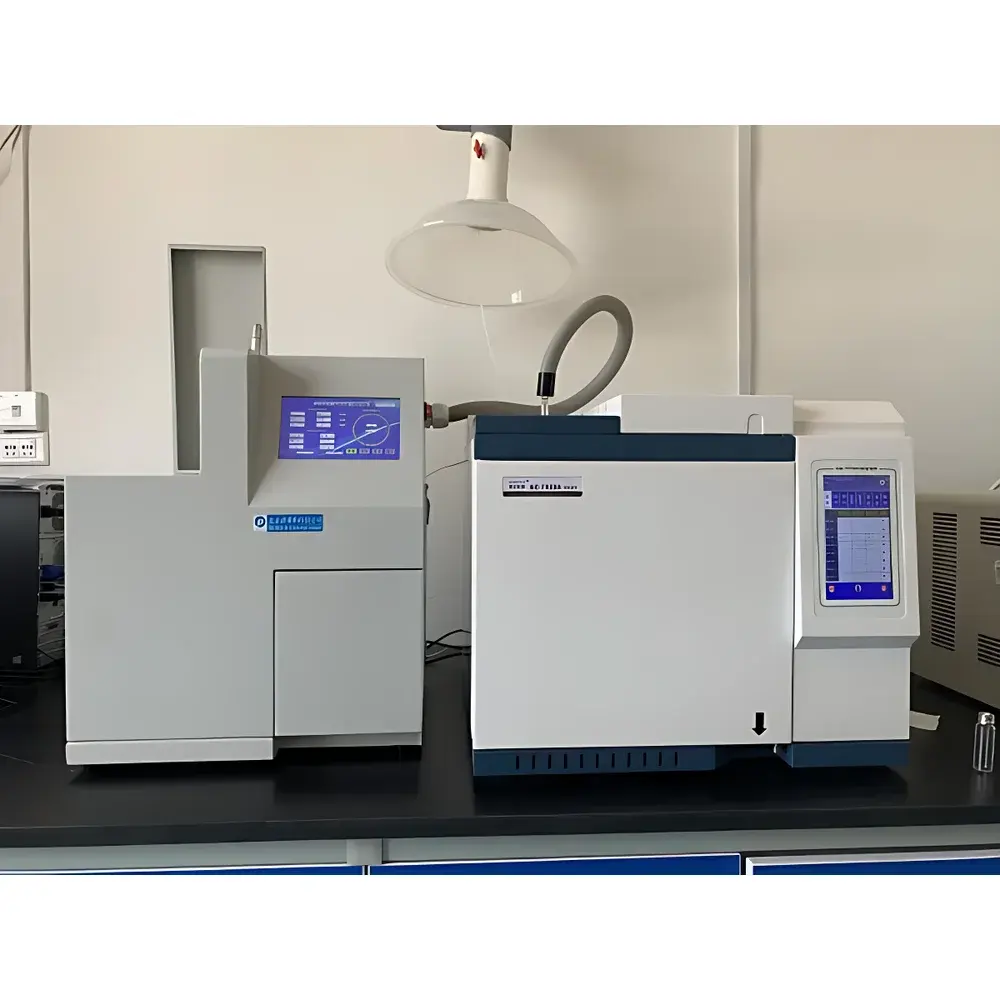
Beifen Sanpu A-HS-20A Plus Fully Automated Static Headspace Sampler
| Brand | Beifen Sanpu |
|---|---|
| Origin | Beijing, China |
| Manufacturer Type | Manufacturer |
| Instrument Type | Static Headspace Sampler |
| Automation Level | Fully Automatic |
| Sample Vial Heating Range | Ambient to 200 °C (1 °C increment) |
| Valve & Transfer Line Temperature Range | 40–220 °C (±1 °C accuracy) |
| Quantitative Loop Volume | 1 mL |
| Sample Capacity | 20 positions |
| Compatible Vial Sizes | 10 mL or 20 mL |
| RSD | <1.0% (at 100 ppm ethanol in water) |
| Pressure Control | 0–0.25 MPa (continuously adjustable) |
| Sampling Time | 0–30 min |
| Injection Time | 0–999 s |
| Purge Time | 0–30 min |
| Communication Interface | USB |
Overview
The Beifen Sanpu A-HS-20A Plus is a fully automated static headspace sampler engineered for precise, reproducible quantification of volatile organic compounds (VOCs) — particularly benzene, toluene, ethylbenzene, and xylenes (BTEX) — in complex, non-volatile matrices such as solvent-based wood coatings. It operates on the principle of phase equilibrium partitioning: solid or liquid samples are sealed in heated vials, allowing VOCs to volatilize and reach thermodynamic equilibrium between the sample matrix and the headspace gas phase. A precisely metered volume of this equilibrated vapor is then transferred via pressurized loop injection into a coupled gas chromatograph (GC), eliminating matrix interference from high-boiling resins, polymers, and pigments common in architectural and industrial coatings. This methodology aligns with ISO 11843-2, ASTM D6729, and GB 18581–2020 for VOC analysis in decorative coatings, ensuring regulatory compliance for indoor air quality and occupational safety assessments.
Key Features
- Fully automated 20-position carousel with intelligent vial detection — automatically skips empty positions and prevents mechanical collision during robotic arm movement.
- Triple-zone independent temperature control: sample vial oven (ambient–200 °C), valve block (40–220 °C), and transfer line (40–220 °C), all with ±1 °C stability and <±0.5 °C long-term drift.
- High-inertness fluid path: de-activated fused-silica capillary tubing and electropolished stainless-steel quantitative loop minimize adsorption, carryover, and cross-contamination — critical for trace-level BTEX recovery in viscous coating extracts.
- Positive-pressure sampling architecture ensures consistent injection volume (1 mL standard loop) without baseline disturbance, compatible with both split and splitless GC inlets.
- 7-inch full-color graphical LCD interface with animated workflow guidance; supports standalone operation or full USB-based parameter control and method scheduling via PC.
- Comprehensive self-diagnostic suite: real-time monitoring of motor position, heater status, pressure integrity, and vial alignment; automatic fault logging and audible/visual alerts.
- Configurable sampling protocols: single vial/multiple injections, multi-vial/single injection, or sequential batch analysis — optimized for QC labs processing 50+ coating samples per shift.
Sample Compatibility & Compliance
The A-HS-20A Plus accommodates standard 10 mL and 20 mL crimp-top headspace vials (custom sizes up to 100 mL available), enabling direct analysis of undiluted or solvent-diluted wood coating specimens per GB/T 23993–2009 and ISO 11890-2. Its robust thermal design supports method validation across diverse sample types — including waterborne emulsions, UV-curable formulations, and high-solids polyurethane systems — without degradation or charring. The instrument meets functional requirements of GLP-compliant laboratories: audit-trail-capable method storage, electronic signature support (via optional software integration), and traceable calibration records. It is routinely deployed in accordance with HJ 643–2013 (solid waste VOCs), HJ 895–2017 (aqueous methanol/acetone), and USP residual solvents testing, making it suitable for third-party certification labs serving paint manufacturers and regulatory agencies.
Software & Data Management
The sampler integrates seamlessly with industry-standard chromatography data systems (CDS), including BF-2002 Chromatographic Data Processor and OpenLab CDS, via hardware-triggered synchronization. All operational parameters — incubation time, pressurization duration, loop fill volume, purge flow rate (0–100 mL/min), and thermal ramp profiles — are programmable and stored with timestamped metadata. Method files include user-defined pass/fail criteria for peak area repeatability (RSD ≤1.0%) and retention time consistency (±0.02 min). Audit-ready reports document system suitability tests (SST), daily performance checks, and calibration verification logs — fulfilling FDA 21 CFR Part 11 requirements when paired with compliant CDS. Remote monitoring and email alerting for completion or error events further enhance unattended overnight operation.
Applications
Primary applications include quantitative determination of BTEX in solvent-borne wood finishes per GB 18581–2020 Annex A; residual solvent screening in cured film extracts; and VOC profiling in raw resin batches prior to formulation. Secondary use cases span pharmaceutical excipient testing (ICH Q3C), medical device EO sterilant residue analysis (ISO 10993-7), food contact material compliance (SN/T 4068–2014), and environmental monitoring of soil/sediment VOCs (HJ 736–2015). Its low detection limits (<0.05 mg/kg for benzene in coatings), high recovery (85.6–105%), and inter-laboratory reproducibility make it ideal for accreditation under CNAS-CL01 (ISO/IEC 17025) and UKAS standards.
FAQ
What sample preparation is required prior to headspace analysis of wood coatings?
Minimal preparation: weigh 0.2–1.0 g of homogeneous coating into a 20 mL headspace vial, add internal standard (e.g., bromobenzene), seal with PTFE-lined crimp cap, and equilibrate at 85 °C for 30 min.
Can the A-HS-20A Plus be used with GC-MS systems?
Yes — its inert flow path, precise pressure control, and compatibility with low-flow carrier gases (He or H2) ensure optimal sensitivity and spectral fidelity for mass spectrometric detection.
Is EPC (Electronic Pressure Control) available as an option?
Yes — optional EPC module enables dynamic inlet pressure regulation and improves retention time precision by ±0.01 psi over extended runs.
How does the instrument handle viscous or particulate-containing samples?
Samples must be homogenized and filtered (0.45 µm PTFE syringe filter) prior to vial loading; the sampler itself processes only the vapor phase, inherently excluding non-volatile residues.
What maintenance intervals are recommended for routine operation?
Valve cleaning every 200 injections; quantitative loop replacement annually; full system leak check and temperature calibration semiannually per ISO/IEC 17025 QA protocols.





