
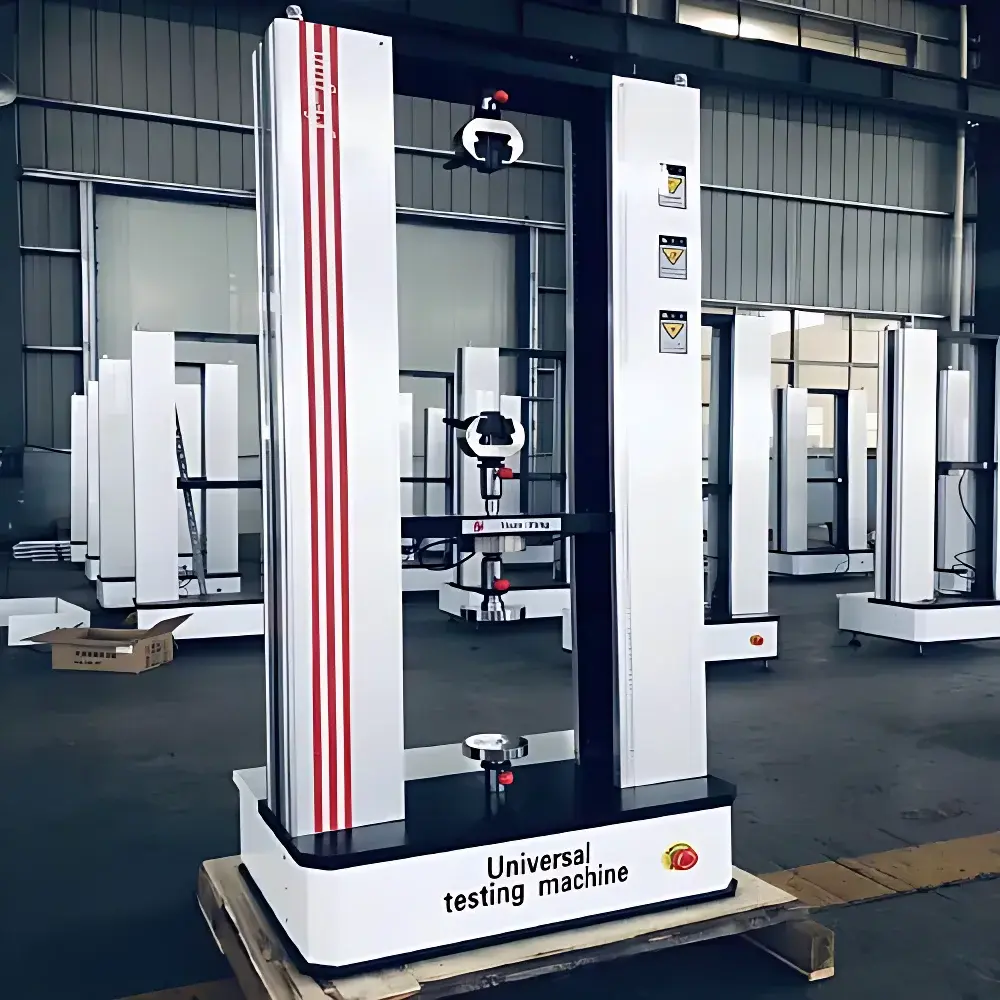
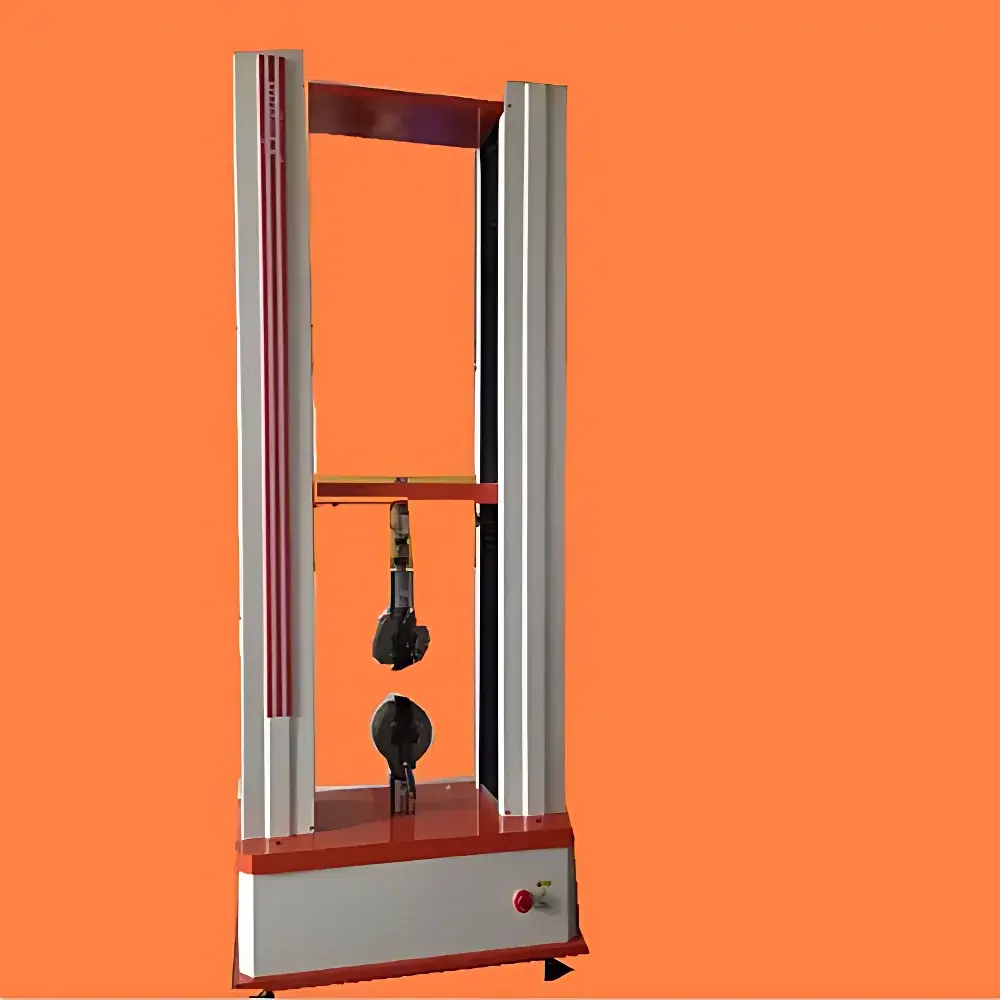
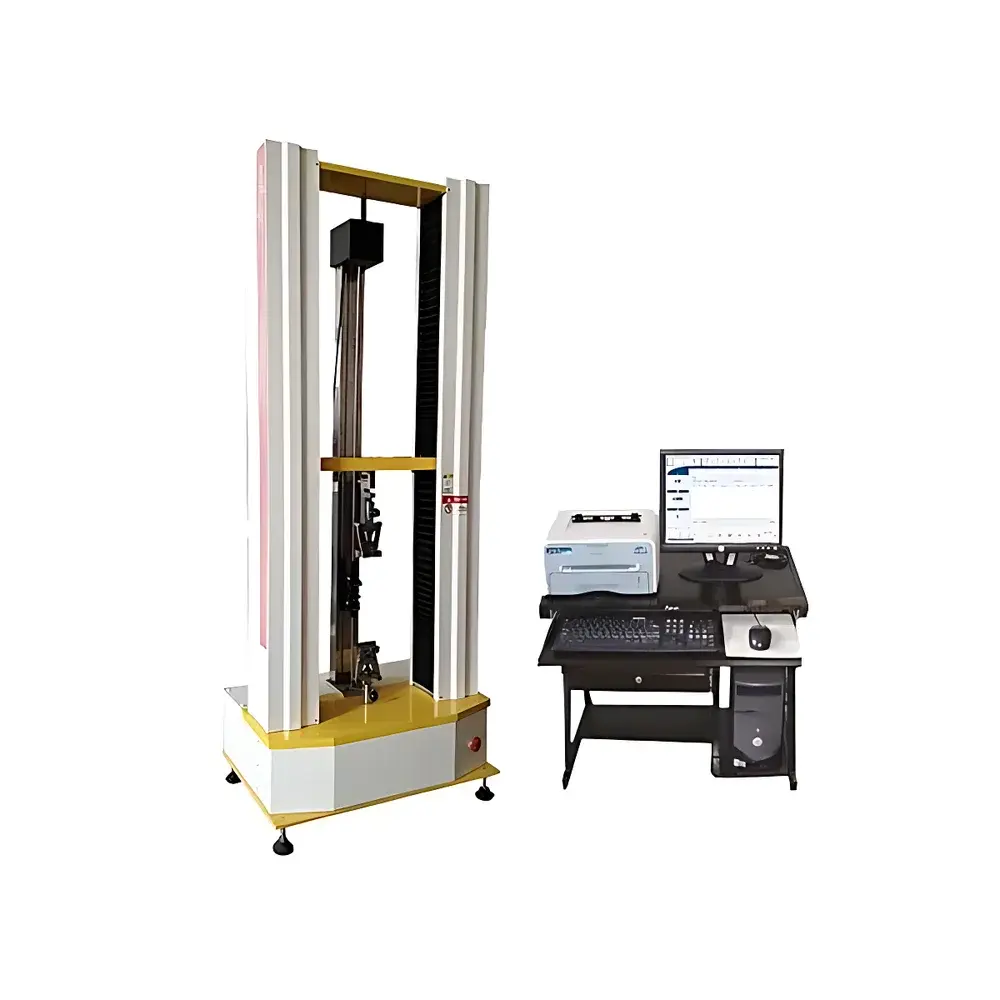
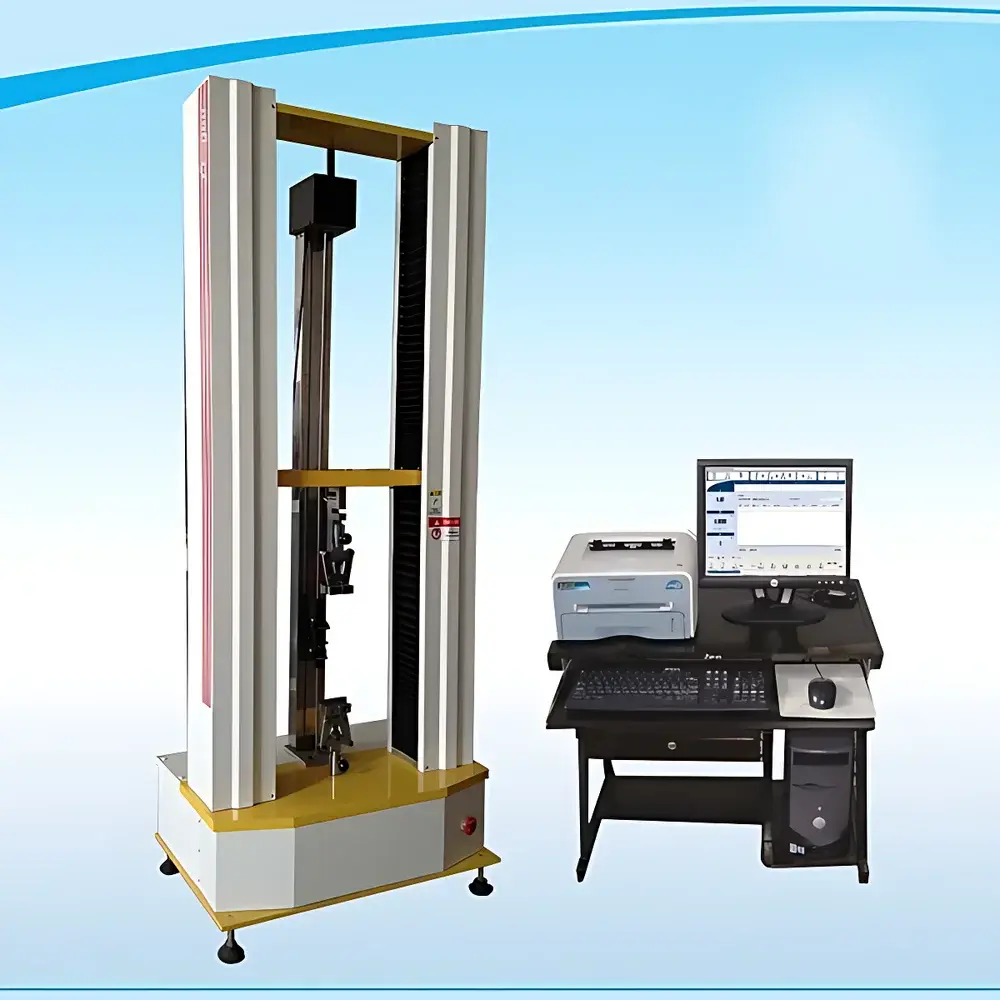
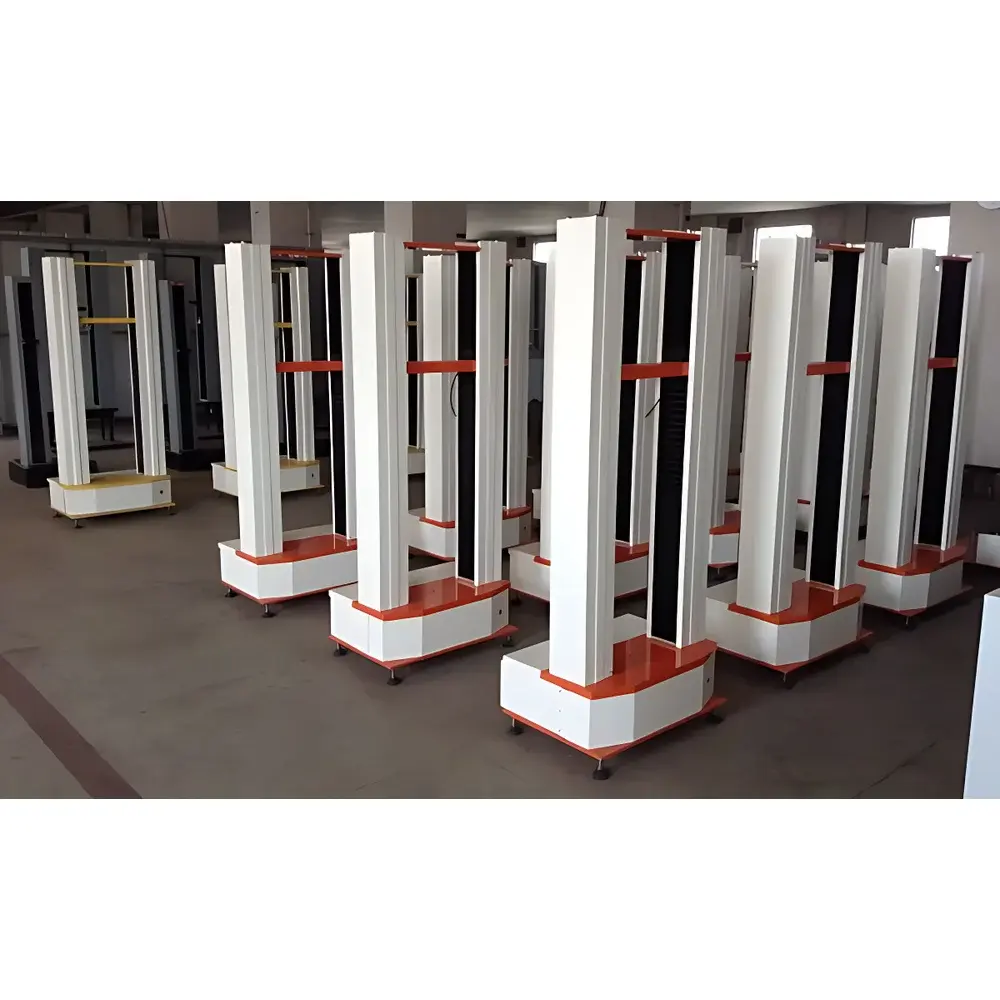
Beiguang Jingyi BWN-1KN High-Speed Peel Strength Tester
| Brand | Beiguang Jingyi / All Precision Instrument |
|---|---|
| Origin | Beijing, China |
| Manufacturer Type | OEM Manufacturer |
| Country of Origin | China |
| Model | BWN-1KN |
| Maximum Test Load | 1 kN |
| Force Measurement Range Accuracy | Better than ±0.5% FS |
| Force Resolution | Better than ±1% of indicated value |
| Travel Range | 0–1000 mm |
| Displacement Resolution | Better than ±0.5% |
Overview
The Beiguang Jingyi BWN-1KN High-Speed Peel Strength Tester is a microprocessor-controlled electromechanical tensile testing system engineered for precision measurement of interfacial adhesion strength in laminated, coated, and bonded materials under controlled peel conditions. It operates on the principle of constant-rate-of-separation (CRS) tensile loading, compliant with standardized peel test geometries including 90° and 180° configurations per ASTM D903, ISO 8510-2, and GB/T 2790–1995. Designed for high-reproducibility mechanical property evaluation, the instrument delivers traceable force-displacement data acquisition at speeds up to 500 mm/min—enabling dynamic assessment of adhesive failure modes, cohesive delamination thresholds, and viscoelastic peel resistance in flexible packaging, medical tapes, automotive trim bonding, and electronic encapsulants.
Key Features
- High-stiffness dual-column frame with precision-ground ball-screw actuation and arc-synchronous reduction gearing for minimal backlash and thermal drift.
- Integrated high-resolution optical encoder for real-time displacement feedback with sub-micron repeatability over full 1000 mm travel range.
- Calibrated load cell with verified linearity better than ±0.5% full scale and thermal compensation across ambient operating temperatures (10–35°C).
- Digital speed control architecture enabling seamless transition between low-speed (0.01 mm/min), medium-speed (1–100 mm/min), and high-speed (100–500 mm/min) test profiles without hardware reconfiguration.
- Modular fixture interface supporting standardized peel grips (e.g., fixed-angle peel jigs, floating roller fixtures), tensile clamps, shear adapters, puncture probes, and bend supports—all aligned to ISO 2041 and ASTM E4 compliance requirements.
- Self-diagnostic firmware with automatic zero-point compensation, overload protection, and emergency stop circuitry meeting IEC 61000-6-2 EMC standards.
Sample Compatibility & Compliance
The BWN-1KN accommodates specimens ranging from thin polymer films (≥25 µm) and pressure-sensitive adhesives to multi-layer composites and elastomeric substrates. Its modular design supports both standard strip-type peel specimens (per ASTM D3330) and non-standard geometries requiring custom tooling. The system conforms to international regulatory frameworks including ISO/IEC 17025 for testing laboratory competence, supports audit-ready calibration records traceable to NIM (National Institute of Metrology, China), and enables method validation per FDA 21 CFR Part 11 when operated with optional electronic signature-enabled software modules. Mechanical test protocols executed on this platform satisfy material qualification requirements under AS9100 Rev D (aerospace), IATF 16949 (automotive), and ISO 10993-12 (biocompatibility testing support).
Software & Data Management
The Windows-based control software (v3.2+) provides ISO 17025-aligned data integrity features: automated timestamped test logging, user-access-level permissions, electronic audit trails, and tamper-evident report generation. Real-time plotting displays synchronized load–displacement, load–time, stress–strain, and extension–time curves—with dynamic axis scaling, multi-curve overlay, and peak-hold annotation. Post-test analysis includes automatic calculation of peel strength (N/mm), average peel force, maximum peel force, energy-to-peel (J/m²), and interfacial fracture toughness estimates. Export formats include CSV, XLSX, PDF, and RTF; raw binary data files are retained with metadata headers containing operator ID, environmental conditions, calibration certificate IDs, and test method references.
Applications
This tester serves as a primary qualification tool in R&D and QC laboratories for adhesive formulation development, shelf-life stability studies, and production lot release testing. Typical use cases include: quantifying peel resistance of medical transdermal patches under accelerated aging conditions; evaluating bond durability of EV battery module thermal interface materials after thermal cycling; validating seal integrity of sterile barrier packaging per ISO 11607-2; assessing interlaminar shear strength in wind turbine blade prepreg systems; and characterizing debond onset in aerospace composite repairs. Its versatility extends to non-peel applications such as tensile modulus of hydrogels, compressive yield of foams, and puncture resistance of protective textiles—when configured with appropriate accessories.
FAQ
What standards does the BWN-1KN comply with for peel testing?
It supports ASTM D903, ISO 8510-2, GB/T 2790–1995, JIS Z 0237, and DIN EN 1979 for peel strength determination.
Is the system suitable for GLP/GMP-regulated environments?
Yes—when equipped with 21 CFR Part 11-compliant software options, it provides electronic signatures, audit trails, and role-based access control required for regulated quality systems.
How often does the system require metrological verification?
Annual third-party calibration against national standards (e.g., NIM-certified reference loads) is recommended; internal verification using certified check weights should be performed before each test session.
Can the instrument perform cyclic or dwell-controlled tests?
Standard configuration supports static and ramped loading only; optional closed-loop displacement hold modules enable strain-controlled dwell and relaxation testing.
What maintenance intervals are specified for critical components?
Lubrication of ball-screw assemblies is required every 3–5 years; periodic inspection of encoder alignment and load cell mounting integrity is advised quarterly.



