
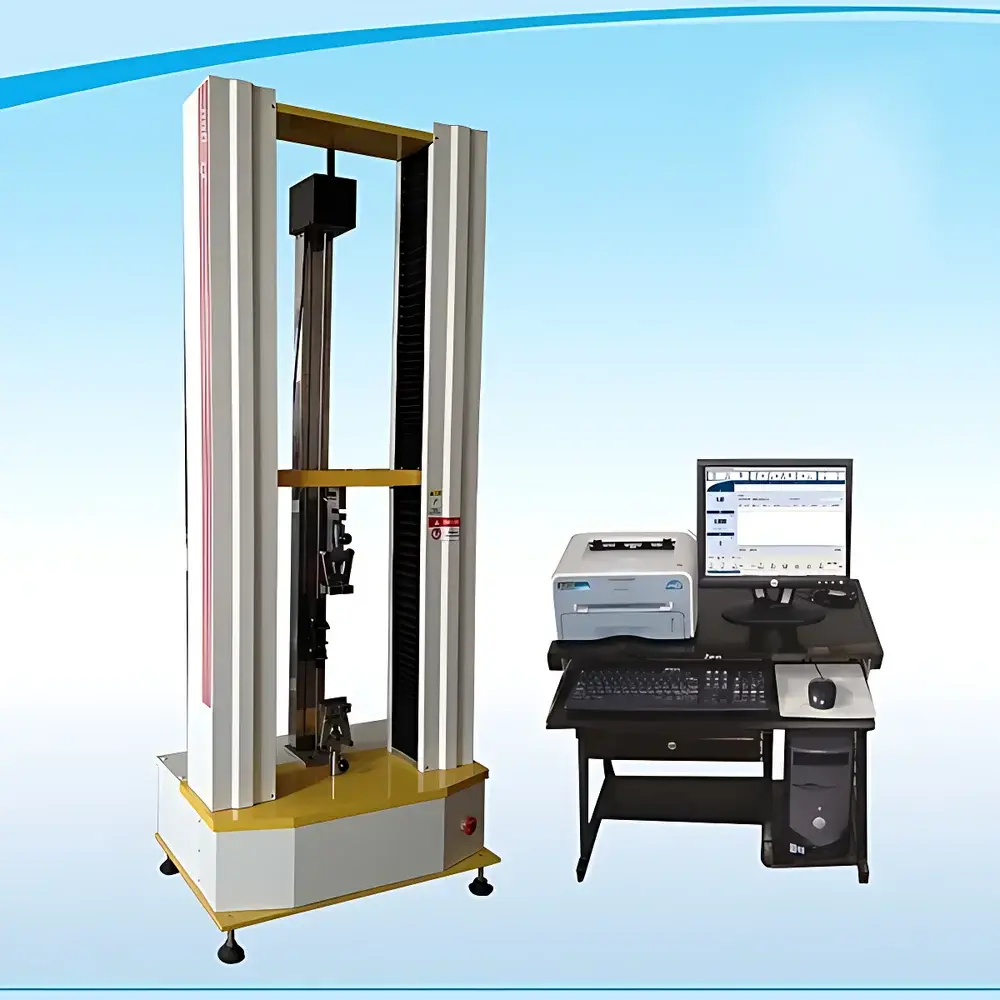
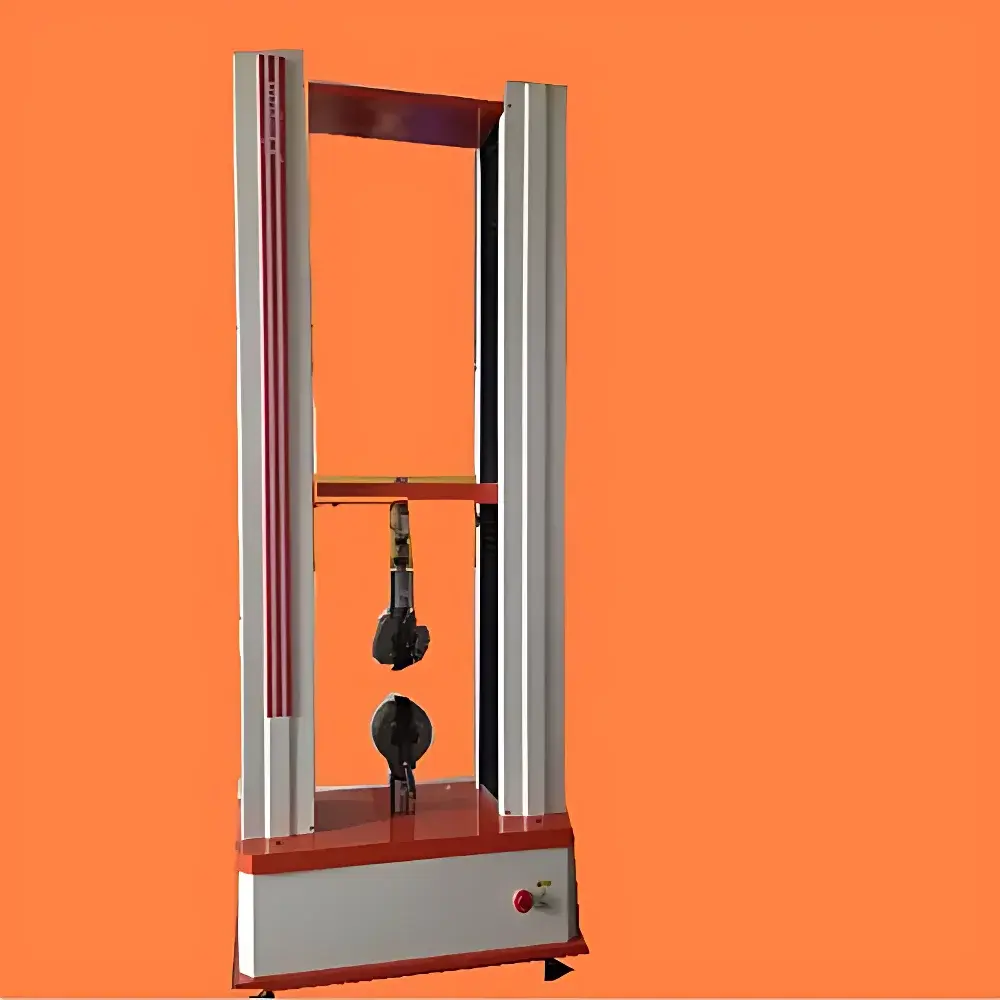
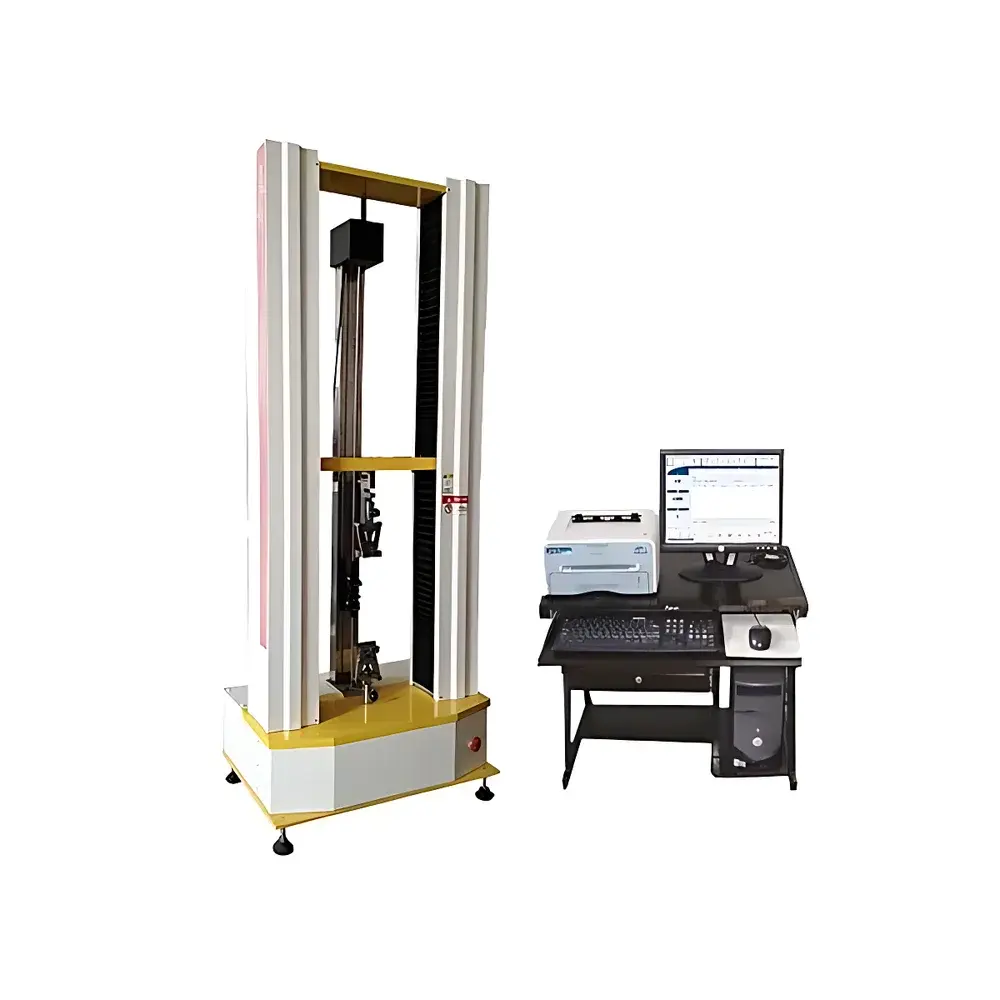
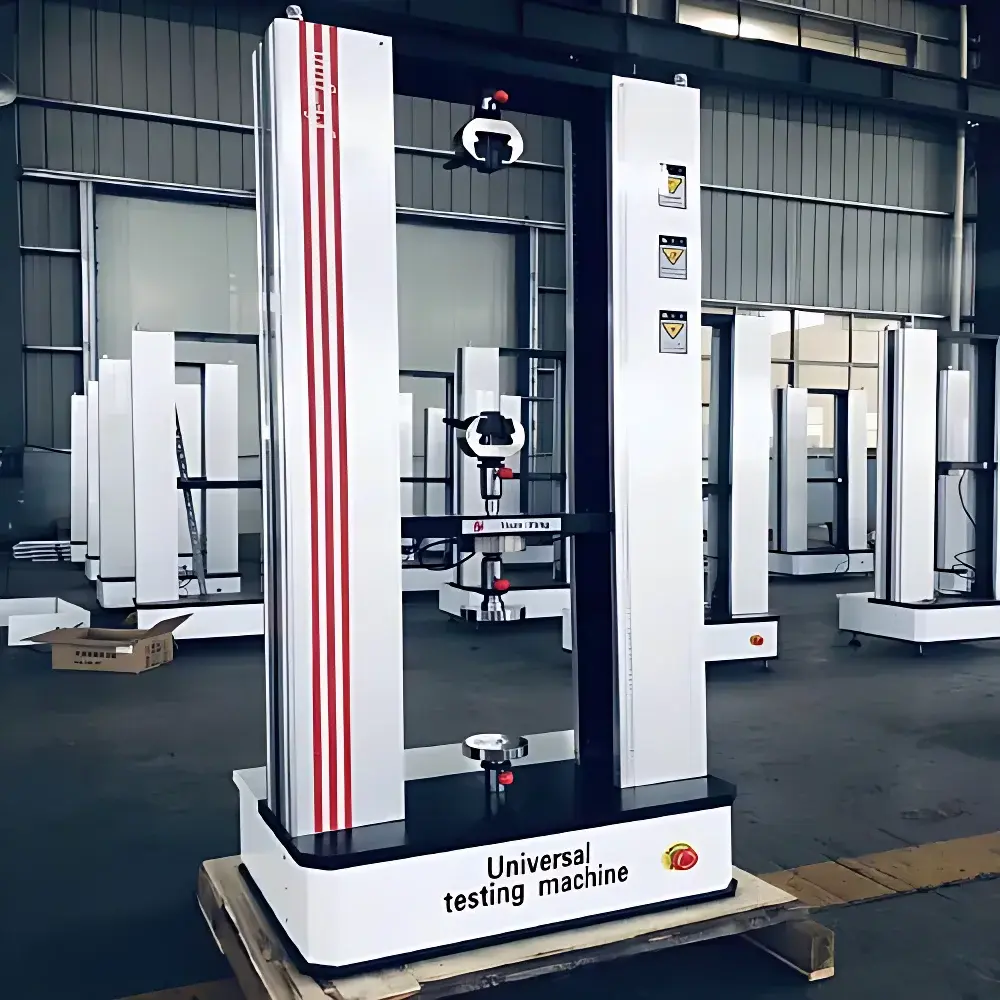
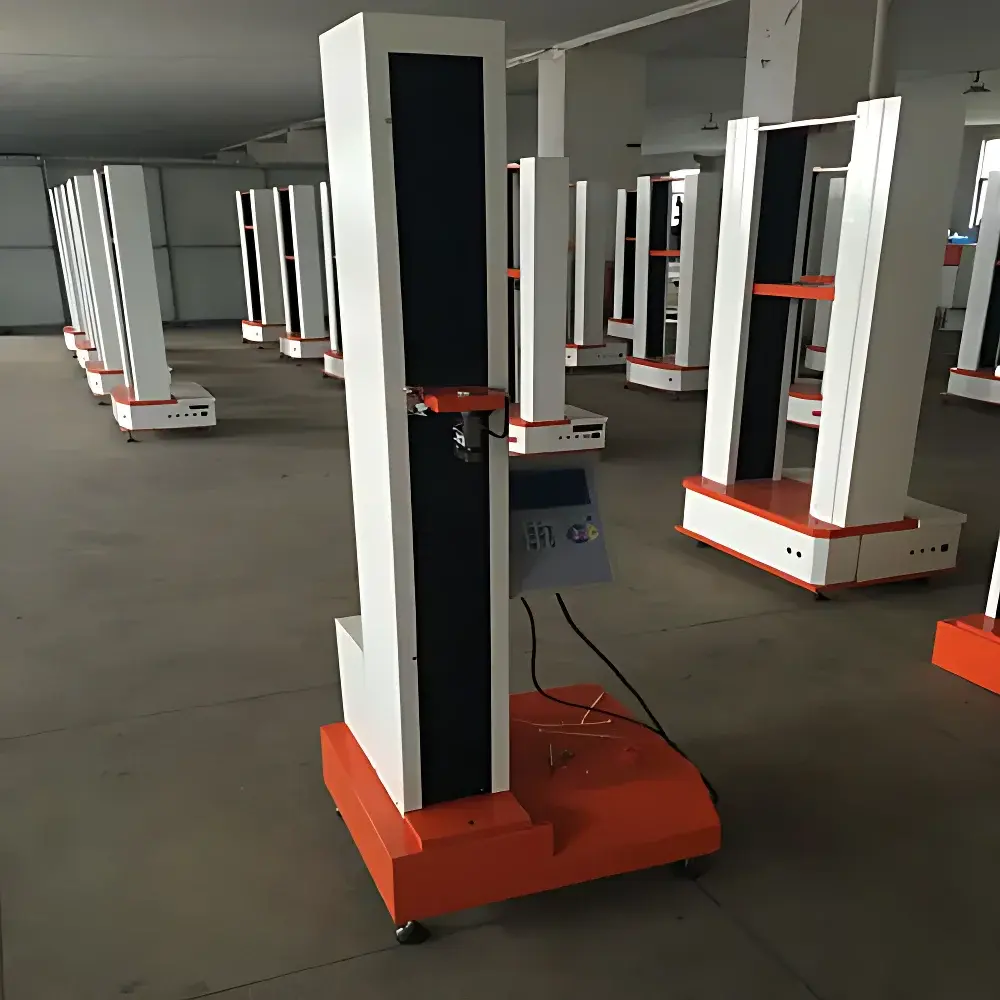
Beiguang Jingyi BWN-500N Electronic Universal Testing Machine for Flexural and Bending Strength Testing
| Brand | Beiguang Jingyi / All Precision Instrument |
|---|---|
| Origin | Beijing, China |
| Manufacturer Type | Direct Manufacturer |
| Product Category | Domestic |
| Model | BWN-500N |
| Instrument Type | Electronic Universal Testing Machine |
| Maximum Test Force | 500 N |
| Force Measurement Accuracy | Class 1 (per GB/T 16491 & ISO 7500-1) |
| Effective Force Range | 2–10% FS |
| Force Resolution | 1/300,000 of full scale |
| Crosshead Speed Range | 0.05–500 mm/min (infinitely variable) |
| Speed Accuracy | ±1% of set value |
| Force Control Rate Range | 0.05–5% FN/s |
| Displacement Measurement Range | 0–999 mm |
| Displacement Resolution | 0.001 mm |
| Displacement Accuracy | ±1% of reading |
| Operating Environment | 10–35 °C, 30–85% RH (non-condensing) |
| Power Supply | AC 220 V ±10%, 50 Hz, 0.5 kW |
| Net Weight | 120 kg |
Overview
The Beiguang Jingyi BWN-500N Electronic Universal Testing Machine is an electromechanically actuated, microprocessor-controlled system engineered for high-reproducibility flexural, bending, tensile, compressive, shear, tear, and peel testing of metallic and non-metallic materials. It operates on the principle of servo-controlled linear motion, where a precision ball-screw-driven crosshead applies controlled mechanical load to specimens via standardized fixtures. Force is measured using a calibrated S-type or cantilever load cell compliant with ISO 7500-1 Class 1 requirements; displacement is acquired via a high-resolution optical encoder integrated into the drive train. The machine conforms to core international standards including GB/T 16491 (China), ISO 6892-1 (tensile), ISO 178 (flexural), ASTM D790 (flexural properties of plastics), and ASTM E4 (verification of force-measuring systems). Its modular architecture supports both static and quasi-static loading protocols under ambient laboratory conditions—making it suitable for QC laboratories, R&D centers, and third-party certification facilities requiring traceable, repeatable mechanical property evaluation.
Key Features
- Fully programmable test control with open-parameter configuration: users define force rate, displacement rate, hold duration, break detection thresholds, and cycle limits without firmware modification.
- Real-time zero-point compensation: automatic or manual floating zero adjustment for force, displacement, and strain channels prior to each test—critical for eliminating thermal drift and fixture compliance effects.
- Multi-stage speed control: independent setting of test speed, jog-up/jog-down speed, and auto-return speed; speed increments are adjustable in discrete steps during manual operation for precise positioning.
- Intelligent safety interlocks: overload shutdown, mechanical end-limit switches, emergency stop circuitry, and software-enforced upper/lower bounds on force and displacement.
- Auto-test termination logic: configurable criteria include peak force detection, specified deflection, fracture event recognition (via slope discontinuity), or time-based halt.
- Integrated real-time clock with ISO 8601-compliant timestamping (YYYY-MM-DD hh:mm:ss) applied to every test record for auditability and GLP/GMP alignment.
- 24-key membrane keypad with tactile feedback and context-sensitive functionality—no external PC required for basic operation or data review.
Sample Compatibility & Compliance
The BWN-500N accommodates standard specimen geometries per ISO 178 (rectangular beams, 80 × 10 × 4 mm), ASTM D790 (63.5 × 12.7 × 3.2 mm), and GB/T 9341. Custom fixtures—including three-point bend, four-point bend, compression platens, wedge-action tensile grips, and pneumatic peel clamps—are mechanically compatible via M6 and M8 mounting interfaces. All force and displacement measurements are traceably calibrated against national metrological standards (CNAS-accredited reference masses and certified displacement standards). The system meets electromagnetic compatibility (EMC) requirements per GB/T 18268.1 and environmental classification IP20 per IEC 60529. For regulated environments, raw test data files (ASCII .txt) retain unaltered timestamps, operator ID, calibration certificate IDs, and instrument serial numbers—supporting FDA 21 CFR Part 11 readiness when paired with validated PC-based software.
Software & Data Management
Data acquisition and reporting are handled through embedded firmware with optional RS232 serial interface for bidirectional communication with host PCs running Windows-based analysis software (e.g., LabVIEW-compatible drivers or vendor-provided suite). Each test generates a self-contained ASCII record containing: test ID (000001–999999), date/time stamp, material code, specimen dimensions, loading mode, force-displacement curve points (at ≥100 Hz sampling), peak values, modulus calculation flags, and user annotations. Storage follows FIFO (first-in, first-out) policy with local memory retaining up to 1,000 complete test records. Exported datasets include SI-unit metadata (N, mm, MPa, mm/min) and support post-processing in MATLAB, Excel, or statistical packages for Weibull analysis, confidence interval estimation, or trend monitoring across production batches.
Applications
This system is routinely deployed for: flexural strength and modulus determination of polymer composites and ceramics per ISO 178; bending rigidity assessment of thin films and laminates; compressive yield point analysis of foams and elastomers; tensile elongation-at-break validation for thermoplastics; peel adhesion quantification of pressure-sensitive tapes per ASTM D903; and shear strength verification of bonded joints in aerospace assemblies. Educational institutions use it for undergraduate mechanics of materials labs due to its intuitive interface and direct correlation with theoretical beam equations (e.g., Euler–Bernoulli bending moment calculations).
FAQ
What standards does the BWN-500N comply with for force calibration?
It adheres to ISO 7500-1 Class 1 accuracy requirements, verified annually using CNAS-traceable deadweight standards.
Can the machine perform cyclic fatigue testing?
No—it is designed for static and quasi-static tests only; dynamic or high-cycle fatigue requires a dedicated servo-hydraulic or electrodynamic system.
Is third-party calibration documentation provided with shipment?
Yes—a factory calibration report with uncertainty budget, as-built drawings, and conformity statement per GB/T 16491 is included.
How is data integrity ensured during power interruption?
Non-volatile flash memory retains all unsaved test data and system parameters; no battery backup is required.
Does the system support ASTM E4-compliant verification procedures?
Yes—built-in verification mode guides operators through step-by-step force calibration checks using reference load cells or certified weights.



