
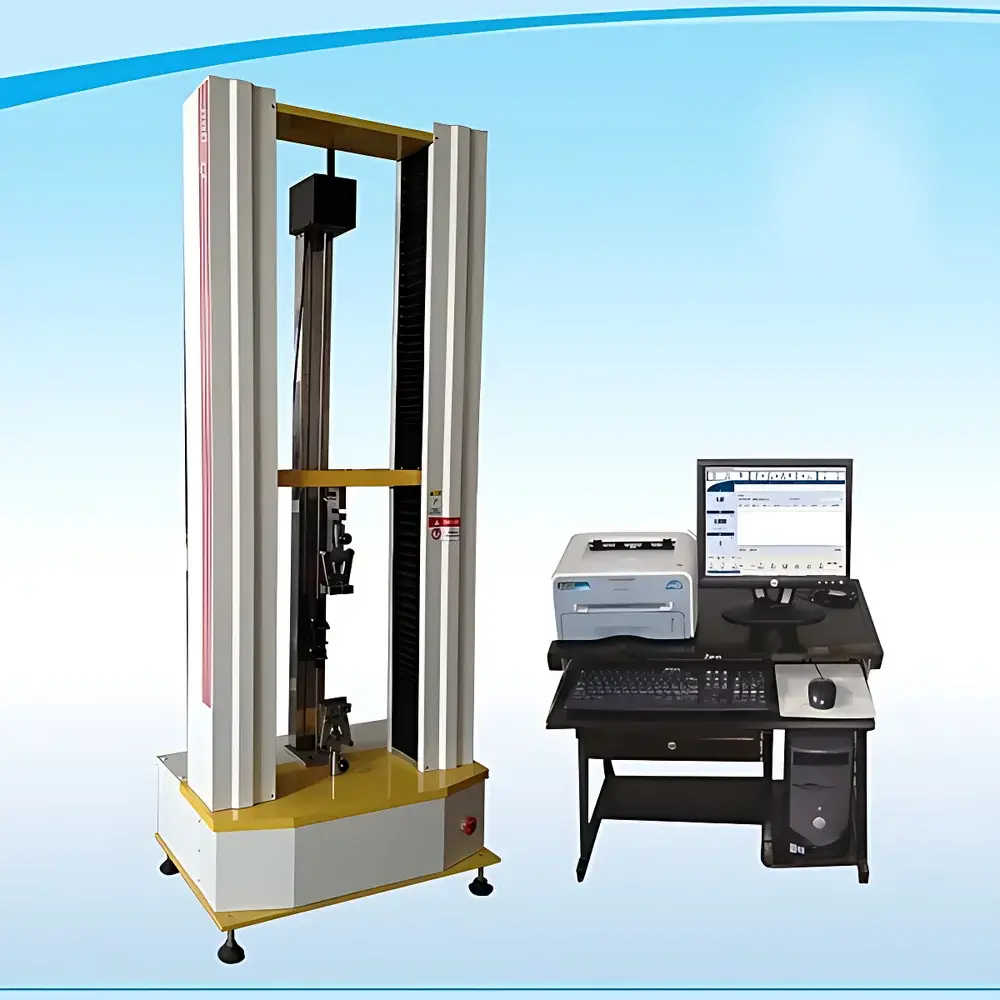
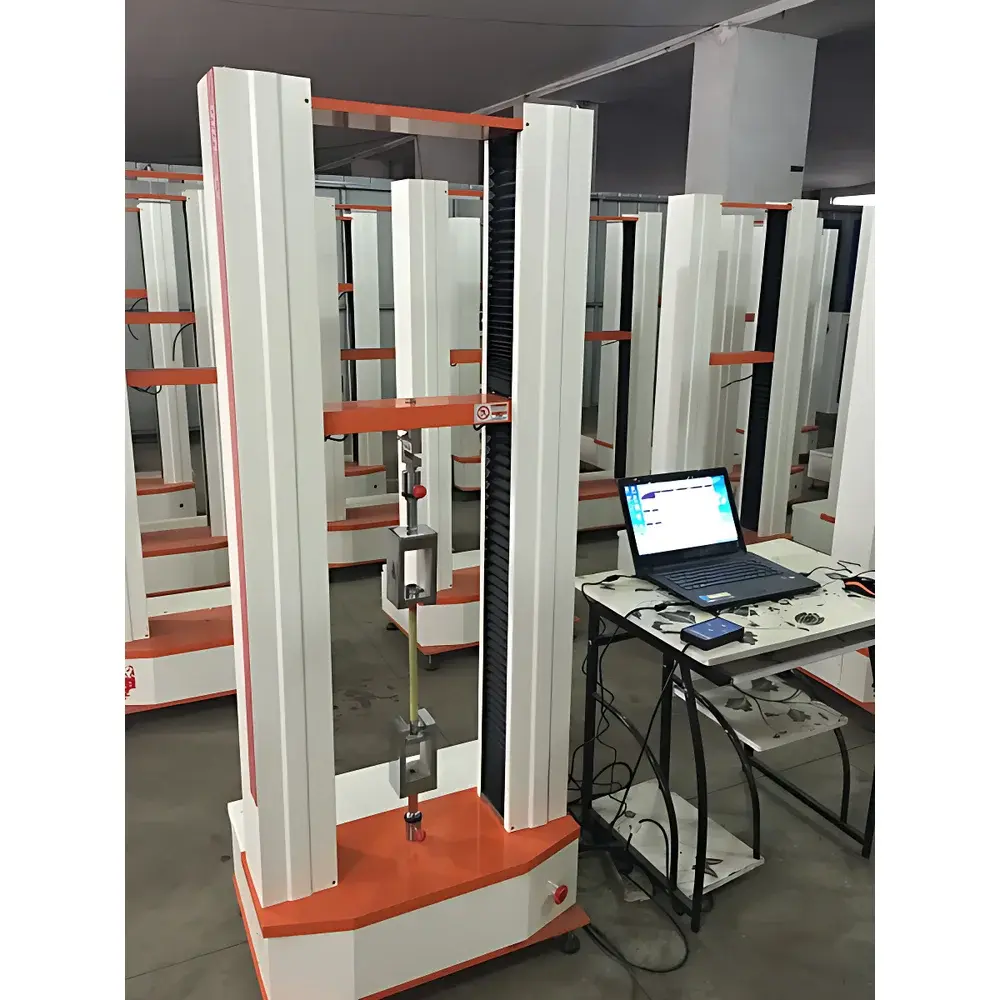
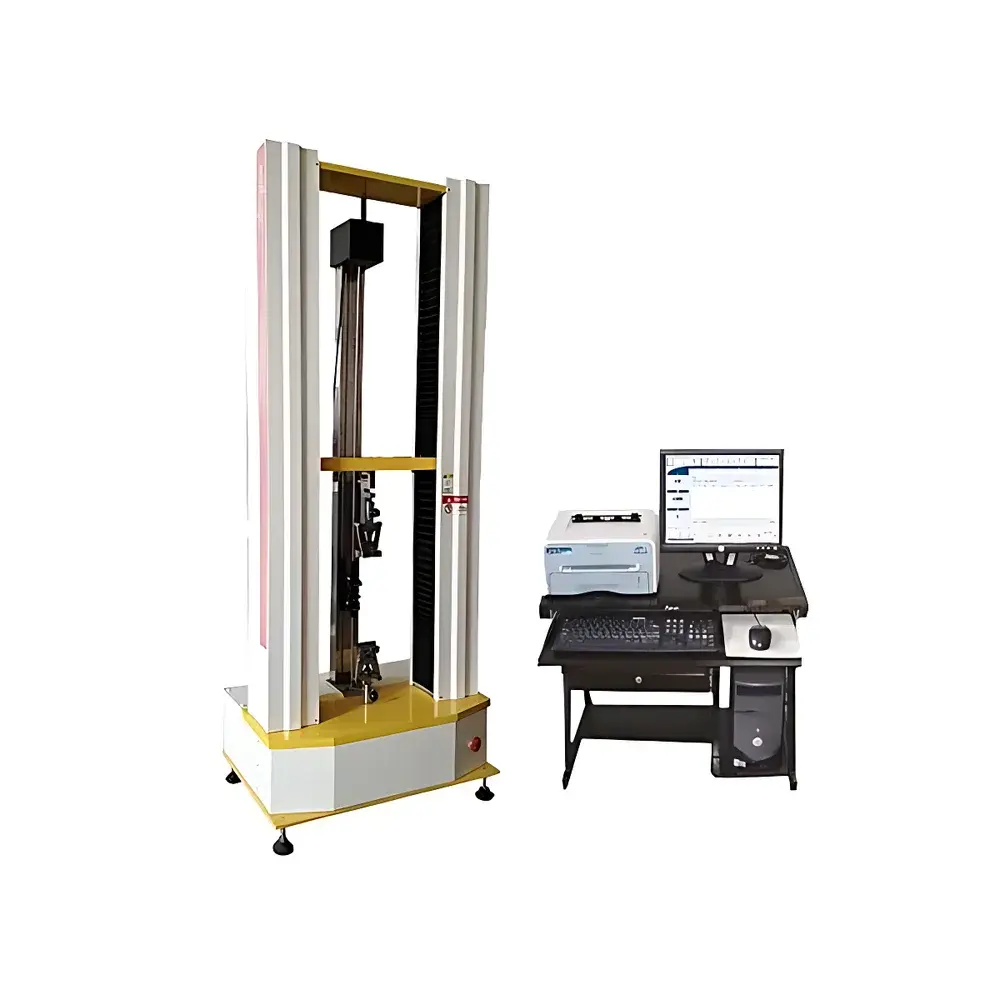
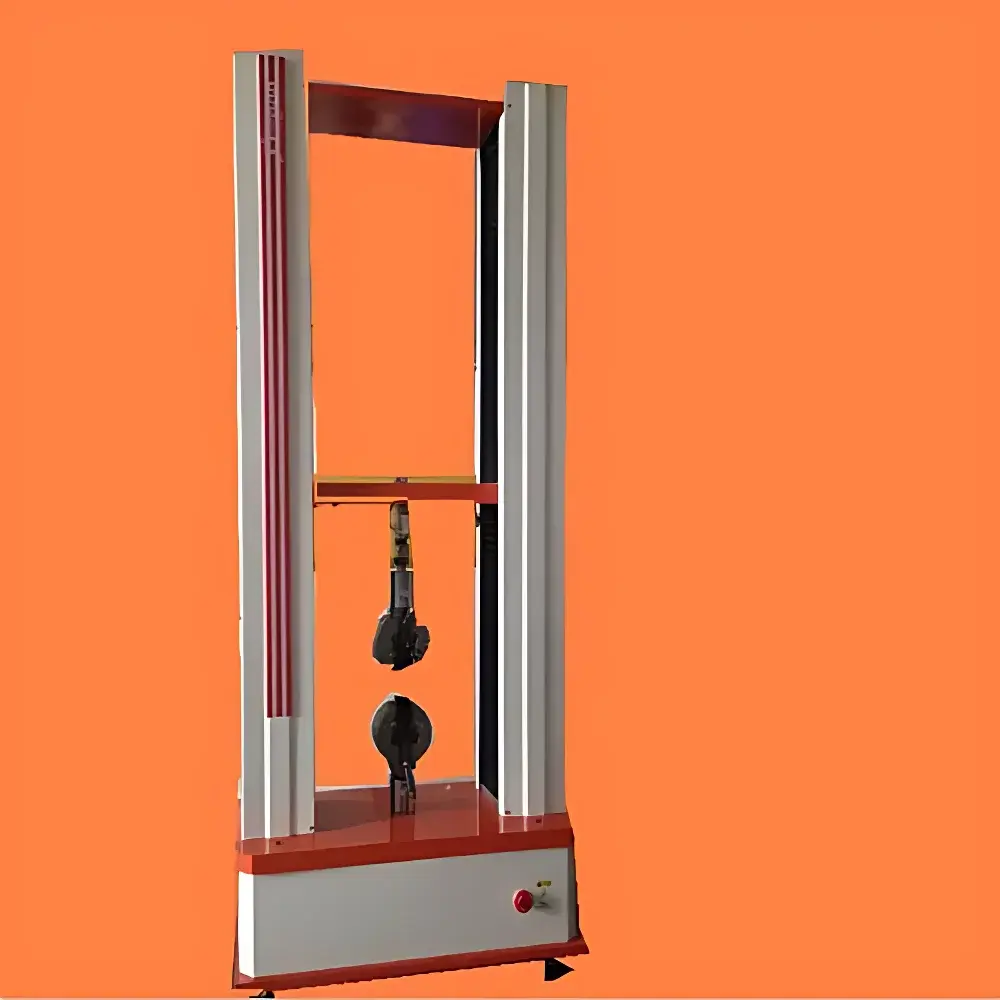
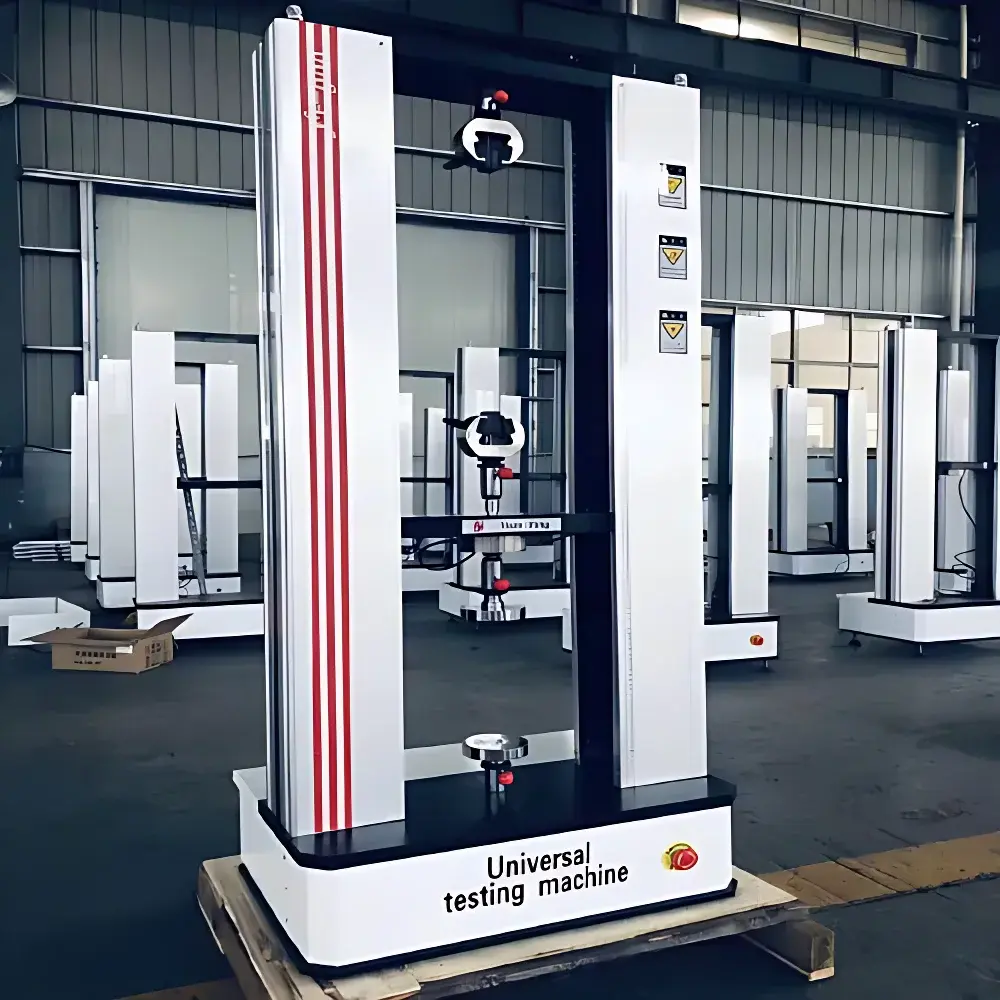
Beiguang Jingyi BWN*-50KN Electronic Tensile Testing Machine for Nonwoven Fabric Strength and Tear Evaluation
| Brand | Beiguang Jingyi / All Precision Instrument |
|---|---|
| Origin | Beijing, China |
| Manufacturer Type | Direct Manufacturer |
| Model | BWN*-50KN |
| Maximum Test Force | 50 kN |
| Force Measurement Accuracy | ±1% of full scale (FS) |
| Force Resolution | 1/300,000 FS |
| Displacement Resolution | 0.001 mm |
| Travel Range | 0–999 mm |
| Speed Range | 0.05–500 mm/min (infinitely variable) |
| Displacement Accuracy | Better than ±1% of reading |
| Power Supply | ~220 V ±10%, 50 Hz, 0.5 kW |
| Weight | 120 kg |
| Compliance | GB/T 16491–2008 (Class 1 Electronic Universal Testing Machine) |
| Safety Features | Dual-limit position protection, automatic overload stop (2–10% over capacity), post-fracture auto-stop |
Overview
The Beiguang Jingyi BWN*-50KN Electronic Tensile Testing Machine is a Class 1 universal testing system engineered for precise mechanical property characterization of nonwoven fabrics and a broad spectrum of soft and semi-rigid materials. It operates on the principle of controlled uniaxial force application via servo-controlled electromechanical actuation, with real-time acquisition of load, displacement, and strain data through high-stability load cells and optical encoder-based position feedback. Designed in strict accordance with GB/T 16491–2008 — the Chinese national standard equivalent to ISO 7500-1 and ASTM E4 for verification of static uniaxial testing machines — this instrument delivers traceable, reproducible measurements for tensile strength, tear resistance, elongation at break, Young’s modulus, yield point, and peel adhesion (90° and 180°). Its modular architecture supports interchangeable grips, environmental chambers, and extensometers, enabling standardized evaluation across R&D labs, QC departments, and third-party certification bodies serving medical textiles, filtration media, geotextiles, hygiene products, and automotive interior composites.
Key Features
- High-force capacity up to 50 kN with ±1% force accuracy across 2–100% of full scale, validated per GB/T 16491–2008 requirements for Class 1 systems.
- Ultra-fine displacement resolution of 0.001 mm and travel range of 0–999 mm, supporting both low-strain stiffness measurement and high-elongation rupture analysis.
- Infinitely variable crosshead speed from 0.05 to 500 mm/min, programmable in closed-loop force or displacement control modes with rate stability compliant with GB/T 16491–2008 (±2% for Class 1 under deformation control).
- Dual-stage safety architecture: hardware-based upper/lower limit switches prevent mechanical overtravel; software-configurable overload threshold (2–10% above rated capacity) triggers immediate motor shutdown.
- Robust cast-iron frame with precision-ground guide columns and preloaded ball screws ensures minimal deflection (<0.02 mm under full load) and long-term alignment stability.
- Integrated thermal management and electromagnetic shielding minimize drift and noise, critical for low-force tear initiation detection in lightweight nonwovens (e.g., spunbond PP, meltblown PET).
Sample Compatibility & Compliance
This tester accommodates specimens conforming to ISO 9073 (nonwovens), ASTM D5034 (grab tensile), ASTM D1117 (tear resistance), ISO 9073-4 (tensile strength), and GB/T 24218 (Chinese textile standards). Standard configurations include pneumatic flat grips (for films and fabrics), wedge-action grips (for fibers and yarns), peel fixtures (90°/180°), and compression platens. All test protocols are fully compatible with GLP-compliant workflows: audit trails, user access levels, electronic signatures, and raw data export (CSV, XML) support regulatory submissions under FDA 21 CFR Part 11 when paired with validated software. The system meets CE marking requirements for machinery safety (2006/42/EC) and EMC directive (2014/30/EU), with documentation provided for ISO/IEC 17025 laboratory accreditation.
Software & Data Management
The embedded control and analysis software provides ISO/IEC 17025-aligned test sequence definition, real-time curve overlay, multi-point modulus calculation (secant/tangent), and automated report generation per GB/T 228.1, ASTM D638, or custom templates. All raw analog-to-digital conversion data (load, displacement, time) are stored without interpolation at ≥1 kHz sampling rate. Software includes built-in calibration wizards compliant with GB/T 13634–2000 for force verification using certified reference load cells, and displacement validation per GB/T 13634–2000 using Class 1 dial indicators. Audit logs record operator ID, timestamp, parameter changes, calibration events, and test interruptions — essential for FDA 21 CFR Part 11 compliance in regulated manufacturing environments.
Applications
- Quantitative tear propagation resistance of surgical gowns, face masks, and wound dressings per ISO 9073-6 and YY/T 0506.3.
- Tensile strength and elongation profiling of hydroentangled, needle-punched, and thermal-bonded nonwovens used in diapers and feminine hygiene products.
- Peel adhesion assessment of laminated composite nonwovens (e.g., SMS structures) for barrier performance validation.
- Mechanical screening of biodegradable nonwovens (PLA, PHA) under accelerated aging conditions.
- Compression set and recovery behavior of nonwoven filter media subjected to cyclic loading.
- Quality conformance testing for automotive headliners, insulation pads, and battery separator substrates per OEM specifications (e.g., Ford WSS-M99P1111-A, GMW14872).
FAQ
What standards does this machine comply with for nonwoven testing?
It is fully compliant with GB/T 16491–2008 (Class 1), GB/T 24218 series, ISO 9073-4 (tensile), ISO 9073-6 (tear), and ASTM D5034/D1117. Calibration and verification procedures follow GB/T 13634–2000 and ISO 7500-1.
Can it perform both tensile and tear tests on the same specimen setup?
Yes — interchangeable fixtures (e.g., trapezoid tear jaws, grab tensile clamps, and constant-rate-of-traverse grips) allow rapid reconfiguration without recalibration, maintaining measurement traceability across test types.
Is the system suitable for ISO/IEC 17025 accredited laboratories?
Absolutely — with optional 21 CFR Part 11-compliant software, full audit trail, electronic signature capability, and documented uncertainty budgets for force and displacement, it satisfies key accreditation requirements for mechanical testing scopes.
What maintenance is required to sustain metrological validity?
Annual verification using certified reference load cells and displacement standards is recommended. Load cell zero drift and encoder linearity should be checked quarterly per internal SOPs aligned with ISO/IEC 17025 Clause 6.4.
Does the machine support environmental chamber integration?
Yes — the controller features analog I/O ports for external temperature/humidity chamber synchronization, enabling conditioned testing per ISO 139 (standard atmosphere) or custom climate profiles.



