
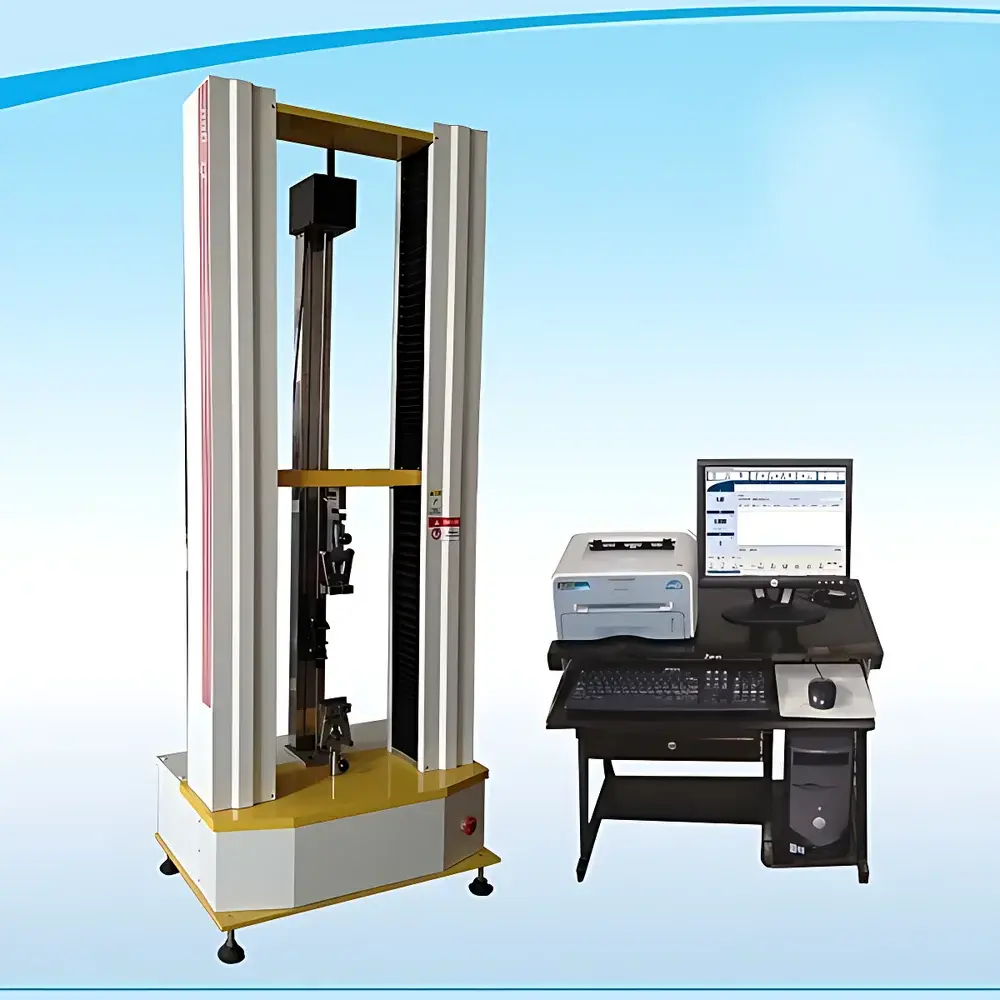
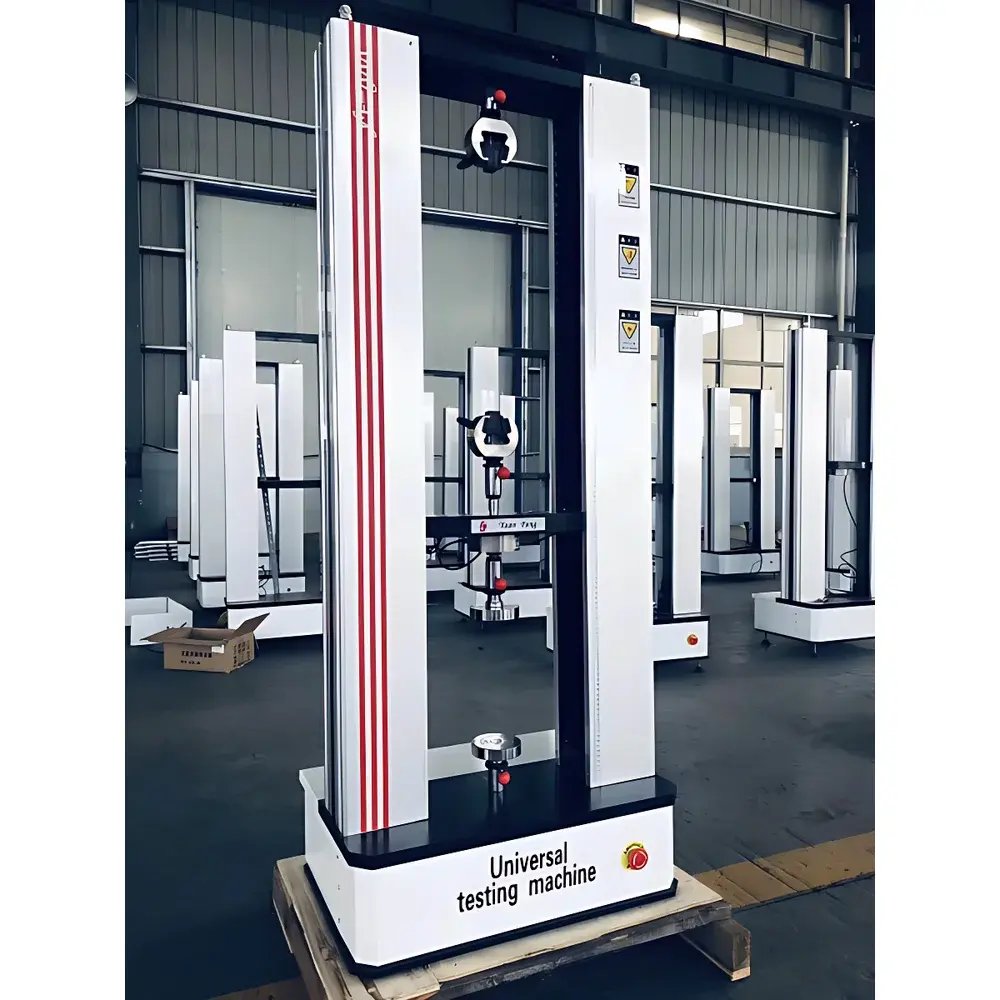
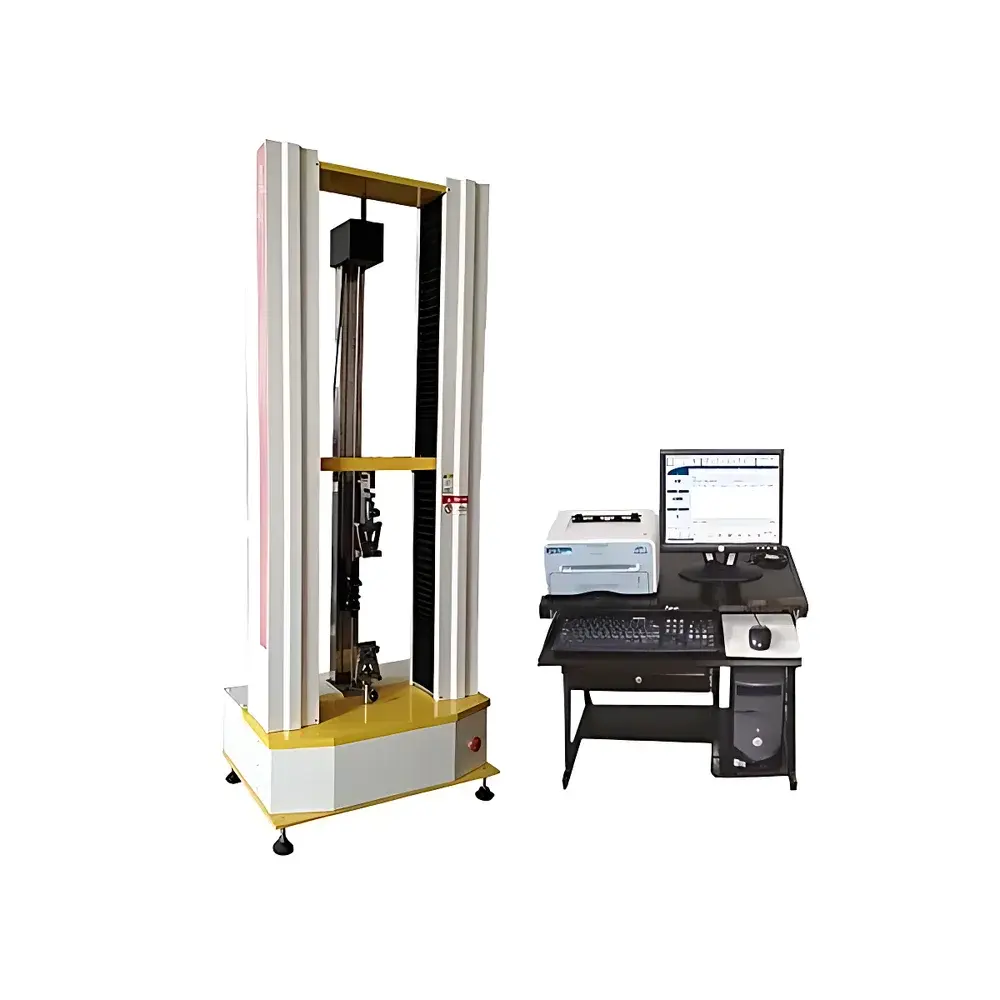
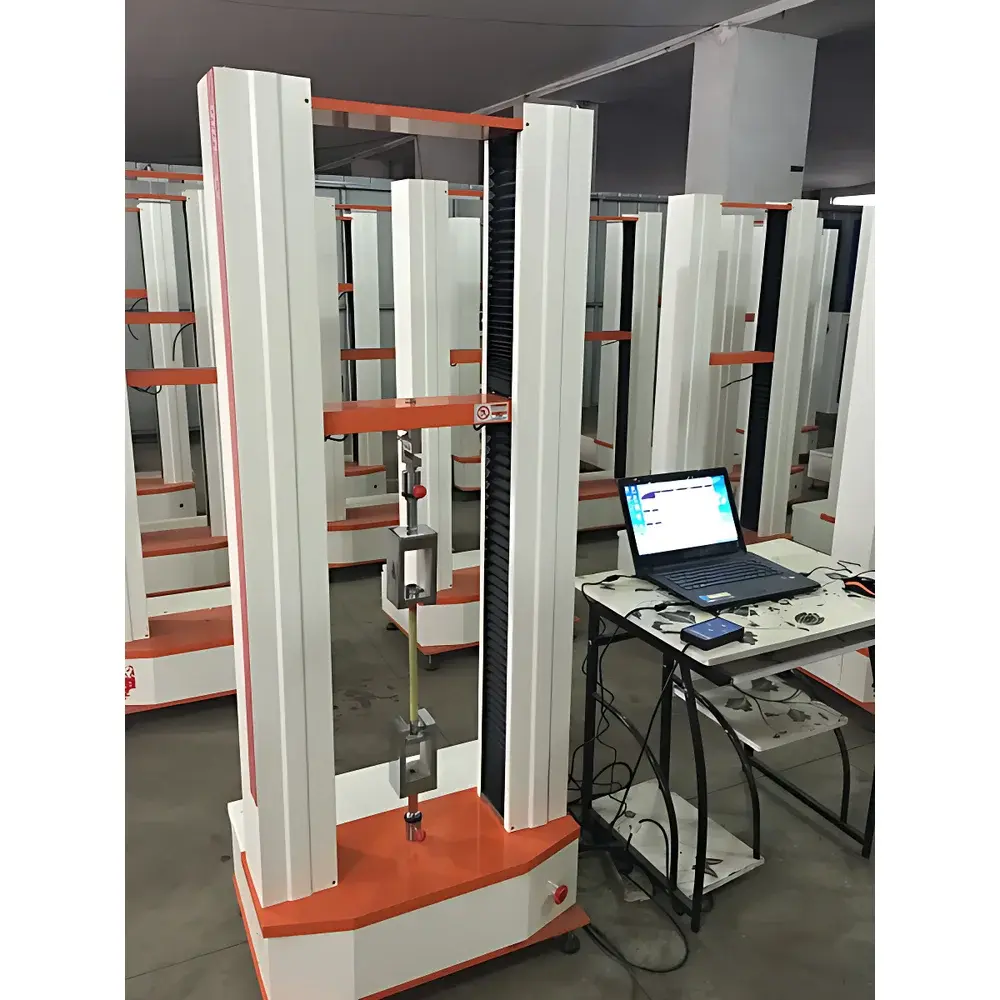
Beiguang Jingyi BWN-50N LCD-Display Digital Universal Testing Machine
| Brand | Beiguang Jingyi / All Precision Instrument |
|---|---|
| Origin | Beijing, China |
| Manufacturer Type | Direct Manufacturer |
| Product Category | Domestic |
| Model | BWN-50N |
| Instrument Type | Electromechanical Universal Testing Machine |
| Max Test Load | 0–50 N |
| Force Resolution | Constant across full scale |
| Force Measurement Range | 2%–100% of full scale |
| Force Accuracy | ±1% of indicated value |
| Crosshead Speed Range | 0.05–500 mm/min (infinitely variable) |
| Displacement Resolution | 0.01 mm |
| Speed Control Accuracy | ±0.5% |
| Displacement Accuracy | ±0.5% |
| Tensile Stroke | 0–1000 mm (excluding fixtures) |
| Power Supply | 220 V, 50 Hz |
Overview
The Beiguang Jingyi BWN-50N LCD-Display Digital Universal Testing Machine is an electromechanical force-testing system engineered for precision tensile, compression, bending, and shear characterization of low-force materials. It operates on the principle of servo-controlled crosshead displacement, where a high-fidelity load cell (50 N capacity, ±0.8% accuracy) transduces mechanical force into digital signals, while a precision ball-screw-driven actuation system ensures repeatable, linear motion under closed-loop control. Designed specifically for academic research laboratories, R&D centers, and QC/QA departments handling thin films, elastomers, biomedical polymers, textile fibers, adhesives, and micro-components, this dual-space testing machine delivers high reproducibility in sub-50 N regimes—critical for evaluating modulus, yield strength, elongation at break, and stress–strain linearity in compliance with ISO 527, ASTM D638, ASTM D882, and GB/T 228.01–2021. Its robust architecture eliminates hydraulic fluid contamination, noise, and maintenance overhead typical of older analog systems, enabling clean, quiet, and energy-efficient operation in shared lab environments.
Key Features
- High-accuracy 50 N load cell with ±0.8% full-scale linearity and integrated 16-bit A/D conversion for stable signal integrity across all four internal force ranges (0.25×/0.5×/0.75×/1× full scale)
- Full-range speed control from 0.05 to 500 mm/min with ±0.5% velocity regulation—enabled by a digital servo motor and precision planetary gear reducer
- LCD digital display console for standalone operation; optional Windows XP–based software interface supports real-time plotting, data logging, and parameter scripting
- Dual-mode crosshead adjustment: rapid coarse positioning + fine micrometer-style travel for precise specimen alignment
- Integrated safety suite including overload emergency stop, upper/lower travel limit switches, and automatic test termination upon fracture detection
- Standard test width: 350 mm; effective traverse distance: 950 mm (excluding grips); maximum tensile stroke: 1000 mm
- Optional extensometer support: large-deformation two-point extensometer with 1/100 resolution and ±1 mm accuracy for strain-sensitive protocols
Sample Compatibility & Compliance
The BWN-50N accommodates specimens ranging from ultra-thin polymer films (<10 µm) to rigid composite strips (up to 10 mm thick), provided appropriate grip configurations are selected—e.g., pneumatic flat grips, wedge-action clamps, or custom micro-fixtures. Its modular design allows seamless integration with ASTM E8/E8M-compliant dog-bone tensile bars, ISO 527 Type 1B dumbbells, and GB/T 1040 standard specimens. The system meets essential regulatory expectations for documented traceability: force calibration certificates conform to ISO/IEC 17025 guidelines; displacement verification follows JJG 475–2018 (Chinese national metrology regulation). While not inherently 21 CFR Part 11–compliant out-of-the-box, audit-ready data export (CSV, XML) and user-access logs can be implemented via third-party validation packages aligned with GLP/GMP workflows.
Software & Data Management
The embedded Windows XP–compatible software provides intuitive graphical setup, real-time curve visualization (force vs. displacement, stress vs. strain), and automated calculation of key mechanical parameters—including Young’s modulus, tensile strength, elongation at break, and yield offset (0.2%). All raw data streams are timestamped and stored with metadata (operator ID, sample ID, environmental notes). Export formats include CSV for statistical analysis in MATLAB or JMP, and image-capturable PNG plots for inclusion in peer-reviewed publications or internal reports. The system supports batch testing sequences with pre-defined test templates, reducing operator-induced variability. Though native software lacks electronic signature functionality, it exports structured data compatible with validated LIMS platforms supporting ALCOA+ principles (Attributable, Legible, Contemporaneous, Original, Accurate, Complete, Consistent, Enduring, Available).
Applications
This instrument serves as a primary mechanical characterization tool in multidisciplinary settings: polymer science labs evaluating thermoplastic elastomer hysteresis; biomedical engineering groups testing suture tensile integrity per USP ; packaging R&D validating seal strength of laminated pouches; textile institutes measuring yarn tenacity and loop strength; and electronics manufacturers verifying peel adhesion of flexible circuit overlays. Its low-force capability makes it especially suitable for quality screening of medical device components (e.g., catheter shafts, hydrogel coatings) and emerging 2D materials (graphene oxide films, MXene membranes), where conventional 1 kN+ UTM systems lack resolution and introduce excessive preload artifacts.
FAQ
Does the BWN-50N support ASTM D882 testing for thin plastic films?
Yes—the system’s 0.01 mm displacement resolution, sub-1% force accuracy, and adjustable gauge length capability meet all geometric and metrological requirements specified in ASTM D882–22.
Can test data be exported in a format compliant with laboratory audit standards?
Raw and processed data export as timestamped CSV files with full metadata; integration with validated LIMS or ELN systems enables adherence to ALCOA+ and ISO 17025 documentation rigor.
Is external calibration traceable to national standards available?
Factory calibration is performed using NIST-traceable deadweight standards; accredited third-party recalibration services (CNAS-certified) are supported per ISO/IEC 17025.
What is the recommended maintenance interval for the servo drive and load cell?
Under normal usage (≤4 hrs/day), annual verification of load cell linearity and crosshead speed fidelity is advised; no routine lubrication of the ball-screw assembly is required due to sealed pre-greased design.
Can the machine operate without a PC connection?
Yes—the front-panel LCD display enables manual mode operation with preset speed/load limits, though advanced analysis and reporting require the Windows-based software module.



