
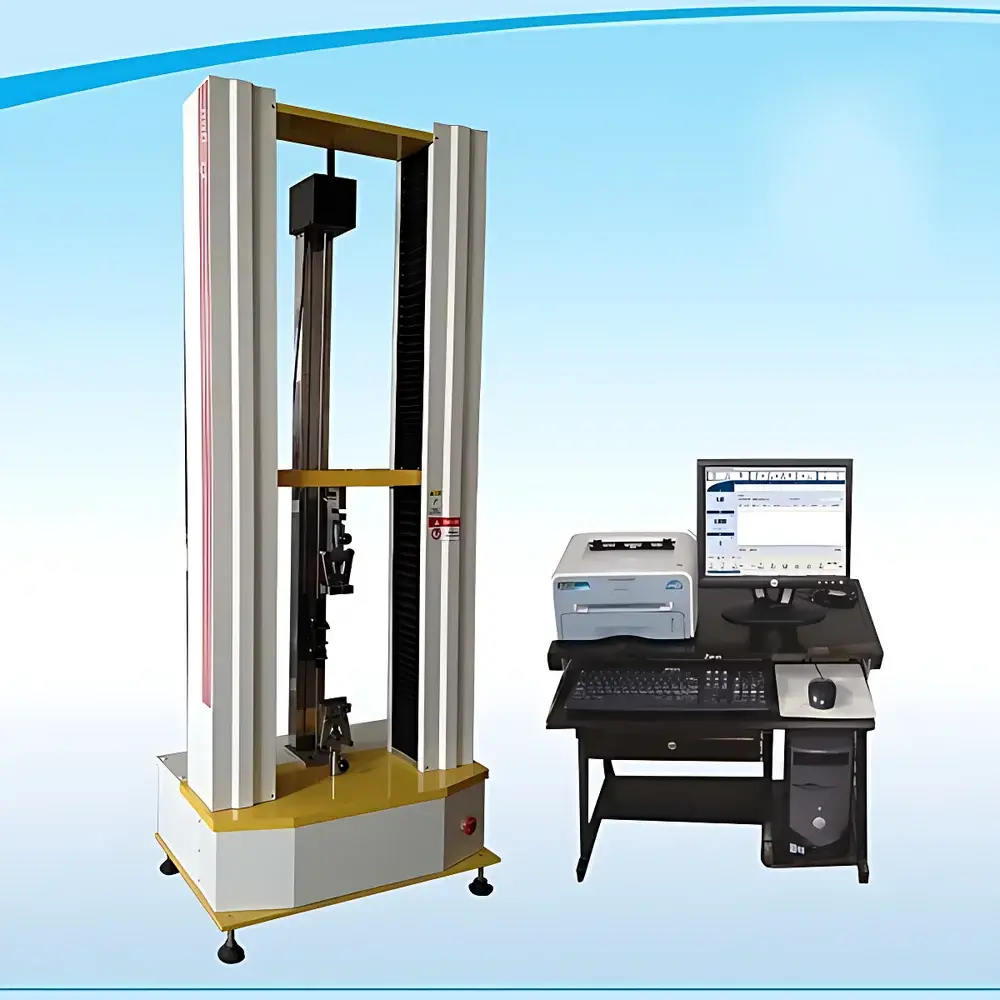
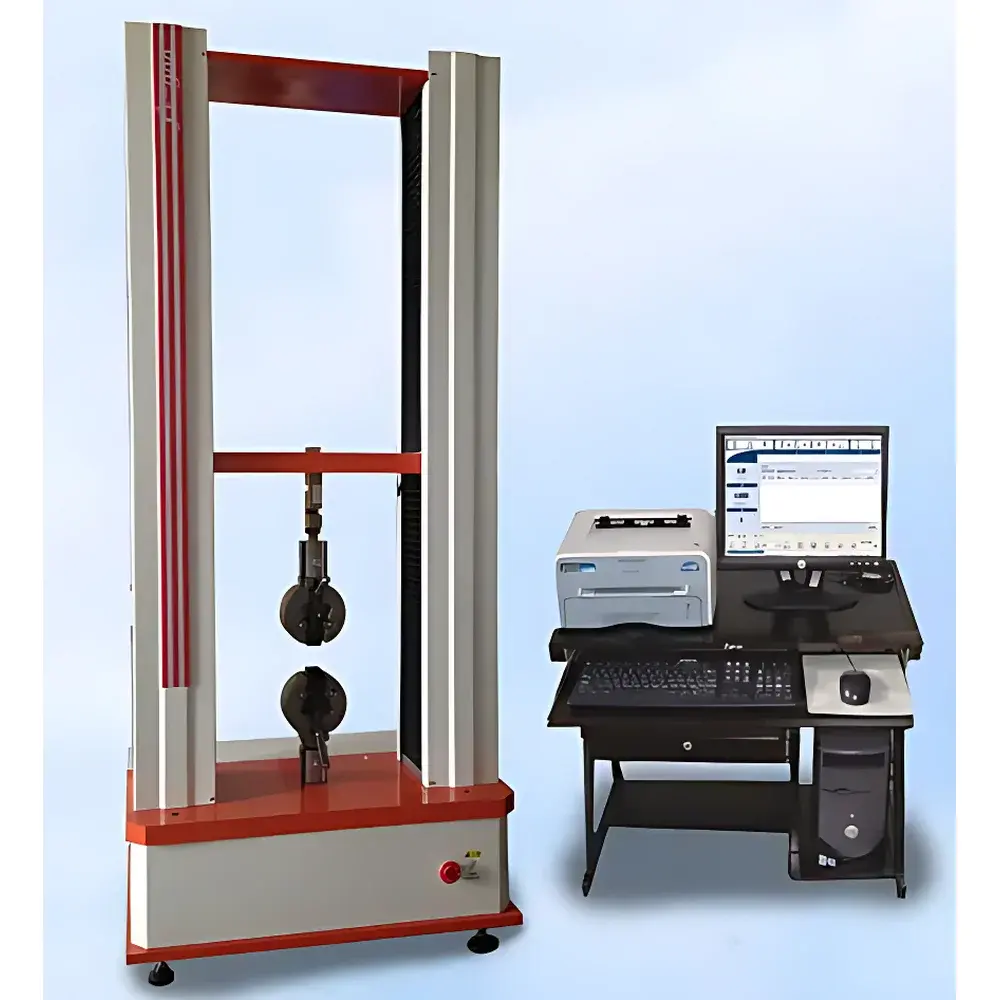
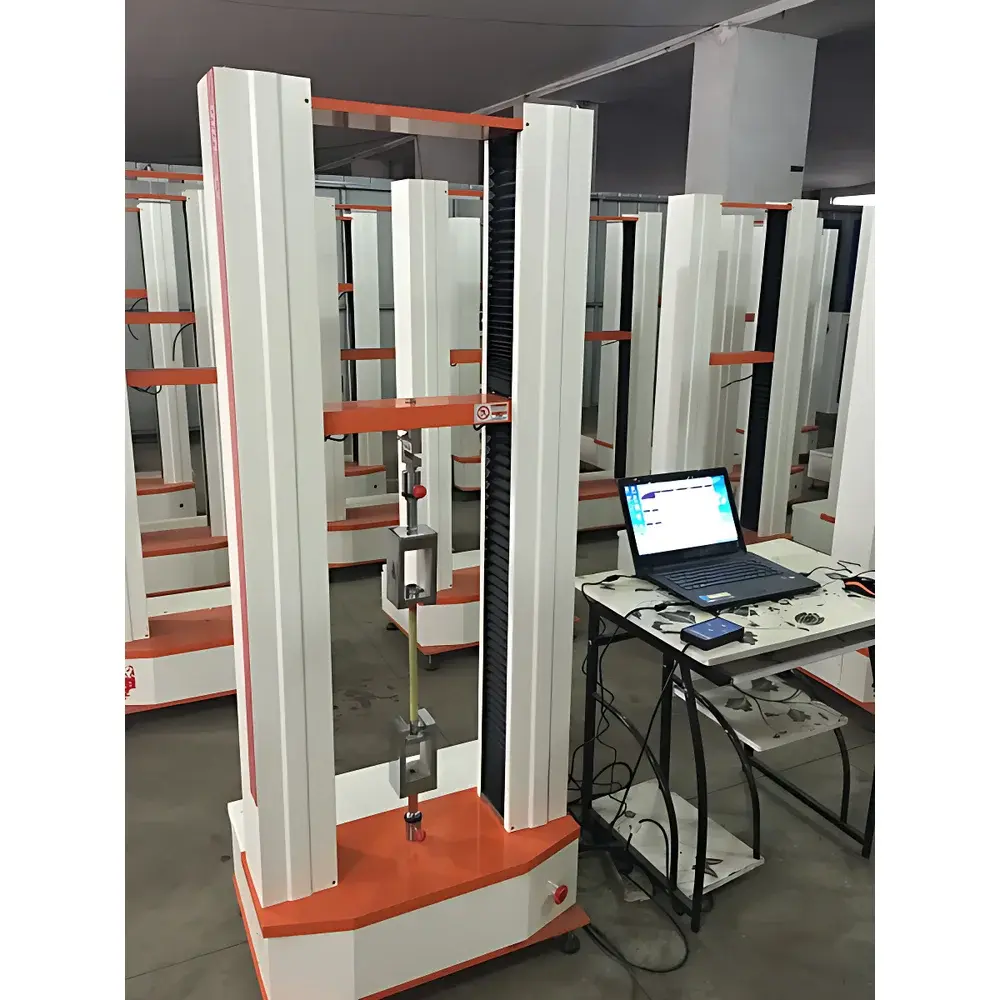
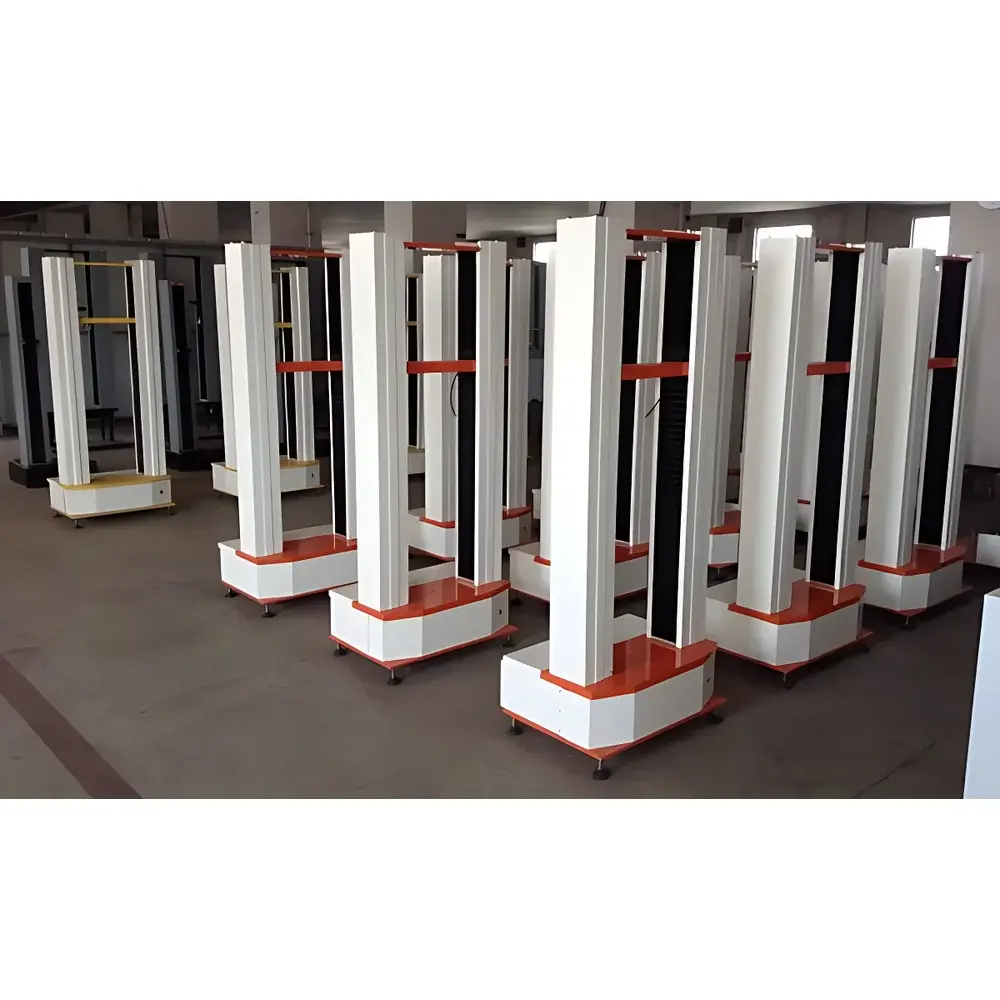
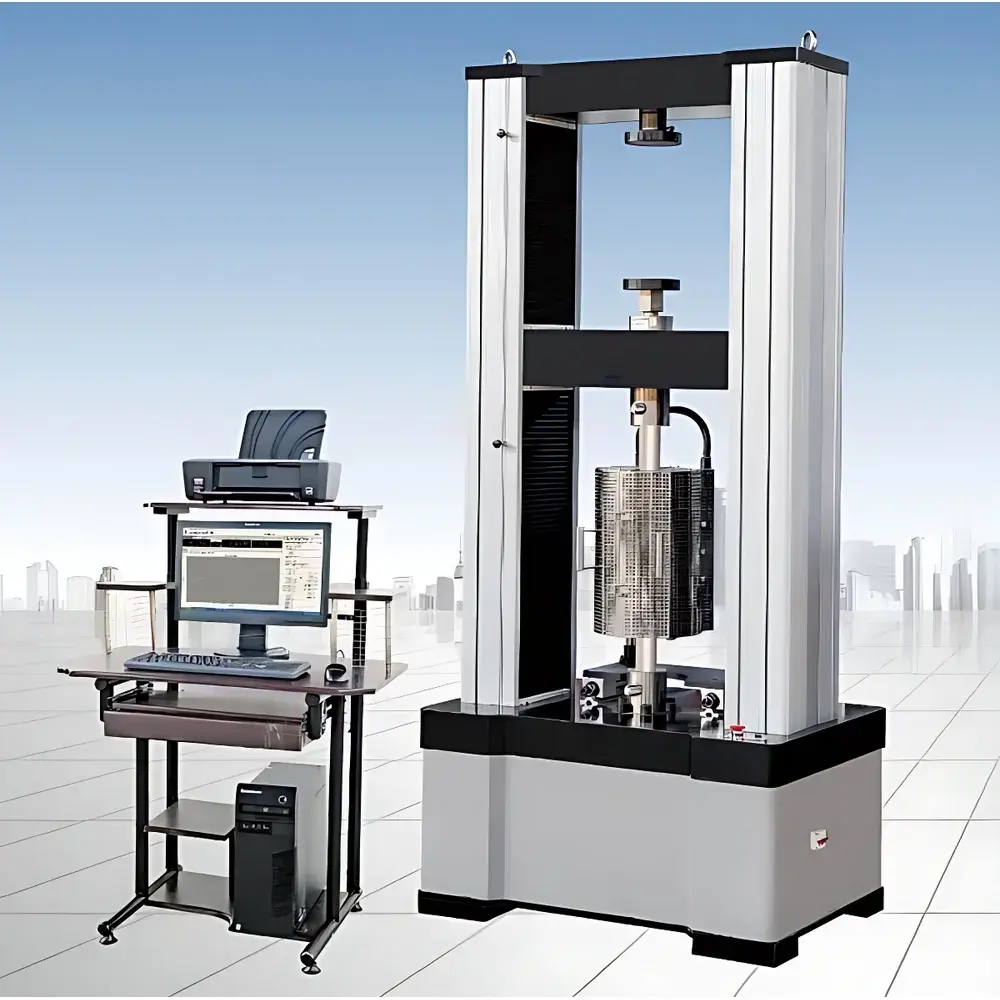
Beiguang Jingyi BWN Series Universal Testing Machine for Rubber and Plastics
| Brand | Beiguang Jingyi / All Precision Instrument |
|---|---|
| Origin | Beijing, China |
| Manufacturer Type | Direct Manufacturer |
| Instrument Type | Electronic Universal Testing Machine |
| Maximum Test Load | 0–300 kN |
| Accuracy Class | Class 1 |
| Force Measurement Error Limit | ±1% of reading |
| Force Resolution | 1/200,000 of full scale |
| Displacement Resolution | 0.01 mm |
| Displacement Speed Range | 0.05–300 mm/min |
| Effective Tensile Stroke | 700 mm |
| Compliance | ASTM D412, D638, D790, ISO 37, ISO 527, ISO 178, GB/T 1040, GB/T 528 |
Overview
The Beiguang Jingyi BWN Series Universal Testing Machine is an electromechanical testing system engineered for high-reproducibility mechanical characterization of polymeric materials—including thermoplastics, elastomers, vulcanized rubber compounds, and reinforced composites. It operates on the principle of controlled uniaxial force application via servo-driven crosshead displacement, enabling precise measurement of tensile strength, elongation at break, modulus (e.g., Young’s, secant), yield point, compressive yield stress, flexural properties, and tear resistance. The system integrates a rigid dual-column or single-column frame architecture with high-precision load cells, optical encoder-based displacement feedback, and closed-loop digital control—ensuring traceable, repeatable, and standards-compliant mechanical data acquisition across laboratory, QC, and R&D environments.
Key Features
- Modular frame design: Available in single-column (for low-force applications ≤5 kN) and dual-column configurations (up to 300 kN), optimized for stability under high-load static and dynamic testing.
- High-fidelity force measurement: Strain-gauge-based load cell with Class 1 accuracy per ISO 7500-1; force resolution of 1 part in 200,000 full scale; calibrated range spans 2–100% FS with linearity error ≤±1%.
- Precision motion control: AC servo motor coupled to preloaded ball screws and harmonic reduction gearing delivers displacement resolution of 0.01 mm and speed regulation from 0.05 to 300 mm/min (±0.5% accuracy above 1 mm/min).
- Dual-channel real-time acquisition: Simultaneous synchronized sampling of load, displacement, and extensometer-derived strain (optional) at up to 1 kHz, supporting ASTM E4 and ISO 5893 compliance for dynamic test protocols.
- Hardware-level safety architecture: Dual-stage overload protection (mechanical limit switches + programmable electronic cutoff at 103–105% of set load), emergency stop circuitry, and software-enforced travel limits.
- Standardized test automation: Preconfigured test methods for ASTM D638 (tensile), D412 (rubber tension), D790 (flexure), ISO 37 (vulcanized rubber), and GB/T 1040 series—fully editable and user-extensible.
Sample Compatibility & Compliance
The BWN series accommodates standardized dumbbell, dog-bone, and strip specimens per ISO 37, ASTM D412 Type A/C, and GB/T 528—as well as compression plates (ISO 7743), three-point bend fixtures (ISO 178), and peel/adhesion tooling (ASTM D903). Its modular grip system supports pneumatic, wedge, screw-action, and hydraulic clamping—enabling secure fixation of low-modulus elastomers and high-strength engineering plastics without slippage or premature failure. All mechanical measurements conform to ISO 17025 calibration traceability requirements when used with accredited force calibration kits. System validation documentation supports GLP/GMP audit readiness, including instrument qualification (IQ/OQ/PQ) templates aligned with FDA 21 CFR Part 11 data integrity expectations.
Software & Data Management
MaxTest software operates natively under Windows XP and later (32-/64-bit compatible) and provides a validated, role-based interface for test definition, execution, and reporting. Core capabilities include: automatic method sequencing with conditional branching (e.g., “hold at 50% strain for 60 s, then ramp to failure”), real-time curve overlay of multiple specimens, statistical analysis (mean, SD, CV%, confidence intervals), and automated report generation in PDF/XLS formats compliant with internal SOPs or external regulatory submissions. Audit trails record all parameter changes, user logins, calibration events, and raw data modifications—meeting ALCOA+ principles (Attributable, Legible, Contemporaneous, Original, Accurate, Complete, Consistent, Enduring, Available). Data export supports CSV, XML, and universal .udm binary formats for third-party analysis in MATLAB, Python (NumPy/Pandas), or Minitab.
Applications
This system serves as a primary mechanical testing platform in polymer formulation labs (e.g., optimizing cure systems in EPDM or silicone elastomers), quality control departments (incoming raw material verification per ASTM D2000 specifications), and failure analysis units (root-cause investigation of brittle fracture in injection-molded PP parts). Typical use cases include: quantifying tensile set recovery in automotive weatherstrips; evaluating creep compliance of PVC pipe compounds per ASTM D2990; determining flexural modulus of carbon-fiber-reinforced PEEK; validating biodegradation-induced embrittlement in PLA films; and performing cyclic loading tests on TPU medical tubing per ISO 10993-12. Its broad force range and configurable fixtures also support non-standard applications such as foam compression set (ASTM D3574) and geotextile grab strength (ASTM D4632).
FAQ
What standards does this machine directly support out-of-the-box?
Preloaded test templates cover ASTM D638, D412, D790, D3574, ISO 37, ISO 527, ISO 178, ISO 7743, and GB/T 1040, GB/T 528, GB/T 9341—each with default parameters, pass/fail criteria, and reporting fields aligned with standard clauses.
Is the system compliant with FDA 21 CFR Part 11 for regulated environments?
Yes—when deployed with enabled electronic signatures, audit trail logging, and user access controls (administrator/operator/technician roles), MaxTest satisfies core Part 11 requirements for electronic records and signatures in pharmaceutical and medical device manufacturing.
Can I integrate an extensometer for true strain measurement?
Absolutely—the system features dedicated analog and digital input channels for contacting or non-contacting extensometers (e.g., video-based or clip-on LVDT types), with automatic switching between crosshead and extensometer displacement during yield detection.
What maintenance is required to sustain measurement accuracy?
Annual force calibration using NIST-traceable deadweight standards and biannual verification of encoder linearity and screw backlash are recommended. Full calibration certificates (including uncertainty budgets) are issued post-service.
Does the machine support multi-step programmed tests (e.g., preconditioning → hold → ramp)?
Yes—via the “Programmed Control” module, users define time- or displacement-triggered sequences with up to 16 independent steps, each specifying target load/displacement, rate, dwell duration, and termination logic.



