
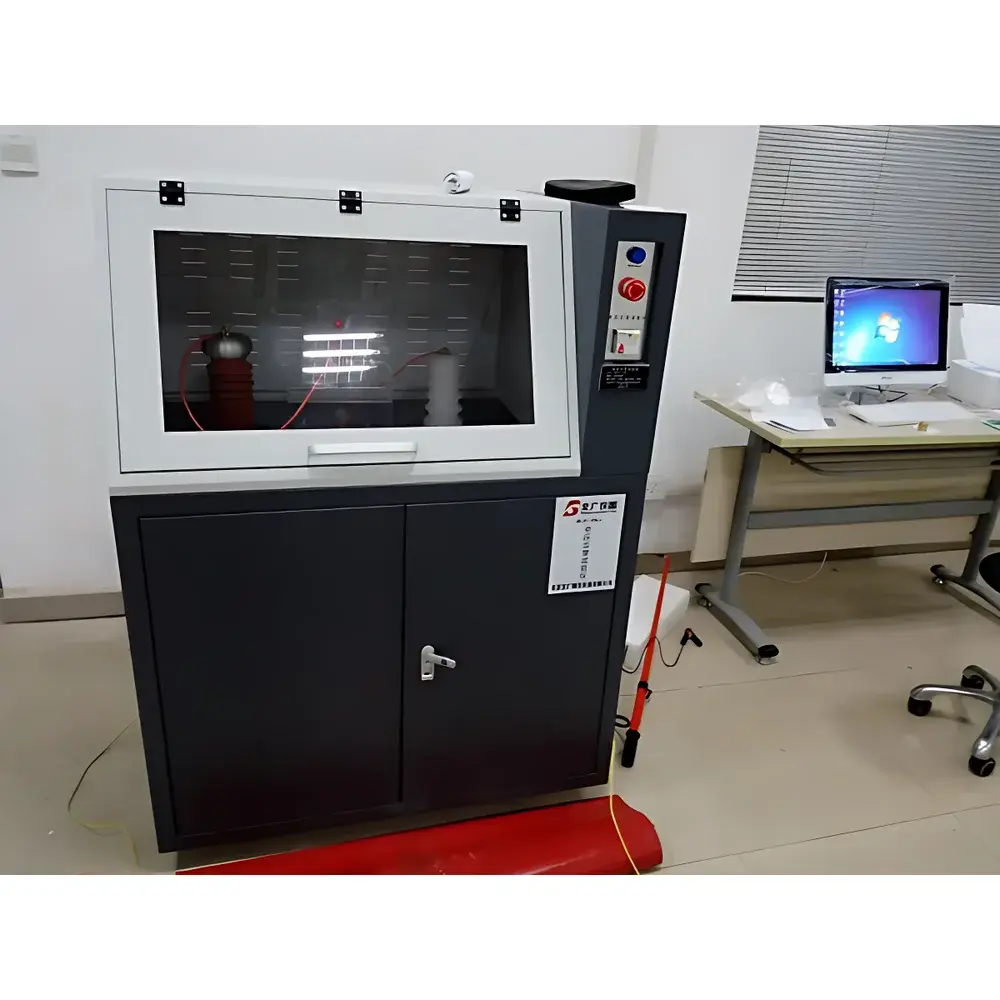
Beiguang Precision BDJC-50KV Dielectric Breakdown Voltage Tester
| Brand | Beiguang Precision Instrument |
|---|---|
| Origin | Beijing, China |
| Manufacturer Type | Direct Manufacturer |
| Model | BDJC-50KV |
| Maximum Output Voltage | 50 kV AC/DC |
| Voltage Measurement Accuracy | ≤ ±2% |
| Ramp Rate | 0.1–10 kV/s |
| Power Output | 50 kVA |
| Compliance Standards | GB 1408.1–2006, GB 1408.2–2006, GB/T 1695–2005, ASTM D149 |
Overview
The Beiguang Precision BDJC-50KV Dielectric Breakdown Voltage Tester is an industrial-grade high-voltage testing system engineered for precise determination of dielectric strength and withstand voltage performance of solid insulating materials under standardized AC or DC stress conditions. Based on the principle of controlled voltage ramping until electrical breakdown occurs across a defined electrode gap, the instrument measures the critical electric field intensity (kV/mm) at which insulation failure initiates—enabling quantification of material robustness against electrical overstress. Designed for compliance-driven laboratories in power equipment manufacturing, polymer R&D, aerospace composites development, and quality assurance departments, the system operates within strict adherence to international test methodologies including IEC 60243 (equivalent to ASTM D149), GB/T 1408 series, and ISO 60243. Its dual-mode capability (AC/DC) supports both routine production-line screening and advanced material qualification where polarity-dependent conduction mechanisms must be evaluated.
Key Features
- Full computer-controlled operation with real-time voltage/current acquisition, enabling programmable ramp profiles, automatic breakpoint detection, and synchronized data logging at ≥1 kHz sampling rate.
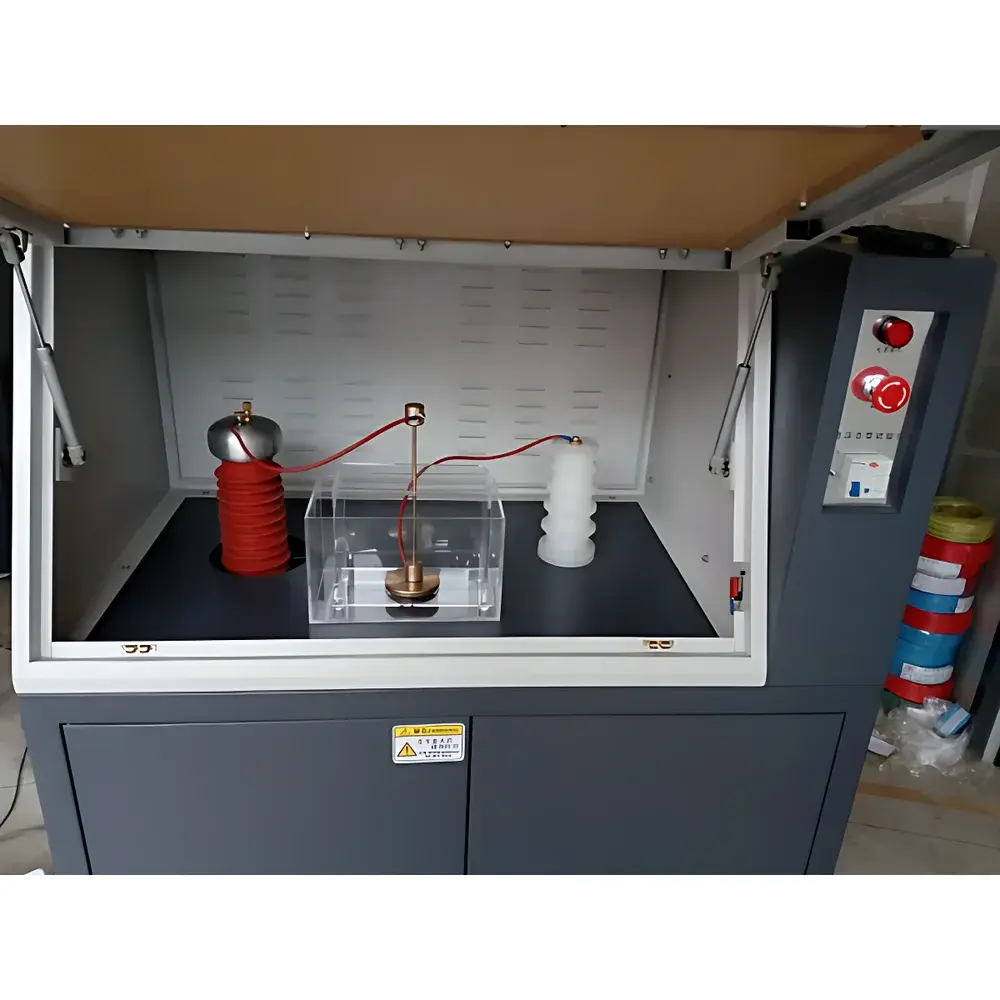
- Dual-output architecture: AC 0–50 kV RMS / DC 0–50 kV (pulsating), selectable via mechanical shorting rod insertion in the high-voltage transformer tower—ensuring traceable polarity configuration per test standard requirements.
- Integrated safety architecture featuring ten-tier protection: overvoltage cutoff, overcurrent interruption (<0.1 s response), interlocked test chamber door switch, zero-voltage reset upon trip, independent grounding terminal, automatic discharge circuitry (with audible/visual indicators), and software-enforced operational lockout during unsafe states.
- High-fidelity measurement subsystem with calibrated digital voltmeter (±2% full-scale accuracy) and precision current sensing (1 µA resolution), referenced to NIST-traceable calibration protocols.
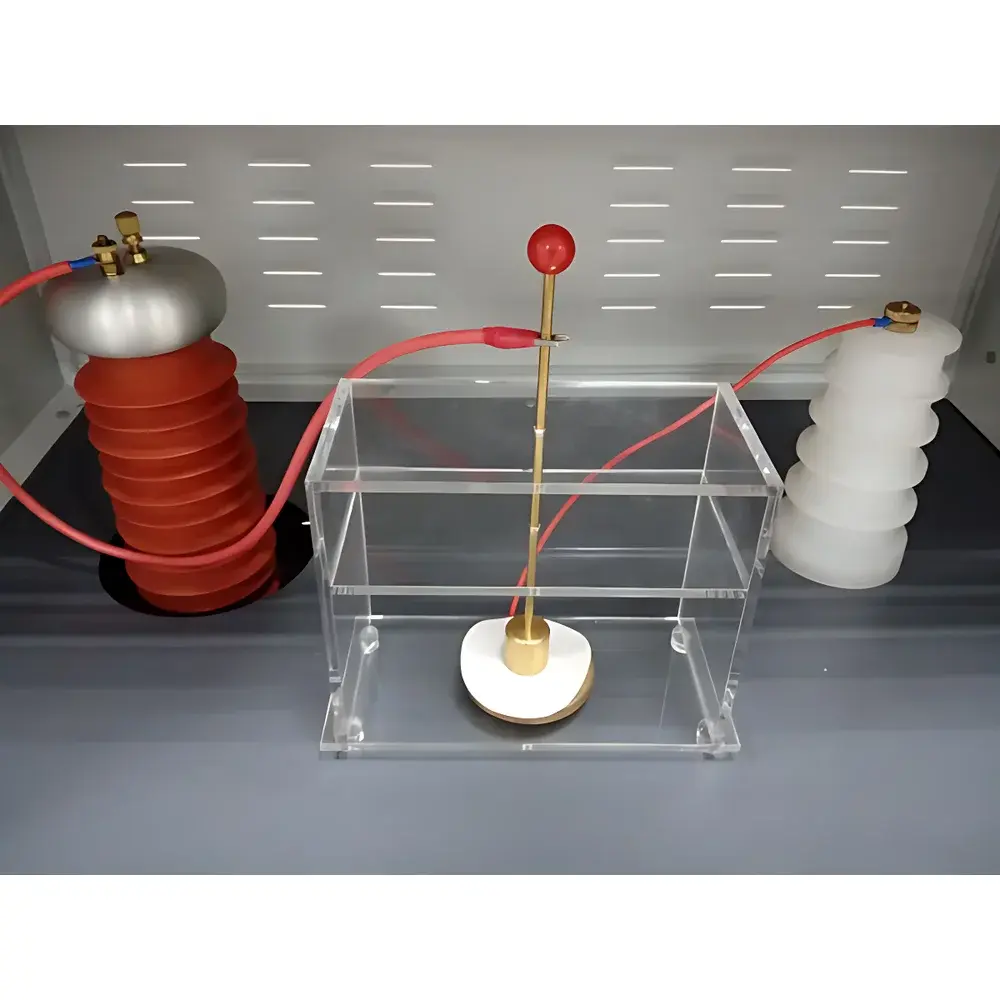
- Modular electrode set compliant with GB 1408.1–2006: two 25 mm diameter × 25 mm height brass electrodes and one 75 mm diameter × 25 mm height electrode, supplied with silicone oil immersion cell and alignment fixtures.
- Continuous-duty thermal management system permitting uninterrupted operation over extended test cycles (up to 7 hours at rated voltage without derating).
Sample Compatibility & Compliance
The BDJC-50KV accommodates rigid and semi-rigid dielectrics including thermoset resins, epoxy-coated laminates, ceramic substrates, glass-reinforced plastics, polymeric films, mica-based composites, and vulcanized rubber compounds. Specimens are mounted between parallel-plane electrodes under controlled environmental conditions (temperature: 23 ± 2°C; relative humidity: <70% RH recommended). All test procedures align with regulatory frameworks governing electrical safety certification—including UL 746, IEC 60674, and EN 60243—and support audit readiness for ISO/IEC 17025-accredited laboratories. The system’s firmware embeds configurable pass/fail thresholds, automatic report generation per test standard clause, and optional 21 CFR Part 11-compliant electronic signature modules for GMP/GLP environments.
Software & Data Management
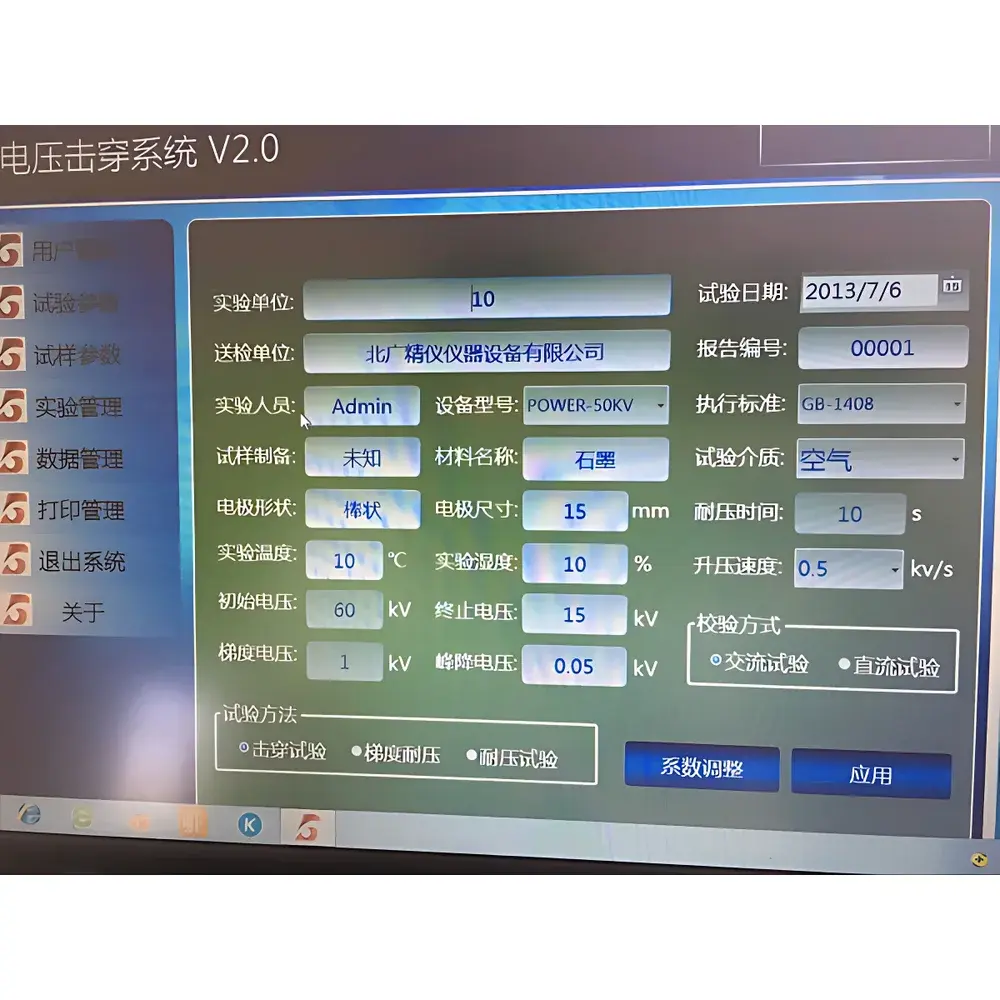
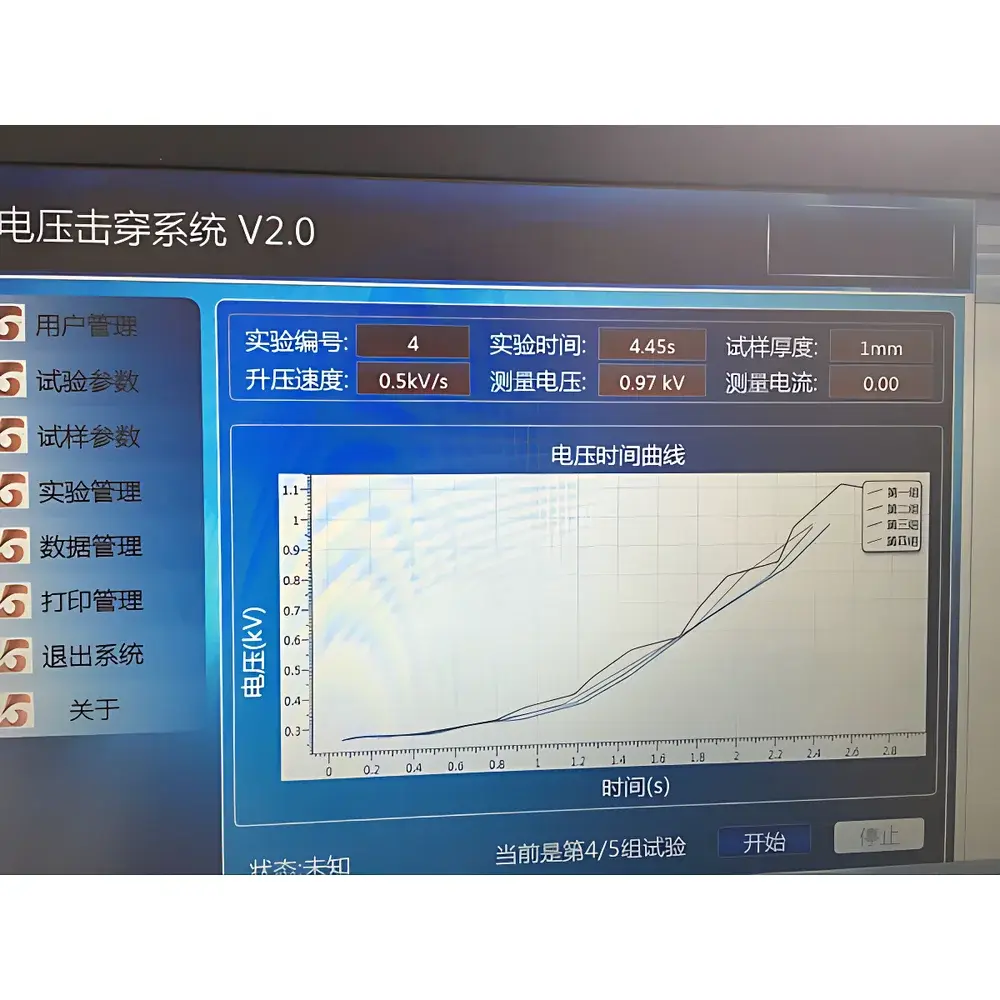
The proprietary test control software provides a validated Windows-based interface supporting multi-user role assignment, audit trail logging (user actions, parameter changes, test initiation/termination timestamps), and encrypted database storage. Real-time Lissajous-type breakdown curve visualization allows overlay comparison of up to six concurrent tests using color-coded traces. Raw data exports to CSV, Excel (.xlsx), and Word (.docx) formats preserve metadata integrity—including electrode geometry, ambient conditions, ramp rate, time-to-breakdown, and peak leakage current. Built-in statistical analysis tools compute mean breakdown voltage, Weibull distribution parameters, and confidence intervals (95%) per ASTM D3418 guidelines. Software updates are delivered via secure HTTPS channel with SHA-256 hash verification.
Applications
This tester serves critical functions across multiple sectors: evaluating insulation integrity of transformer bushings and cable terminations; qualifying encapsulation materials for high-voltage semiconductor packaging; validating arc resistance of PCB substrate laminates (e.g., FR-4, polyimide); assessing aging effects on polymer dielectrics under accelerated voltage stress; and supporting failure analysis of electrostatic discharge (ESD)-sensitive components. In academic research, it enables correlation studies between molecular structure (e.g., crosslink density, filler dispersion) and macroscopic dielectric performance—facilitating predictive modeling of long-term insulation reliability per IEEE Std 930.
FAQ
What voltage standards does the BDJC-50KV comply with?
It meets GB 1408.1–2006, GB 1408.2–2006, GB/T 1695–2005, and ASTM D149, with optional configuration for IEC 60243 and UL 746 testing protocols.
Can the system perform both AC and DC breakdown tests on the same specimen?
Yes—by physically reconfiguring the high-voltage transformer’s internal shorting rod and selecting the corresponding mode in software, users can conduct sequential AC and DC tests while maintaining identical specimen geometry and environmental conditions.
Is manual discharge required after DC testing?
Yes. A dedicated grounding wand is provided for operator-initiated discharge of the HV sphere prior to chamber access; automated discharge occurs only when the safety door is opened post-test.
How is measurement traceability maintained?
Voltage transducers are calibrated annually against primary standards from CNAS-accredited labs; calibration certificates include uncertainty budgets and as-found/as-left data per ISO/IEC 17025 requirements.
Does the system support custom test sequences for multi-step stress profiling?
Yes—the software allows defining step-stress, ramp-hold, or staircase protocols with user-defined voltage levels, dwell times, and pass/fail logic per step.



