
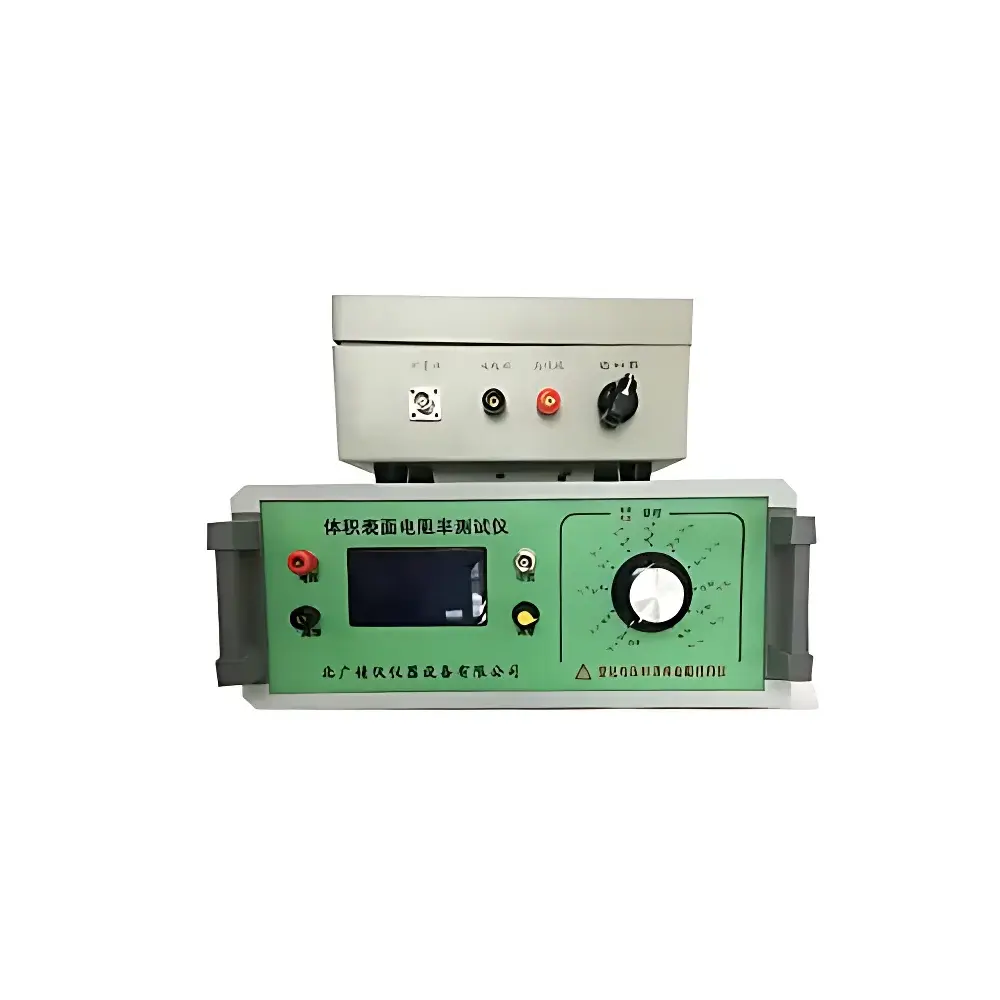
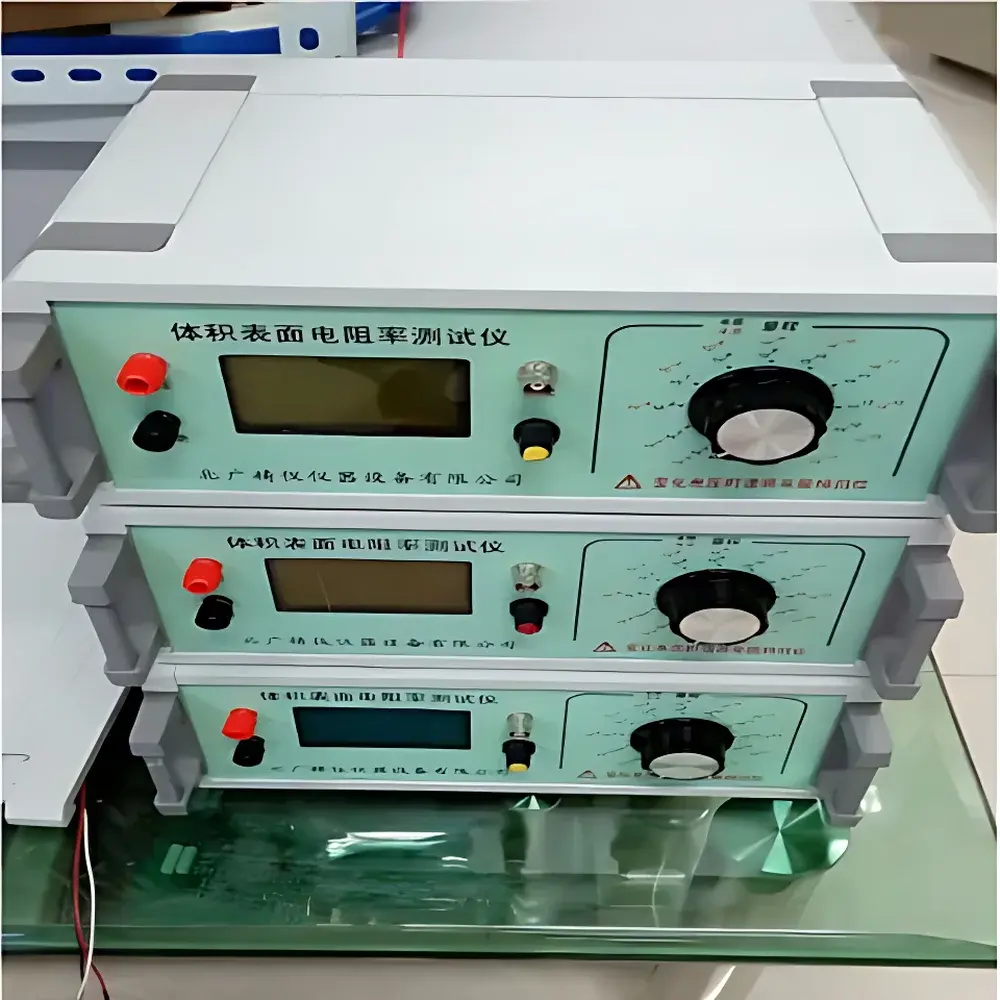
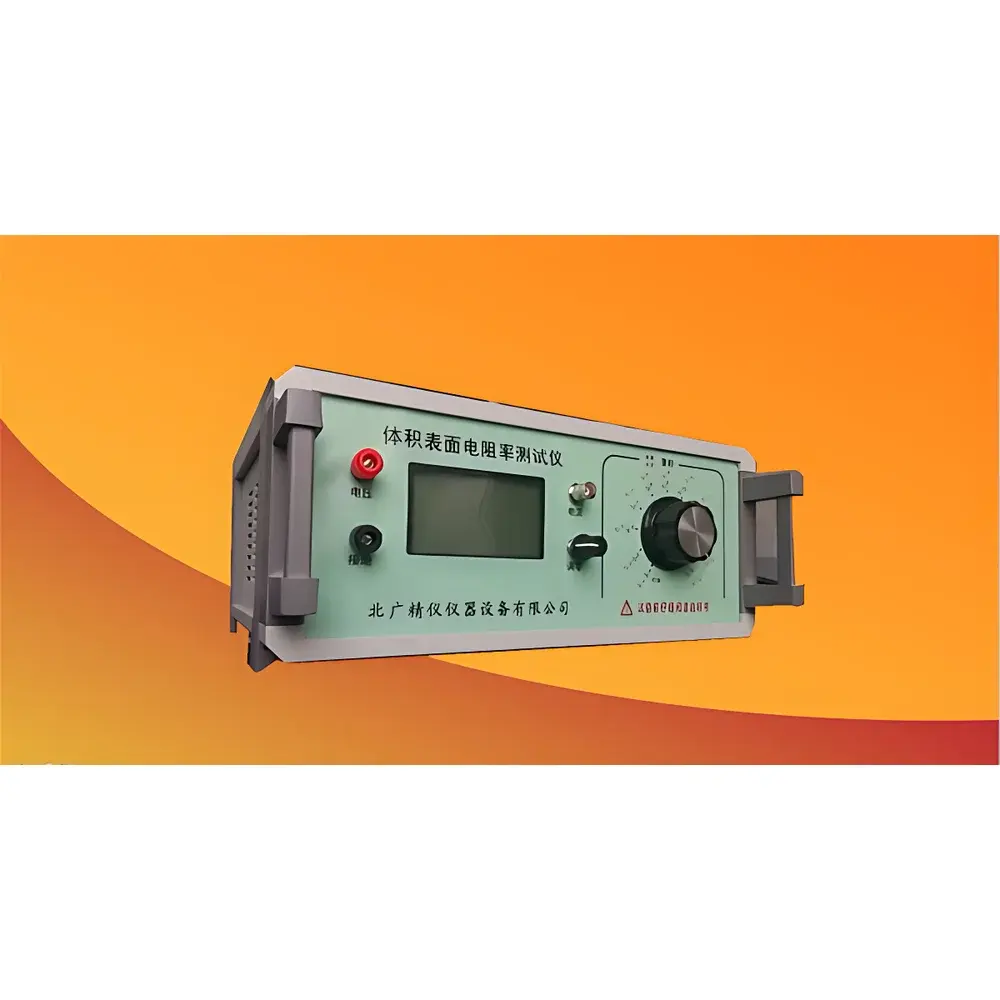
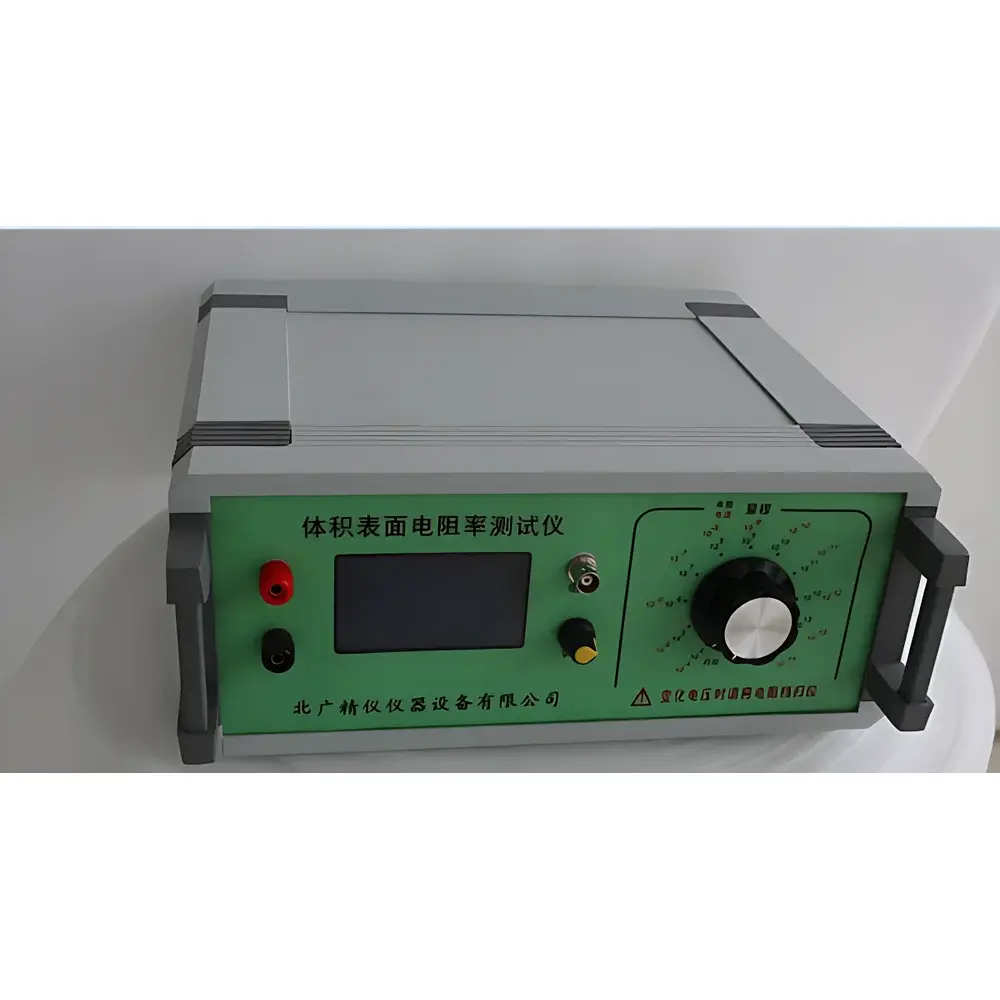
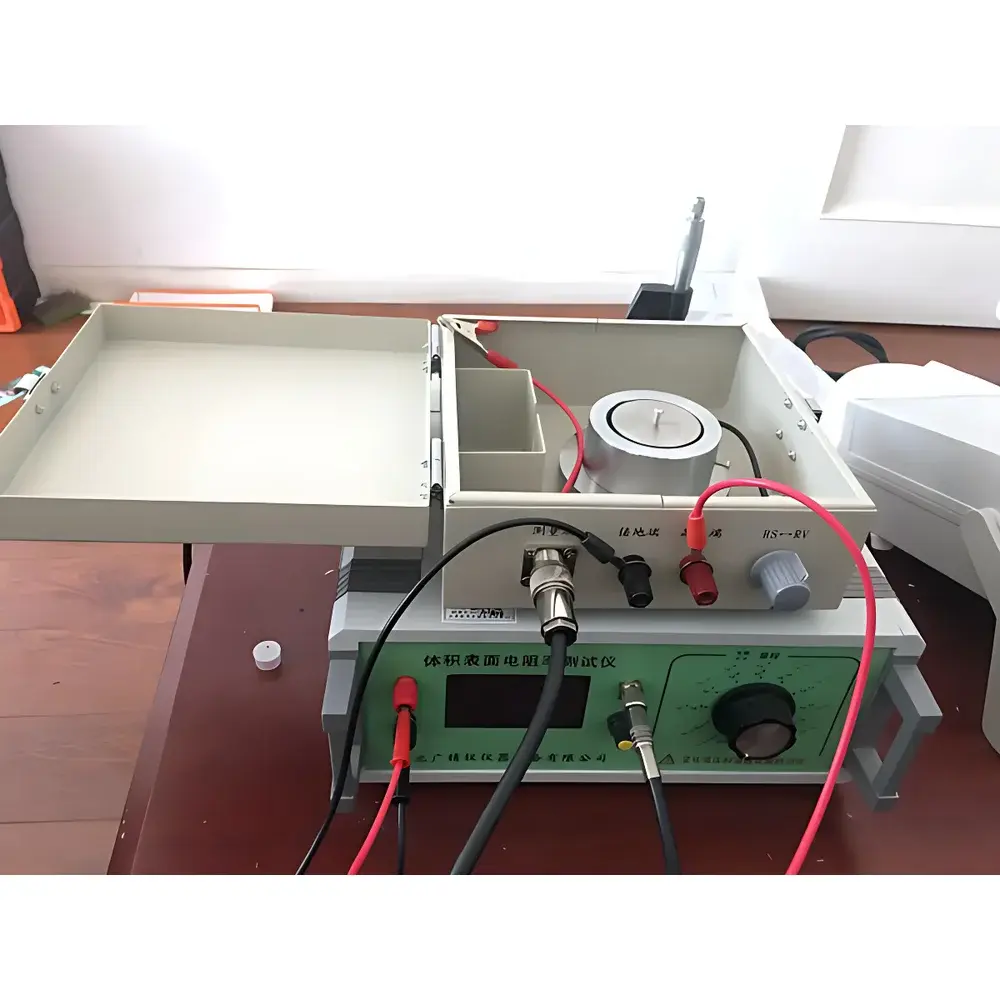
Beijing North Guang Precision Instrument BEST-121 Rock Electrical Resistivity Tester
| Brand | Beijing North Guang Precision Instrument |
|---|---|
| Origin | Beijing, China |
| Manufacturer Type | Direct Manufacturer |
| Product Origin | Domestic (China) |
| Model | BEST-121 |
| Test Voltage Range | 10 V–1000 V (selectable in 6 steps) |
| Resistance Measurement Range | 1×10⁴ Ω to 1×10¹⁸ Ω |
| Current Measurement Range | 1×10⁻¹⁶ A to 2×10⁻⁴ A |
| Accuracy | ≤1% (for R ≤ 10¹² Ω) |
| Compliance | GB/T 1410–2006, GB 12014, GB/T 20991–2007, GB 4385–1995, GB 12158–2006, GB/T 15738–2008, GB/T 22042–2008, GB/T 22043–2008, GB/T 24249–2009, GB 26539–2011, GB/T 26825–2011, GB 50515–2010, GB 50611–2010, GJB 105–1998-Z, GJB 3007A–2009, GJB 5104–2004 |
Overview
The Beijing North Guang Precision Instrument BEST-121 Rock Electrical Resistivity Tester is a high-precision, direct-current (DC) resistivity measurement system engineered for quantitative evaluation of bulk and surface electrical resistance in geological specimens, insulating solids, and composite materials. It operates on the principle of Ohm’s Law (V = IR), combined with standardized electrode configurations defined in GB/T 1410–2006 and ASTM D257, enabling calculation of volume resistivity (ρ, in Ω·m) and surface resistivity (σₛ, in Ω/sq) using geometric correction factors. The instrument applies a stable, user-selectable DC test voltage (10 V to 1000 V) across precisely dimensioned three-electrode fixtures—comprising a central cylindrical electrode (50 mm diameter), an annular guard electrode (60–80 mm ID/OD), and a bottom circular plate electrode (100 mm diameter)—to isolate volumetric conduction paths from surface leakage currents. This architecture ensures metrological traceability for applications where resistivity correlates with moisture content, degree of cementation, microfracture continuity, or diagenetic alteration in rock cores, sedimentary samples, and engineered geomaterials.
Key Features
- Wide dynamic resistance range: 1×10⁴ Ω to 1×10¹⁸ Ω, supporting measurements from conductive shales to highly resistive granites and synthetic insulators.
- Multi-step DC voltage sourcing (10 V, 50 V, 100 V, 250 V, 500 V, 1000 V) with automatic polarity reversal capability to mitigate electrode polarization effects during extended polarization time tests.
- Dual-parameter digital display: simultaneous real-time readout of resistance (Ω) and current (A) on a high-contrast LCD interface.
- Integrated Faraday-shielded test chamber with grounded copper shielding and interlocked lid, minimizing electromagnetic interference and electrostatic noise during ultra-high-resistance (>10¹⁵ Ω) measurements.
- Compliant three-electrode fixture set (per GB/T 1410–2006): precision-machined stainless steel electrodes with defined geometries for unambiguous separation of volume vs. surface conduction pathways.
- Automated measurement sequencing: programmable dwell times (1 min, 2 min, 5 min, 10 min, 50 min, 100 min) with auto-stabilization detection to identify steady-state current prior to resistivity calculation.
- Low-power design (<5 W), CE-marked AC 220 V / 50 Hz operation, and compact benchtop footprint (W × D × H: 320 × 280 × 150 mm) suitable for core logging labs and field-deployable geotechnical testing stations.
Sample Compatibility & Compliance
The BEST-121 accommodates solid rock specimens (core plugs, slabbed outcrops, cut blocks) with thicknesses ≥5 mm and diameters up to 100 mm. Its electrode geometry supports both volume resistivity (current forced vertically through the specimen between bottom plate and central cylinder) and surface resistivity (current constrained radially along the top face between annular and central electrodes). All measurement protocols adhere strictly to GB/T 1410–2006, which aligns methodologically with IEC 60093 and ASTM D257 for insulating material characterization. The system meets environmental requirements for laboratory use (0–40 °C, RH <80%), and its grounding architecture satisfies electromagnetic compatibility (EMC) provisions under GB/T 18268.21–2010 (industrial measurement equipment). Calibration traceability is maintained via NIST-traceable reference resistors and annual verification per ISO/IEC 17025–compliant internal procedures.
Software & Data Management
While the BEST-121 operates as a stand-alone analog-digital hybrid instrument, its measurement outputs are fully compatible with external data acquisition systems via RS-232 serial interface (optional USB-to-serial adapter). Raw resistance and current values, along with timestamped polarization intervals, can be logged into spreadsheet-compatible CSV files for post-processing. The instrument supports GLP-compliant documentation: each test record includes operator ID (manually entered), sample ID, electrode configuration (Rs or Rv), applied voltage, measured current, elapsed polarization time, and calculated resistivity (with geometric correction factor applied per GB/T 1410 Annex A). Audit trails for calibration events, firmware updates, and maintenance logs are retained internally and exportable for FDA 21 CFR Part 11–aligned quality systems.
Applications
- Geophysical core analysis: quantifying formation resistivity for hydrocarbon saturation modeling and porosity-permeability correlation.
- Geotechnical engineering: assessing clay content, pore fluid salinity, and weathering state in soil-rock mixtures.
- Materials science research: evaluating aging effects, hydration kinetics in cementitious systems, and ionic migration in geo-polymers.
- Quality assurance in mining and quarrying: screening for electrically anomalous zones indicating fracturing or fluid infiltration.
- Standards compliance testing: validation of antistatic performance in protective gear (GB 12014, GB/T 22042), flooring (GB 50515), and industrial ceramics (GB 26539).
- Academic pedagogy: hands-on instruction in solid-state conduction physics, dielectric behavior, and metrology fundamentals.
FAQ
What standards does the BEST-121 comply with for rock resistivity testing?
It conforms primarily to GB/T 1410–2006, which is technically equivalent to ASTM D257 and IEC 60093 for volume and surface resistivity determination in solid insulators—including consolidated geological materials.
Can the instrument measure both volume and surface resistivity on the same specimen?
Yes—via mechanical reconfiguration of the three-electrode fixture and switching the test mode selector (Rv or Rs position) on the shielded enclosure, enabling dual-mode characterization without specimen remounting.
Is periodic calibration required, and what is the recommended interval?
Calibration against certified reference resistors is mandatory before first use and annually thereafter; additionally, daily zero-check and open-circuit verification are advised prior to critical measurements.
How does the system handle polarization effects during long-duration measurements?
It incorporates programmable polarization timing, real-time current monitoring, and auto-stabilization logic that halts measurement when successive readings deviate by <0.5%, ensuring thermodynamic equilibrium prior to resistivity computation.
Does the instrument support automated data export for LIMS integration?
Yes—via RS-232 output, raw measurement data (voltage, current, time stamp, electrode mode) can be streamed to external software or laboratory information management systems (LIMS) for automated report generation and audit trail archiving.



